Still Hurts

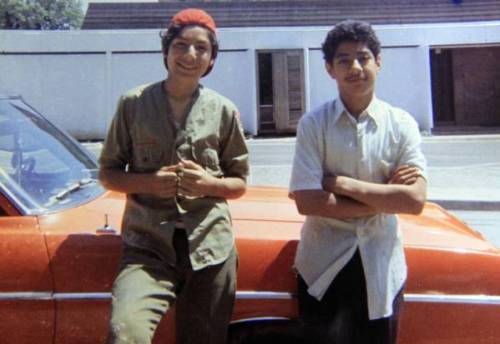
Santos Rodriguez, right, stands with his brother David next to a relative’s car just a month before Santos’ death.

Santos Rodriguez, right, stands with his brother David next to a relative’s car just a month before Santos’ death in 1973.

Today marks an ignominious scar in the history of Dallas, Texas.  It’s the 40th anniversary of the death of a 12-year-old boy by a Dallas police officer playing a game.  It began innocuously enough.  In the pre-dawn hours of July 24, 1973, Dallas police received a report that three boys were spotted fleeing a gas station where a vending machine had been burglarized of $8.  Officer Roy Arnold spotted the youths, but couldn’t catch up with them.  Yet, he thought he recognized two of them, brothers David and Santos Rodriguez.  They’d been in trouble before.  He summoned his partner, Darrell L. Cain, and the duo drove to the East Dallas home of the boys’ 80-year-old maternal grandfather, Carlos Miñez, who didn’t speak much English.

The officers immediately took custody of the boys, handcuffed them and drove them back to the scene of the crime.  The boys proclaimed their innocence, but the policemen demanded the name of the third suspect.  Cain sat in the back seat of the squad car, next to David.  He figured a way to get the boys to talk.  He pulled out his gun and emptied it of bullets, before pointing it to the back of Santos’ head.

The Rodriguez brothers had too much against them from the start.  They were a little more than a year apart in age; born to a teenage mother and an illegal immigrant father.  David, Sr., had already been deported to México, and their 29-year-old mother, Bessie, was in jail; charged with killing an abusive boyfriend a few years earlier.  All of that fed into the myth much of Dallas’ White society held of the city’s Hispanic citizens: illegal, uneducated Mexican immigrants who had too many kids too soon and bore a criminal mindset.  That was pretty much the same view of Dallas’ Black residents.  At the time, less than a quarter of Dallas citizens were non-White.  Hispanics clustered mostly in the western and eastern edges, while Blacks were relegated to the increasingly impoverished southern sector.  Both groups had tolerated disrespect and harassment from police for decades.  Then, it all came to a boil that dark summer morning.

“I bet I can get him to talk,” Cain said, emptying his gun.  Pressing the barrel of the firearm to the back of Santos’ head, he again demanded the name of the ubiquitous third burglary suspect.  He pulled the trigger, and there was a click.  Santos again feverishly denied knowing anything about the incident.  Cain pulled the trigger a second time, and a flash of light flooded the car, along with the smell of gunpowder.  He’d missed one bullet left in the chamber.

“You’re going to be alright,” a terrified David shouted to his brother, as the officers bolted from the vehicle like frightened little animals.  Blood filled the car floor.  Santos wasn’t alright.

That was it; that was the catalyst for the city’s minority populations.  The city erupted into a frenzy of protests and violence that had besieged other metropolitan areas years earlier.  I was 9 years old that summer and, albeit obsessed with my new German shepherd puppy, I stopped to look at the fiasco; my naïve and innocent mind trying to fathom what happened.

As one might expect in those days, given the city’s history, Cain wasn’t really held accountable.  He lost his job and went on trial in Austin where the case had been moved because of local publicity.  He was found guilty by an all-White jury and sentenced to 5 years in prison; he served only half.  In 1978, the U.S. Justice Department refused to prosecute Cain under federal civil rights statutes, since he’d already been tried in state court.

While Cain adamantly insisted the shooting was an accident and described himself as traumatized in a 1998 interview with the Dallas Morning News – the only time he’s spoken publicly about the tragedy – it seemed the culmination of a long series of events that had occurred for as long as anyone could remember.  Police stopping Black and Brown people on the street; forcing their way into residents’ homes in the dead of night; pulling them over for the most mundane of traffic-related transgressions.  The civil rights movements that had rattled the nation for years finally reached the streets of Dallas – avenues trembling with anger and tension.  Every forest fire needs just one tiny spark to inflame the dry brush.  We were slightly less than a decade removed from the Kennedy assassination.  And then, this happened.

It was truly a different time.  Today, Hispanics make up 42% of Dallas’ population, while Blacks comprise about 25%Roughly half of the city’s police officers are non-White, as are nearly half of police sergeants.  Dallas has a Black police chief, David O. Brown.  If juveniles are suspected of criminal behavior, a judge must approve of any interrogation.

In light of the recent George Zimmerman – Travyon Martin case, I wonder, though, how much has changed.  In general, the U.S. wasn’t consumed by the kind if violence we see now.  There were no ‘Right-to-Carry’ laws.  Police across the nation try their best to interact with the public, instead of behaving like ravenous vultures.  The Rodriguez event seemed so long ago, and of course, it really was.  But, whenever a child dies, it always hurts.  No one can ever make up for it; we can only try to move forward.
Leave a comment

Filed under Essays

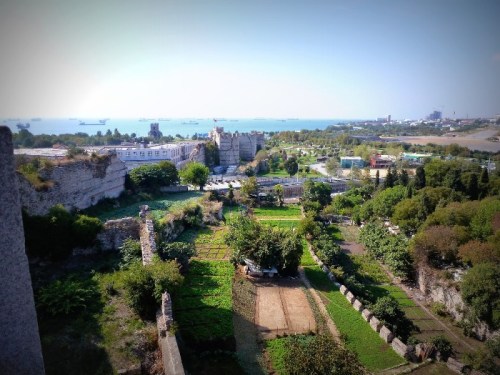
Destruction of the Yediluke Orchards in Istanbul

The Orchards lining the Land Walls of Constantinople, now Istanbul.

The Orchards lining the Land Walls of Constantinople, now Istanbul.

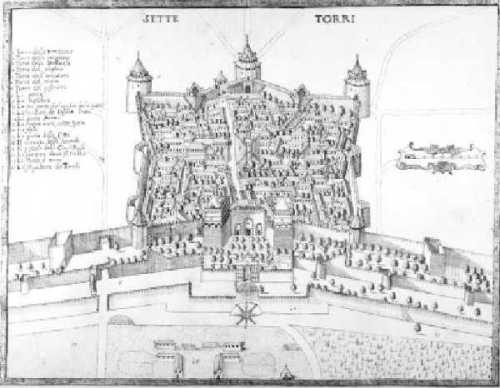
If you want any more proof that our contemporaries often have little or no respect for the world’s cultural treasures, just look to Istanbul, Turkey, where authorities are destroying the Yediluke Orchards in the name of progress.  So-called modernization usually guts the ancient past.  The Yediluke Orchards are a prominent feature of the Seven Towers Fortress; a vast complex that has stood for some 1,600 years.

Built during the Byzantine Empire, the Seven Towers Fortress was part of the former Constantinople; the historical metropolis established around 650 B.C. that sat on the Black Sea, as Istanbul does now.  It joined Europe and Asia and served as the base for the early Christian Church.  Constantinople was a major cultural, religious and political center for centuries.  Even now, contemporary Istanbul is the proverbial gateway between Europe and Asia.

Depiction of the Seven Towers Fortress, c. 1685, Francesco Scarella.

Depiction of the Seven Towers Fortress, c. 1685, Francesco Scarella.

The Yediluke Orchards run along the outer walls of the Seven Towers Fortress and supplied residents with food.  Today, as city officials destroy the orchards, local citizens have begun to protest.  As you might expect when people try to stop their government from committing atrocities of any kind, they became subject to police brutality.  We’ve seen this happen before though.  In the North African city of Timbuktu, ancient manuscripts were destroyed amidst carnage unleashed by Al-Qaeda-backed rebels.  In Belize recently, workers almost completely destroyed a 2300-hundred-year-old Mayan period to use the rocks for road fill.

If it was left up to we writers, poets, painters and other artists, wars would not erupt over such trivial matters as oil and diamonds and our ancient past would be kept in tact.  It’s too much to ask of our political leaders to relinquish their cherished power for the sake of humanity.  But alas, my rationale is viewed as too utopian for practical application.

In Istanbul, citizens continue to protest destruction of the Yediluke Orchards.  I can only hope they win the battle.

Thanks to Sedef’s Corner.

Even now, the Yediluke Orchards serve a purpose.

Even now, the Yediluke Orchards serve a purpose.

1 Comment

Filed under Art Working

Happy Birthday Nelson Mandela!

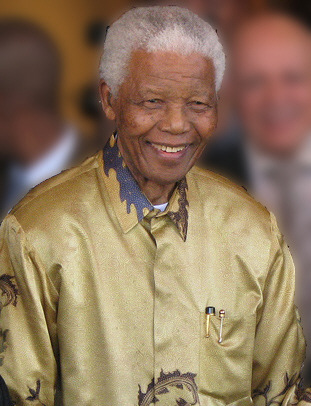
Nelson_Mandela-2008_(edit)

In case you missed it, Nelson Mandela turned 95 today.  The legendary human rights activist has few equals in the relentless battles for justice and dignity.  He was born Rolihlahla Mandela on July 18, 1918, in the tiny village of Mvezo, on the banks of the Mbashe River in Transkei, South Africa.  “Rolihlahla” in the Xhosa language literally means “pulling the branch of a tree,” but is often translated as “troublemaker.”  For Mandela, that turned out to be a good thing.  Throughout most of his left, South Africa was a staunchly and racially segregated nation; where the descendants of Dutch and English settlers held the bulk of the wealth and power over the Black citizens who had occupied the region for millennia.  In 1942, Mandela joined the African National Congress, an organization devoted to reverting centuries of brutal oppression.  For his efforts, he was rewarded with a lengthy prison sentence and the label of terrorist.  He was finally freed in 1990 and rebuilt his life as a crusader for human rights.

He celebrated his birthday from a hospital where’s he been for several weeks now.  He doesn’t have many years ahead of him, but his legacy of hope and determination is unparalleled.

Nelson Mandela Centre of Memory.

1 Comment

Filed under Birthdays

Roosevelt – As He Was

All presidents – like all people – have secrets.  It’s a simple fact of human nature.  Most of us like to keep ours.  In the current 24-hour news cycle, though, that’s become increasingly difficult, if not impossible, for public figures.  But, for Franklin D. Roosevelt, keeping his disability secret wasn’t just a matter of vanity; it was a matter of national importance.  Roosevelt had contracted polio in 1921; a condition diagnosed while he was vacationing in Canada.  Although he tried a number of treatments, he never fully regained the use of his legs.  He continued on with his political ambitions and eventually served an unprecedented 12 years as the nation’s 32nd president.  And, hardly anyone outside his close circle of family, friends and White House confidants knew he was almost completely wheelchair-bound.  It’s tough to imagine such a secret now, but in Roosevelt’s time, people could maintain that level of secrecy – and respect.

Recently, Ray Begovich, a professor of journalism at Franklin College in Indiana, uncovered a rare piece of film footage showing Roosevelt in his wheelchair.  It’s just an eight-second bit that he accidentally discovered while conducting unrelated research at the National Archives in Maryland.

“This raw film clip may be the first motion picture images of the president in his wheelchair, and it was never meant to be shown to the world,” Begovich said.

The film was taken during Roosevelt’s visit to the U.S.S. Baltimore at Pearl Harbor in July of 1944.  Roosevelt exits a doorway and proceeds down a ramp behind a row of sailors who block the view of the wheelchair.  While Roosevelt’s disability was a closely-guarded secret during his presidency, it later served as inspiration to disability advocates who succeeded in getting a statue of the president in his wheelchair added to the Roosevelt Museum in Washington.

Yes, it was a different world in the 1940s.  Now, we know that physical limitations don’t equate to mental aptitude.

1 Comment

Filed under Classics

No Winners Here

scales_20of_20justice

Many of us here in the U.S. have been watching the George Zimmerman murder trial closely.  I have to admit I’ve become addicted to the ongoing media coverage, but not because of any ubiquitously salacious intent.  It’s fascinating how attorneys for both sides dissect each bit of information, like butchers attacking a cow carcass.  In a way, that’s what attorneys are – butchers.

As people on all sides eagerly await the verdict, I know two things are certain: the victim, Trayvon Martin, will never come back home and no one will win.  There are never any winners in murder trials.  If anything, the concept of justice will win.  But, like beauty, that’s often an interpretation of the beholder.

I try to take in the boat loads of data slung at me regarding this case and sort through the definitive facts.  Here are the facts: the incident occurred on February 26, 2012, just after 7 P.M. local time, in the Retreat at Twin Lakes, a gated community in Sanford, Florida.  It was raining.  George Zimmerman resided at Twin Lakes.  Trayvon Martin’s father, Tracy Martin, did also.  The younger Martin was staying with his father because the teen had been suspended from school for possessing a plastic bag that tested positive for marijuana.  Martin had visited a convenience store, just blocks from his father’s home.  He was on the phone with a female friend when he became aware that someone was following him.  Zimmerman was carrying a Kel-Tec PF-9 9mm firearm.  He called the police to report that he was following someone.  Zimmerman and Martin got into a physical altercation.  Zimmerman shot Martin, and the teen died almost instantly.  Those are bulk of the facts.  Everything outside of that arena is mostly conjecture.

No one can explain why Zimmerman didn’t stop following Martin, as the police dispatcher instructed him.  No one knows exactly what words were exchanged between the two.  I do know we’ll probably see another case like this in our lifetime.

Here in the U.S. – mainly in the Southeast – issues of race and ethnicity still creep into debates about social justice and police activities.  And, to say that race doesn’t factor into this particular matter is akin to saying that Earth isn’t round.  It’s unfortunate, in this second decade of the 21st century, but that’s how it is.

Here’s another fact: no one involved in the Zimmerman – Martin case will ever be the same.  Not the families of the two principals; not even the 911 dispatcher who told Zimmerman to stay in his vehicle.  If Zimmerman is found not guilty, it will set off a firestorm of anger and protest.  If he’s found guilty of just one charge, he will most certainly be imprisoned.  Either way, no one will be satisfied.  Justice may win – but sometimes, that’s not saying much.

3 Comments

Filed under Essays

Medal of Honor

medalLarge

It was on this day in 1862 that President Abraham Lincoln approved legislation authorizing the preparation of 2,000 Medals of Honor to “be presented, in the name of the Congress, to such non-commissioned officers and privates as shall most distinguish themselves by their gallantry in action, and other soldier-like qualities.”  The Medal of Honor had been initiated the previous year as an award given by the U.S. Navy.  Today it is the highest award given to U.S. military personnel in the line of duty.

Since then, more than 3,400 people have received this medal.  Some have been dubious, such as the soldiers who were awarded the medals for their actions in the tragic 1890 “Wounded Knee” massacre.  But, in the recent Afghanistan and Iraq Wars, the medals have taken on new significance and enhanced value.  Recipients almost have to die to get one.  These aren’t perfect attendance awards!  In an ideal world, no such awards would be given because war wouldn’t occur.  But alas, this isn’t a utopian universe.  Regardless this is my personal salute to all MOH recipients and all military personnel.

1 Comment

Filed under History

Happy Birthday Bill Cosby!

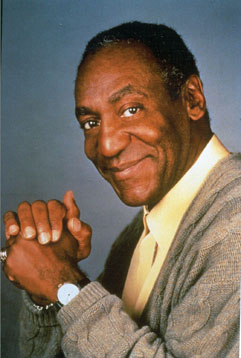
cosby-medium

Born William Henry Cosby in Philadelphia, Pennsylvania on July 12, 1937, Bill Cosby is one of America’s truly comedic gems.  His outlook on family life is pretty much unparalleled and what makes him especially unique.  He reminds me of my own father: the older he gets, he doesn’t just get funnier; he becomes totally irreverent and unapologetically honest.

Leave a comment

Filed under Birthdays

Why I’m Still Proud to Be an American

RLIT0075-usa-flag18mb

As I hear the sound of fireworks booming in the distance, not far from my suburban Dallas home, I contemplate the value and wisdom of patriotism.  Independence Day is slowly winding down here in the U.S.  If you’ve looked closely at my Gravatar photo, you can see I’m wearing a vest in the emblem of the American flag.  It’s quite clear to most that I’m proud to be a citizen of this country.  It hasn’t been easy, though, these past few years to sustain that type of joy.  But, national pride is like being in a relationship: you love the other person most of the time; other days, you just want to walk away and say to hell with it.  No one is perfect, and therefore, neither is any nation perfect.

Since the turn of the century, the U.S. has come under attack – not so much from without as from within.  The multiple terrorist attacks of September 11, 2001 changed most everyone here.  But, as the nation beamed in its refreshed vanity, I suspected some would use that as an excuse to denigrate anything that seemed remotely different and anyone who didn’t fully see their point of view.  I just didn’t know it would get this bad.

The U.S. is embroiled in the worst economic crisis in nearly eight decades; an onslaught of mismanagement brought about by uneven tax cuts, two wars and deregulation of the financial and housing industries.  As our military return home to foreclosed homes and lackluster health services, some of the wealthiest citizens hide their money in offshore bank accounts.  School districts are laying off teachers, and police are fighting crime with fewer and fewer resources.  Congressional members left Washington last weekend without acting to prevent student loan rates from doubling.

So, why the prideful feelings?  Why don that flag vest and express joy in being an American?  Because it will get better.  Despite all the angst and frustration, this country is still one of the best places to live.  Yes, it could improve in terms of education and health care.  But, that’s just the point: the potential is there.  People have scoffed at my national pride; thinking I’m a fool, a naïve dunce who should know better.  But, I’ve looked at them and asked what they’ve done to improve their own lot in life.  What, I’ve queried – looking hard at the arrogant scowls that blister their faces – have they done to make this country a better place?

Criticism without action is pointless – and stupid.  It goes back to the relationship issue.  If you really love and care for someone, you’ll tell them when you feel they’re wrong.  You’ll look them in the eyes and relay your concerns and your fears.  You know they could do better.

The U.S. is the self-proclaimed beacon of freedom and democracy.  We have the oldest national constitution one Earth.  We are a democratic nation, and a democracy requires interaction among its citizens; it demands political engagement.  After the controversial 2000 presidential elections, a friend told me he didn’t vote because he felt it didn’t count and pointed to the election results as proof.  He then admitted the real reason he didn’t vote: he didn’t want the IRS to find him, since he owed so much in student loans and credit card debt at the time.  Excuse me?

“Are you serious?” I asked him.  “You have a social security number and a driver’s license.  If the IRS wanted to find you, believe me, they’ll find you!”

Whenever I hear my fellow Americans dismiss the value of elections, I consider the tens of millions of people around the world who wished they had the luxury of choosing between the lesser of two evils.  When they lament the lack of freedom for the poor, I see other Americans stepping in to fill the void of hunger.  When they remark on this nation’s history of racist oppression, I remind them those days no longer exist; we’ve come a long way since then.

The U.S. is going through one of the toughest period in its existence.  I don’t know.  It just is.  But, I suspect it’s the result of inaction on the part of the citizenry; people like my friend who didn’t bother to vote and who had resigned their country to an uncertain fate.

Yet, when I hear the extremists say they despise America – simply because it’s not working for them in particular – I recall the words of John F. Kennedy: “Ask not what your country can do for you, but rather what you can do for your country.”

Wherever you live, in whatever nation you call home, you simply can’t expect others to do things for you.  You have to make your country work for you.  It’s an endless chore.  But, there’s no sensible alternative.

3 Comments

Filed under Essays

Happy American Independence Day!

4_july_independence_day

Image courtesy Creative Art Works.


U.S. Independence

2 Comments

Filed under News

Yes, I’ve Used Those Words – And So Have You

rs_293x473-130627112755-634.pdeen7.ls.62713

Here in the U.S., the “Society of Political Correctness” is swept up in an unending tizzy about racist comments once made – years ago – by culinary maven Paula Deen, the self-proclaimed “Queen of Southern Cooking.”  Deen, head of a multi-million dollar gastronomical empire that’s geared to maintaining high rates of obesity in the world’s richest nation, has been in relentless defensive mode since she admitted using a racial slur to describe a Black man who held her up at gunpoint in 1987.  The fiasco began – ironically – when a White former employee of one of Deen’s restaurants filed suit against Deen citing the latter had repeatedly used the term ‘nigger’ to describe Negro people.  The former employee, Lisa Jackson, claims the comments were especially hurtful because her own nieces are bi-racial with a Black father.  In a court-ordered deposition, Deen admitted she’d used the ‘n’ word more than a few times in her life.  Consequently, sponsors have been dumping her faster than bail bondsmen have dumped Lindsay Lohan.  Even Wal-Mart has pulled Deen’s merchandise!  And, how can any decent southern White woman be a bona fide redneck if Wal-Mart doesn’t stand by her?

I can’t speak for other countries, but anyone age 30 and over here in the U.S. who claims they’ve never ever, not once used a racial epithet to describe someone of a different ethnicity in the heat of anger or in the midst of an episode of temporary stupidity is either lying, mentally retarded, or has been in a coma since birth.  I’ve used all sorts of unsavory terms to describe people of different races.  Hell, I’ve even used them against my own people: Spaniards, Mexicans and Germans!

Yes, I’ve used the word ‘nigger’ before!  I’ve also spit out such hateful terms as ‘spic,’ ‘redskin,’ ‘chink,’ ‘gook,’ ‘hebe,’ ‘redneck,’ ‘White bitch,’ and ‘George W. Bush’ to describe people.  Here’s the difference: I’ve always stepped back and thought how stupid that was of me.  I should know better than that.  But occasionally, I get mad at someone – so outrageously mad – that I let loose with a barrage of insults.  We all have those weak moments; those brief periods of intellectual vacuums where we let our emotions get the best of us and nothing we say makes sense.  It’s just part of human nature; we’re an imperfect species.  We don’t always say the right thing.

That’s probably what happened to Deen that night in July of 1987 when a gun-wielding Black man threatened her while she worked as a bank teller.  Terrified because of the incident, she slipped into a nonsensical frame of mind and started rambling.  No one seems to be upset, however, that a Black man disrespected the rule of law by putting a gun to Deen’s head and robbing a bank; therefore, feeding the myth that Black men are naturally predisposed to violence.  They’re more concerned with Deen’s angry verbiage.  Does that make sense?

Here’s something else: Deen isn’t a Yale law professor; she’s essentially a glorified chef who happened to get lucky enough to turn her passion for butter- and salt-laden foods into a fortune.  I wish I could do the same with my masturbatory techniques, but I think the market is already overwhelmed by 40-something Spanish / Mexican Indian / German men playing with themselves online.

Deen has apologized profusely.  She even appeared on the “Today” show last week and tearfully told host Matt Lauer, “I is what I is.”  As a writer, that particular verbiage almost gave me an aneurism!  But, what else can she do?  Kill herself on live TV?  She’s already slowly doing that with her daily menus.  People need to give it a rest and lay off Deen.  Many folks have rallied to her defense, including some Negroes.  I’ve never been a fan of Deen, but I don’t understand why this matter has taken up so much media time.  In the state of Texas, some 45% of residents under age 17 have no health care coverage, and on the nation level, we’re building more prisons than schools.  That’s what bothers me – not the brainless rants of a 66-year-old woman who deep-fries everything that crawls out of her refrigerator.  I’m not trying to tell other people what to think or how to feel.  If some are offended by Deen, then I respect their sentiments.  She’s just not someone I’m worried about.

In the meantime, I have to set up for my next solo video shoot.  I’m determined to break into that market after all.

2 Comments

Filed under Essays