“Action and reaction, ebb and flow, trial and error, change – this is the rhythm of living. Out of our over-confidence, fear; out of our fear, clearer vision, fresh hope. And out of hope, progress.”
Image: John Darkow

Recently American Online (AOL) made a stunning announcement: they’re shutting down on September 30 – this year. As in one month from now! What had once been THE email service for many internet users has apparently run its course and – like most lifelong politicians – is no longer relevant.
Introduced in 1991, the screeching sound of AOL dial up served as the soundtrack of those early days of the cyber universe. I definitely remember it! AOL came with my first personal computer in March of 2000. The “You’ve got mail” voice alert was exciting at the time.
The influx of broadband remedied the nails-on-chalkboard tone that signaled a connection to the internet. But, as with dial phones and 8-track tape players, AOL may have become a victim of technology. It’s just what happens with technology and trends.
Despite my initial love for AOL, I had two major clashes with them; the second of which severed our relationship forever. In February 2004, AOL published a piece on how Christopher Columbus allegedly used Leap Year Day of 1504 to trick the indigenous Taino people of Jamaica into providing food for him and his stranded crew. In the comments section, someone posted a completely unrelated remark; something to the effect of “no one has suffered like the Jewish people.”
I have no idea what prompted it, except ethnocentric arrogance. But I replied with a remark that included the term “politically correct bullshit”. Apparently that hurt someone’s feelings, so they reported me to AOL who promptly deleted the verbiage and suspended me from commenting for a short period. In other words, AOL did something that reeked of juvenile behavior – they put me on “probation”.
“Excuse me?” It was bad enough I could hardly understand the customer service representative through her heavy accent. Like several U.S. companies at the turn of the century, AOL had outsourced their technical support and customer service to India and other parts unknown. But, when she told me about the probationary status due to my foul language, I retorted, “You don’t place me on probation! I place you on probation!” I was a paying customer, plus the U.S. Supreme Court had already ruled that foul language was protected speech under the First Amendment to the Constitution. Neither truth would change their cyber mind.
Seven years later I committed another more egregious act – in the minds of AOL leadership. I emailed a nude image of myself to a close friend in a joke message. This time it was AOL who got their feelings hurt and literally shut down my email address. I had to scramble to find another service and settled on Gmail. But I kept thinking – if everyone who used foul language or sent a nude photo got banned from the internet, well…you wouldn’t have an internet!
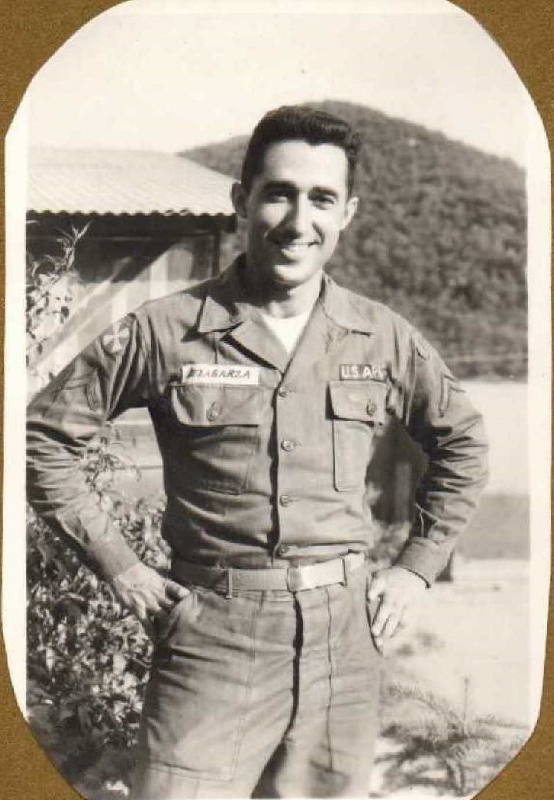
My father – who was born in 1933 – told me that, as a kid, he thought the voices he heard from the radio were from tiny people inside the device. Radio was a popular form of technology in the 1930s and 40s. Then television, then computers and now…well, who knows what will come up in the future.
Goodbye to AOL. And life continues. Like technology itself, it always does.
Filed under Essays

The CBS television network is one of the most storied media outlets here in the U.S. It officially launched in September of 1927 as a radio network – a major news source at the time – before transitioning in 1941 into the new medium of TV. The assassination of President John Kennedy in 1963 led CBS to expand their weekly evening news broadcasts from 15 to 30 minutes, which remains a staple of mainstream news outlets.
In 1960 a young journalist named Dan Rather joined CBS, and in 1981, he took over the helm of the network’s nightly evening news broadcast from another legend, Walter Cronkite. Rather had already established himself as a premier journalist. From his live coverage of Hurricane Carla in 1961 to the chaotic 1968 Democratic National Convention in Chicago and the horrors of 9/11, Rather had few equals. But, in the fall of 2004, he encountered his final nemesis – and perhaps one of the most unlikely: a conservative Republican political figure with a fragile ego, incumbent U.S. President George W. Bush. After five lackluster years as Texas governor, Bush ran for president in 2000 – and won in a controversial decision handed down by the U.S. Supreme Court. He became only the second U.S. president to follow his father into that esteemed role. One issue that arose early in Bush’s presidential campaign was his decision to join the Texas National Guard upon graduating from Harvard in 1968. He reenlisted four years later and then – allegedly – transferred to Alabama to work on the presidential campaign of George C. Wallace, a renowned segregationist. Whether or not Bush completed his second stint in the National Guard has never been resolved. He served at a time when the Vietnam War was raging and positions in any state’s national guard were highly valued for draft-age men.
The same conundrum befell Bill Clinton when he announced his candidacy for the presidency in 1991. Conservatives were quick to denounce Clinton as a “draft dodger”, but held off criticism of Bush years later. But when Dan Rather began his quest to determine the exact nature of Bush’s so-called military service, right-wing hound dogs quickly pounced. How dare Rather question the integrity of their contemporary savior! After Bush won the 2004 election (in contrast to 2000, when it was strictly an electoral college victory), the pseudo-Texan’s anger manifested quietly and nondescriptly in Rather’s termination from CBS.
The move pleased conservatives, but outraged liberals. It mirrored a similar move by CBS against Rather’s colleagues, Connie Chung, a decade earlier. Chung began her journalism career with CBS as a Washington, D.C., correspondent in the 1970s. In 1993, she became only the second woman and the first Asian-American to headline a major network news broadcast, when she became Rather’s co-anchor on the CBS Evening News. Two years later, however, her stint with the network crashed after interview with the parents of another conservative Republican with a fragile ego.
In November 1994, Republicans gained control of both Houses of the U.S. Congress for the first time since 1954. And they didn’t just win – they won a super-majority in each chamber. There were at least 3 factors: Clinton’s attempt at a national healthcare program, a ten-year ban on assault-style weapons and queers in the military. All three were anathemic to American conservatives, and the new Speaker of the U.S. House of Representatives, Newt Gingrich, stood at the helm of their angst. A Pennsylvania native and Ronald Reagan acolyte, Gingrich first arrived in the U.S. Congress in 1979. When Bill Clinton became president, Gingrich led the loud, yet unofficial call, to slaughter the former Arkansas governor’s reputation.
In the spring of 1995, Connie Chung traveled to Georgia to interview Gingrich’s parents. His mother, Kathleen, sitting in her kitchen, chain-smoking and speaking barely above a stage whisper, noted her son’s disdain for the Clintons – not just the President, but also First Lady Hillary. When pressed by Chung, Kathleen Gingrich said Newt had called Hillary Clinton a “bitch”. Chung chuckled and seemingly expressed surprise.
The interview rocketed across the news spectrum like a lightning bolt. Newt Gingrich openly announced his rage (and refused to acknowledge whether or not he’d described Hillary Clinton as a “bitch”). Nonetheless, he accused Chung of taking advantage of people who weren’t “media savvy”. In response, Chung asked how “media savvy” does someone need to be when they’ve welcomed a national news figure into their home and have three cameras and several studio lights set up around them. CBS severed Chung’s contract.
Now, some two decades later, CBS has bowed to the ego of yet another conservative Republican: President Donald Trump. They recently announced the cancelation of the long-running “The Late Show”, which will officially end in May 2026. Comedian Stephen Colbert has hosted the show since 2015 and has been one of Trump’s most prominent critics. This announcement comes as a surprise, but in reality, shouldn’t be. Previous host David Letterman frequently mocked President George W. Bush – and never shied away from his barbs. Every political figure in the U.S. has been the subject of disdain and caricature. Anyone who enters American politics with a thin skin normally fries in the broth of farcical verbiage. But it sort of comes with the territory.
Yet I can’t help but notice that attacks on journalism and popular culture have come from the conservative wing. The right-wing fringe that once openly-mocked diversity and inclusion now seems to bristle at the sound of tawdry jokes and comical jibes. And liberals are the wimps?
Spare me the anxiety!
Personally I was the subject of extensive bullying throughout my school years and even into young adulthood. But I survived the maelstrom and I’m still here. In a nation that values free speech and a free press, it’s frustrating to know that journalists and comedians are ostracized for criticizing or questioning anyone – least of all political figures. In fact it pisses me off and makes me wonder what’s next. The U.S. currently has a president who insulted a large number of people and deliberately fomented a physical assault on our government. Threatening physical violence and slandering someone’s reputation are actually illegal. But, in the current, political climate, personal fragility is obviously subjective.

“Those who expect to reap the blessings of freedom, must, like me, undergo the fatigue of supporting it.”
Filed under News

As if mega-billionaires don’t cause enough problems, Amazon founder Jeff Bezos is marrying actress/journalist Lauren Sánchez in Venice sometime this weekend. The actual date has been kept secret. The duo practically rented the entire community for their pleasure; countless celebrities and other high-profile individuals attended. Greenpeace joined protests against the global wealthy elite and displayed the above banner in Venice’s St. Mark’s Square, amidst the festivities.
“The problem is not the wedding, the problem is the system. We think that one big billionaire can’t rent a city for his pleasure,” Simona Abbate, one of the protesters, told Reuters.
Mayor Luigi Brugnaro defended the event by arguing that it will bring an economic windfall to local businesses.
Bezos has vowed to make sizable charity donations, including a million euros for Corila, an academic consortium that studies Venice’s lagoon ecosystem.
It’s almost ironic. Venice is built on a lagoon and has become a battlefront for climate change activists. Sea levels continue to rise, and places like Venice are in danger of literally drowning.
Filed under Curiosities

Around this time in 1215 C.E., England’s King John placed his royal seal on the “Great Charter”, more commonly known as the Magna Carta. The signing came after a revolt by English nobility against John’s rule. The document guaranteed the king would respect the rights of individuals and uphold the freedom of the Church – among other things.
The charter was a key element in the establishment of democracy in England and ultimately across Europe. It also became critical in the creation of the United States more than 500 years later. The framers of the U.S. Constitution highlighted the essence of the Magna Carta in their discussions.
The anniversary of King John’s signing is notable here in the U.S. since last weekend the indefatigable Donald Trump staged a parade in Washington, D.C., to coincide with the 250th anniversary of the establishment of the U.S. Army and his 79th birthday. The festivities were more for him and his overbearing ego than to celebrate the Army. But it was also important in that thousands of “No Kings” protests occurred across the nation – a direct response to Trump’s totalitarian attitude.
Fortunately, the Magna Carta – and the U.S. Constitution – will outlast any political ideology.
Filed under History

“Freedom is never voluntarily given by the oppressor; it must be demanded by the oppressed.”
Filed under News