

“Those who are skilled in combat do not become angered. Those who are skilled at winning do not become afraid. Thus, the wise win before the fight, while the ignorant fight to win.”
“Those who are skilled in combat do not become angered. Those who are skilled at winning do not become afraid. Thus, the wise win before the fight, while the ignorant fight to win.”
Filed under News
“The only thing I know is this: I am full of wounds and still standing on my feet.”
Filed under News

“Don’t worry about the world coming to an end today. It’s already tomorrow in Australia.”
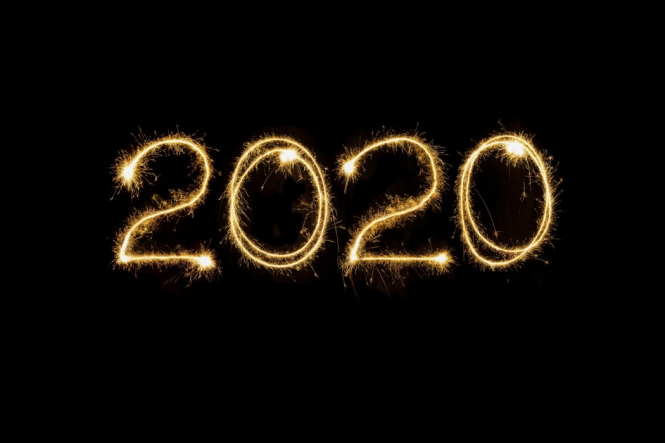
Yes, Dear Readers, 2020 is finally coming to an end! Perhaps the worst year in memory for many of us, the demise is upon us. Everyone always hopes for the best at the start of the year. But many don’t truly prepare for the worst. We just sort of hope things will be different This Year. When it doesn’t, we’re often surprised. Others just aren’t surprised because they always expect the worst anyway. I used to fall into that latter category, but now, I just don’t let myself fall too in love with New Year’s Day.
Nevertheless, what should have been an extraordinary year – what with the start of a new decade – has become a nightmarish dystopia riddled with many of the same vices of previous times: political ineptness and civil unrest. For the United States, we had the added ills of an idiot president, and for the world, a global pandemic. Only a catastrophic series of natural disasters (monstrous earthquakes or a meteor strike) could make it worst. Or better, depending on your outlook.
All pessimism aside, my Lovely Followers, The Chief will be counting down every day of this month up to and including New Year’s Eve. Like a bad day at work or drunken family holiday gathering, 2020 can’t die soon enough!
Filed under News
I know I’m not alone in wishing this year a speedy demise. It certainly can’t end soon enough. On January 1, I personally felt I was at the precipice of a new beginning. I planned to finish and publish my second novel; a minor accomplishment that didn’t materialize last year. I also hoped to work towards upgrading my house. My father’s fetish for candles many years ago left soot marks throughout most every room. I also wanted to plant a couple of trees in the front yard. All sorts of good things loomed across the horizon! But, if you want to see the Great Creator’s sense of irony, announce your plans for the future.
At the end of January, my mother suffered a stroke; one bad enough to render her left side almost completely immobile. I had to admit her to a rehabilitation center and almost felt like I was abandoning her. She made good progress and started to regain movement on her left side, especially her arm. Then her Medicare benefits ran out, and the center had to discharge her. Basically they evicted her because she didn’t have enough money. So she returned home and went on hospice care. She passed away in June.
By then, however, the COVID-19 pandemic had hit, and the economy starting tanking. As my mother’s health deteriorated here at the house, I also fell ill and thought I’d contracted the C plague. Nasty visions of me lying in bed gasping for air, while my mother wilted in her own bed and hospice nurses tried getting into the house, burdened my days and nights. One morning local firefighters ambushed my front door with loud bangs. They’d been told a COVID victim might be trapped inside. A man stood on the porch with a heavy tool designed to breach everything from storm doors to bad attitudes.
After my mother died, I learned she had no beneficiary payouts from her two pension funds. Like so many Americans, I was unemployed and exhausting what funds I’d garnered from previous work. I couldn’t qualify for unemployment insurance, and no stimulus money was headed my way. I had to borrow money to pay basic utilities. Then I did receive money from an insurance policy I didn’t know existed. That became the brightest spot in my dismal life so far.
I’ve stabilized myself now, even as I remain jobless with minimal prospects. More importantly, I know I’m not alone in my feelings of despair and loneliness.
The U.S. is still mired in the depths of the most cantankerous presidential election in decades. The pandemic shows no signs of abating. And the economy remains brittle. Adding to the agony is that the Atlantic / Caribbean hurricane season just won’t quit. Even though it’s technically scheduled to cease on November 30, tell that to nature. Some fools tried that with the pandemic – ordering it to end by X date – and the scourge replied with a middle finger.
Such is 2020. Everything that could go wrong this year has gone wrong. We’ve reached the point, nevertheless, that any kind of mishap is answered with, ‘It’s 2020.’
The number 2020 is supposed to signify perfect vision. And, at this moment, we’ve seen how perfectly screwed up things can get. Thus, in the future, perhaps for generations to come, any crisis will be dubbed ‘A 2020’.
Had a bad day at work or school? Just tell people it was a 2020.
A rough trip through the airport? A 2020 escapade.
Burned food in the oven? You made a 2020.
How was it with your in-laws over? It was so 2020.
You get the message. Now, on to New Year’s!
Filed under Essays

To my fellow Americans (and pretty much the rest of the world):
It’s almost over! Both 2020 and this year’s elections are almost done. I can see the sun peeking over the horizon. Yes, it’s there – waiting for the demise of our current morass. And then we will be free! And we can continue on with our lives! Hold on, brothers and sisters! The aftermath is upon us, and we will be delivered to freedom!
(If freedom doesn’t arrive as expected, please feel free to imbibe in your vice of choice.)
Filed under Wolf Tales
“The future belongs to those who prepare for it today.”
As we continue moving forward into this third decade of the 21st century, I can’t help but ponder the many things both we and our forebears thought society would have realized by now. I’m considering all of this in the midst of the growing COVID-19 scourge; which now has been officially declared a pandemic. Just imagine…by the year 2020, we thought we’d have:
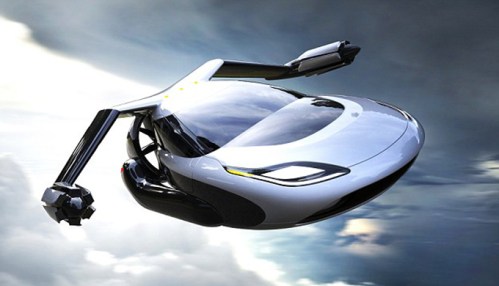
Flying cars

A cure for cancer

A colony on Mars
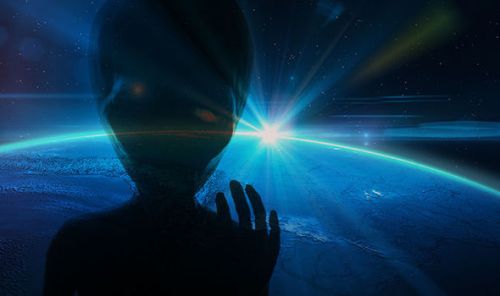
Contact with extraterrestrials
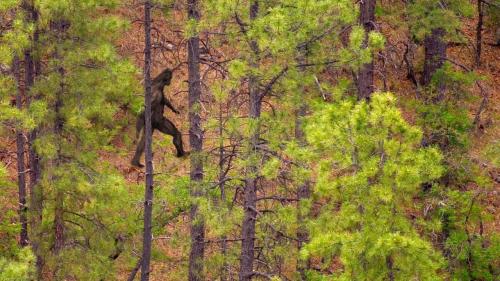
Found Bigfoot

Achieved teleportation

Bullet trains in every major city

Life expectancy exceeding 90
Instead, what are we doing? Teaching people how to sneeze into their sleeves and wash their hands. What the fuck happened?!
Filed under Wolf Tales

“Nothing in life is to be feared. It is only to be understood.” – Marie Curie
Here we are! It’s 2020 – the start of a new year and a new decade. Forty years ago I was excited about the prospect of witnessing and understanding the birth of a new decade. I had just turned 16 and couldn’t remember 1970. But this was different. A whole new decade! As my parents and I often did, we staged a New Year’s party in 1979; inviting family, friends and neighbors. I had taken the time to cut up strips of multi-colored paper into literally thousands of squares, which I then tossed into the air from a large brown paper bag at the stroke of midnight.
I was considerably more excited ten years later, as we welcomed the 1990s, which – even now – remains the best decade of my life. I was a young adult by then, working for a major bank in Dallas; a small personal accomplishment that made me feel I was finally a part of society and not some frustrated observer on the outside looking into a seemingly untouchable world. During that time I began making concerted attempts to become a published writer and even contemplated returning to college. These latter two dreams each wouldn’t materialize for more than another decade later.
The turn of the century – and the millennium – was one of the most exciting moments I’ve ever experienced. Like the dawn of the 1990s, it remains a high point of my life. Twenty years ago the world looked more hopeful and inviting. I wasn’t nearly as excited about the 2010s. Things had grown kind of awkward for me by then. But it’s come and gone.
So alas, we are at the threshold of the third decade of the 21st century. Every New Year’s bears the excitement of a renewal; a chance to alter our priorities and improve our stations in life. Yet, it’s different with the start of a new decade. Since the early 1900s, societal changes have occurred rapidly. For millennia, time periods were designated by century; now they’re often designated by decade. Each ten-year interval boasts its own cultural shifts; fashion and music trends; and political dynamics. As our life expectancy increases, so does our concept of time.
I’m approaching this decade with more caution, however. As I tend to do, I maintain a safe distance and analyze the universe around me and wonder what more can be done to improve not just my life, but everyone’s lives.
These last two decades have seen an explosion of technological and cultural advances, both here in the United States and across the globe. But, in many ways, things haven’t changed much. I’ve focused my concern on how dismal our political and economic well-being have become. The pathetic presidency of George W. Bush and the ever-increasing disorientation of the Donald Trump administration have set us back on many levels. Unlike 20 years ago we now have the greatest wealth gap in over a century. The first decade of the present century should have been an extraordinary time of progressive social and technological advancement. Yes, everyone seemingly has a cell phone and a personal computer. But so many promising visions of the future were lost to Middle East conflicts and an extreme level of corporate deregulation. The “Great Recession” squashed hope for many people across the nation. While many of my fellow Americans wonder if Bitcoin will make a resounding return to the financial sphere or what latest cell phone apps will be available in the coming months, I’m contemplating the grander picture.
In the 19th century, the U.S. built the world’s first transcontinental railroad system and helped create telephones and electric lighting. At the start of the 20th century, we sent men into the air and then constructed the world’s largest highway system. In 1962, President John F. Kennedy issued a challenge to the nation; wanting us “to go to the moon in this decade and do the other things; not because they are easy, but because they are hard.” And, we did just that! Just seven years later, Neil Armstrong became the first human to set foot on the lunar surface.
The 1960s and 70s saw the birth of various civil rights movements: women, non-Whites, and gays and lesbians. That forced America to live up to its promise to be a land of equality and prosperity. We finally began seeing the fruits of those movements in the 1990s.
Yet here stands the U.S. – still mired in Middle East conflicts and dealing with an economy that, on the surface, looks extraordinary. But those of us struggling with medical bills and increasingly high costs of basic living aren’t exactly thrilled that the U.S. stock market is functioning wonderfully for large corporations that don’t often pay their taxes and feel they have the unquestionable right to contaminate the environment in the name of profit.
Although I’m an introvert, I remain optimistic and would like to see society achieve some grand accomplishment over the next 10 years.
Infrastructure – As of 2017, the American Society of Civil Engineers (ASCE) gave the U.S. a grade of D+ for infrastructure. That’s an overall assessment of everything from bridges to railroads. To say they’re falling apart is dismissively juvenile. A grade is just a letter, but the implications are dire. In 2007, a section of Interstate 35 through Minneapolis collapsed, killing 13 people and injuring 145. But, nearly 13 years later, the U.S. is still spending more on military intervention in the perpetually-chaotic Middle East than making serious efforts to rebuild, or even refurbish, highways like I35. The ASCE estimates the nation will need up to 4.5 trillion USD to repair or rebuild much of our infrastructure by 2025. It’s one critical issue on which elected officials of all political stripes might agree. Instead, we have a president who wants to spend even more money to build a wall along the nation’s southern border with México. I can’t even contemplate how much that would cost. Knowing the U.S. federal government, though, it would be much more than initial estimates. Still, as I move around my own local area, I notice roads that have been under construction since the start of the last decade!
Subterranean Power and Telecommunication Lines – In September of 2017, Hurricane Maria rolled over Puerto Rico as a borderline category 5 storm. With an estimated cost of 94 billion USD, it stands as one of the most expensive natural disasters in U.S. history. And Maria didn’t even reach the American mainland. As with most such calamities, residents in the impact zones lived without power, which includes clean water. Like Andrew did to Florida in 1992, and Katrina to the Gulf Coast in 2005, Maria destroyed a substantial number of power and telecommunication lines across Puerto Rico. Our government’s response? USD 5 billion in aid and a president tossing paper towels into a raucous crowd.
Tropical storm systems aren’t our only nemesis. Currently, the U.S. is dealing with yet another round of powerful winter weather, with strong winds flipping vehicles and blizzard conditions hampering travel. It’s not uncommon for massive weather phenomena to impact more than 100 million people. Last October the Dallas, Texas area experienced a rash of tornado outbreaks. But that’s just in one city in one state. Other areas across the country have been struck by these meteorological vortexes. And, of course, power and telecommunication lines are among the casualties.
The same happens after floods, tornadoes, wildfires and earthquakes. Humans can never control Earth’s natural elements. Every time we’ve tried, those elements remind us who holds the true power. Still, we can lessen the severity of unruly weather by burying as many of our power and telecommunication lines underground as possible. It’s nothing new. People have been pushing this concept for years. And there are the usual detractors. Although a number of power and telecommunication lines have already been interred, opponents claim they’re not always more reliable than overhead lines. While overhead lines experience more outages, subterranean lines are generally more difficult to access and repair when problems with them do arise. Another obstacle, of course, is funding. There are greater costs associated with the installation of subterranean lines. The costs would have to be passed down to consumers somehow. But, I feel it’s all worth the financial burden. Ultimately, it costs people more to go without power – both in actual money and lives lost. The expenses incurred with the initial installations and ongoing maintenance will more than pay for themselves in the ensuing years.
Space – Since humans first looked up to the sky and began studying the stars, we’ve wondered what it would be like to fly and visit another celestial body. Now, we’ve taken flight and ventured onto the moon. The next logical step would be Mars. Plenty of people – from Elon Musk to Mars One – are making a concerted effort to get there. In the 1970s, the U.S. became the first nation to reach Mars with the Viking I and II voyages. We’ve done it again recently with the Curiosity mission. The U.S. space program was good for the country and the world, as it spurred a number of technological developments; mainly with telecommunications, but also with engineering and robotics.
Sadly, if the U.S. wants to send humans to the moon now, we couldn’t do it. We’ve let that go. Again, it’s the war factor – more money spent on Middle East conflicts than on things that really matter. But I would like to see the U.S. rejuvenate its space program and begin establishing a lunar colony; thus making interplanetary travel materialize from the pages of science fiction into reality. And, of course, we should make a concerted effort to send a craft with humans to Mars by the end of this decade. There’s more technology in a single Smart Phone than there was in all of the Apollo 11 lunar module. We can make this happen.
Thousands of years ago humans thought Earth was the only place in the universe that harbored any semblance of life. We’re starting to realize that’s not true. We exist on this third rock from the sun, but I’m certain we have never been alone. And, even if we are (by some odd fluke of nature), what’s to say we can’t venture outward and make our world more hospitable? If we rise above our own political and social distractions, we’ll understand we can do better than this. We have to do better. I can’t imagine us living in a world of such chaos and uneasiness. Throughout this next decade, we have to move forward. Time will. We have to follow it.
Photo by Josh Sorenson.
Filed under Essays
 Chief Writing Wolf