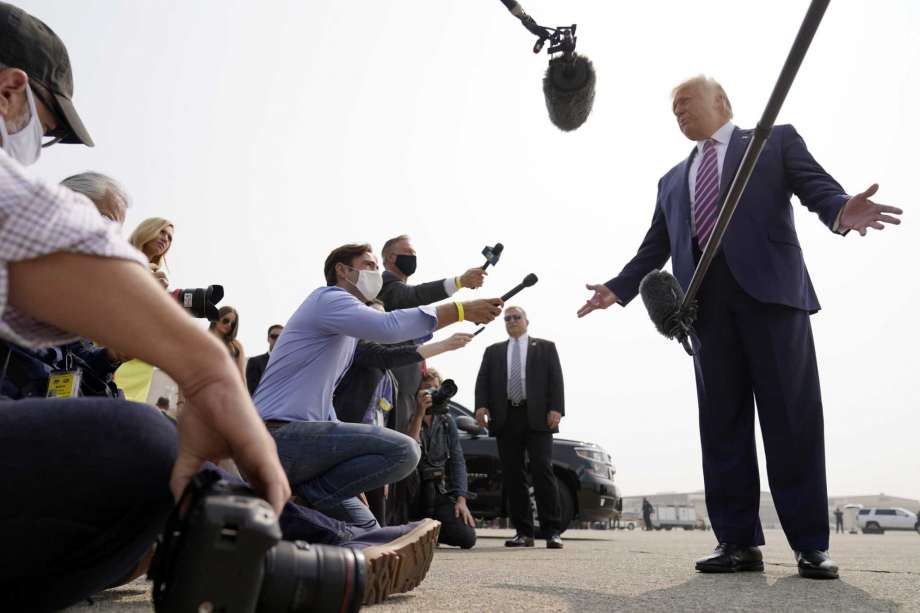
“I wear a mask when needed, when needed I wear masks. I don’t wear a mask like him. Every time you see him he’s got a mask. He could be speaking 200 feet away and he shows up with the biggest mask I’ve ever seen.”
– Donald Trump, to Joe Biden during Tuesday night’s debate
President Trump walks to Marine One Friday, October 2, on his way to Walter Reed National Military Medical Center.
“Kennedy deserved to be shot because he was a Catholic!”
My father looked at the old man with the hottest level of anger he could muster in a split second. All of 30 with a newborn son, my father blurted back at his coworker, “He was our president, you son-of-a-bitch! No one deserves to get shot!”
It was November 22, 1963, and the news of President John F. Kennedy’s assassination had just spread around the print shop in downtown Dallas where my father worked. Emotions were already raw, and my father didn’t care that he – a young Hispanic man – was yelling and cursing at a much older White male; in Texas; in 1963.
The antagonism towards Kennedy and the Democratic Party in Dallas and Texas – and throughout much of the Southeastern U.S., for that matter – couldn’t be more palpable on that tragic day. Even decades later I’ve heard some conservatives say November 22, 1963 was one of the best days in modern American history. One was a former friend – an openly-gay Jewish man – in 2003. The rest of us seated with him at a restaurant table after a Toastmasters meeting were stunned.
“Yeah,” I casually responded. “Just like the day Hitler escorted the first rabbi into a gas oven.”
No one in their right mind celebrates the death or illness of a national leader. Even as much as I dislike Donald Trump, I’m not happy to know that he’s come down with the dreaded COVID-19 virus. Late on Thursday night, October 1, news broke here in the U.S. that Trump and his wife have tested positive with the virus. Earlier this evening, Friday, the 2nd, Trump was escorted to the hospital. While I’m sure some leftist extremists are thrilled with this development, I see it for the national implication it has. This poses a serious threat to our national security.
In 1918 President Woodrow Wilson was concerned with the “Great War” (now known as World War I), which was consuming Europe and now involved the U.S., when a mysterious influenza began rampaging across the globe. Now known simply as the “Spanish flu”, the scourge afflicted some 500 million people and killed an estimated 50 million. Understand this occurred long before the jet age. According to historians, Wilson ignored the severity of the health crisis, even as it began taking lives here in the U.S., and vigorously pursued the end of the war. In April of 1919, he arrived in Paris for peace talks – and left sick with the very flu he never publicly acknowledged.
Once back home, Wilson was quickly sequestered, and White House press reports simply indicated that overworking had caused the president to come down with a cold and a fever. The Associated Press emphasized Wilson was “not stricken with influenza.” In the aftermath of the greatest conflict the world had known, the mere thought of the president contracting the dreaded flu surely would have sent the nation into a panic. So the true nature of his illness was stifled.
Six months later matters worsened for Wilson when he suffered a debilitating stroke. It’s plausible the flu exacerbated the onset of the stroke. Wilson never really recovered and would die in 1924. During the 18 months he had left in his presidential tenure, Vice-President Thomas Marshall should have taken his place. But, at the time, the vice-president was little more than a figurehead. In fact, throughout Wilson’s presidency, Marshall later claimed he performed “nameless, unremembered jobs” that had been created solely to prevent him from doing any harm to the nation as a whole. But, as history eventually revealed, First Lady Edith Wilson served as de facto Commander-in-Chief. She literally presided over cabinet meetings and other presidential duties; all while hiding her husband’s grave condition.
After Woodrow Wilson’s debilitating stroke in October 1919, First Lady Edith Wilson practically took over his White House duties.
Just less than four years after Wilson endured his stroke, President Warren Harding suffered a similar event – but with fatal consequences. Harding and his wife, Florence, had just arrived in San Francisco after touring the Alaskan territory when he experienced a heart attack. Vice-President Calvin Coolidge was at his father’s home in Vermont; a dwelling without electricity or a telephone – not uncommon in rural abodes even by the 1920s. When word reached Washington of Harding’s death, two Secret Service agents got in a car and drove all night to Vermont to rouse Coolidge.
It’s difficult to imagine that now: a house with no phone and Secret Service agents having to drive to scoop up a sleeping vice-president. It’s equally unimaginable what allegedly happened in the days following Harding’s demise. First Lady Florence Harding charged into the Oval Office upon returning to the White House and cleaned out her husband’s desk; apparently removing a number of documents along with personal effects.
Secrecy has always been a part of any presidential administration. It has to be. And sometimes it’s mixed with basic respect for an individual’s privacy. Not until after Franklin D. Roosevelt died, for example, did many Americans learn he had been stricken with polio in the 1920s and was all but bound to a wheelchair. At the 1940 Democratic National Convention in Chicago, Roosevelt fell as walked to the podium. Film footage of the event wasn’t released until a few years ago, and most convention-goers remained quiet about the incident. Footage of Roosevelt being wheeled onto the deck of a military vessel almost remained hidden for decades.
Most Americans weren’t aware of the severity of Dwight D. Eisenhower’s heart attack in the fall of 1955; the White House press initially disguised it as a cardiac event. As with Roosevelt, the American public bestowed respect for medical privacy upon the president. But when Eisenhower experienced a mild stroke two years later, some questioned his fitness for office. By the time he left the White House, he truly looked like the 70-year-old man he was.
Therefore, most Americans were thrilled when John F. Kennedy – the first president born in the 20th century – arrived. He wasn’t just handsome and charming; he was vibrant and energetic. Yet not until long after his death did the public learn that Kennedy had become addicted to a variety of pain pills to help him cope with both a back injury he’d suffered in World War II and the effects of Addison’s disease.
Kennedy’s assassination was the first since William McKinley in 1901 and his death the first in nearly 20 years. It had been a given that the vice-president would succeed the president, if something detrimental happened to the latter. But, what if something happens to the vice-president? McKinley’s first vice-president, Garret Hobart, died of heart disease in November 1899. McKinley didn’t replace him, even though he selected Theodore Roosevelt as his running mate during his 1900 reelection campaign.
The question of succession became urgently relevant on November 22, 1963. Many people forget that Vice-President Lyndon Johnson was in the same motorcade as Kennedy; a few cars away. When shots rang out, a Secret Service agent shoved Johnson to the floorboard where the vice-president began complaining of chest pains. That was kept secret from the public, as a horrified nation needed no further bad news.
Thus, the 25th Amendment to the U.S. Constitution was created. It established a definite line of succession to the office of the president, beyond just the vice-president. And it received its first real test on March 30, 1981 when President Ronald Reagan was shot just outside a hotel in Washington, D.C. Vice-President George H.W. Bush was aboard Air Force Two, returning to the nation’s capital, when a Secret Service agent informed him of the shooting. Back in Washington chaos rocked the White House, as the country felt the nightmarish echoes of Kennedy’s death.
On March 30, 1981, Vice-President George H.W. Bush sat aboard Air Force Two watching news reports about the shooting of Ronald Reagan.
A junior in high school at the time, I vividly remember the confusion. While most of my classmates seemed oblivious to the fact the president of the United States had just been shot, I was worried. The Soviet Union had invaded Afghanistan more than a year earlier and were poised to invade Poland to squelch a labor uprising. As with rumors about the Kennedy assassination, was this a Soviet plot? I knew Bush was vice-president, but I didn’t know he’d been in Texas.
I remember Secretary of State Alexander Haig stepping into the White House Press room and announcing, “I’m in control here.” Haig was criticized later for inserting himself as the interim authoritarian. But, in a morass of hysteria, someone had to take command!
I also recall my mother sitting before the TV upon returning home from work that evening – and tearing up as news of the shooting spilled out. It took her back to that tragic autumn day in 1963, as she sat down to watch “As the World Turns” while nursing me, and Walter Cronkite suddenly interrupted to tell of Kennedy’s shooting.
The magnitude of the Reagan shooting didn’t come into full view immediately as news figures couldn’t determine if Reagan had, indeed, been shot. (It turned out a fragment of a bullet that had hit a car had struck Reagan.) The White House later concealed the seriousness of Reagan’s health in the aftermath. Days after the incident, Reagan posed for a photograph; clad in his robe and smiling. No one knew at the time he was running a high fever and almost collapsed once the picture was taken.
Reports of Donald Trump’s condition continue to flood our news feeds. We’re now learning that several people within the President’s inner circle have tested positive for the novel coronavirus and that the outdoor ceremony on Saturday, September 26, announcing Judge Amy Coney Barrett to the U.S. Supreme Court, may have been the “super spreader” event.
Trump is now in isolation and being treated for the ailment. I don’t bemoan that he’s being treated with the most potent medicines available and has a complete medical staff around him. Whether anyone likes it or not, he IS president of the United States, and his health is extremely important. I don’t care much for Donald Trump, but I don’t want to see him get sick and die. I only wish the best for him in this crisis.
The mandatory mask issue reached a raucous level at a football game in Logan, Ohio this week, when local officials tried to arrest a woman in the bleachers for refusing to wear a mask.
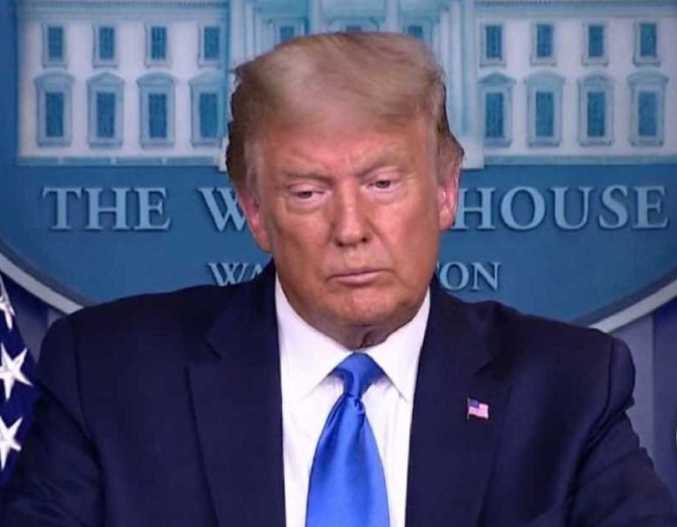
“Well, we’re going to have to see what happens. You know that I’ve been complaining very strongly about the ballots, and the ballots are a disaster.”
– President Donald Trump, expressing concerns over voter fraud during a White House press briefing
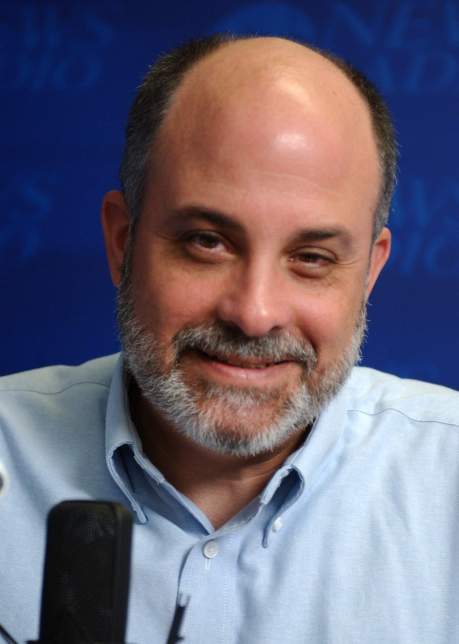
“We’ve hit — they say — an ominous number, ladies and gentlemen. Two hundred thousand people have died from the coronavirus. That is the biggest lie this century.”
– Mark Levin, on his radio program The Mark Levin Show
Levin went on to declare, “Two hundred thousand people died who may have had the coronavirus, but less than 10,000 died from and only from the coronavirus.”
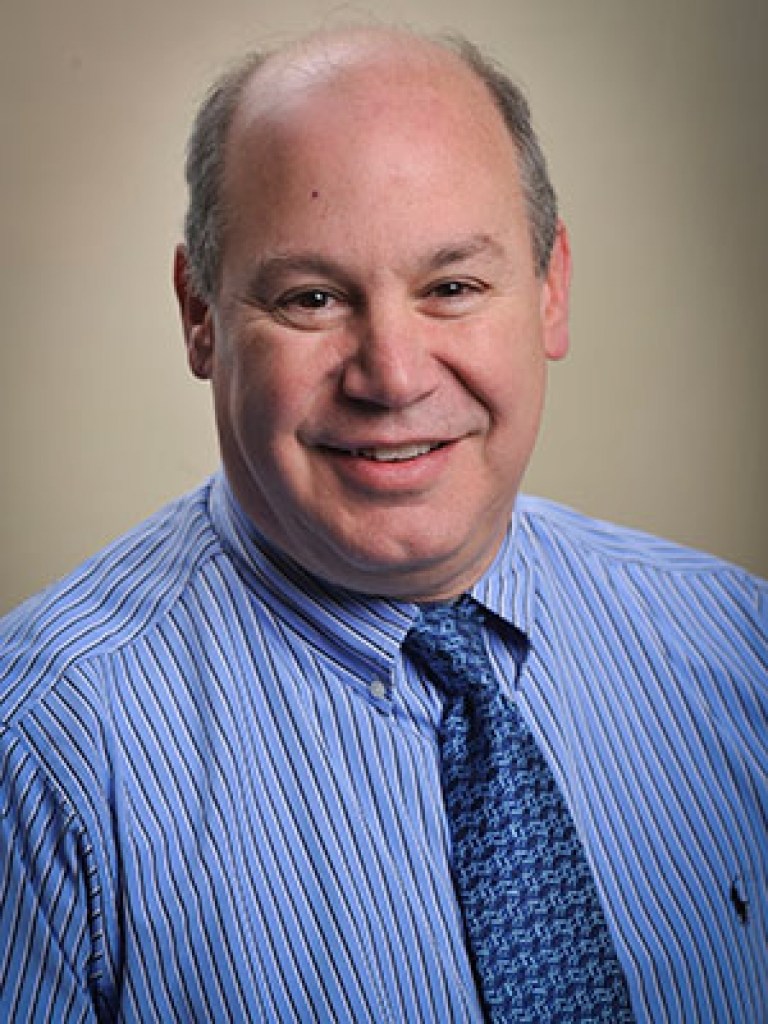
“There’s absolutely no evidence that having a cold from a coronavirus in the past does anything to protect us. If it did, we wouldn’t have the epidemic we’re having right now.”
– Dr. Michael Saag, associate dean for global health at the University of Alabama at Birmingham, to NBC News.
“I hope that you and the President don’t dislocate your shoulders patting yourselves on the back saying good job. We are 4% of the world’s population. We’re 22% of the world’s deaths. You bragged about the economy growing so fast – your words. Our unemployment is significantly higher than Germany’s; significantly higher than France’s; twice what Taiwan’s is; almost 3x what South Korea and Japan’s is; much higher than Australia; twice what Britain’s rate is; twice what New Zealand’s rate is. I mean I know you think the economy is doing well. But, if you’re talking to your wealthy friends on Wall Street…but things are pretty bad for most working Americans. They’re going to get worse unless you come up with a real package.”
– Sen. Sherrod Brown, reacting to U.S. Treasury Secretary Steven Mnuchin’s statement regarding U.S. economic response to the COVID-19 pandemic
Mnuchin had said, “I think we’ve made tremendous progress on testing.”
“When you have a president without shame, backed by a party without spine, amplified by a network without integrity, and by social networks that are marinated in conspiracy theories, behind whom are a lot of armed people — if you are not frightened by this, you are not paying attention.”
“It will start getting cooler. Just you watch. . . . I don’t think science knows.”
– President Donald Trump, in response to a reporter’s question about climate change causing wildfires in the Western U.S.
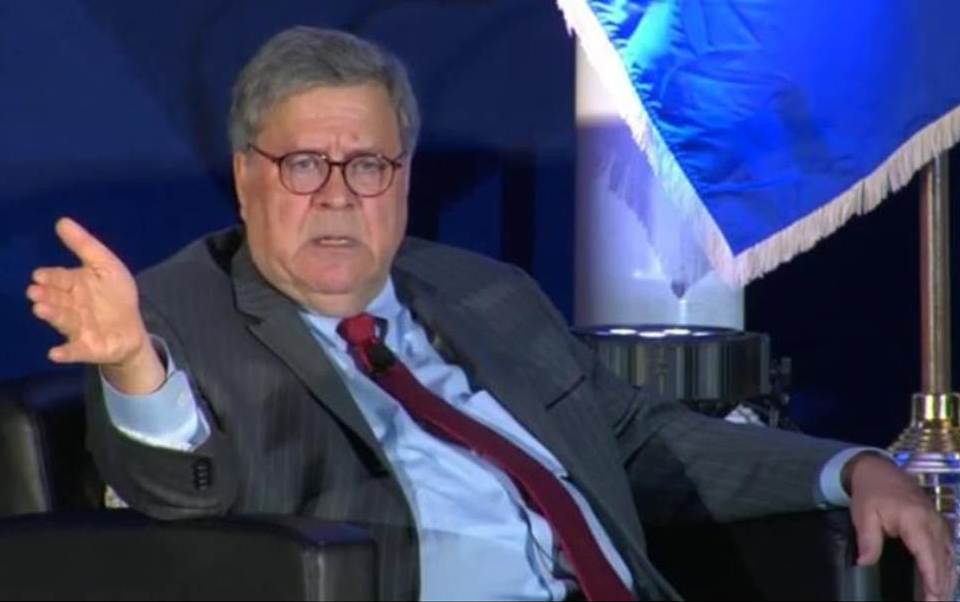
“You know, putting a national lockdown, stay at home orders, is like house arrest. Other than slavery, which was a different kind of restraint, this is the greatest intrusion on civil liberties in American history.”
– U.S. Attorney General William Barr, addressing a Constitution Day celebration hosted by Hillsdale College.
The event’s host asked Barr to explain the “constitutional hurdles for forbidding a church from meeting during Covid-19.” Barr had recently suggested that Sedition Act charges should be carried out against some protestors – even peaceful ones – to maintain the traditional “law and order” status quo conservatives demand every time civil unrest breaks out over civil injustice. It’s ironic he made his comments during Constitution Day, since the 1st Amendment to the U.S. Constitution covers free speech.
“The blue states had tremendous death rates. If you take the blue states deaths out, we are at a level I don’t think anybody in the world would be at.”
– Donald Trump, noting the slow decline of positivity case rates and hospitalizations while touting the overall federal response to the outbreak at a White House press briefing.
The pandemic has taken nearly 200,000 American lives so far. Aside from claiming that “blue states” (those with Democratic governors) are insignificant, I’m equally appalled he ended his sentence with a preposition – more proof he’s an idiot.
“I think he made a mistake when he said that. It’s just incorrect information and I called him and he didn’t tell me that and I think he got the message maybe confused, maybe it was stated incorrectly. We’re ready to go immediately as the vaccine is announced and it could be announced in October, it could be announced a little bit after October but once we go we’re ready.”
– Donald Trump, referring to Dr. Robert Redfield, director of the U.S. Centers for Disease Control and Prevention over the importance of wearing masks and the timing for a vaccine.
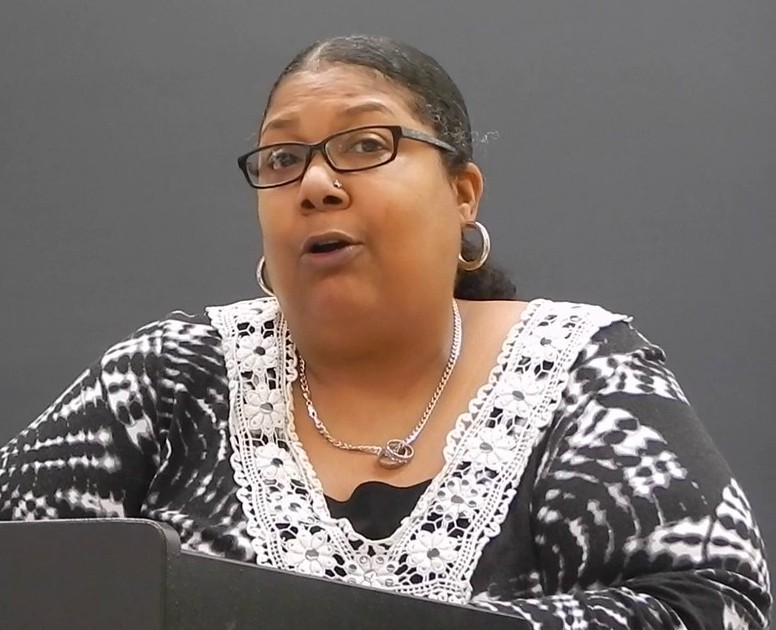
Blaque, a professor of African-American history and literature at Kutztown University with sarcoidosis, had started asking President Donald Trump, “Should preexisting conditions – which Obamacare brought into – brought to fruition – be removed…”, when he interrupted her with “No.”
Talk about a Grade A smack down! This is a true case of putting a politician in their place!
This COVID-19 pandemic has taken so much from the average person – no matter where in the world they live. Here in the U.S. we’re trapped in a nightmarish scenario with a disoriented leader heralding recent gains in the stock market, while millions remain unemployed. I’m sure those struggling to pay utilities are thrilled to know Fortune 1000 companies are enjoying record stock prices.
One of the most severe – and underrated – effects is the impact the scourge has had on people’s psyches. Emotional, mental and physical health always become subconscious victims of any national crisis. People are just trying to survive.
Personally, I’m in a vortex of angst and frustration. My freelance writing enterprise – as meager as it was – has pretty much collapsed. I’m fortunate I have some money saved from previous work, but I know that won’t last forever. Or even much longer. After my mother’s death this past June, though, I began to feel sick. Friends and relatives thought I was in a state of grief, which I was for the most part. But I thought I’d contracted that dreaded novel coronavirus. I had many of the symptoms. I had hoped my seasonal allergies had started to hit me early. Then again, perhaps it was the stress of dealing with my mother’s health. One friend suggested I was suffering from a lack of iron and Vitamin D. Still, I finally reconciled, it may be all of the above. Fighting so many battles at once takes a toll on the body. And mind.
Because of the pandemic, health clubs were among those businesses shuttered across the nation in an effort to contain the spread. I last visited my gym in mid-May; shortly before the rehabilitation center where my mother had been staying shoved her out because her Medicare benefits had been exhausted. (That’s another story!)
But even after my gym reopened in June, I still haven’t visited. Again it was that awful sickness. I didn’t know what was wrong. I’ve taken to doing basic calisthenics and walking along an exercise trail behind my home in recent weeks in the middle of the day. I used to go running, but I don’t have the strength right now. Key words: right now. Once you take off a long time without doing any kind of exercise besides laundry and loading and unloading the dishwasher, it’s a tad bit difficult to get back to normal. But even that little bit still makes me feel good.
Seven years ago I wrote about my tendency to visit my local gym on Saturday nights, when hardly anyone was present. I commented that only lonely fools like me did such a thing. At the turn of the century, working out on a Saturday night was unmanageable. But the gym I had at the time was open 24 hours. It was a perfect time to jog on a treadmill and lift weights, I realized, with such a sparse crowd. No one was there to be “seen”. That quiet time – with various types of music blaring from the myriad speakers lingering overhead – allowed me to think of every aspect of my life.
I left that gym in 2017 to join another local gym that closed unexpectedly a year later. After a lengthy hiatus, I joined my current gym last year. This is an old-school gym with no fancy juice bars or chic workout gear. Loud rock and rap music bounces around the concrete walls. It boasts an outside area with non-traditional workout gear, like tractor tires and tree stumps. Men can go shirtless. People there sweat – they don’t perspire! It’s not for suburban soccer moms or GQ cover models. (No offense to soccer moms!) I feel more than comfortable in such an environment.
I know it’s tough to take one’s mental and physical health into consideration if you’re unemployed or underemployed. But I also know you don’t have to belong to any kind of health club to care for your own health. Mental health experts are concerned about the severity this pandemic is having on people’s well-being. Quarantines are literally driving people crazy. And to drink too much alcohol and/or consume illegal drugs. Or contemplate hurting themselves. A bad economy helps none of that. I can identify with all of that. I really do feel that kind of pain.
Just walking the other day, carrying a water bottle and letting the sun emblazon my bare torso, helped me mentally. It didn’t make everything magically disappear once I returned home. I knew it wouldn’t. But maintaining one’s health – as best as possible, even in the worst of times – is vital. It can’t be overemphasized.
I’ve thought about this scenario: I’m home alone at age 80-something and I have a stroke or some kind of cardiac event. I can’t get to a phone and I don’t have one of those Life Alert devices. As a staunchly independent, childless 50-something with few friends, that thought has crossed my mind on more than a few occasions in recent years. It became even more glaringly realistic this past January, when I told my mother she needed to take a shower. I realized she had urinated on her bed; a simple of case having fallen asleep and – given her age, I thought – wasn’t able to make it to the bathroom in time.
“I’ll change the sheets,” I told her, before retreating into the hall. A moment later I saw she was flailing her right arm and leg. “What’s wrong?” I asked. “You need to get up and take a shower.” But then it became clear.
She’d had a stroke.
It apparently had been a brief event and was already starting to heal by the time she’d arrived at the hospital. But her left side was mostly paralyzed. I sat beside her in the emergency room, as she gazed blankly into a flickering light panel, and thought, ‘Now what?’
Years ago, when her mental health started to wane, someone asked why I didn’t place her in a “home.” “She has a home,” I replied. “It’s the one she’s in now.”
But the now had changed. And I was forced to contemplate the unthinkable: putting one of my parents into a “home” – whatever the hell that’s supposed to entail.
I had promised my father that I would do everything to ensure he didn’t pass away in a hospital; ensconced in a strange bed with tubes wrapped around him, as if he was a hostage. And I was able to help him achieve his desire.
But this situation is different – and far more complicated. After her hospital stay, I had to place my mother into a rehabilitation center. I found one nearby and was able to tour the facility a few days before she arrived. It’s an older building that looked like it hadn’t received a fresh paint job in about four presidential administrations. On that Friday evening I accompanied her to the place, I felt as if I’d swallowed a tree branch – and it was now stuck. The center looked even more dismal than when I’d first entered. And that night, as my mother lay in bed, glancing around the room – her left arm and leg still mostly inert – my heart filled with trepidation. I couldn’t stay that night, so after more than an hour – assuring her things would be alright and consulting with the amiable staff – I departed. I almost felt like I’d abandoned my mother into a pit of despair. And, even worse, I’d violated a solemn vow I’d made to my father more than a decade ago: if he should pass away first, I’d take care of my mother.
Looks, indeed, can be deceiving. While the rehab center was an aged structure, the staff was incredible. I did have a good feeling from the start, though, when I first spoke with one of their representatives. But it didn’t take long for me to realize I’d made a great choice.
I brought my mother home in March, as the COVID-19 pandemic gripped the nation. The startling number of coronavirus deaths in similar facilities alarmed me. The center had banned visitors a few days earlier, but I had to get her out of there. As good as the place had been for her, I didn’t she feel she was safe. And I knew I could care for her just as well as the rehab center and get her back to some semblance of her former self. I should know by now that far-reaching plans always look great on paper or in dreams.
After only a week, I had to return her to the rehab center. Her health had deteriorated in that short period. But, once back at the facility, she improved. She’d regained some movement on her left side and was alert. She still didn’t recall what had happened.
But then, matters became even more complex – and aggravatingly unsettling. My mother’s lengthy stay at the rehab facility had exhausted her Medicare benefits. They paid 100% for 21 days, when they lowered the rate to 80%. My mother – and I – was obliged to pay the remainder. But she didn’t qualify for a supplemental insurance policy – even through Medicare. Or the Affordable Care Act (ACA). The requisites for either make the Harvard Law School entrance exam look like a daycare application.
Medicaid was our last option. Completing the application for that was tantamount to completing one to be a Central Intelligence Agency case officer. And my mother wasn’t approved. With her Social Security and two pensions, she earns too much per month; just a “few dollars” too much, the rehab center associate helping navigate the morass informed me.
And what, I inquired privately in my angry cogitations, qualifies as a “few dollars” too much? I researched a handful of other available and plausible alternatives – enough to fill a tea cup – and could find nothing viable. Absolutely nothing. For my mother even to begin to qualify for some semblance of Medicaid coverage to help with her health care expenses, she’d have to cede all of her assets, including this house – the house she and my father worked hard to get and to keep; give it all up to an omnipotent entity that designed the very system to which my parents (and millions of others) annually pay homage and taxes.
And she earns a “few dollars” too much.
By the end of April, the rehab center – the place that had proved life-saving and life-changing – had reached its financial breaking point with us. They had to let her go. They had no choice, they told me – and therefore, neither did we.
Fortunately, Medicare does pay for extended hospice care here at the house. Representatives with the agency I selected have been incredible – even angelic – in their commitment and service. They’re as concerned with me, also, as my mother.
Still, I seethe at the thought of the financial fiasco in which we’ve now been placed. We’re in debt to the rehab facility now, as well as to a slew of doctors and the hospital. My mother is just one of literally millions of Americans in similar straits. At current rates, the crisis will only deepen nationwide. The number of Americans aged 65 and older is expected to almost double from 52 million in 2018 to 95 million in 2060; rising from 16% to 23%of the population.
A half-century ago, programs like Medicare and Medicaid were designed to assist the elderly and poor with health care needs. They’re not just altruistic; they’re vital. As with the Social Security system a generation earlier, Medicare and Medicaid provided necessary safety nets for many Americans. The nation had matured into a contemporary society where even the most vulnerable of citizens were not left to fend for themselves.
As usual, social conservatives scoffed at the notion. Just like with the post-World War II GI Bill, they denounced such aspirations as welfare and socialized medicine. These were the same fools who demanded people swear allegiance to the United States, be willing to sacrifice their lives to the Constitution, abide by established laws, and blindly pay money to ensure a safe democracy for all. They still do. Yet, when people earn a “few dollars” too much…they shrug their shoulders and change the subject to American exceptionalism.
My mother began working for an insurance company in downtown Dallas in the fall of 1952 at the age of 19 and retired from an insurance company in February of 2003 at age 70. With the exception of taking off 15 months for being pregnant with and caring for me – at a time when maternity leave was more of a concept – she worked for half a century. Fifty years. And, as her physical and mental health decline from years of just being alive…she earns a “few dollars” too much.
“Age is just mind over matter,” my father once told me. “If you don’t mind, who gives a shit?!”
People have told me that, for being a good person, I deserve a “big reward.” And I’ve also told some they deserve a special place in the “Great Beyond” just for being themselves. As genuine and thoughtful as those words are, does anyone have to wait until life in some other realm to be appreciated for their actions? Is it truly necessary to wait until we’re dead to receive the respect we’re due in life?




 Chief Writing Wolf