

“The tiny seed that, in order to grow, it needed to be dropped in dirt, covered in darkness, struggle to reach the light.”
“The tiny seed that, in order to grow, it needed to be dropped in dirt, covered in darkness, struggle to reach the light.”
Filed under News

“The only thing I know is this: I am full of wounds and still standing on my feet.”
Filed under News
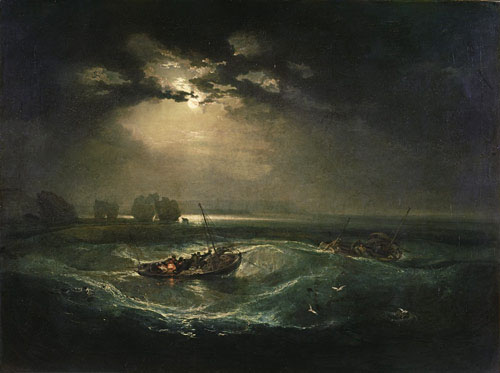
“Darkness cannot drive out darkness; only light can do that. Hate cannot drive out hate; only love can do that.”
– Martin Luther King Jr.
Image: “Fisherman at Sea”, JMW Turner
Filed under News
Images captured in the aftermath of a horrific blast of ammonium nitrate in the port of Beirut, Lebanon on August 5 that killed at least 135 people and injured more than 5,000 others show a city in chaos.
The following day Beirut resident Hoda Melki captured her mother playing “Auld Lang Syne” on a piano amidst the blast-related debris and damage in her apartment.
Filed under News
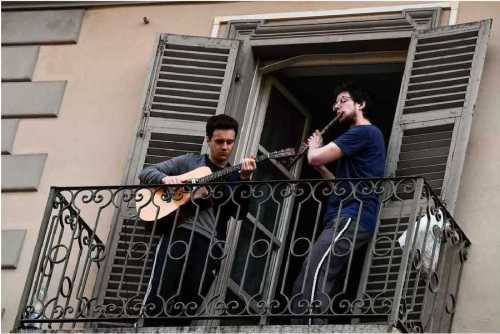
Some Italian citizens – as perhaps only Italians could – reacted to a recent COVID-19 quarantine with music and song. Until March 26, Italy had experienced the most confirmed coronavirus cases outside of China. Initially, Italian government shut down the northern half of the country – but eventually, the entire nation fell to lock-down commands. Isolated in their homes, several talented individuals retrieved musical instruments and their voices to sing to the quiet air. The results have been magical – and have been spreading faster than the virus.
Filed under Art Working

“Nothing in life is to be feared. It is only to be understood.” – Marie Curie
Here we are! It’s 2020 – the start of a new year and a new decade. Forty years ago I was excited about the prospect of witnessing and understanding the birth of a new decade. I had just turned 16 and couldn’t remember 1970. But this was different. A whole new decade! As my parents and I often did, we staged a New Year’s party in 1979; inviting family, friends and neighbors. I had taken the time to cut up strips of multi-colored paper into literally thousands of squares, which I then tossed into the air from a large brown paper bag at the stroke of midnight.
I was considerably more excited ten years later, as we welcomed the 1990s, which – even now – remains the best decade of my life. I was a young adult by then, working for a major bank in Dallas; a small personal accomplishment that made me feel I was finally a part of society and not some frustrated observer on the outside looking into a seemingly untouchable world. During that time I began making concerted attempts to become a published writer and even contemplated returning to college. These latter two dreams each wouldn’t materialize for more than another decade later.
The turn of the century – and the millennium – was one of the most exciting moments I’ve ever experienced. Like the dawn of the 1990s, it remains a high point of my life. Twenty years ago the world looked more hopeful and inviting. I wasn’t nearly as excited about the 2010s. Things had grown kind of awkward for me by then. But it’s come and gone.
So alas, we are at the threshold of the third decade of the 21st century. Every New Year’s bears the excitement of a renewal; a chance to alter our priorities and improve our stations in life. Yet, it’s different with the start of a new decade. Since the early 1900s, societal changes have occurred rapidly. For millennia, time periods were designated by century; now they’re often designated by decade. Each ten-year interval boasts its own cultural shifts; fashion and music trends; and political dynamics. As our life expectancy increases, so does our concept of time.
I’m approaching this decade with more caution, however. As I tend to do, I maintain a safe distance and analyze the universe around me and wonder what more can be done to improve not just my life, but everyone’s lives.
These last two decades have seen an explosion of technological and cultural advances, both here in the United States and across the globe. But, in many ways, things haven’t changed much. I’ve focused my concern on how dismal our political and economic well-being have become. The pathetic presidency of George W. Bush and the ever-increasing disorientation of the Donald Trump administration have set us back on many levels. Unlike 20 years ago we now have the greatest wealth gap in over a century. The first decade of the present century should have been an extraordinary time of progressive social and technological advancement. Yes, everyone seemingly has a cell phone and a personal computer. But so many promising visions of the future were lost to Middle East conflicts and an extreme level of corporate deregulation. The “Great Recession” squashed hope for many people across the nation. While many of my fellow Americans wonder if Bitcoin will make a resounding return to the financial sphere or what latest cell phone apps will be available in the coming months, I’m contemplating the grander picture.
In the 19th century, the U.S. built the world’s first transcontinental railroad system and helped create telephones and electric lighting. At the start of the 20th century, we sent men into the air and then constructed the world’s largest highway system. In 1962, President John F. Kennedy issued a challenge to the nation; wanting us “to go to the moon in this decade and do the other things; not because they are easy, but because they are hard.” And, we did just that! Just seven years later, Neil Armstrong became the first human to set foot on the lunar surface.
The 1960s and 70s saw the birth of various civil rights movements: women, non-Whites, and gays and lesbians. That forced America to live up to its promise to be a land of equality and prosperity. We finally began seeing the fruits of those movements in the 1990s.
Yet here stands the U.S. – still mired in Middle East conflicts and dealing with an economy that, on the surface, looks extraordinary. But those of us struggling with medical bills and increasingly high costs of basic living aren’t exactly thrilled that the U.S. stock market is functioning wonderfully for large corporations that don’t often pay their taxes and feel they have the unquestionable right to contaminate the environment in the name of profit.
Although I’m an introvert, I remain optimistic and would like to see society achieve some grand accomplishment over the next 10 years.
Infrastructure – As of 2017, the American Society of Civil Engineers (ASCE) gave the U.S. a grade of D+ for infrastructure. That’s an overall assessment of everything from bridges to railroads. To say they’re falling apart is dismissively juvenile. A grade is just a letter, but the implications are dire. In 2007, a section of Interstate 35 through Minneapolis collapsed, killing 13 people and injuring 145. But, nearly 13 years later, the U.S. is still spending more on military intervention in the perpetually-chaotic Middle East than making serious efforts to rebuild, or even refurbish, highways like I35. The ASCE estimates the nation will need up to 4.5 trillion USD to repair or rebuild much of our infrastructure by 2025. It’s one critical issue on which elected officials of all political stripes might agree. Instead, we have a president who wants to spend even more money to build a wall along the nation’s southern border with México. I can’t even contemplate how much that would cost. Knowing the U.S. federal government, though, it would be much more than initial estimates. Still, as I move around my own local area, I notice roads that have been under construction since the start of the last decade!
Subterranean Power and Telecommunication Lines – In September of 2017, Hurricane Maria rolled over Puerto Rico as a borderline category 5 storm. With an estimated cost of 94 billion USD, it stands as one of the most expensive natural disasters in U.S. history. And Maria didn’t even reach the American mainland. As with most such calamities, residents in the impact zones lived without power, which includes clean water. Like Andrew did to Florida in 1992, and Katrina to the Gulf Coast in 2005, Maria destroyed a substantial number of power and telecommunication lines across Puerto Rico. Our government’s response? USD 5 billion in aid and a president tossing paper towels into a raucous crowd.
Tropical storm systems aren’t our only nemesis. Currently, the U.S. is dealing with yet another round of powerful winter weather, with strong winds flipping vehicles and blizzard conditions hampering travel. It’s not uncommon for massive weather phenomena to impact more than 100 million people. Last October the Dallas, Texas area experienced a rash of tornado outbreaks. But that’s just in one city in one state. Other areas across the country have been struck by these meteorological vortexes. And, of course, power and telecommunication lines are among the casualties.
The same happens after floods, tornadoes, wildfires and earthquakes. Humans can never control Earth’s natural elements. Every time we’ve tried, those elements remind us who holds the true power. Still, we can lessen the severity of unruly weather by burying as many of our power and telecommunication lines underground as possible. It’s nothing new. People have been pushing this concept for years. And there are the usual detractors. Although a number of power and telecommunication lines have already been interred, opponents claim they’re not always more reliable than overhead lines. While overhead lines experience more outages, subterranean lines are generally more difficult to access and repair when problems with them do arise. Another obstacle, of course, is funding. There are greater costs associated with the installation of subterranean lines. The costs would have to be passed down to consumers somehow. But, I feel it’s all worth the financial burden. Ultimately, it costs people more to go without power – both in actual money and lives lost. The expenses incurred with the initial installations and ongoing maintenance will more than pay for themselves in the ensuing years.
Space – Since humans first looked up to the sky and began studying the stars, we’ve wondered what it would be like to fly and visit another celestial body. Now, we’ve taken flight and ventured onto the moon. The next logical step would be Mars. Plenty of people – from Elon Musk to Mars One – are making a concerted effort to get there. In the 1970s, the U.S. became the first nation to reach Mars with the Viking I and II voyages. We’ve done it again recently with the Curiosity mission. The U.S. space program was good for the country and the world, as it spurred a number of technological developments; mainly with telecommunications, but also with engineering and robotics.
Sadly, if the U.S. wants to send humans to the moon now, we couldn’t do it. We’ve let that go. Again, it’s the war factor – more money spent on Middle East conflicts than on things that really matter. But I would like to see the U.S. rejuvenate its space program and begin establishing a lunar colony; thus making interplanetary travel materialize from the pages of science fiction into reality. And, of course, we should make a concerted effort to send a craft with humans to Mars by the end of this decade. There’s more technology in a single Smart Phone than there was in all of the Apollo 11 lunar module. We can make this happen.
Thousands of years ago humans thought Earth was the only place in the universe that harbored any semblance of life. We’re starting to realize that’s not true. We exist on this third rock from the sun, but I’m certain we have never been alone. And, even if we are (by some odd fluke of nature), what’s to say we can’t venture outward and make our world more hospitable? If we rise above our own political and social distractions, we’ll understand we can do better than this. We have to do better. I can’t imagine us living in a world of such chaos and uneasiness. Throughout this next decade, we have to move forward. Time will. We have to follow it.
Photo by Josh Sorenson.
Filed under Essays
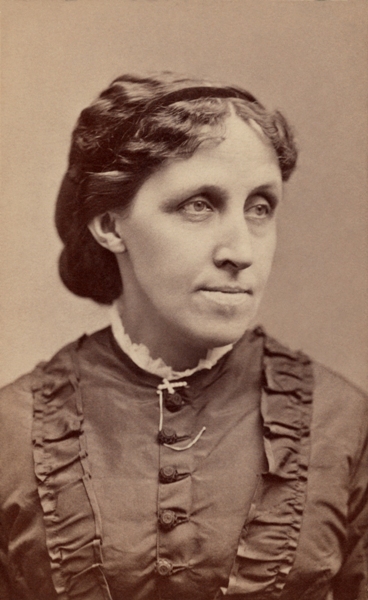
“Far away there in the sunshine are my highest aspirations. I may not reach them but I can look up and see their beauty believe in them and try to follow where they lead.”
Filed under History
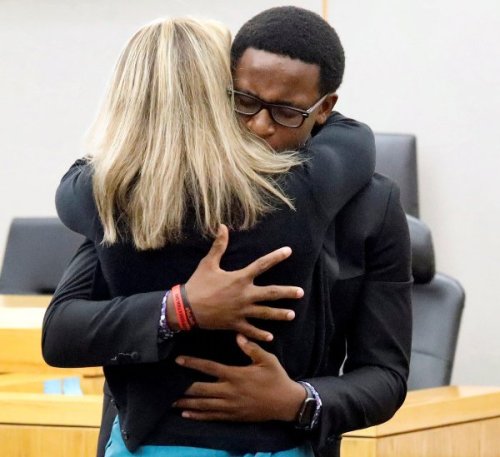
“I know I can speak for myself. I forgive you.”
– Brandt Jean, 18-year-old brother of shooting victim Botham Jean, during his victim impact statement after the conviction of former Dallas police officer Amber Guyger.
Filed under News

In the Valley of Hope, Truth was an elderly woman who traveled on her Horse of Justice; telling the villagers what they often heard from the outside world was wrong, inaccurate, immoral and even dangerous. Whether it was lies about medical issues or dubious declarations made the Valley’s appointed leaders, Mother Truth always settled the villagers’ fears. They had trusted her for as long as they knew and had no doubted she held their best interests close to her heart and soul.
Then, a new group of people ascended to the village leadership. They were loud and angry and disdainful of their predecessors. They mocked the people who had come before them with vulgar language and degenerative names. At first the villagers merely viewed them as pure buffoons; clowns who loved the attention. But, after a while, some of the valley residents began to listen to this new crop of leaders. Then they started believing them. And they began repeating the claims espoused by these new self-styled leaders. More and more of the residents started to believe these people. After all, the latter group was wealthy and educated – they must know of what they speak. They could not be lying. The words these individuals used, the images they painted of a world out of control – all of it frightened the valley residents.
One afternoon Mother Truth tore through the Valley atop Justice and frantically told the villagers that the crescendo of lecherous voices from of these new leaders spewed out falsities. “They do not understand what they say!” she cried. “They are merely greedy and arrogant! They want nothing more than to secure their own futures and their own wealth!”
“What shall we do?” asked the people.
“Stop believing every single thing they say!” Mother Truth replied. “Think and research for yourselves!”
Stunned, the crowd suddenly and unexpectedly metamorphosed into an angry mob. They attacked the old sage unmercifully and hurtled her into a catacomb, before sending Justice into the fields to reap the crops.
Eventually, some of the villagers realized they had made a mistake. “Mother Truth has never lied to us,” they moaned. “Her very name reveals the nature of her soul. We must free her.”
With the help of these renegades, Mother Truth escaped the catacombs and rescued her horse from an orchard.
Defiant, she rode back into the village, her head held high and her silver hair fluttering in the wind.
Troubled by their own behavior, the valley residents came to accept a painful reality – Truth may hurt, but hope always wins out, and justice plows forward.
Filed under Wolf Tales

“Goodnight, little boy. I love –” I stopped, catching sight of the blank floor space against the wall, next to the closet in my room. He wasn’t there, curled up into a crescent of silver and white atop a towel riddle with holes and tears. Wolfgang was gone.
I was reaching for a lamp on an end table, when I started to tell him goodnight and that I love him – as I’d done for years. I remained in that odd position – propped up on my left elbow, right arm stretched out towards the lamp – for what was probably just a few seconds, but felt like several minutes. I wondered how long I could hold that position without dropping dead.
I finally shut off the lamp and laid back onto my trio of pillows. Beneath a single sheet, clad in nothing but skin and body hair, I felt a stick of anxiety materialized in my throat. I rattled off my usual stanza of prayers to all those who’ve gone before me, pleading for their protection and their strength.
I looked again at the spot on the floor where Wolfgang would camp out every night; that ragged towel – seemingly held together by strings – bunched up beneath him.
I don’t know why, but Wolfgang had a fetish for towels. It may have come from his previous daddy, Tom*, my former friend and roommate, who carried the puppy around in a lunch cooler; an old purple beach towel of mine that he’d stuffed into it. The towel provided some comfort to a tiny critter who would grow into a 20-pound monstrosity filled with eons of canine angst.
In early 2005, I lived and worked temporarily in Northeastern Oklahoma on a government project that was part of the contract my employer, an engineering company, had. The area, bordering Kansas and Missouri, is a mostly toxic wasteland where soil and water had poisoned by decades of lead and zinc mining. I stayed in a nice and recently-built hotel, along with a coworker and our supervisor.
For most of the time I was in Oklahoma, Wolfgang stayed with my parents. But, for the month of May, I rented a car and drove all the way up there because I’d decided to take Wolfgang with me. Some of the hotel staff came to like him. The first time someone with the housekeeping staff heard him barking, she was certain I had a pitbull ensconced in the room. There mere sound of his voice frightened her. But she and a few others were mirthfully surprised to see how small he was.
That little thing can make that much noise?!
Yes, he can!
One night, as I sat at the desk in my hotel room, working on my laptop, I noticed Wolfgang exiting the bathroom with a small white towel in his mouth. Because of his presence, I made a deal with management that no one was to enter the room, unless I was there also or in the event of an emergency. Wolfgang’s bite matched his bark. Consequently, I let bath towels pile up beneath the sink.
A few minutes later, I turned to Wolfgang and was startled to see that he’d removed every single used towel from beneath the sink and to a spot in front of a cabinet. He lay in front of the pile, curled up like a hairy conch shell. I laughed.
I keep trying to think of things like that, now that Wolfgang is gone. It’s the same with my father. Memories of him behaving like the lunatic he was – imitating Flip Wilson’s “Geraldine Jones” persona, threatening to tickly my mother – roll through my mind. It eases the pain of losing both of them within a 5-month period.
Today is the first birthday I’ve marked without either of them. It’s such a weird feeling. How could this happen? Why, in the name of all that’s great and wonderful in this world, did they pass away so close together? Talk about timing!
Last month I finally decided to rummage again through the storage shed in the back yard; a dilapidated structure where my parents stuffed anything and everything they didn’t want or need in the house. It also had doubled as a tool shed for the plethora of gardening equipment my father had accumulated over the years. In the fall of 2014, I carted a few large pieces – a dead lawnmower, an antique weed eater, etc. – to the front yard for him. I taped a cardboard sign with the words “FREE TO GOOD HOME” across the mess and left it all there for whomever. It was gone before day’s end.
At the same time, I retrieved several boxes of old National Geographic magazines. “These don’t belong out here,” I told my father. Old Home & Garden magazines, maybe, but not National Geographic. I hauled them all into my room and rearranged them, alongside my gallery of books.
But last month I found several other items – a few as old as those National Geographics, but more precious. There was a box of handwritten journals by my paternal grandmother, Francisca. A couple of other boxes contained stuff from my childhood: drawings, poems, stories. Among the latter was a one dollar bill paper-clipped to a fragile slip of paper. It was a note from me to my father; thanking him for being such a great daddy. I was about 5 when I wrote that. And he kept it! As an only child, my parents were apt to keep as much about my childhood around as possible. But that a simple, handwritten note dating to the late 1960s would retain a place amidst all of that material stunned me.
And yes, it also made me sad. But I realized – more than ever before – how fortunate I was to have a father as incredible as mine. It’s why I get angry now when I hear people say fathers don’t serve a purpose in this world.
Back in July I visited a weight-lifting gym in East Dallas with a close friend, Pete*, who’s a regular there. It’s a tiny, no-frills joint carved into an aged shopping center; where free weights are the main source of muscle-building and men can work out shirtless. After showering and changing back at his house, Pete and I had dinner at one of our favorite Mexican restaurants near downtown.
At some point, the conversation turned to family, and – with my voice cracking – I emphasized how badly I missed my father. I try not to get emotional in public. Even during my dad’s memorial service in June, I managed to hold it together. But, planted in a booth beneath dim lighting in the restaurant, I just couldn’t remain poised. It must have been the margarita swirls. I was already on my second one.
Pete knows how I feel. He lost his own father 12 years ago. Curiously, our fathers had grown up together in East Dallas neighborhoods now occupied by office buildings and overpriced condos. “My father went to be with his mother,” Pete had told me that night on the phone. I didn’t understand. All of Pete’s grandparents were dead. What was he trying to – aw shit! I don’t know if there’s an etiquette rule for announcing the death of a loved one via telephone, and if there is, I could care less about it.
I still have trouble sitting in the easy chair near the fireplace where my dad used to sit while watching TV. His urn resides quietly on the dirty white brick of the raised hearth. I make it a point to touch it every day and tell my father I love him. His mother had lived to age 97. Why couldn’t he? What is the proper time of year to die? It seems we have rules for everything in our lives these days. Meteorologists can track hurricanes with near-accuracy. As soon as a massive quake struck northeastern Japan in March of 2011, scientists could determine how long it would be before tsunamis struck the Hawaiian Islands and the west coast of the U.S. Why couldn’t the slew of doctors my father had seen over the years not tell me when his body would finally say, ‘To hell with this shit!’?
A few times over the past few months, Wolfgang would stare at that general area for the longest time. I’d feel the pressure change in the house. But it wasn’t a frightening sensation. I knew my father was nearby. He had said more than once he wanted to die in this house and not in a hospital, a menagerie of tubes pouring out of him like overgrown hairs. If I did anything right, I feel it was that. I was able to grant my father his most heartfelt wish.
There are so many echoes of him and Wolfgang around me, now that they’re both gone. And the house is otherwise quiet. I’ve never felt pain like this before. But, on this 53rd birthday of mine, I’m not too distressed. My heart and my mind are filled with the happiness of the lives they lead. I couldn’t ask for more from either of them.
*Name changed.
Filed under Essays
 Chief Writing Wolf