Africans in Renaissance Art

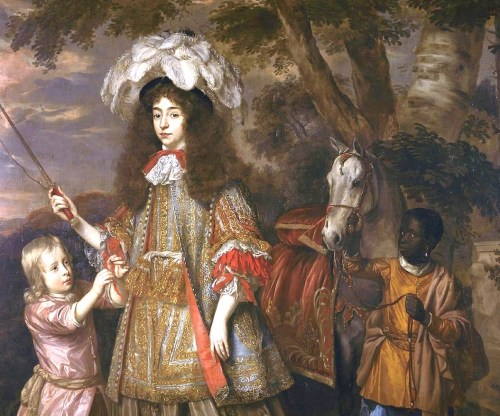
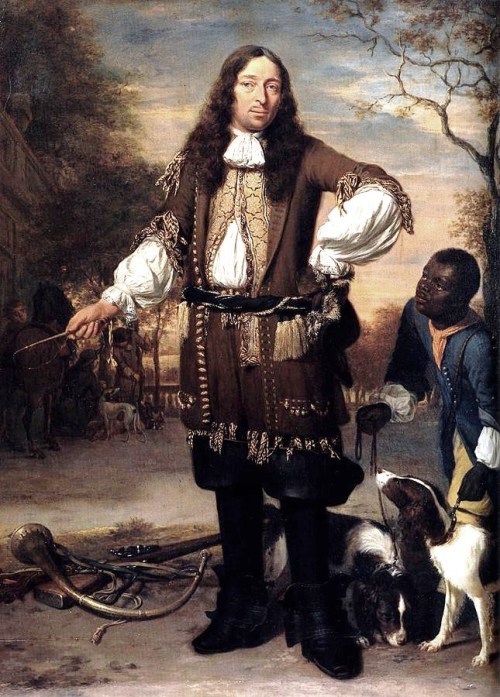
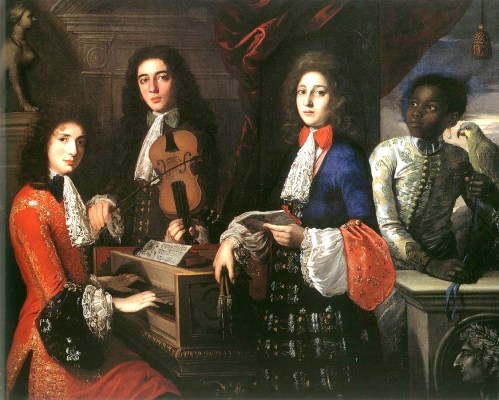
That the United States has a long – and sometimes ignored – history of Black slavery is not news. But, what’s often not discussed – at least here in the U.S. – is the fact Europeans also maintained an African slave culture. To be fair, European countries began outlawing slavery long before the U.S. Yet, as intriguing and painful as the slavery issue may be, I find it even more fascinating that African slaves actually appeared in some Renaissance-era art.

The period known simply as the Renaissance in Europe began after the “Middle Ages,” which was the time extending roughly from the 5th century A.D. – or the collapse of the Roman Empire – to the 14th century. The Middle Ages are also often dubbed the “Dark Ages,” a term that may be more appropriate considering that the Renaissance saw an overall revival in the learnings of ancient Greece and Rome; development of new technologies, such as the printing press; increased political stability; overseas exploration; and, of course, the evolution of various art forms.

It makes sense, though, that part of the ongoing revival was realizing that Africans were humans, too. Therefore, the placement of Blacks in paintings – even if they were slaves or servants – is somewhat appropriate. While the following examples may be unsettling to many people, one has to view them within the context of their respective time frames. The bright colors and stoic poses of these delineations can’t and won’t eliminate the brutal legacy of African slavery in either Europe or the U.S. But, just like the clothing worn by the subjects, we can never look like that again.

Thank you to blogger Barbara Wells Sarudy for highlighting these artworks.


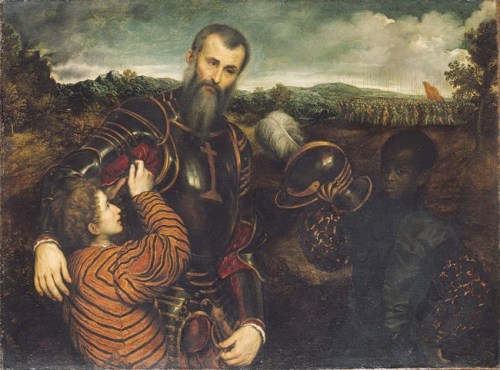
“Portrait of a Man in Armor with Two Pages,” Paris Bordone, 1530s.

“Portrait of a Man in Armor with Two Pages,” Paris Bordone, 1530s.

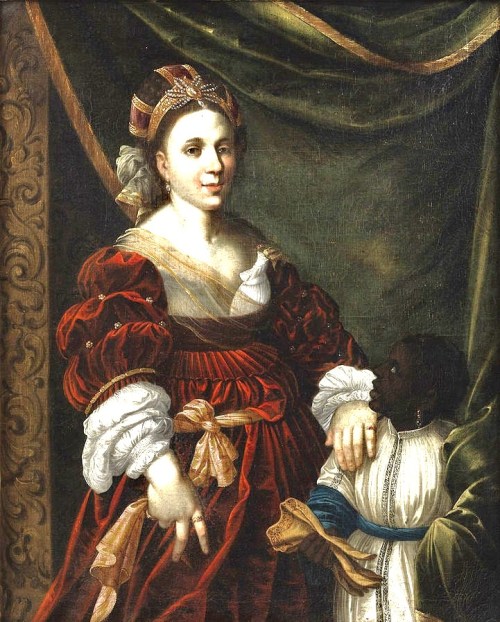
“Courtly Lady with Moor Boy,” unknown German artist, 1600s.

“Courtly Lady with Moor Boy,” unknown German artist, 1600s.

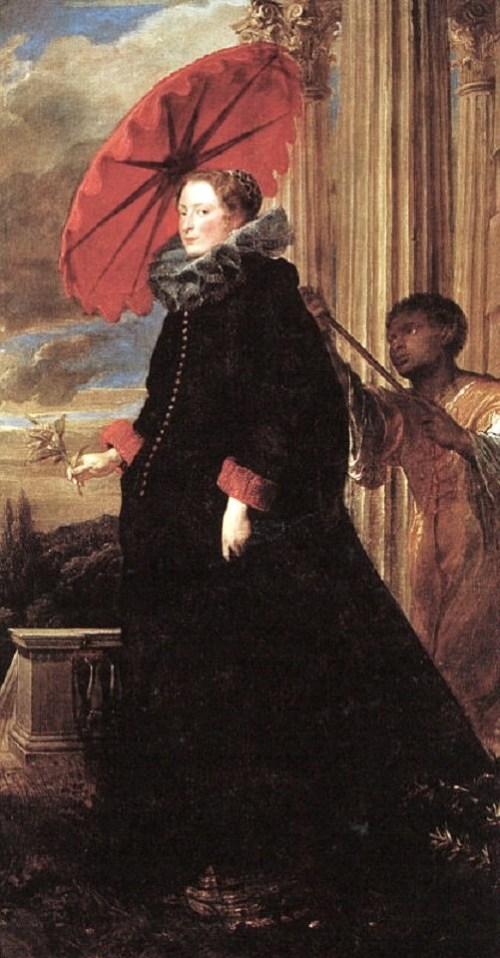
“Marchesa Elena Grimaldi,” Anthony van Dyke, 1623.

“Marchesa Elena Grimaldi,” Anthony van Dyke, 1623.

“Portrait of Two Children as Hunters in a Garden,” Nicholas van Helt, 1640s.

“Portrait of Two Children as Hunters in a Garden,” Nicholas van Helt, 1640s.

“Belgium Family Group in a Landscape,” Frans Hals, 1648.

“Belgium Family Group in a Landscape,” Frans Hals, 1648.

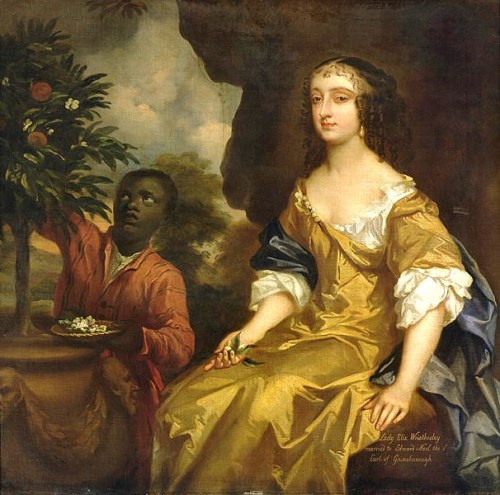
“Lady Elizabeth Noel Wriothesley,” Peter Lely, 1660-65.

“Lady Elizabeth Noel Wriothesley,” Peter Lely, 1660-65.

“Portrait of Maria, Princess of Oranje,” Jan Johannes Mijtens, 1665.

“Portrait of Maria, Princess of Oranje,” Jan Johannes Mijtens, 1665.

“Portrait of Margaretha van Raephorst,” Jan Johannes Mijtens, 1668.

“Portrait of Margaretha van Raephorst,” Jan Johannes Mijtens, 1668.

“Portrait of Johan de la Faille,” Jan Verkolje, 1670s.

“Portrait of Johan de la Faille,” Jan Verkolje, 1670s.

“Portrait of Franziska Sibylla Augusta von Sachsen-Lauenburg,” Georg Adam Eberhard, 1678.

“Portrait of Franziska Sibylla Augusta von Sachsen-Lauenburg,” Georg Adam Eberhard, 1678.

“Louise de Kéroualle, Duchess of Portsmouth,” Pierre Mignard, 1682.

“Louise de Kéroualle, Duchess of Portsmouth,” Pierre Mignard, 1682.

“Three Musicians of the Medici Court,” Anton Domenico Gabbiani, 1687.

“Three Musicians of the Medici Court,” Anton Domenico Gabbiani, 1687.


For related reading material, please consider the following:

Allison Blakely, “Blacks in the Dutch World: The Evolution of Racial Imagery in a Modern Society,” Indiana University Press, 1993.

Simon Gikandi, “Slavery and the Culture of Taste,” Princeton University Press, 2011.

Kim Hall, “Things of Darkness: Economies of Race and Gender in Early Modern England,” Cornell University Press, 1995.

2 Comments

Filed under Classics

Now I Understand

????????????????????????????????

In the mid-1970s, Freddie Prinze was leading an extraordinarily successful life. In December 1973, at the age of 19, he had come to the nation’s forefront after a stint on “The Tonight Show” in December 1973, which led to him landing the first half of the title role in “Chico and the Man,” an NBC television comedy. He appeared opposite Jack Albertson, a stage and film veteran. Despite their age and cultural differences, the two became good friends, with Albertson serving as a mentor to his younger co-star. I remember the series clearly. Prinze’s character was a breakthrough role. For the first time, American television boasted a Hispanic figure who spoke English perfectly.

By January of 1977, Prinze had a rollicking standup comedy career with sold-out gigs wherever he went and a top-selling comedy album; “Chico and the Man” remained a highly-rated show. He even performed at Jimmy Carter’s inaugural ball. He was married with a 10-month-old baby boy, Freddie, Jr.

And, he was miserable.

Things had begun to spiral out of control for Prinze. He’d become addicted to Quaaludes and cocaine and, in November 1976, was arrested for drunk driving. Then, on January 26, 1977, his wife, Kathy, startled him with a restraining order.  Two days later Prinze planted himself at the Beverly Hills Hotel and began making a series of “goodbye” calls to his mother, a few friends and his manager, Marvin Snyder. Snyder rushed to the hotel to try to stop his young client from harming himself. But, it was too late. Prinze put a gun to his head and pulled the trigger. He survived the initial shot, but the next day, his family authorized officials at ULCA Medical Center to remove Prinze from life support. He was 22.

The news of Prinze’s death – a suicide, no less – shocked and horrified the masses who loved him. How could someone that young with so much talent, success and money, plus a beautiful wife and baby, be so unhappy? I was 13 at the time and couldn’t understand. He was popular, right? He had lots of money, right? Why would he kill himself? It just didn’t make sense.

The recent suicide death of actor / comedian Robin Williams exposes, yet again, a miserable underside that lurks beneath a life of outwardly blissful happiness in the entertainment world. There’s a reason why the symbol of the theatre is comprised of dual masks: the comic Thalia, smiling, and the dramatic Melpomene, frowning. They’re high and low; top and bottom; the moon’s bright side and its dark side. Intertwined and – for the most part – interchangeable. All emblems of life. One can’t exist without the other.

Both Prinze and Williams had a great deal of money and a great deal of fame. It seemed everybody loved them. If someone has those two things – money and fame – then everything else is inconsequential. They should be completely and totally satisfied with their lives. Isn’t that the way it’s supposed to be?

Money may make life easier, but it really doesn’t make it completely satisfying. As cliché as it sounds, money truly does not buy happiness. No amount of money will make you like a job you hate. I love writing, for example, even though I haven’t made much money from it; a few freelance and contract technical writing gigs over the past few years. When I lost my job with an engineering firm in 2010, I was earning more money than I ever had before. Yet, in that last year, I hated the place. For some reason, tension had been building since the end of 2009, and I ultimately felt management was targeting me specifically. It was almost a relief to get laid off.

It’s difficult for people outside of artistic communities to understand. But, comics, actors, singers and other artists are people, too. We’re weird, yes, but we’re human beings first. We have the same emotional fluctuations and experience the same anxieties in life that everyone else does. We’re just a bit more expressive about it. Yet, because professional artists exist in the public realm, their lives fall under greater scrutiny. They’re magnified a thousand times for all to see. And, when someone makes a career out of telling jokes and doing impersonations, people assume they’re always happy. But, it’s difficult for most to imagine the pressure an artist must feel to perform and be “on” all the time. People expect a comedian to make them laugh – all the time. Entertain me, my little clown. I want nothing less from you.

And so, the entertainer does what they’re supposed to do – entertain. That’s why they’re paid – very well, sometimes – and thus, despite whatever agonies they’re facing, they pull the spirit of that entertainer deep from within the depths of their souls and put on a show. The writer, the singer, the dancer – all of them do what they’ve trained themselves to do; what they’ve wanted to do perhaps since childhood.

It appears artists, in particular, are prone to severe mood swings that often lead them to substance abuse and untimely deaths. Actors, writers, painters and the like experience the best and worst that humanity has to offer. That’s why the word “troubled” often accompanies the moniker of artist.

Jackson Pollock was one of the most innovative abstract painters of the 20th century, but he battled alcoholism his entire adult life. Ernest Hemingway was a literary giant, a larger-than-life persona who was the epitome of masculinity and steadfast courage; yet injuries he incurred during his raucous life apparently took a toll on his mental and physical health, and he committed suicide in 1961.

But, it’s not that every artist is troubled; we’re not all mentally unbalanced and destined for an early grave. We merely troubled; we’re not all mentally unbalanced and destined for an early grave. We just observe life through a more acute lens; we balance things out differently. We don’t see the world strictly in terms of black and white. We watch it move in all its colorful glory; the laughter and the pain mixed up together. That’s how and why we create the art that we do. If we didn’t experience the full gamut of human emotions, then we wouldn’t be so creative. We’d be … well, just like everyone else.

Fellow blogger Gus Sanchez touched on this very subject a few weeks before Williams’ death. “On Mood Disorders and the Writing Process” jumps directly into the fire of the artist-mental illness connection. As someone who’s gone through the manic highs and lows of creativity and dry spells where I feel the entire world is out to get me, I fully comprehend the realities of depression and anxiety.

It’s a blessing to be imbued with such creative elements. We can make other people happy, or make them think. It’s a curse in that we see the ugliest sides of the world glaring back at us and challenging us to do something about it. We often take up that challenge. Many times it works out for the best; sometimes, it hurts.

The Melpomene mask doesn’t conform to our vision of life in the limelight. Everyone wants to be around Thalia; we always demand Thalia be there to make us feel good about things. But, Thalia just can’t be a part of our world unless Melpomene is also present. They’re undeniably symbiotic; conjoined twins held together by the same heart. They can’t live separately. Without cold, there can be no hot. Wherever there’s a smile, there must also be a frown.

Towards the end of my tenure at the engineering company, I had a private meeting with my immediate supervisor. I told her that everyone was on edge and just didn’t feel good about things. She shot back, accusing me and the others of “creating all this drama.”

“There’s no drama,” I quietly responded. This wasn’t a soap opera. It was the real thing. I guess she couldn’t understand it the way I did. She was looking at the situation through a narrow, gray tunnel. I saw all of the sign posts, in blazing red and yellow, warning of danger ahead.

When Freddie Prinze passed away, my young mind couldn’t fathom such horror. But, as information about Williams’ emotional problems begin to surface, his tragic death seems only slightly more comprehensible. I keep thinking Freddie Prinze and other artists who died at their own hands reached out from the netherworld, grabbed Williams’ soul as it departed his beleaguered body and said, ‘Come with us. We understand. You’re safe now.’

So, I look at all the happiness and all the tragedy that make up this wonderfully unique thing called human existence, and I understand, too.


National Suicide Prevention Lifeline.

2 Comments

Filed under Essays

In Memoriam – Lauren Bacall, 1924 – 2014

lauren_bacall_728588

“I think your life shows in your face, and you should be proud of that.”

Lauren Bacall


“Designing Women” (1957)


“How to Marry a Millionaire” (1953)


“The Big Sleep” (1946)


“The Fan” (1981)


“The Maltese Falcon” (1941)


“To Have and Have Not” (1944)

Leave a comment

Filed under News

In Memoriam – Robin Williams, 1951 – 2014

robin-williams-weapons-of-self-destruction-1024

“You’re only given one little spark of madness. You mustn’t lose it.”

Robin Williams


“Dead Poets Society”


“Good Morning Vietnam”


“Good Will Hunting”


“Mrs. Doubtfire”


“Patch Adams”


At the Los Angeles Improv, HBO, 1977


With Jonathan Winters on “The Tonight Show,” October 19, 1991

Leave a comment

Filed under News

Frat Crap

skull-shaped-beer-pitcher

Thirty years ago this month I made one of the worst decisions of my entire life: I joined a fraternity. In August of 1984, I was a shy, naïve 20-year-old; the kind of person college social groups eat up and spit out. When I started classes at what was then North Texas State University (now, the University of North Texas), I hoped to complete my education within two years and begin a career in computers – anything to do with computers – like my parents had planned for me. I also hoped to break out of my shell of insecurity, make plenty of friends and find my future wife – after losing my virginity first. I ended up suspended from school for the fall 1985 semester, addicted to alcohol, maniacally depressed – and still a virgin.

Then, as now, I blame that fucking fraternity. I know the status of “Victim” has been a coveted one in America since the 1980s. But, hear me out on this mess.

I’ll say flat out that social Greek-letter organizations serve absolutely no purpose. They have only one function: party, which means getting drunk and having sex. Yes, they toss in the occasional charity function bullshit just to look good. For example, in November 1984, the frat I joined teamed up with the county to drive people to voting stations. In another self-righteous instance, we participated in a campus blood drive; where the director (a pre-med professor) walked around in a stupid vampire outfit. (Get it? Blood drive? Vampire?) Anne Rice probably would have killed him on the spot. Other than those two saccharine-laced, cringe-worthy exceptions, we just got drunk (they called it “enjoying alcohol – immensely”); tried to seduce as many unwary females as possible; engaged in quasi-macho antics; and partied at an aging two-story house on the edge of campus.

On my first day in the dorm, I saw a flyer advertising a party for the frat, which I’ll call Alpha Omega Dipshit (AOD). After I settled in – living away from home for the first time in my life, along with a flamboyantly gay roommate – I looked again at that ad for AOD and thought it must be great way to make new friends. I was desperate to meet new people. This wasn’t high school, which I hated. Life at a community college the preceding two academic years had been nice. But, I didn’t spend a lot of time with people. My social life during the my first two years out of high school revolved around whatever plans my parents had and my German shepherd. My dating life revolved around my hands and a bottle of baby oil. Things would be better now, I assured myself. North Texas was different. I wasn’t dealing with kids anymore. I was dealing men and women. I thought.

On a whim, I followed a guy I’d met and quickly befriended in the dorm to the AOD party, where beer flowed like the testosterone through my body. There were lots of beautiful people, and I tried making friends with every one of them. I really wanted people to like me. Being shy hurt and I had to break free of it.

In 1984, President Ronald Reagan signed a federal law requiring states to raise their minimum legal alcohol consumption age to 21; otherwise, they’d lose highway funding. The law was a response to the growing anti-drunk driving movement. Before the 1980s, drunk driving was viewed with an almost humorously dismissive attitude. Despite fatal accidents involving alcohol, intoxicated driving still wasn’t considered nearly as egregious as interracial marriage or homosexuality. That all changed after the young daughter of Candy Lightner, a California woman, was struck and killed by a habitual drunk driver. She made it a national issue. Hence, the 1984 federal law.

But, then-Texas Governor Mark White essentially told Reagan to go to hell when he mandated the legal alcohol consumption rate wouldn’t be raised to 21 in the Lone Star State until 1985. Texas had enough money to fund its own highways without some former B-movie actor telling us what to do. (That anti-Washington sentiment has always sort of been part of the Texas identity. White, I might add, was a Democrat.) It really didn’t matter to me, though. I didn’t drink that much alcohol anyway at the time.

Three years earlier, 18-year-old seniors at my high school were upset because Texas planned to raise the minimum alcohol-drinking age to 19.

“They can give you a right,” one girl told me at the start of an English class, “but they can’t take it away.”

How profound. I didn’t care. I just wanted to get the fuck out of that high school.

But, when I stepped into the back yard of the AOD house, I followed the crowd to the beer kegs and started partaking of Coors Light. Even now, the mere smell of Coors Light incurs bitter images of college boys behaving stupidly. I had one plastic cup of beer. And then, another. And then, another. And then, another. And then, another. And then, another. And then, another. And then, another.

And, that’s where it began.

I wanted so much to Belong. My lifelong shyness had stunted my personal growth. Aside from my dog, I felt no one liked me. But, in pursuing that friendship goal – paying money along the way – I became a punching bag for most of those guys. More importantly, my entire academic regimen collapsed, and the university placed me on academic probation for the spring 1985 semester. That prevented me from becoming a full, active member of AOD. I still had to pay monthly dues, of course. But, I remained in the netherworld of pledgeship. That’s something like a glorified time out. Can you feel the hopelessness?

Things got worst that year. We had to put our dog to sleep in April, and then, the university suspended me for the rest of 1985. My parents were outraged, and I became suicidal. I felt I’d lost everything. My dog was dead; I didn’t have any new friends; and my future looked bleak. And, I was still a virgin.

My life reached a new low that October when I got arrested for drunk driving. I showed up to my waiter job at a country club already intoxicated one weekday evening. Carl*, my openly-gay supervisor, wouldn’t let me work, even though the gaggle of mostly-Jewish members wouldn’t have given me a second look anyway. Instead, Carl made me sit in the back office where I ate a meal he had one of the cooks prepare for me and admitted he had the hots for me. Great, I thought. After all my efforts at chic one-liners and coy humor, the only person interested in me was a middle-aged man with a beer gut. After I sobered up a little, he told me to go home. But, I didn’t. I felt I had nothing to live for at the time. So, I got into my little Ford Escort and went bar-hopping. Coming off Dallas’ Greenville Avenue, I stumbled into a police trap and then into a police car. I had never felt as much humiliation as the moment I called my parents from Lew Sterrett Jail in downtown Dallas. They bailed me out early the next morning. Fortunately, my blood-alcohol level tested below what was then the legal limit of .10.

I returned to North Texas for the spring 1986 semester and then again for the ensuing academic year. I left for good a year later; vowing to return and complete my education. I never went back. But, I finally did earn a college degree – 20 years later.

I made only two really good friends during my tenure at North Texas. One, Dean*, I had met through AOD. He was a tall, skinny guy with tousled brown hair and a penchant for short girls. We became close – like brothers. Not frat brothers. Real brothers. As an only child, that meant everything in the world to me. He became the kind of friend I’d always wanted. He was upset that I didn’t become a full member of the frat, yet he didn’t let that bother him.

But, AOD did get in the way of our friendship. In September 1986, after I’d settled in once more at North Texas, I ran into Dean in a parking lot, while headed to class. We hadn’t seen each other in over a year. We traded phone numbers, and later, he invited me to drop by an AOD rush party. Against my better judgment, I took him up on his offer. I went with a guy named James* who’d just graduated from high school and who I’d met at my new job a few months earlier. There, I ran into many of the people I’d known before. It felt so strange – being in that house – with those familiar faces – and the smell of Coors Light. But, nothing could have prepared me for what happened next.

At some point, I got into a heated discussion with a guy named Kyle*. He’d been part of the same pledge class as me and Dean and now, two years later, was AOD’s president. Kyle was already kind of a strange character; someone who did a great Keith Richards impersonation, but was probably the same type to walk into his workplace with a shotgun. I didn’t realize he could be such an asshole, though. I don’t know what prompted the argument, but a short while later, Dean asked me to leave. Actually, he had been told to ask me to leave. He was the frat’s “Sergeant-at-Arms” – a glorified Boy Scout-type role – and apparently, since we’d been such good friends, he’d been given the task to let me know I was no longer welcome. Fine. I didn’t need them. So, I calmly departed with James in tow; acting is if nothing was wrong.

Deep down inside, however, I felt completely dejected. I had wanted so badly to be a part of that group. The next night I scampered about the campus, ripping down flyers advertising AOD. I guess I showed them! Regardless, Dean and I stayed in touch throughout the remainder of the academic year. We just didn’t talk about the frat.

The other friend, Robert*, had actually attended the same grade school as me. We knew each other only sparingly back then. But, on my first day in the dorm in August 1984, Robert stepped into my open doorway and introduced himself; he was in the room just across the hall. He startled me at first, but I was glad people were so friendly. Or, at least he was. After another moment, though, I thought I remembered him. It’s one thing to reconnect with people from high school. But, grade school?!

Ironically, he joined AOD – at my urging – and did well with it. He wasn’t there the night Dean asked me to leave. But, Robert has remained one of my best friends ever since. He’s tolerated my moodiness over the years. For example, I had an alcohol blackout one night in the early 1990s and unwittingly called him to tell him “this was it.” I was determined to kill myself. (I seriously don’t remember the incident, but I trust he’s telling me the truth.) Being the good real estate salesman he is, Robert stayed calm and managed to talk me into exhaustion.

When he revealed that to me a few years ago, I apologized to him for making such a scene and taking up so much of his time. It’s not his fault I couldn’t get my stuff together and heal myself from depression and alcoholism. Which I eventually did. Several years later.

Over the past two decades, I’ve been dumbfounded – angered, actually – to learn of incidents involving social Greek-letter outfits on college campuses. They almost always feature severe alcohol abuse, hazing and, quite often, sexual assault. How is it, I ask, that colleges allow these groups to exist? I guess the frat culture is embedded that strongly in the realm of America’s higher education. What a waste.

In the summer of 2003, my employer hired three young female temporaries to assist with an ongoing project. One had just graduated from high school and planned to attend a major Texas university that fall. Shortly before she resigned her position, I warned her to stay away from social fraternities – and sororities. “They’re just no good,” I told her.

I last saw Dean on South Padre Island during spring break 1987. I’ve retained my friendship with Robert, but I still often think of Dean. Not long after he had ordered me to leave the AOD house in 1986, Robert told me Dean had gone on a drinking binge. He felt he’d turned on a friend, Robert said, and couldn’t handle it. I never knew that. I can only hope Dean didn’t descend into a decades-long battle with alcohol like I did. I wouldn’t wish that on anybody.

It wouldn’t be fair, if I said that Dean and Robert were the only decent guys in that fraternity. In fact, most of them were great guys. It was the handful of assholes who ruined it for everybody else. Isn’t that the way it often works?

Yet, I wonder – where is Dean now? Is he okay? Did he succeed in life? I felt, if anyone deserved it, he did. I’m not so arrogant to wonder if he thinks of me, though. But, we had the kind of friendship that should have lasted a lifetime. If that damn fraternity just hadn’t thrown so much crap all over us.

*Name changed.

Image.

7 Comments

Filed under Essays

Books on a Roll

FWS_BM_bookshop2.06-780x439

In this age of digital publishing, old-fashioned brick-and-mortar book stores have to rethink their image in an attempt to remain relevant. The British Museum in London has taken an innovative approach with their own bookshop: they’ve installed a “wheel of books” for the bookshop’s display window. Designed and built by London-based Lumden Design, the “wheel” is comprised of 270 actual books and stands 2 meters (7 feet) in height.

Perched conspicuously at the shop’s entrance, is already achieving its objective in making visitors stop and visit the store. They’re certainly snapping plenty of photographs of the wheel.

“We have strived to create a compelling retail environment which compliments the majesty of the Reading Room, as well as enhancing the architecture of Lord Foster in the Great Court itself,” Lumden declares, referring to a separate area within the shop.

With the advent of e-book readers and various devices to distract people, it’s nice to know a collection of traditional books is attracting people. I guess, sometimes, you just have to think outside of the…er, wheel.

FWS_BM_bookshop2.08-780x439

FWS_BM_bookshop2.07-780x439

1 Comment

Filed under Art Working

Bad Boys, Dumb Broads

Joke All You Can 051414

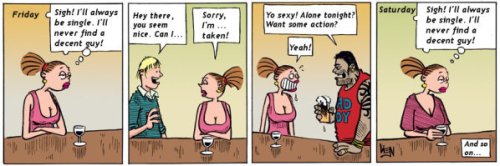
‘Nice guys finish last,’ goes the old maxim. Apparently, they also go home alone. At least the straight ones do. Recently, a photograph has been circulating on the Internet of a young man named Jeremy Meeks. This isn’t just a simple cell phone snapshot, or a Facebook post. It’s a mug shot. Meeks’ picture went viral in June, after his arrest on weapons charges; earning him the affectionate moniker of “handsome mug shot guy.” The 30-year-old Californian isn’t exactly husband material, though, and the dark spot on the outer edge of his left eye isn’t a birthmark. Meeks has a lengthy criminal rap sheet dating back to 2002; the tear drop mark is a gang tattoo.

That didn’t stop thousands of people from visiting his Facebook page and “liking” it, as people are wont to do in this digital age. It didn’t even prevent talent agent Gina Rodriguez from accepting Meeks as a prospective client. Rodriguez, whose gallery of talent includes such media gems as Nadya “Octomom” Suleman and Farrah “Teen Mom” Abraham, hoped to get Meeks a modeling contract as voluptuous as his lips. Knowing star potential when they see one, officials with a porn studio have also approached Meeks; offering him a $100,000 contract. Meeks has been held in the San Joaquin County Jail on a whopping $1,050,000 bail.

“Handsome mug shot guy” is married with a young son and, according to family members, has been trying to live a quiet life after spending time in prison and being involved with the “Northside Gangster Crips,” an offshoot of the Los Angeles-based “Crips,” one of the oldest and most violent street gangs in the U.S. He was arrested June 18 after driving away from a suspected drug house in Stockton, California that was due to be searched. Two others were with him in the vehicle, which also contained a loaded and unregistered semi-automatic handgun and two extended magazines in the trunk. Police also found marijuana in the car.

Insisting her son is an innocent “working man,” Meeks’ mother, Katherine Angier, seized upon his newfound celebrity to plead for help. She established a profile on the “Go Fund Me” web site to raise money for his legal defense, adding that her precious offspring has been stereotyped because of his past behavior. “He’s my son, and he is so sweet,” Angier opines.

Well, who could argue with her?! Unfortunately, more than just Meeks’ mother has come to love his face. Plenty of desperately lonely females have swooned over those cornflower blue eyes and chiseled cheek bones.

Just the right look.

Just the right look.

A second cousin of mine who’s an active-duty solider in the U.S. Army recently went on a Facebook rant about the lascivious response Meeks is getting; ending it with a deprecatingly bitter piece of advice: “Keep it classy, girls!”

I can empathize. This is the kind of crap that drives men crazy. While women often complain that men lust after the ubiquitous supermodel chicks, the reality is that most men usually don’t become infatuated with female criminals. At least most supermodels aren’t of a criminal bent – excluding Naomi Campbell. Indeed, two of America’s worst serial killers, Ted Bundy and Richard Ramirez, developed legions of female fans during their respective criminal trials. It didn’t seem to matter that these monsters deliberately sought out and slaughtered untold numbers of innocent people. Some felt there was an angel inside each man and they had the ability to bring it out.

I wish I had purple eyes and stood six feet tall. But, I don’t. I just wasn’t born with those attributes. I wish I’d joined the U.S. Navy some 30 years ago; my life might have gotten into better shape a long time ago. But, I just never did. I’m not alone. People often want who and / or what they can’t normally have. Poets and psychologists have debated this issue for millennia; knowing it’s part of the human psyche to crave the unattainable. Modern science has deduced that dopamine, a chemical precursor to adrenaline, is the primary culprit. It’s a complex substance the brain develops naturally; one that generates feelings of pleasure and desire – but, not necessarily satisfaction. It may be a key factor in substance abuse, such as alcoholism. Researchers still don’t understand why some people respond more acutely to one set of stimuli than others. The brain may be the most powerful sex organ in the human body, but it remains a mysterious one.

Females who prefer the stereotypical “bodice-ripper” (think Rhett Butler carrying a shrieking Scarlett O’Hara up the staircase in “Gone with the Wind”) might want to confer with occupants of a domestic violence shelter; women who either fell for or stayed with a man they thought could change with a good meal and the right perfume. It’s amazing how stupid some women can be in genuinely believing their feminine charms are powerful enough to alter the core personalities of the worst men; a sort of hormonal alchemy that would be the “Holy Grail” for marriage counselors, psychologists and talk show hosts. But, with a few exceptional cases, it rarely occurs.

Such blind self-adulation can be fatal. There are countless stories of women dying at the hands of men who really didn’t have a Prince Charming hidden beneath those balled up fists and bloodshot eyes. But, when I contemplate such odd pairings, I recall the tragic tale of a cousin who took her own life in January 1983. Already a somewhat fragile soul, she had married a man with a drug problem a couple of years earlier; believing she could somehow cure him of his ailment. Her mother strongly opposed the union, as did most everyone else in the family. But, no one could stop it. After all, she was an adult. And, apparently no one – not even my cousin – could stop her husband’s drug addiction. So, she left him. That would seem a happy enough ending, but her marriage’s sudden dissolution plunged my cousin into a state of extraordinary despair. I guess she blamed herself for the guy’s inability to shake free from his wicked habit; shattering her vision of a bright and loving future for the two of them. So, she sat down in a closet one night after work and stuck a pistol in her mouth. He had been a very bad boy, and she was a very good girl. Yet, she’s the one who ended up dead. He had failed miserably, but she felt like a miserable failure. Where’s the justice, I asked quietly at the funeral. Where, in a decent world, is there room for something so twisted as that?

Wearing a San Joaquin County jumpsuit – in what I called “arresting amber” – Meeks made a court appearance on July 8 and received mixed news: he’s no longer facing multiple weapons charges. But, the state turned his case over to the federal government, and now, Meeks is looking at a single federal weapons possession indictment. As a federal case, it’s obviously much more serious, and if convicted, he could face up to 10 years in prison and a $250,000 fine.

And, knowing how desperate some women are for a man, there’ll be more than a few nitwits holding vigil for his sorry ass in the comfort of their delusional minds. Meanwhile, the truly nice men will still be at home alone.

Cartoon courtesy of Joke All You Can.

1 Comment

Filed under Essays

The Worst Legacy

broken_promise_by_don_paolo

This past April marked twenty years since the death of President Richard M. Nixon, which came nearly two decades after he became the first Chief Executive in U.S. history to resign from office. That ignominious fortieth anniversary is coming up next month. It’s not something to be celebrated. The Watergate affair that brought him down has left an indelible stain on both American politics and the soul of the American people. Those of us in the 50 and under crowd have pretty much grown up in a world suspicious and even hostile towards all levels of government. The over 50 crowd helped build and fuel that distrust after a brutal sense of betrayal for a nation that set itself up more than two centuries ago as a beacon of democracy and freedom.

I’ve always said Watergate burned whatever bridges of faith and trust the American public had in their elected officials. But, the wicked uncertainty actually began the moment President John F. Kennedy had his head blown apart by an assassin’s bullets and Jacqueline Kennedy clambered onto the trunk of the presidential limousine in Dallas on November 22, 1963. The ensuing Warren Commission Report hoped to quell doubts that the murder was anything but the act of one deranged ex-Marine with delusions of grandeur. Yet, people saw it for what it really was: a rush to judgment. Americans weren’t so gullible anymore. The quagmire in Vietnam; the various energy crises of the 1970s; and the absolute failures of the Gerald Ford and Jimmy Carter Administrations (the latter burdened by the ineptness of the Iran hostage ordeal) only sealed the fate of Americans’ general distrust of their government.

Ronald Reagan fed off that fear like a lion gorging on a sick zebra and metamorphosed it into two successful political campaigns. One of his most popular statements, “The nine most terrifying words in the English language are, ‘I’m from the government, and I’m here to help’,” resonated strongly with the frustrated masses. Indeed, he had a point. But, Reagan’s own professional disconnect and ineffectiveness – Iran-contra, covert U.S. involvement in Central American conflicts, ignoring the AIDS epidemic, a pathetic war on pornography – placed him in the same pantheon of “Them.”

Almost from the moment Bill Clinton announced his candidacy for president, Republicans took retribution against their Democratic counterparts over Watergate by targeting Clinton every chance they could. They dissected the Whitewater deal and found – nothing. So, they turned to First Lady Hillary Clinton and manufactured something called “Travelgate.” When that didn’t work, they pounced on the events surrounding the suicide of Vince Foster; dragging the memory of a man who may have had severe emotional problems into their cesspool of arrogance and striving fruitlessly to twist it into an evil political plot. Alas, in 1998, they zeroed in on something totally unrelated to politics: the Monica Lewinsky affair and tried to impeach Clinton over a tawdry sexual indiscretion. The final report by special prosecutor Kenneth Starr read like a soft-core porn novel. I remember looking at that mess and thinking, “They want to impeach a U.S. president over that?! A blowjob?!”

We see that stubbornness now with the likes of House Speaker John Boehner and Texas Senator Ted Cruz. They complain that President Obama has no viable plans to help the U.S. economy, for example, but stand in their buckets of ideological cement and won’t budge. Thus, Obama (slowly growing some semblance of a backbone) has been forced to invoke executive privileges to get the work done. Now, Boehner is threatening to sue him because of it! I remember Boehner repeatedly asking, “Where are the jobs?” But, when Obama wanted the Bush tax cuts for the wealthiest 1% of Americans to expire at the end of 2010, Republicans balked and threatened to block extension of unemployment benefits, which were also set to expire at the end of that year; thus holding struggling Americans hostage. Obama relented, and the wealthiest citizens continued to see their after-tax incomes grow, while average Americans continued to lose their jobs and their homes.

The administration of George W. Bush solidified, in my mind, the corruptness and intransigence of the U.S. government. The 09/11 horror compelled many Americans to question what our government officials know and what they’re doing about it. That the Bush Administration then tied the 09/11 affair to Iraq’s alleged development of nuclear and / or chemical weapons convinced so many of us that our government is willing to go to extreme lengths to obfuscate and mislead just to embolden its own agenda. They tap-danced on the dead bodies of the innocent people who hurtled themselves from the World Trade Center’s burning Twin Towers and merely wiped the blood of soldiers from the millions of dollars they earned from oil revenue.

Bush was a puppet president; a doll adorned in designer business suits and propped up with ersatz ‘Mission Accomplished’ bravado. I almost feel sorry for him. Even he said, after leaving the White House, that he felt “liberated.”

Obama hasn’t done much better. At least he’s more verbally adept than Bush. But, I wish he’d make the time to rummage through his wife’s cache of designer handbags for his gonads before telling John Boehner and Mitch McConnell, “Fuck you. I’m president of the United States. I run this shit here – not you guys.”

It bothers me, for example, that we’re still entrenched in Afghanistan. I feel we should have bombed the crap out of them twelve years ago – damn their civilians, including the children and women, because they didn’t care about ours – and then leave. Maybe airdrop a few high-protein biscuits and bottled water into the mountainside, just to show we’re not complete assholes and go about our own business.

But, it bothers me even more that Obama hasn’t empowered Attorney General Eric Holder to investigate the causes of the near-total economic collapse in 2008. The worst financial downturn since the 1930s didn’t happen because someone on the Dow Jones trading floor accidentally unplugged a computer before the end of the business day because they needed to do a software upgrade. It resulted from a multitude of events; such as hefty tax cuts for that “job-creating” 1%; extreme deregulation of the housing and banking industries; and the billions of dollars on the Afghanistan and Iraq Wars. Except for a handful of notable exceptions – Bernie Madoff, Mark Dreier – no one has been held accountable for the “Great Recession.” But, if I walk into a local convenience store with a toy gun and rob the Pakistani clerk of fifty bucks, I could spend thirty years in prison. I believe there were other more diabolical machinations in play, beginning in 2001, that caused the economic downturn. Yes, economies endure cycles of bull and bear markets. But, this fiasco wasn’t just cyclical, like rainfall. Somebody did something, and it wasn’t by accident.

In February 2012, Maine Senator Olympia Snowe stunned her constituents by announcing that she wouldn’t seek reelection that year. She didn’t hesitate to explain why: the level of hostility and unwillingness to compromise in the U.S. Congress had become unbearable. To her, I guess, it wasn’t worth the trouble anymore. It was a shame. Snowe was one of the most level-headed politicians in Washington, regardless of party affiliation. She was willing to listen to and work with all of her colleagues. But, many of them just didn’t seem to share the same ethic.

I still say it all goes back to Watergate. Nixon and his band of henchmen were determined to keep the president in power, as the 1972 elections neared. Nixon had a modest tenure as Vice-President under Dwight Eisenhower, but suffered a humiliating defeat at the hands of the upstart Kennedy in 1960. When he lost the California governor’s race in 1962, he vowed to exit public life altogether, loudly proclaiming, “You won’t have Richard Nixon to kick around anymore.” But, he just couldn’t stay away. He loved the political game and desperately wanted the presidency. His dogged ambition put him in the White House six years after the California debacle – and forced him back out six years later.

Things have never been the same since. And, we still can’t bring ourselves to trust anyone in government.

1 Comment

Filed under Essays

Happy Birthday Ron Kovic!

1000509261001_2047894676001_Ron-Kovic-Born-On-the-Fourth-of-July

“I am the living death
the memorial day on wheels
I am your Yankee Doodle Dandy
your John Wayne come home
your fourth of July firecracker
exploding in the grave.”

Ron Kovic, Democratic National Convention, New York City; July 15, 1976.


Ron Kovic, born July 4, 1946; author of “Born on the Fourth of July,” “Around the World in Eight Days,” and “A Dangerous Country.”

Leave a comment

Filed under Birthdays

Happy American Independence Day 2014!

happy-american-independence-day-3

“It is those who have struggled the most, and who’ve been forced to be the most creative, that have the most to teach us.”

Matthew Dennis, Professor of History and Environmental Studies, University of Oregon.


Soldiers wave American flags at the RCA Dome in Indianapolis.  Photo courtesy Staff Sgt. Russell Lee Klika, U.S. Army.

Soldiers wave American flags at the RCA Dome in Indianapolis. Photo courtesy Staff Sgt. Russell Lee Klika, U.S. Army.

“Let every nation know, whether it wishes us well or ill, that we shall pay any price, bear any burden, meet any hardship, support any friend, oppose any foe, to assure the survival and success of liberty.”

President John F. Kennedy


U.S. Independence.

Leave a comment

Filed under News