This Old Thing

The Yorx electronic clock/radio in the photo above is one my parents bought for me just before I started high school – in 1978.  It has been functioning ever since.  Except for a few instances in which I transported it from one location to another, that clock has been plugged in and operating almost continuously.  The radio doesn’t get much reception anymore, but the buzzer is still loud and perfectly operational.  To put all that into perspective, I’ve been through four desktop computers since 2000 and five cell phones since 2001.

And yes, that’s a landline phone in the background of the above photo.  My parents and I moved into this house in December of 1972, but didn’t get a phone until the following month – and only because my mother wrote a stern letter to the local telephone conglomerate.  In those days, we’d otherwise have to find a payphone.  Remember those?  This area was newly-developed (former farmland), so there weren’t many of those devices around yet.

I have a backup refrigerator from the early 1990s that still functions.  My parents remodeled the kitchen in 2006 and decided to get a new refrigerator; yet kept the old one.  That 2006 model apparently gave up on life last year, and the cost of repairing it wouldn’t be worth the expense.  But, like my Yorx clock, the older fridge has been working almost continuously for several years.  I wrote last year about the house where I’m living; the place where I grew up and how it turned 50.  My truck is 17 years old and – although showing its age – hasn’t even reached 100,000 miles.

Here are at least two other old things: London’s Big Ben clock, which has been fully operational since 1859, and a light bulb in a San Francisco firehouse, which was turned on in 1901 and has been on ever since.  How many light bulbs have you been through in your lifetime?!

And here’s yet another – me!  I’ll be 60 this November and I’m happy to say I’m evolving and learning.  I just started a full-time job with a government-contracting firm, which I can only hope will last until I can retire – or an asteroid destroys the Earth, and I won’t have to worry about credit card bills.

Okay, I’m not a “thing”.  But I am happy to say I’ve been around a while and I’m now reflecting upon my past years.  I’ve often been one of those people to hold grudges; to recount previous conversations and events and achingly wish I could have done better.  It’s been rough for me to understand I can never change the past.  Whatever happened way back when brought me to where I am now – bruised and battered and imperfect, indeed.  But I’m here – and so much better for it all.

More importantly I decided long ago I’ll never get “old” – whatever the hell that’s supposed to mean.  I’ll age, of course, but not get old.  I don’t care what people say now or in the future.  I’m glad to be here in my present state.

Now, this “old” bastard will engage in another aged activity – reading a physical book.  Some things just never get…well, old.

5 Comments

Filed under Essays

The Heart Has No Wrinkles

This is a simple, yet extraordinary post from fellow blogger Catnip of Life.  Indeed, the heart never gets wrinkled! Thank you, Sharla!

“There is a fountain of youth: it is your mind, your talents, the creativity you bring to your life and the lives of people you love. When you learn to tap this source, you will truly have defeated age.”

Sophia Loren

It is inevitable for the wrinkles of life to show their ‘ugly’ signs throughout the aging process. For some, the signs of aging appear much earlier than others. How soon they appear and the deepness of their appearance depends upon life itself…its ups & downs, as well as detours along the way. 

“Wave the magic wand!” we might say at some point. Ah-h-h-h, if only that would work but then we could find ourselves in the midst of a global storm! Yet, if we were without those wrinkles, what would that say about our lives? Would we have truly lived? Would we have smiled and laughed, as well as frowned and cried? Or, would our faces look pasty without any indications of former emotion?

Reflect back on times in your life perhaps when a wrinkle might have first appeared. What was your reaction? Did signs of any wrinkling change the love and compassion you feel in your heart?  To love and to be loved never ages regardless if wrinkles appear!

Leave a comment

Filed under News

October 2023 Literary Calendar

Events in the month of October for writers and readers

National Book Month

National Reading Group Month

Famous October Birthdays

Other October Events

Leave a comment

Filed under News

Happy Labor Day 2023

“The only place success comes before work is the dictionary.”

Vince Lombardi

Leave a comment

Filed under News

Swinging

As Labor Day fast approaches here in the U.S., I’m happy to point out that I recently started a new job; a full-time position with a firm that does a great deal of government contract work.  And, if you know anything about the U.S. federal government, there’s a lot of work to be done!  It’s similar to the kind of work I did with an engineering company more than a decade ago.

Yes, that’s me in the scary unretouched photo above – slaving away over a hot keyboard and fighting spreadsheet eyes.  Although my company has a local office, they switched to remote work at the start of the COVID-19 pandemic three years ago and have found that it seems to be the best functional model for everyone.  So I get to sit at a desk in my home bare-chested and in gym shorts shuffling through a myriad of digital documents.  As a devout introvert, it’s a utopian environment for me.

It’s especially ironic in that I’ll be 60 in some two months – and finding a job at this point in life is challenging for anyone.  I’d been doing contract and freelance work since 2010, so it’s quite a change.  But welcome nonetheless.  Yes, it’d be great if my debut novel (or any future novel) could be sold to a motion picture company for X amount – preferably in the seven figure range – that would be extraordinary.  But I know how unlikely that is.  I’m not naïve.

I listen carefully to close friends and fellow bloggers as they vent about their own struggles to get from one point to another in the working world.  One friend lives in the Los Angeles area and works for a major television network.  He studied filmmaking and screenwriting at New York University in the 1990s and is witnessing – and feeling – the impact of the ongoing writers’ and actors’ strikes firsthand.  I commented a while back about his education.  “A lot of good that did me!” he replied.  I often felt the same, as I struggled over the past decade to find work.  I kept relying upon that degree in English I finally earned.  What good has it done? I asked myself more than a few times.  But I’m still proud of it.

My father was essentially forced to retire shortly after turning 62 in 1995.  When he called the local Social Security office to apply for his benefits, the clerk stated (almost sarcastically), “I guess you want your money now.”  My father answered, “You’re damn right I do!”  In the middle of one day several years ago he decided on a whim to have a glass of wine.  One of my uncles lives alone in a neighboring suburb with a cat and once told me, “I’m happy to sit around on my fat ass and watch TV all day!”  Aside from a brief stint in the U.S. Army in the 1960s, he worked in warehouses most of his life.  Like my father, he did hard labor – donkey-type work; the kind that wears out people quickly.

Other people, like my mother, did white-collar work – the kind that wears on the mind.  I don’t know what’s worse – mental or physical exhaustion.  I suppose they’re equally stressful.

Regardless I’m back in the swing of things with the labor force.  I actually enjoy what I’m doing – mainly because I’m doing it from home and can sit around bare-chested while listening to music such as this.  It helps fight those spreadsheet eyes.

3 Comments

Filed under Essays

Lacks Justice

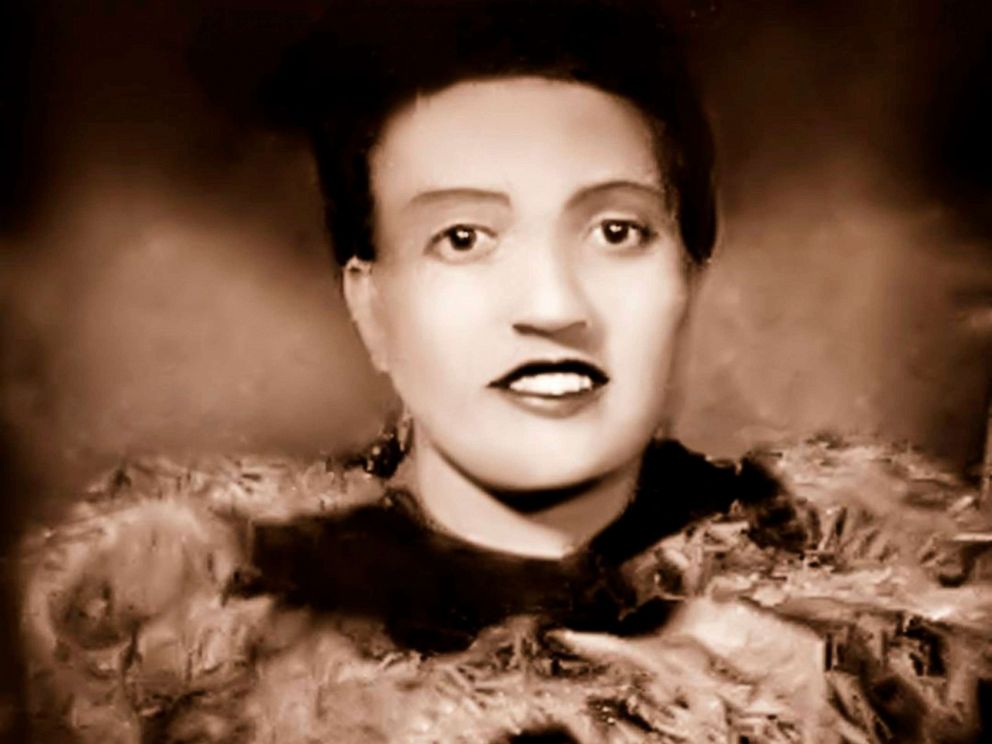
The story of Henrietta Lacks is one of the most compelling I’ve ever encountered.  It’s also one of the most tragic and upsetting.  Lacks was an African-American resident of Baltimore when she developed cervical cancer in the early 1950s.  While seeking treatment in the racially segregated ward at Baltimore’s Johns Hopkins Hospital, doctors removed a sample of her cancer cells without her knowledge or permission and sent them to Dr. George Gey, prominent cancer and virus researcher at the time.  In 1951, it was still perfectly legal to extract cancer cells and engage in other medical procedures without the patient’s consent or knowledge.  In those early days of oncology research, Gey had been looking for cancer cells that would survive for any extended period.  None had – until he obtained those belonging to Lacks.  Whereas other cells would die as soon as he obtained them, Lacks’ cells doubled every 20 to 24 hours.  This replication would eventually lead to a myriad of solutions and treatments in various medical fields.

Nicknamed “HeLa” (from the first two letters of Henrietta’s first and last names), the cells have been used to study the effects of toxins, drugs, hormones and viruses on cancer cells without actually experimenting on humans.  “HeLa” cells were even critical to the development of the polio and COVID-19 vaccines, as well as continuing oncological research.  Meanwhile, Lacks passed away quietly on October 1, 1951 at the age of 31, leaving behind her husband and children and was buried in an unmarked grave.

Johns Hopkins never sold or benefited financially from the usage of the “HeLa” cell line, but it did offer them freely for scientific research.  The Lacks family certainly never benefited financially from this research – and Henrietta didn’t receive any recognition for her “contribution”.

Until recently.

Rebecca Skloot’s 2010 book “The Immortal Life of Henrietta Lacks” brought much-needed attention to the case.  Henrietta’s daughter, Deborah, wondered aloud if the doctors at Johns Hopkins had killed her mother to harvest those valuable cells.  Had they even gone so far to clone her in some fashion?  Considering that Henrietta was an impoverished Black woman in 1950s America, such hypotheses aren’t beyond the realm of possibility.

In 2013 the Lacks family reached a settlement with the National Institutes of Health that provided some control over how the DNA from the HeLa cells is used in future research.  It also includes acknowledgement in any future scientific papers discussing those cells.

Last year Johns Hopkins University officials announced plans for an on-campus building project named for Henrietta. “The architectural design of the building to be named for Henrietta Lacks reflects Johns Hopkins’ commitment to proudly honor and celebrate Mrs. Lacks’ extraordinary legacy on our campus,” said Ronald Daniels, president of Johns Hopkins.

Last week Lacks’ descendants reached a settlement in its lawsuit against Thermo Fisher Scientific, a biotech company that apparently profited the most from usage of the HeLa cells.  However, Lacks’ family points out that their situation highlights the legacy of racism in American medicine and its persistence even now.  We have evidence that European colonialists gave smallpox-infected blankets to Native Americans.  The Tuskegee Syphilis Experiment remains one of the most egregious examples of medical research in American history.

“Indeed, a great portion of early American medical research is founded upon nonconsensual experimentation upon systemically oppressed people,” Lacks family attorneys declared in their initial suit.

I have to note that Thermo Fisher had demanded the lawsuit be dismissed because the statute of limitations had expired.  But Lacks family attorneys asserted that Thermo Fisher continues to benefit.

Here’s another curiosity.  Ronald Lacks, one of Henrietta’s grandsons, self-published a book in 2020 about his grandmother’s case; hoping to bring further attention and possibly generate some revenue for his family.  That same year Thermo Fisher CEO Marc Casper received a compensation package over $26 million.

No amount of money can ever compensate for the mistreatment of vulnerable populations.  Denying that such wrongdoing occurred in the first place certainly doesn’t alleviate matters.  This is what we’ve seen here in the U.S. with the relentless conservative denial of the brutal realities of European colonialism and Black slavery and the vicious legacies they spawned.

As a society, however, we can make some amends by acknowledging what happened and how bad it was.  I feel Henrietta Lacks has ultimately been vindicated with her story now being told and a medical building that will bear her name.

And that kind of recognition means just about everything.

2 Comments

Filed under Essays

August 2023 Literary Calendar

Events in the month of August for writers and readers

Family Fun Month

Happiness Happens Month

Romance Awareness Month

  • August 1 – Herman Melville’s Birthday; World Wide Web Day
  • August 1-7 – International Clown Week;
  • August 2 – National Coloring Book Day (U.S.)       
  • August 4 – Percy Blythe Shelley’s Birthday; International Beer Day
  • August 5 – Blogger Day
  • August 6 – Farmworker Appreciation Day; Psychic Day (U.S.)
  • August 6-12 – International Dog Assistance Week
  • August 7 – Professional Speakers Day (U.S.); Purple Heart Day (U.S.)
  • August 7-13 – National Simplify Your Life Week (U.S.)
  • August 9 – Book Lover’s Day (also November 4)
  • August 10 – Vlogging Day; World Lion Day
  • August 11 – Mountain Day
  • August 12 – International Youth Day; World Elephant Day
  • August 13 – International Lefthanders Day; Women’s and Family Day
  • August 14 – Danielle Steele’s Birthday; Love Your Bookshop Day; World Lizard Day
  • August 15 – Chant at the Moon Day
  • August 16 – World Calligraphy Day
  • August 18 – National Bad Poetry Day; World Breast Cancer Research Day
  • August 19 – International Homeless Animals Day; World Honey Bee Day; World Humanitarian Day; World Photo Day
  • August 21 – Poet’s Day
  • August 22 – International Day Commemorating Victims of Acts of Violence Based on Religion or Belief
  • August 23 – European Day for Remembrance of Victims of Stalinism and Nazism; International Day for Remembrance of the Slave Trade and Its Abolition
  • August 23-September 1 – World Water Week
  • August 24 – Paulo Coelho’s Birthday; International Strange Music Day
  • August 26 – International Bat Night
  • August 28 – Leo Tolstoy’s Birthday
  • August 30 – Mary Shelley’s Birthday; International Day for Victims of Enforced Disappearances
  • August 31 – International Day for People of African Descent; International Overdose Awareness Day; We Love Memoirs Day; World Distance Learning Day

Famous August Birthdays

Other August Events

Leave a comment

Filed under News

History Wash

“History, despite its wrenching pain, cannot be unlived, but if faced with courage, need not be lived again.”

Maya Angelou

Last November, when he won reelection by a large margin, Florida Governor Ron DeSantis declared that “Florida is where woke comes to die.”  I still don’t know who created the term “woke”, much less why or when.  But it’s become the latest toy in the diaspora of political angst.  If “woke” means historically accurate or aware, then those of us with at least half a brain are more than fully “woke”.  I can’t say the same for the conservative mindset.

In the latest salvo against historical accuracy, the state of Florida’s education board approved a spate of standards in teach African-American history.  The new measures require lessons on race to be taught in an “objective” manner that doesn’t “indoctrinate or persuade students to a particular point of view”.  Excuse me?  Objective?  Indoctrinate?  Only social conservatives in the Deep South would view solid history studies as indoctrination.

Not to be outdone on the ignorance scale, an Oklahoma education official, Ryan Walters, has declared that the notorious 1921 Tulsa race massacre – which resulted in the bloody deaths of some 300 African-Americans – wasn’t actually about race and that teachers should not “say that the skin color determined it”.  The 1921 Tulsa event remains one of the most sanguineous racial events in U.S. history.  It’s similar to a 1923 slaughter in Rosewood, Florida.  But, in the eyes of social (and mostly White) conservatives, they apparently were just really bad days.

Not surprisingly, these changes in teaching regimens have generated controversy – and anger.  In response to Walters’ claim, Alicia Andrews, chair of the Oklahoma Democratic Party, stated, “How are you going to talk about a race massacre as if race isn’t part of the very cause of the incident?”

In response to the recent Florida measures, the Florida Education Association, a statewide teachers union, denounced the new policy as a “big step backward.”  Andrew Spar, president of the association, issued a press release asking, “How can our students ever be equipped for the future if they don’t have a full, honest picture of where we’ve come from? Florida’s students deserve a world-class education that equips them to be successful adults who can help heal our nation’s divisions rather than deepen them.”

This is why we progressives view conservatism with disdain.  To us, conservative ideology is often regressive; holding onto false narratives of life’s events and who people are.  It’s also an improper revision of what happened way back when.  In 2015, controversy erupted when one of the biggest publishers of school textbooks, McGraw-Hill presented a tome that deemed African slaves as “immigrant workers”.  The caption accompanied a map of the United States in a section about immigration and read: “The Atlantic Slave Trade between the 1500s and 1800s brought millions of workers from Africa to the southern United States to work on agricultural plantations.”

The verbiage had gone unnoticed until the mother of a 15-year-old high school student raised hell over it.  McGraw-Hill promptly recalled the book and issued a public apology.

And that is what people have to do now when they encounter something so outrageous.  Ignorance is not education.  Just as the truth always comes to light, so does history.  Revising it to fit a particular narrative won’t change the facts.

Leave a comment

Filed under Essays

In Memoriam – Tony Bennett, 1926-2023

“To me, life is a gift, and it’s a blessing just to be alive.  And each person should learn what a gift it is to be alive no matter how tough things get.”

Tony Bennett

Leave a comment

Filed under News