
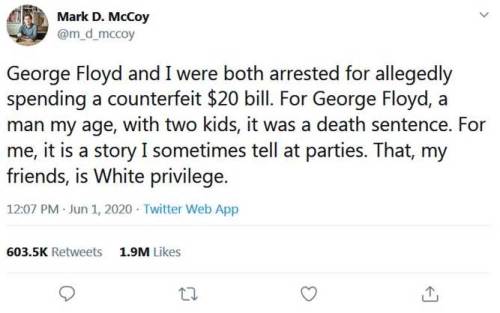
Tweet of the Week – June 5, 2020
Filed under News
Worst Quote of the Week – June 5, 2020

“I did know that following the president’s remarks on Monday evening that many of us were going to join President Trump and review the damage in Lafayette Park and at St John’s Episcopal Church. What I was not aware of was exactly where we were going when I arrived at the church and what the plans were once we got there.
– U.S. Defense Secretary Mark Esper, revealing he was aware of a plan to visit a Washington, D.C., church – where President Donald Trump posed for photos displaying a Bible – but that he didn’t know exactly what would happen when they arrived.
Filed under News
Best Quote of the Week – June 5, 2020
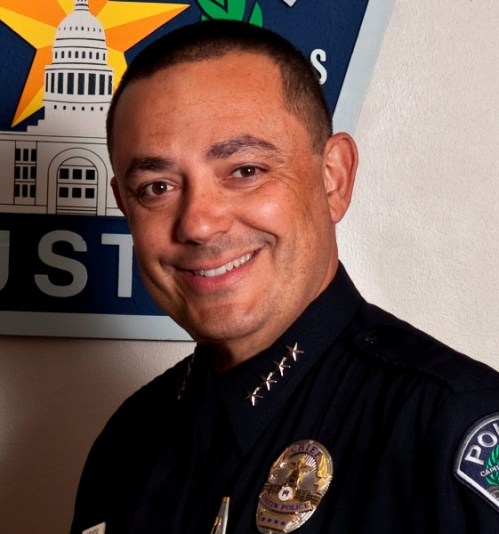
“Please, if you don’t have something constructive to say, keep your mouth shut.”
– Art Acevedo, Houston police chief, in response to Donald Trump’s advice to state governors to “dominate” people protesting the recent shooting death of George Floyd by Minneapolis police.
Filed under News
Aged Out

“I hope I die before I get old.”
– “My Generation”, The Who, © 1965
I’ve thought about this scenario: I’m home alone at age 80-something and I have a stroke or some kind of cardiac event. I can’t get to a phone and I don’t have one of those Life Alert devices. As a staunchly independent, childless 50-something with few friends, that thought has crossed my mind on more than a few occasions in recent years. It became even more glaringly realistic this past January, when I told my mother she needed to take a shower. I realized she had urinated on her bed; a simple of case having fallen asleep and – given her age, I thought – wasn’t able to make it to the bathroom in time.
“I’ll change the sheets,” I told her, before retreating into the hall. A moment later I saw she was flailing her right arm and leg. “What’s wrong?” I asked. “You need to get up and take a shower.” But then it became clear.
She’d had a stroke.
It apparently had been a brief event and was already starting to heal by the time she’d arrived at the hospital. But her left side was mostly paralyzed. I sat beside her in the emergency room, as she gazed blankly into a flickering light panel, and thought, ‘Now what?’
Years ago, when her mental health started to wane, someone asked why I didn’t place her in a “home.” “She has a home,” I replied. “It’s the one she’s in now.”
But the now had changed. And I was forced to contemplate the unthinkable: putting one of my parents into a “home” – whatever the hell that’s supposed to entail.
I had promised my father that I would do everything to ensure he didn’t pass away in a hospital; ensconced in a strange bed with tubes wrapped around him, as if he was a hostage. And I was able to help him achieve his desire.
But this situation is different – and far more complicated. After her hospital stay, I had to place my mother into a rehabilitation center. I found one nearby and was able to tour the facility a few days before she arrived. It’s an older building that looked like it hadn’t received a fresh paint job in about four presidential administrations. On that Friday evening I accompanied her to the place, I felt as if I’d swallowed a tree branch – and it was now stuck. The center looked even more dismal than when I’d first entered. And that night, as my mother lay in bed, glancing around the room – her left arm and leg still mostly inert – my heart filled with trepidation. I couldn’t stay that night, so after more than an hour – assuring her things would be alright and consulting with the amiable staff – I departed. I almost felt like I’d abandoned my mother into a pit of despair. And, even worse, I’d violated a solemn vow I’d made to my father more than a decade ago: if he should pass away first, I’d take care of my mother.
Looks, indeed, can be deceiving. While the rehab center was an aged structure, the staff was incredible. I did have a good feeling from the start, though, when I first spoke with one of their representatives. But it didn’t take long for me to realize I’d made a great choice.
I brought my mother home in March, as the COVID-19 pandemic gripped the nation. The startling number of coronavirus deaths in similar facilities alarmed me. The center had banned visitors a few days earlier, but I had to get her out of there. As good as the place had been for her, I didn’t she feel she was safe. And I knew I could care for her just as well as the rehab center and get her back to some semblance of her former self. I should know by now that far-reaching plans always look great on paper or in dreams.
After only a week, I had to return her to the rehab center. Her health had deteriorated in that short period. But, once back at the facility, she improved. She’d regained some movement on her left side and was alert. She still didn’t recall what had happened.
But then, matters became even more complex – and aggravatingly unsettling. My mother’s lengthy stay at the rehab facility had exhausted her Medicare benefits. They paid 100% for 21 days, when they lowered the rate to 80%. My mother – and I – was obliged to pay the remainder. But she didn’t qualify for a supplemental insurance policy – even through Medicare. Or the Affordable Care Act (ACA). The requisites for either make the Harvard Law School entrance exam look like a daycare application.
Medicaid was our last option. Completing the application for that was tantamount to completing one to be a Central Intelligence Agency case officer. And my mother wasn’t approved. With her Social Security and two pensions, she earns too much per month; just a “few dollars” too much, the rehab center associate helping navigate the morass informed me.
And what, I inquired privately in my angry cogitations, qualifies as a “few dollars” too much? I researched a handful of other available and plausible alternatives – enough to fill a tea cup – and could find nothing viable. Absolutely nothing. For my mother even to begin to qualify for some semblance of Medicaid coverage to help with her health care expenses, she’d have to cede all of her assets, including this house – the house she and my father worked hard to get and to keep; give it all up to an omnipotent entity that designed the very system to which my parents (and millions of others) annually pay homage and taxes.
And she earns a “few dollars” too much.
By the end of April, the rehab center – the place that had proved life-saving and life-changing – had reached its financial breaking point with us. They had to let her go. They had no choice, they told me – and therefore, neither did we.
Fortunately, Medicare does pay for extended hospice care here at the house. Representatives with the agency I selected have been incredible – even angelic – in their commitment and service. They’re as concerned with me, also, as my mother.
Still, I seethe at the thought of the financial fiasco in which we’ve now been placed. We’re in debt to the rehab facility now, as well as to a slew of doctors and the hospital. My mother is just one of literally millions of Americans in similar straits. At current rates, the crisis will only deepen nationwide. The number of Americans aged 65 and older is expected to almost double from 52 million in 2018 to 95 million in 2060; rising from 16% to 23%of the population.
A half-century ago, programs like Medicare and Medicaid were designed to assist the elderly and poor with health care needs. They’re not just altruistic; they’re vital. As with the Social Security system a generation earlier, Medicare and Medicaid provided necessary safety nets for many Americans. The nation had matured into a contemporary society where even the most vulnerable of citizens were not left to fend for themselves.
As usual, social conservatives scoffed at the notion. Just like with the post-World War II GI Bill, they denounced such aspirations as welfare and socialized medicine. These were the same fools who demanded people swear allegiance to the United States, be willing to sacrifice their lives to the Constitution, abide by established laws, and blindly pay money to ensure a safe democracy for all. They still do. Yet, when people earn a “few dollars” too much…they shrug their shoulders and change the subject to American exceptionalism.
My mother began working for an insurance company in downtown Dallas in the fall of 1952 at the age of 19 and retired from an insurance company in February of 2003 at age 70. With the exception of taking off 15 months for being pregnant with and caring for me – at a time when maternity leave was more of a concept – she worked for half a century. Fifty years. And, as her physical and mental health decline from years of just being alive…she earns a “few dollars” too much.
“Age is just mind over matter,” my father once told me. “If you don’t mind, who gives a shit?!”
People have told me that, for being a good person, I deserve a “big reward.” And I’ve also told some they deserve a special place in the “Great Beyond” just for being themselves. As genuine and thoughtful as those words are, does anyone have to wait until life in some other realm to be appreciated for their actions? Is it truly necessary to wait until we’re dead to receive the respect we’re due in life?
Filed under Essays
Preparing for the Next Pandemic
This is an excellent essay perspective on the current COVID-19 crisis from writer Charles Ray.

“Those who cannot remember the past are condemned to repeat it.” – George Santayana – 1905
“Those who fail to learn from history are condemned to repeat it.” – Winston Churchill – 1948
Novel Coronavirus (COVID-19), which began in Wuhan, China in December 2019, in just a few short months had become a global pandemic, by mid-May 2020, infecting more than four million people worldwide, and causing over 300,000 deaths. In the United States alone there were over one million confirmed cases and over 85,000 deaths, with cases reported in every state and territory.
COVID-19 has disrupted trade, travel, and economies, forced millions to live in physical isolation from friends and relatives, and put added strains on already strained international relations in ways that not even the last world war did. In some areas, commerce has come to a virtual standstill, unemployment has skyrocketed to levels never seen before, and…
View original post 1,897 more words
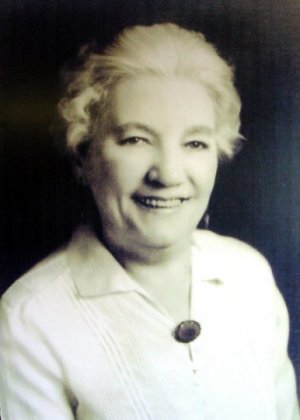
Retro Quote – Laura Ingalls Wilder
Filed under History
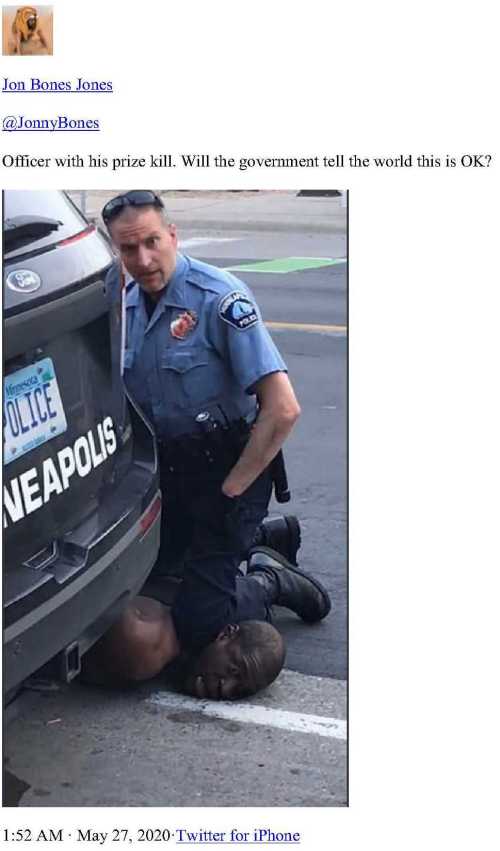
Worst Quote of the Week – May 29, 2020
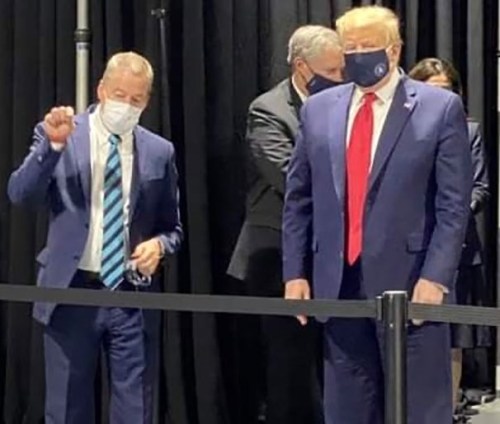
“Well I did wear – I had one on before. I wore one in this back area. But I didn’t want to give the press the pleasure of seeing it.”
– President Donald Trump, in response to a reporter on why he didn’t wear a mask while touring a Ford plant.
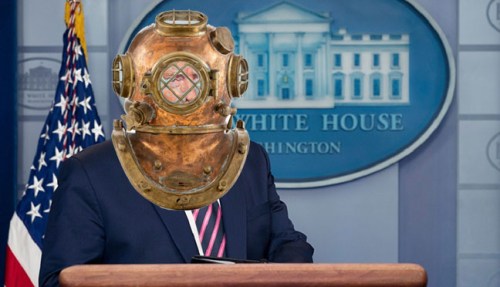
Writer, artist and fellow blogger Art Browne (my kindred brother in weirdness) proposed this alternative:
Filed under News
Best Quote of the Week – May 29, 2020
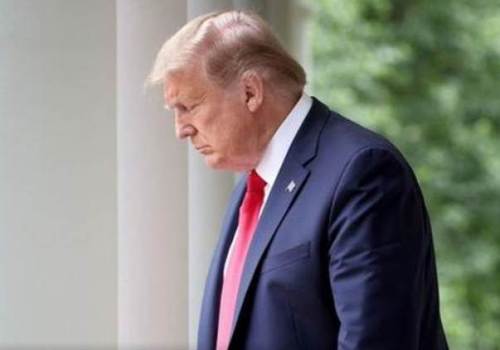
“Much as he might wish otherwise, Donald Trump is not the president of Twitter. This order, if issued, would be a blatant and unconstitutional threat to punish social media companies that displease the president.”
– American Civil Liberties Union, in response to Trump’s executive order that could weaken legal protections for social media outlets.
“The president has no authority to rewrite a congressional statute with an executive order imposing a flawed interpretation of Section 230,” the ACLU continued, referring to the section of the Communications Decency Act that shields platforms from being held liable for what users publish on them.
Trump had issued the order in a toddler-esque tirade against Twitter for having the audacity to fact-check two of his posts; one claiming that mail-in ballots will lead to voter fraud (a long-standing conservative mantra used to thwart voting rights) and the other that the state of California will send mail-in ballots to “anyone living in the state, no matter who they are or how they got there.”
Twitter is based in San Francisco, a city with a notorious reputation for having a leftist political and social bent. California Governor Gavin Newsom, an arch foe of Trump, recently issued an order to protect public health in relation to the COVID-19 pandemic while casting their votes in this year’s presidential election.
Filed under News
100,000 Dead and Still a Circus

“When the final bulb pops alight, and the smoke and sparks dissipate, it is finally legible, this elaborate incandescent sign. Leaning to your left to gain a better view, you can see that it reads: Le Cirque des Rêves. Now the circus is open. Now you may enter.”
– “The Night Circus”, Erin Morgenstern, © 2011
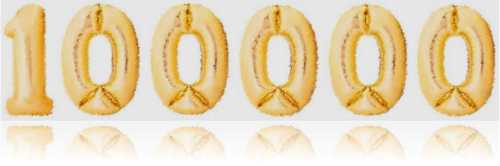
On Wednesday, May 27, the COVID-19 death toll here in the United States achieved a brutal milestone: 100,000. Globally, some 5.6 million infections have been confirmed, with more than 353,000 fatalities. Bearing only 5% of the world’s population, the U.S. has roughly one-third of deaths directly related to the COVID-19 scourge and about 1.7 million infections. Sometimes being first isn’t such a good thing.
About 300 municipalities in the U.S. boast populations of about 100,000. We have sports arenas that can seat 100,000 people. Despite the viral carnage, many cities across the U.S. are moving towards a re-opening; albeit with a few restrictions. The limitations appear subjective. Some restaurants, for example, remain delivery or curbside pick-up only, while others allow a small number of patrons indoors, with tables kept at least six feet apart. Most demand employees wear masks and latex gloves at all times, but don’t require the same of guests. Then again, it’s sort of difficult to imbibe in food and beverages with one’s mouth ensconced in a piece of cloth – no matter how fashionable it might be.
Is this the new normal? And who designates what is or is not normal?
For me social distancing and frequent hand-washing have been normal since color television was still a novelty. Yes, I am that…mature and I was that precocious! But, for some people, washing their hands after they pick up dirty laundry or take out the trash is a catastrophic lifestyle change. Hence, my social distancing predilection.
Such habitual alterations aside, I can only shake my head at the blatant disregard some people have for their neighbors – what I also call downright stupidity. Am I sadistic in chuckling at the thought of moronic infidels perishing in the morass of their viral incompetence? I view it merely as being practical – in a Darwinian frame of mind. Among lower mammals, those that cannot maintain pace with the herd are sacrificed to the course of nature. Among humans – at least in democratic societies – even the stupid are afforded some level of sympathy.
However, it’s tough for me to sympathize with many of our elected leaders, including the psychotic, discombobulated clown the United States calls its president – Donald J. Trump. The alleged liberal media has noted the president’s distortion of facts regarding the COVID-19 pandemic – from his pronouncement that April heat will kill off the virus to his suggestion that injecting basic household cleaning chemicals into one’s corpus is good preventative medicine.
One hundred thousand is not just a number – it represents human beings; lives lost to a disease that, oddly enough, has a low fatality rate. The U.S. death toll to COVID-19 is equal to the number of fatalities in this country to the 1968 Hong Kong flu, which killed roughly 1 million people globally. One would think a nation as developed and affluent as the United States would be able to confront any scourge as influenza. But looks are often deceiving. The U.S. has been good at developing weapons of destruction. Our military is the most highly-trained and well-prepared fighting force in the world. Yet health care issues always seem to be relegated to a Neanderthal-style the fittest shall survive type of mentality.
And it goes back to what political structure is in place at the time of the crisis. Forty years ago, when AIDS arrived on the world stage, the U.S. was beset by the ultra-conservative Ronald Reagan – a half-ass actor cum political assailant. While contemporary conservatives deify Reagan and tumble into near-orgasmic frenzies at the mere mention of his name, the rest of us clear-headed folks understand what an incompetent dolt he was. And not just because he turned his back on the working folks of America! As a social conservative, he and his minions felt justified in categorizing people into those who deserve to live and those who don’t. With his banshee of a wife beside his feeble body and mind and an attorney general who thought waging war on the adult film industry was a noble cause, the Reagan Administration ignored the very real calamities of a growing crack-cocaine epidemic and the burgeoning AIDS crisis. Thus, thousands died, while Reagan uttered a few quaint phrases that cemented his aw-shucks persona as adorable to his legions of blind disciples.
I see much of the same happening now with COVID-19. As thousands fall ill and the economy sinks, Donald Trump is more engaged with his Twitter account and continues propagating the myth of rampant voter fraud. Now we have 100,000 dead from this novel coronavirus – and growing – with more than 1 million infected. And despite that low morbidity rate, just recovering from the ailment seems to be a slow ride through the fires of Hell wearing tissue paper-thin clothing soaked in lighter fluid. Moreover, scientists still aren’t certain of the long-term effects of COVID-19. Most people recover, yes, but at what cost? How will the disease impact their health years from now? What of their cardiovascular system? Respiratory system, metabolism, digestive tract, immunity? Like AIDS forty years ago, COVID-19 is fresh off the virological boat. We just don’t know.
I do know, however, that a conservative ideology is bad for health care. Like the schematics for the Titanic, everything looks great on paper – until it slams into something, and we see what happens. No one knows what the hell to do! Except pass judgment and make light of the matter.
That’s what Reagan and his ilk did during the AIDS mess: toss around cruel jokes and tap-dance on the graves of the fallen. And it’s pretty much what Trump is doing now. He’s not exactly making jokes – his presidency and leadership have taken the top awards on that. But he’s not providing any true direction. He did order some manufacturers to being producing much-needed medical supplies. But even that came with some arm-twisting!
Think about that number, however: 100,000. What number of dead do we have to see before everyone takes it seriously? When is it no longer just a very bad day? What price is a life?
Images: Alejandro De La Garza
Filed under Essays
 Chief Writing Wolf