Tag Archives: apocalypse 2012

November 21, 2012 – 30 Days Until Baktun 12

Survivalist Tip:  Ah, yes.  We’ve now reached another critical point in the countdown: exactly 30 days to go before the apocalypse.  At this stage, I’ll return to a daily countdown with reminders of things I’ve already mentioned all year long.  We’ll start with your list of the most essential items you’ll need once chaos erupts.  Surely, by now, you’ve created a formal list and not just hope you’ll remember stuff!  If you don’t have a list, START ONE NOW!  You don’t have much time.  Remember especially, this is no Christmas wish list!  This is a survival list.  Start looking over yours now, and we’ll resume tomorrow.

Leave a comment

Filed under Mayan Calendar Countdown

November 18, 2012 – 34 Days Until Baktun 12

Survivalist Tip:  Once things settle down a little after December 21, don’t think you’ll be in the absolute clear.  Stop being such a suburbanite.  Even with all the zombies, politicians and rap stars dead, you should still be very much in survivalist mode.  Of course, it’s not a lifestyle you should leave behind anyway, but that’s another essay.  If you’re extremely resourceful, you’re probably planning on starting your own garden or farm – growing fruits, vegetables and other crops to be as self-sufficient as possible.  Therefore, you need to stock up on pots for starting various plant seedlings.  I’m not talking Tupperware or Corningware.  Again, get out of that damn suburbanite mentality!

There are a number of different types of pots and trays to get your garden started.  Some are plastic, ceramic, concrete, wood and even recycled cow manure.  If we’re lucky, we’ll be able to recycle the bodies of some of those dead politicians for plant feed, but again, that’s another essay.  I recommend getting containers that will last a long time; therefore, look at ceramic and concrete pots.  While this may seem rudimentary, remember that archaeologists have always recognized pottery as a sign of a civilized society.  Every stable community from the ancient Romans to the Mayans molded pots to contain water and food.  Life will never be the same after the start of the New Baktun, which will be a good thing.  Besides, some of those pots can hold your chocolate, while you’re busy planting!

Leave a comment

Filed under Mayan Calendar Countdown

November 11, 2012 – 41 Days Until Baktun 12

Survivalist Tip:  Safety goggles are another critical feature in your supply arsenal.  They aren’t just for mowing overgrown lawns, changing car batteries and swimming.  Safety goggles provide vital protection for your eyes.  In the chaos that will most likely erupt after December 21 – when the sudden shifts in axes will hurtle tons of dust and other debris into the air, when fog and smoke from forest fires may linger for months – safeguarding your vision can’t be underestimated.

A sturdy set of safety goggles has some important characteristics:

  • Scratch-resistant lenses,
  • Lenses with anti-fog coating,
  • Shatter proof lenses and frame,
  • Impact resistant,
  • Wide contact between goggle and face for comfortable fit,
  • Stable nose bridge for a proper seal,
  • Wide and adjustable support strap.

These are the same types of goggles military and police officials utilize.  So, if they’re good enough to take down drug dealers and corrupt politicians, then they’re good enough to take out zombies and anyone who tries to steal your chocolate or water.

Image.

2 Comments

Filed under Mayan Calendar Countdown

November 4, 2012 – 48 Days Until Baktun 12

Survivalist Tip:  Hurricane Sandy’s assault upon the northeastern United States should remind everyone how vulnerable we are to this type of weather phenomenon.  Tropical storm systems have been striking most coastlines of the world since the beginning of time and aren’t going to stop just because someone builds a million dollar beach front home.  It’s important for you to understand just what a hurricane is and what it does.

As I mentioned in a previous post, the term “hurricane” is an anglicized version of Huracán, a Taino Indian deity.  The Mayans and other indigenous cultures of the Americas documented these types of storms and respected them for the power they held and the damage they could impose.  It’s one reason, for example, why Europeans didn’t find many people already populating what is now southern Louisiana or the Carolinas’ Outer Banks.  Native Americans knew those regions were at risk for hurricane strikes.  Hurricanes are also known as typhoons and cyclones.

As the name implies, a tropical hurricane is a storm system with a low-pressure center that forms in the world’s tropical regions.  Conversely, an arctic hurricane is a low-pressure storm system that forms in either the Arctic or Antarctic Circles.  The latter are more commonly known as blizzards.  In the Northern Hemisphere, hurricanes rotate in a counter-clockwise direction, and in a clockwise direction in the Southern Hemisphere.  Full-fledged hurricanes normally don’t form in the Atlantic Ocean because the region lacks a weather system called the doldrums, which occurs when air rises, but does not move.

A tropical hurricane usually begins as a tropical disturbance, which then becomes a tropical wave, a tropical depression, a tropical storm and finally, when its winds reach a minimum speed of 74 mph, a hurricane.  The rotation of the Earth, in turn, generates the rotation of the storm.

Several factors have to come together for a hurricane to form, but its primary energy source is heat – both from water and air.  While an initial warm core system, such as an organized thunderstorm, is necessary for the formation of a tropical cyclone, a large flux of energy must also lower atmospheric pressure more than a few millibars, about 0.10 inch of mercury.  The inflow of warmth and moisture from the underlying ocean surface is critical for tropical cyclone strengthening.  Condensation leads to higher wind speeds, as a fraction of the released energy is converted into mechanical energy; the faster winds and lower pressure then cause increased surface evaporation and thus even more condensation.  Much of the released energy drives updrafts that increase the height of the storm clouds, speeding up condensation.  By that point, the storm has developed an eye; the winds rotating immediately around that eye are the fastest and the most consistent.  It is this wind speed that meteorologists measure.

While a hurricane’s winds are deadly enough, the greatest danger is the storm surge – the water that the hurricane shoves out of its way as it approaches land.  This type of ocean water movement behaves differently than tsunamic waves, which are generated by some kind of seismic activity, or a submarine landslide.  Like tsunamis, though, storm surges stretch the height of the ocean body, from the surface to the floor.  But, the waves are more dome-shaped.  High and low tides also factor into the damaging effects of storm surges.  In the case of high tides (such as with Hurricane Sandy), they’re particularly deadly.

Once on land a hurricane usually collapses because it has been cut off from its vital water supply.  But, some can travel far inland.  In 1969, Hurricane Camille struck the U.S. Gulf Coast and died out as a tropical depression off the coast of Virginia.  Heavy rainfall is closely associated with hurricanes.  Unlike normal storm systems – which dissipate after releasing all their moisture – hurricanes suck up water from the ocean and recycle it.  Rainfall amounts can be astounding.  A typhoon that struck the Philippines in 1940 dumped a total of 8 feet of rain.

Despite their damaging effects, hurricanes actually serve a purpose.  Because they are essentially heat engines, they redistribute heat that builds up in tropical regions.  They can end droughts, squash forest fires, and replenish lakes and reservoirs.  When Hurricane Georges struck the U.S. Gulf Coast in 1998, it obliterated a massive infestation of mosquitoes and gnats.

I know this is a lot of information to digest in one sitting – and I’ve barely touched the surface of it!  But, like I said, it’s important to comprehend how hurricanes function.  They are a critical part of our world’s climate and environment.  Just remember – Huracán doesn’t care if you’ve carefully planned a vacation to a coastal hotspot.  When that bitch gets mad, run!

Leave a comment

Filed under Mayan Calendar Countdown

October 29, 2012 – 54 Days Until Baktun 12


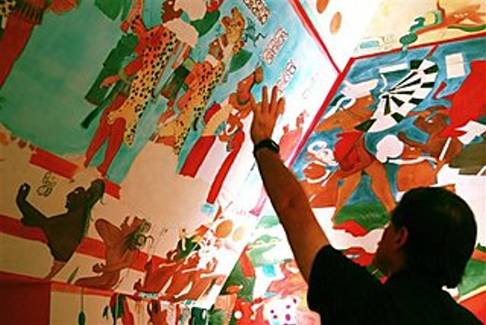
Survivalist Tip:  The Houston Museum of Natural Science is trying to assuage troubled souls about the upcoming apocalypse by displaying Mayan artifacts and therefore, assure people that the sun will rise on December 22, 2012.  I’m quite certain, too, the sun will rise – over a new universe, of course!  But, the Houston exhibit, titled “Maya 2012 Prophecy Becomes History,” hopes to clarify the mystery surrounding the ancient Mayan calendar.  Nearly every item on display dates back a thousand years or more; some as far back as 3,500 years.  Carefully reconstructed murals depict images in the jungle monuments from southern México and Central America.  There are replicas of large pyramids, various inscriptions and the calendars themselves.

All of this illuminates how the date of December 21, 2012 coincides with a rare celestial event: the sun will pass through the Milky Way during the winter solstice; something that occurs only once every 26,000 years.  Thus, will begin the New Baktun, according to Mayan legend.  Museum officials are wise to point out that the ancient Mayans, in a sense, created their own apocalypse in that they overbuilt and outstripped their resources.  But, that’s all part of the grand design of the Great Creator.  If you abuse your world, God will wipe out your ass and start all over.

Leave a comment

Filed under Mayan Calendar Countdown

October 21, 2012 – 62 Days Until Baktun 12

Survivalist Tip:  I mentioned previously that you may need a water purification system when the apocalypse hits, considering that your electricity may go out.  But, you also need to have plenty of containers to hold that water.  I’m not talking about people who are overweight!  You’ll need some sturdy water storage accessories; preferably made of steel, but firm plastic ones will suffice.

Containers for long-term water storage come in a variety of sizes – from 55 gallons to 5 gallons.  If you plan to stay at home, I recommend the biggest ones you can get.  If your mind is thinking of something sexual, stop reading now and smack yourself.  You can keep these vessels in your garage or anywhere in the house or apartment.  Making certain the water stays fresh and drinkable is an obvious concern, so that’s where the aforementioned water purification system comes into play.  The ancient Mayans and their contemporaries around the world developed sophisticated water storage and purification methods without the benefit of electricity, computers, or utility companies.  Therefore, it’s paramount you learn to retain and treat your own water.  With these items in your possession, you’ll be assured of a stable environment, while chaos overwhelms everyone else.  And, once things settle down, you can use the containers to bury the bodies of anyone who tried to break into your home and steal your chocolate.

Leave a comment

Filed under Mayan Calendar Countdown

October 16, 2012 – 67 Days Until Baktun 12

Survivalist Tip:  The November / December 2012 issue of Archaeology Magazine, a publication of the Archaeological Institute of America, has a detailed analysis of the ancient Mayan calendar.  It’s well worth the read; if anything, to develop a greater understanding of it, but also to realize just how truly mathematically and astronomically advanced the ancient Mayans were.

Then – as now – the Mayans recognized that the elements of the natural world, the cosmos and their own bodies functioned according to observable cycles and therefore, were interconnected.  Keeping track of the sun, the moon and other celestial bodies was a means of harmonizing their universe.  Curiously, the ancient Mayan calendar operated on a 260-day cycle, which is the same duration of the average human pregnancy.  But, it is their “Long Count” calendar, which was used to tally the number of days since the mythological date of their creation, that has drawn the most attention.  This is the calendar that archaeologists say ends on December 21, 2012.  (Some claim the actual date of the end of the current Baktun is December 23.)

When calculated according to the “Long Count” calendar, the Mayan date of creation is set at or around August 11, 3114 B.C.  “Long Count” dates were written as a series of 5 numbers.  January 1, A.D. 1, for example, would be 7.17.18.13.3.  This is a highly complex system; too much to explain here.  While pundits and mystics debate what exactly will happen on December 21, 2012, one thing is certain: we all need to be more respectful of our place in this universe.  We also need to have as much chocolate to enjoy the ride!

Leave a comment

Filed under Mayan Calendar Countdown

Mayan Calendar Countdown – October 7, 2012 – 73 Days Until Baktun 12

Survivalist Tip:  I’ve stated more than once that you can’t be certain how things will go after December 21.  Many of you certainly hope to stay in your homes and weather the chaos.  But, in the event you have to evacuate to safer territory, it might be prudent to stash as many of your survivalist essentials in an assortment bucket.  These look like ordinary plastic trash receptacles, but they’re actually portable multi-leveled storage units.  A good sturdy assortment bucket is roughly 12” x 10” x 13” in size and costs anywhere from $60 to $70.  The wheels make it easy to transport, should you be on foot, or just to move around.  Their varied compartments allow for storage of dried foods, bottled water, ammunition and, of course, your beloved chocolate.  Even after things settle down and return to some degree of normalcy, the assortment bucket can be used for future storage.  Besides, you never know when you have to hide food from nosy relatives.

Leave a comment

Filed under Mayan Calendar Countdown

September 23, 2012 – 87 Days Until Baktun 12

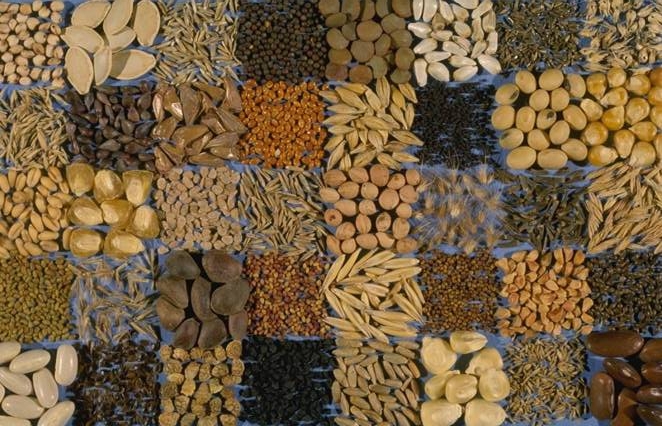
Survivalist Tip:  I’ve mentioned previously about gathering some herbs and vegetables in preparation for the apocalypse, since we don’t know how long the initial upheaval will last.  But, I recommend also storing some non-hybrid, or open-pollinated seeds.  Unlike hybrid and genetically-modified seeds, non-hybrid seeds can be stored for a long period of time, which is perfect for future planting.  With the collapse of the normal socioeconomic structure, it’s important to know how to plant seeds and cultivate crops.  Regardless of your environment – city, suburban, rural, cave – non-hybrid seeds allow for comprehensive sustainable gardening.  Think of them as “Victory Gardens” for the New Baktun.

There are as many non-hybrid seeds as there are crops: beans, grains, teas, herbs, fruits, vegetables and even cocoa.  You can even get non-hybrid seeds for livestock and pets.  Along with easy storage, these types of seeds produce foods that have a higher nutritional value than standard hybrid seed plants.  This quite simply is because they are more pure and natural; they haven’t been cross-pollinated with other plants, which has become the standard in food production.  Like all ancient societies, the Mayans planted and harvested their own crops.  They didn’t have grocery stores and restaurants and they didn’t have preservatives.  In other words, they took care of themselves.  Life in the New Baktun will require the same level of self-reliance – and plenty of chocolate!

Leave a comment

Filed under Mayan Calendar Countdown

September 16, 2012 – 95 Days Until Baktun 12

Survivalist Tip: We are now at a critical stage in the countdown; less than 100 days until the start of Baktun 12.  September is National Preparedness Month, a declaration made official by President Obama on August 31.  Considering how badly most survivalists despise politicians, this is an otherwise smart move on a president who began his career as a lawyer – an equally despicable species of human.  For North America, however, some of the most powerful hurricanes have struck during the month of September.  Since the ancient Mayans were able to track these storms without satellites or radar, the true survivalist won’t take this notice lightly – and neither should you.

Therefore, refer once again to your comprehensive list of survivalist gear and paraphernalia.  By December 21, you should have ample supplies of bottled water, flashlights, generators, batteries, rain gear, chocolate and other necessities.  After all, if the president of the United States has a survivalist mentality, shouldn’t you? 

Image.

Leave a comment

Filed under Mayan Calendar Countdown