Tag Archives: writing

Word of the Week – April 30, 2022

Pervicacity

[per-vi-KA-si-tee]

Noun

Latin, 17th century

The quality or state of being pervicacious. Obstinacy; stubbornness; willfulness; from the Latin “pervicacitas,” meaning obstinacy.

Example: My individual pervicacity compels me to write, no matter my circumstances.

Leave a comment

Filed under News

May 2022 Literary Calendar

Events in the month of May for writers and readers

  • May 1 – Loyalty Day
  • May 1 – Save the Rhino Day
  • May 2 – Brothers and Sisters Day
  • May 3 – Garden Meditation Day
  • May 3 – Lumpy Rug Day
  • May 4 – National Candied Orange Peel Day
  • May 6 – Space Day
  • May 7 – National Babysitters Day
  • May 7 – National Train Day
  • May 8 – Mother’s Day (U.S.)
  • May 9 – Lost Sock Memorial Day
  • May 11 – Twilight Zone Day
  • May 13 – Blame Someone Else Day
  • May 13 – Frog Jumping Day
  • May 13 – Leprechaun Day
  • May 14 – National Windmill Day
  • May 15 – National Chocolate Chip Day
  • May 16 – Love a Tree Day
  • May 16 – National Sea Monkey Day
  • May 23 – Lucky Penny Day
  • May 24 – International Tiara Day
  • May 25 – National Towel Day (UK)
  • May 27 – Don’t Fry Friday
  • May 27 – Memorial Day (U.S.)

3 Comments

Filed under News

Word of the Week – April 23, 2022

Eidetic

[i-DED-ik]

Adjective

Greek, 1920s

Relating to or denoting mental images having unusual vividness and detail, as if actually visible.  Though based on the Ancient Greek “εἰδητικός” (meaning “constituting an appearance”), the word was only coined in the early 1900s by German psychologist Erich Rudolf Jaensch who used the term “eidetisch” to describe the particular precision of mental images that were different from and far clearer than regular memories.

“Eidetic” is often used interchangeably with “photographic” to describe the capacity for incredibly detailed and precise memories, but there is a difference between the two terms.  Photographic memory usually describes the ability to recall detailed information (including texts and numbers), while “eidetic memory” describes an ability to maintain a vivid picture of something after it is gone, even experiencing a feeling of the image still being present.

Example: Memories of my recently-departed friend have been occurring with eidetic clarity.

Leave a comment

Filed under News

Instagram of the Week – April 16, 2022

Writer Steven Pressfield offering more brutally practical advice to aspiring writers and other creative types, as part of his ongoing “Move Your Ass” series.

Leave a comment

Filed under News

Word of the Week – April 16, 2022

Noetic [no-ED-ik]

Adjective

Greek, 17th century

(Formal) Relating to mental activity or the intellect.  Stems from the Greek “noētikos,” from “noētos,” meaning “intellectual”, which comes from “noein,” meaning “perceive.”  The Institute of Noetic Sciences is a nonprofit research center in Petaluma, California. Former astronaut Edgar Mitchell co-founded the center in 1973 after claiming he entered a meditative trance upon his return to Earth after the Apollo 14 moon landing.  He also said he conducted ESP experiments with earthbound friends during spaceflight. The institute conducts research on topics like consciousness-based healthcare, spontaneous remission, survival of consciousness after bodily death, psychokinesis, and alternative healing practices.

Example: I normally want to deal only with people who express a noetic sense of confidence.

Leave a comment

Filed under News

Word of the Week – April 9, 2022

Noumenon

Noun

Greek, 18th century

A thing as it is in itself, as distinct from a thing as it is knowable by the senses through phenomenal attributes (in Kantian philosophy). “Noumenon” is based on the Greek “νοούμενον,” meaning “something that is conceived with the mind.” This was in direct contrast to “phenomenon,” which came from the Greek “φαινόμενον,” meaning “that which appears visibly.”

German philosopher Immanuel Kant coined the word “noumenon” (and the plural “noumena”) in 1783 in an effort to describe things occurring outside of appearances visible to human beings. “Noumenon” describes a transcendental thing too great to be fully conceived with limited human capacities. Kant used the word in direct contrast to “phenomenon,” which is a fact or event perceptible to humans through their senses.

Example: My unique views on life manifest themselves as the noumenon of my stories.

Leave a comment

Filed under News

Word of the Week – April 2, 2022

Adjure

[ə-DJUR]

Verb

Middle English, 14th century

Urge or request (someone) solemnly or earnestly to do something.  Stems from late Middle English via the Latin “adjurare,” from “ad-” meaning “to” plus “jurare” “swear” (from jus, jur- ‘oath’).

Example: I often have to adjure myself to finish working on my latest novel.

Leave a comment

Filed under News

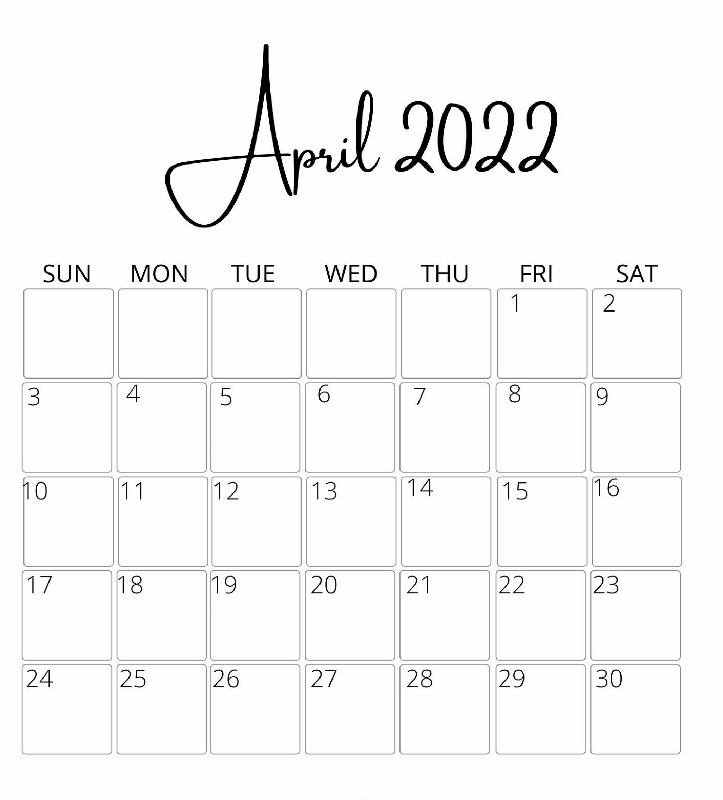
April 2022 Literary Calendar

Events in the month of April for writers and readers

D.E.A.R. (Drop Everything and Read) Month

National Poetry Month

School Library Month

  • 1 – Reading is Funny Day
  • 2 – International Children’s Book Day
  • 2 – National Children’s Picture Book Day
  • 2 – Hans Christian Anderson’s birthday
  • 3-9 – National Library Week
  • 4 – National School Librarian Day
  • 4 – Maya Angelou’s birthday
  • 5 – National Library Worker’s Day
  • 6 – National Library Outreach Day (formerly National Bookmobile Day)
  • 7 – Take Action for Libraries Day
  • 9 – National Unicorn Day
  • 12 – Drop Everything and Read (D.E.A.R.) Day
  • 12 – Beverly Cleary’s birthday
  • 13 – Scrabble Day
  • 14 – Celebrate Teen Literature Day
  • 15 – Rubber Eraser Day
  • 15 – World Art Day
  • 16 – National Librarian Day
  • 17 – International Haiku Poetry Day
  • 18 – Newspaper Columnists Day
  • 23 – William Shakespeare’s birthday
  • 23 – World Book and Copyright Day
  • 23 – World Book Night
  • 24 – U.S. Congress approved the Library of Congress
  • 27 – National Tell A Story Day
  • 28 – Harper Lee’s birthday
  • 28 – Great Poetry Reading Day
  • 30 – Independent Bookstore Day

Leave a comment

Filed under News

Word of the Week – March 26, 2022

Enchiridion [eng-kə-RID-ee-ən]

Noun

Greek, 16th century

A book containing essential information on a subject.  The ancient Greek ἐγχειρίδιος means “fitting in the hand”.  An “enchiridion” came into English in the 16th century as a portable, hand-sized guidebook.  The modern handbook has its roots in the enchiridion (related to the Greek word for “hand”), traditionally a small, portable manual widely used from early Greece through to the 19th century. Enchiridons were designed to keep useful information near at hand, including religious teachings, ethical advice, the rules of poetry, guidance for soldiers, and means of understanding the law.

Example: My decades of personal journals comprise an enchiridion of my ambitions, hopes and fears.

Leave a comment

Filed under News

Finis

There are a number of things that terrify people: spiders, darkness, getting stranded on a desolate road in East Texas.  But, in this modern age, one thing horrifies people more than seeing another Starbucks pop up in the neighborhood – your computer crashing.  For decades we’ve been led to believe technology is our mechanical savior; it will make our lives easier and more productive at all times.  And, to some extent, that’s true.

But when that dreaded “Blue Screen of Death” materializes, it’s worse than learning you need to shop again for homeowner’s insurance.  That’s what happened to me recently, when my 11-year-old desktop PC apparently decided it had enough of me and my cyber antics and took its own life.  It explains why I didn’t post anything last weekend.  I try to be consistent.  Of course, I tried to be consistent in pursuing my adult film career some 20 years ago – but obviously nobody had faith in my sexy technical writer persona.

Anyway…the old bastard died (the PC), and I was stranded.  Fortunately, I still had my father’s desktop PC, and a long-time neighbor/friend helped me yank out the hard drive from mine and showed me how to install it temporarily into this other one.  I still wasn’t able to pull any of my old data off of it, but I’m glad I back everything up onto a zip drive once a month.

So not all was lost.

All of my writings were on that zip drive, which – I guess to any writer – is one of those lifesaving moments.  Kind of like realizing there is at least one place that still sells your favorite wine.

And a writer without their collection of stories is like…well, a porn star without lube!

Leave a comment

Filed under Essays