Category Archives: Art Working

Books on a Roll

FWS_BM_bookshop2.06-780x439

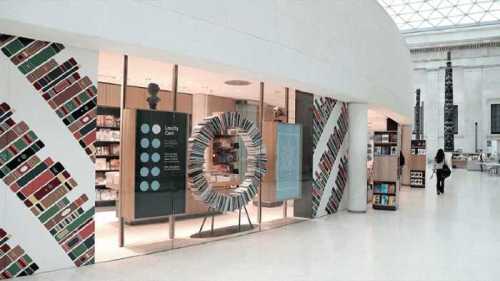
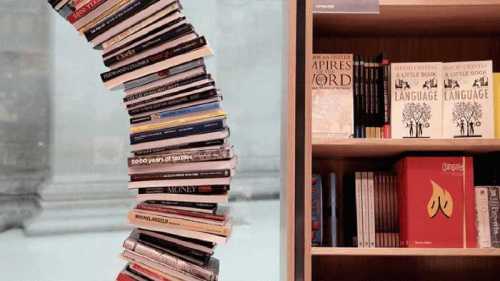
In this age of digital publishing, old-fashioned brick-and-mortar book stores have to rethink their image in an attempt to remain relevant. The British Museum in London has taken an innovative approach with their own bookshop: they’ve installed a “wheel of books” for the bookshop’s display window. Designed and built by London-based Lumden Design, the “wheel” is comprised of 270 actual books and stands 2 meters (7 feet) in height.

Perched conspicuously at the shop’s entrance, is already achieving its objective in making visitors stop and visit the store. They’re certainly snapping plenty of photographs of the wheel.

“We have strived to create a compelling retail environment which compliments the majesty of the Reading Room, as well as enhancing the architecture of Lord Foster in the Great Court itself,” Lumden declares, referring to a separate area within the shop.

With the advent of e-book readers and various devices to distract people, it’s nice to know a collection of traditional books is attracting people. I guess, sometimes, you just have to think outside of the…er, wheel.

FWS_BM_bookshop2.08-780x439

FWS_BM_bookshop2.07-780x439

1 Comment

Filed under Art Working

The Royal Family that Laid the Golden Egg

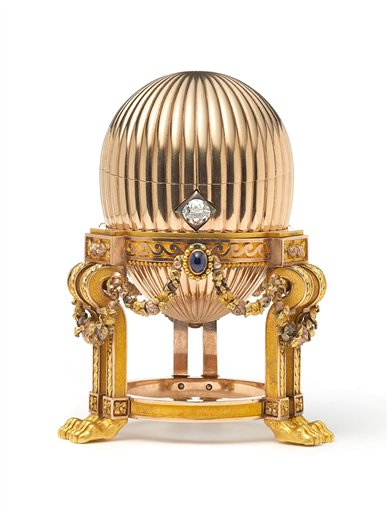
Not for scrap – this Faberge Egg is worth a few million and some change.

Not for scrap – this Faberge Egg is worth a few million and some change.

I don’t know what it is about Faberge Eggs that fascinate people – people, like viewers of “American Idol” and patrons of Botox parties, who have too much damn time on their hands.  To me, eggs are something that comes out of a bird’s ass and ultimately ends up in pancake batter or an omelet.  I mean, Faberge Eggs have to be the gayest things since “Star Trek” (come on – go-go boots; bell bottoms; perfectly-coiffed hair; phasers instead of real guns).  But, I find even this particular story intriguing.

Last week – and just in time for spring – a scrap metal enthusiast walked into the London shop of antique dealer Kiernan McCarthy and bought a Faberge egg for about $14,000 (EUR 10,1200); hoping to profit from its gold content.  But, a closer examination of the item made the customer think he was a rare Russian artifact.  As luck and good fortune often shines upon those not looking for them, the egg turned out to be an imperial Faberge Easter egg made for Russian royalty that’s worth millions.

The egg contains a Vacheron Constantin watch and sits on a jeweled gold stand.  It was given by Tsar Alexander III to his wife Empress Maria Feodorovna for Easter 1887.  Faberge made 50 of the imperial eggs for the Russian royal family, and eight remained missing until now.  Only three of those, however, are known to have survived the 1917 Russian Revolution.

This particular egg will be on display at London’s Wartski Antique Dealers, which specializes in Russian artifacts and Faberge Eggs.

1 Comment

Filed under Art Working

Repairing Jesus’ Birthplace

Visitors light candles in the Church of the Nativity.

Visitors light candles in the Church of the Nativity.

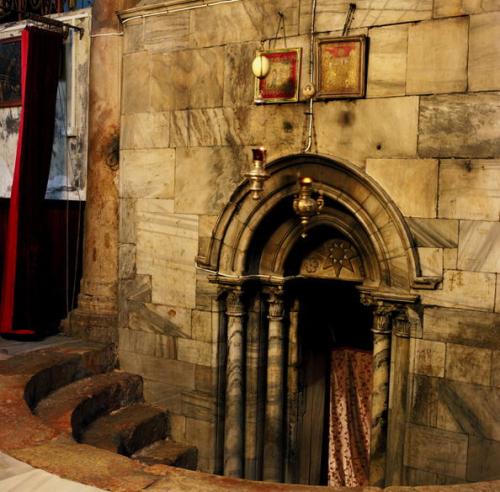
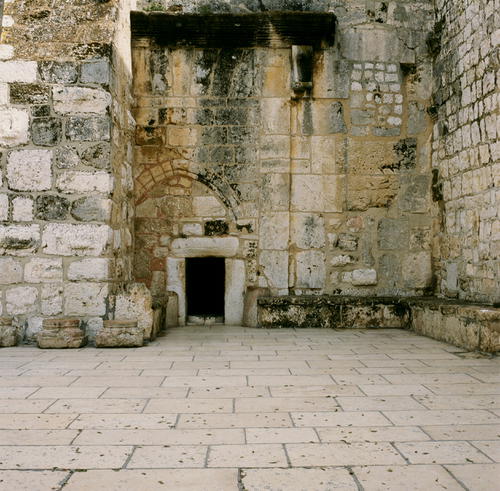
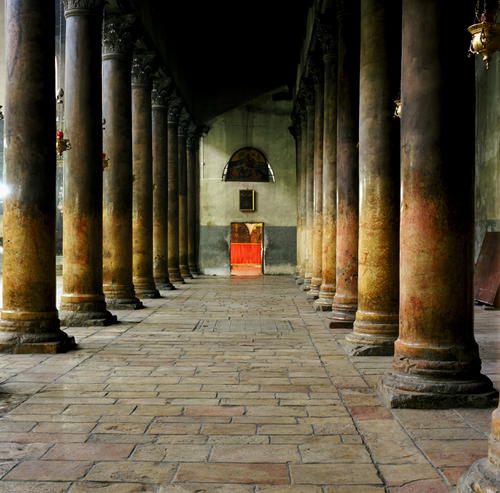
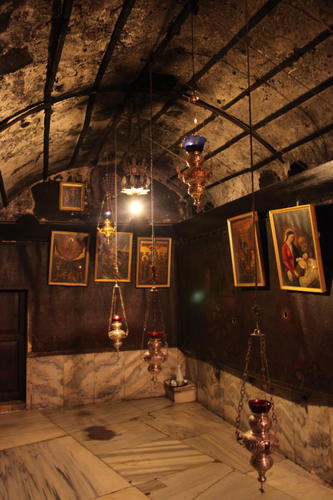
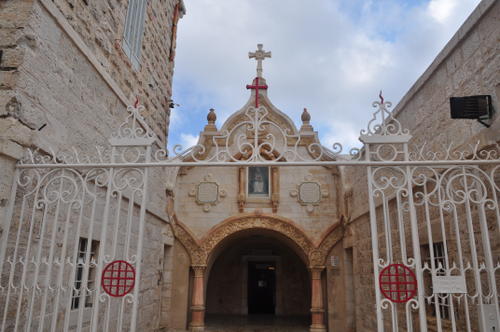
Christian lore has it that Jesus was born in a manger in the city of Bethlehem and ultimately died to bring peace and joy to the world.  Looking at the centuries-old violence that has plagued the region now called the Middle East, it seems to have been in vain.  But, Palestinian authorities have set aside their animosity for outsiders by allowing a handful of Italian craftsmen to begin much-needed repairs to the roof of the Church of the Nativity in Bethlehem, which dates to the 4th century A.D.  Water leaks, seismic activity and general weather conditions have taken a toll on a structure classified as a UNESCO World Heritage site.  The church’s pine and cedar timbers are up to 800 years old and its deteriorating roof was donated by England’s King Edward IV in 1479.

“It’s very emotional to work here,” says Marcello Piacenti, head of a family business that is rejuvenating the structure; something his clan has being doing for six generations.

Workers are applying protective gauze to gold-leaf mosaics, while technicians examine the church’s wooden trusses for hidden damage.

As one might expect, there are internal clashes over the structure’s care.  Monks from Greek Orthodox, Catholic and Armenian churches have disputed who has authority to clean and repair the church.  The three dominions manage the building under a tense arrangement that seems to mirror the overall Middle East conflict.  You’d think they’d know better.

Finally, in 2009, Palestinian President Mahmoud Abbas, fearing the church might collapse, issued a decree to repair the church.  That brought some agreement among its proprietors, and Piacenti’s company was called in to help.

Whatever religious disputes anyone has, I can only hope they drop all that friction and realize how important the church is.  Christian or not, it is a piece of history and it needs to be preserved.

Lieu de naissance de Jésus : l’église de la Nativité et la route de pèlerinage, Bethléem

Lieu de naissance de Jésus : l’église de la Nativité et la route de pèlerinage, Bethléem

Lieu de naissance de Jésus : l’église de la Nativité et la route de pèlerinage, Bethléem

Le Lieu de naissance de Jésus : l’église de la Nativité et la route de pèlerinage, Bethléem

Lieu de naissance de Jésus : l’église de la Nativité et la route de pèlerinage, Bethléem

1 Comment

Filed under Art Working

A Magna Carta in Houston

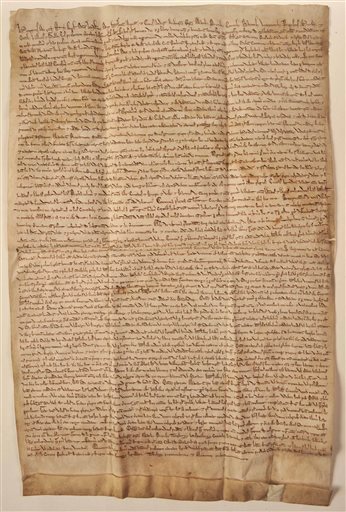
A copy of the original “Magna Carta.”

A copy of the original “Magna Carta.”

For the first time in its known history, the legendary “Magna Cartawill leave its birth place of England and arrive in the United States.  Originally issued on June 15, 1215, in a field at Runnymeade by King John, the revered document is a considered a hallmark of democracy with its multiple declarations of various freedoms; including an acknowledgement that taxes cannot be arbitrary, free men cannot be imprisoned without first being judged by their peers, and that justice cannot be delayed or denied.  King John was just trying to avert a civil war, when confronted by scores of rebellious land barons; a clash that erupted anyway, when Pope Innocent III nullified it 10 weeks later.  Somehow, though, the item itself survived.  Copies of the original made in 1217 are kept at the Hereford Cathedral Perpetual Trust.

Now, one of those versions will go on display at the Houston Museum of Natural Science.

“These are truly rare and ancient documents,” said Catherine F. Patterson, a British historian at the University of Houston.  “They are national treasures that have been guarded for centuries and don’t typically leave England’s shores.”

The “Magna Carta” later formed the basis for English common law and is often cited as a cornerstone of the U.S. Constitution.  It’s ironic, though, since the medieval treatise applied only to wealthy landowners.  Nonetheless, it remains a historic item.

The exhibit is scheduled to open in February and last for 6 months.  Hopefully, it’ll make people focus on the realities of democracy’s foundations and the struggles for true freedoms.

“People in their minds have the Disney version where the king wakes up one day and says, ‘I have a great idea,’” said Joel Bartsch, the museum’s president and CEO.  “When they come to the museum, they get the real version.”

1 Comment

Filed under Art Working

Egyptian Museum Ransacked

Here we go again.  Amidst political upheaval and social disorder, a nation’s priceless cultural treasures bear the brunt of the angst.  We saw this happen in Afghanistan in 2001, when the Taliban ordered the destruction of all Buddhist statues in the region; including one that – at 2,000 years of age and 165 feet tall – was the oldest and biggest replica of the prophet in the world.  We saw it occur just this past spring in Mali where rebels torched two buildings holding ancient manuscripts; some dating to the 13th century A.D.

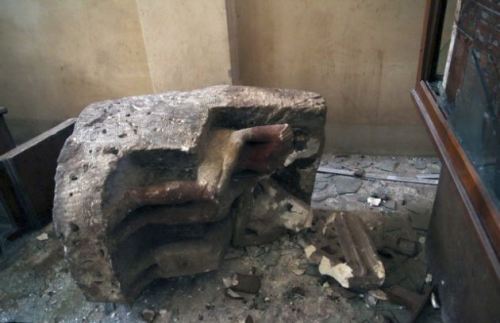
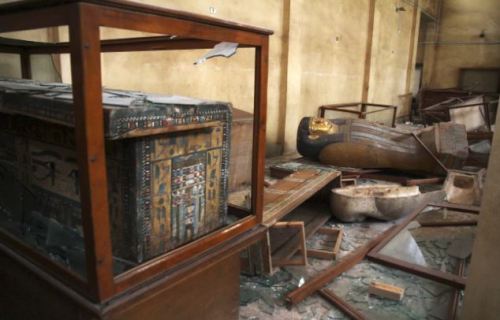
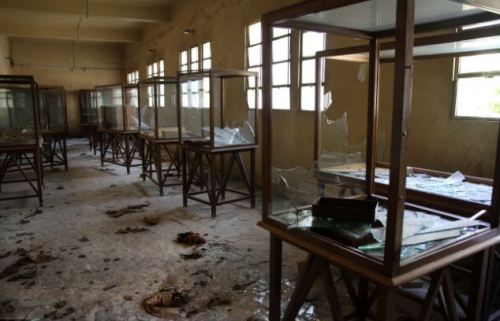
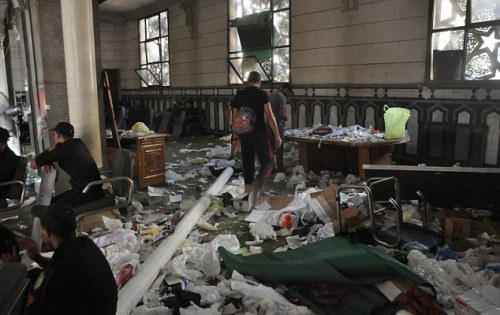
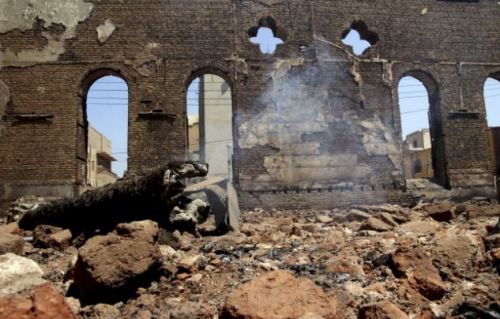
Now Egypt’s famous Malawi National Museum has fallen victim to the “Arab Spring.”  Last week looters stormed into the internationally-renowned museum and damaged or destroyed scores of artifacts.  In an official statement, the government has blamed supporters of the Muslim Brotherhood for causing the damage.  Museum authorities are still surveying the mess and compiling a list in an attempt to prevent other artifacts from being smuggled out of the country and possibly sold in the underground antiquities market.

At this point in the debacle, does it really matter who’s responsible?  What does the government intend to do if it – and this is just a wild-ass guess – if it actually manages to bring someone to trial?  In the bitter world of politics and ethnic clashes, a nation’s artistic and cultural legacies somehow always get caught in the crossfire.  Looking at these photos, it’s tough to understand what can be done to rectify the calamity.

article-2396100-1B56F4EA000005DC-162_634x422

article-2396100-1B56FAA7000005DC-875_634x422

article-2396100-1B56FB7F000005DC-880_634x422

article-2396100-1B56415F000005DC-826_634x416

article-2396100-1B56D370000005DC-197_634x422

3 Comments

Filed under Art Working

Tiny Pages

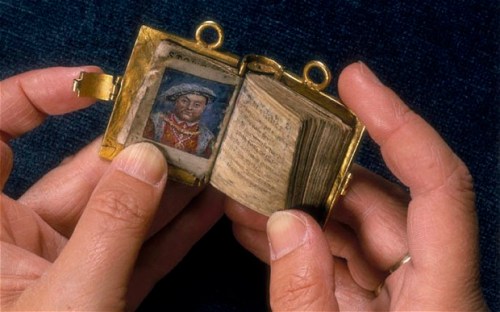
A miniature book once owned by Anne Boleyn.

A miniature book once owned by Anne Boleyn.

People are amazed at how small cell phones, personal computers and other electronic devices are becoming.  But, good old-fashioned books have a jump start on that trend.  It seems impractical, but there are such things as miniature books; tomes that measure no more than three square inches in size, with print too small to be read without a magnifying glass or a telescope.  And, they’re not the tools of “Cold War” spy games.  They’ve been around for centuries.

“They were created for reasons of practicality, curiosity and aesthetics,” says Julian Edison, whose collection of 15,000 little books includes two-inch clay tablets onto which ancient Babylonians inscribed cuneiform lettering around 2200 B.C.

Some twenty years after Johann Gutenberg developed his printing press, miniature books were being produced.  Most were religious texts.  Book-makers utilized magnifying glasses and a myriad of small tools to create books that were mirror images of their life-size counterparts, complete with leather binding and gold threading.

The Miniature Book Society, a non-profit established in Delaware, Ohio in 1983, is dedicated to the art of the littlest publications.  This past spring MBS even hosted a traveling exhibition that showcased both historic and contemporary small-scale literary works.

Don’t be fooled though.  Small books don’t necessarily mean small prices.  London-based book dealer Sam Fogg recently sold a 16th century miniature prayer book for GBP 3 million.  For GBP 15,000, Edison himself just acquired a miniature diary kept by a 13-year-old girl who survived the Titanic.  I’m sure some people will look at these Lilliputian books in the same way as they do my model cars – nice, but what purpose do they serve?  Well, that’s something only true book lovers can understand.

1 Comment

Filed under Art Working

Quick Cash – Detroit Art for Sale

On the auction block?  A panel of Diego Rivera’s “Detroit Industry.”

On the auction block? A panel of Diego Rivera’s “Detroit Industry.”

On July 18, Detroit, Michigan became the largest city in U.S. history to file for bankruptcy.  The once mighty industrial metropolis has been on a constant downslide for decades.  In 1960, it was the fourth most populous city in the country with more than 3 million residents.  But, as of the 2010 census, its population had dropped to approximately 714,000.  Detroit now has more than $18 billion in outstanding debts.  Scores of traffic lights aren’t functioning; police take up to an hour to respond to 911 calls; pot holes dot the urban landscape; bodies are piling up in the morgue waiting for autopsies; and retired city workers, such as police officers and firefighters, may see cuts in their pension benefits.

But, just when we thought things couldn’t worsen, Detroit’s vast art collection has fallen into the sights of those seeking a resolution to the city’s financial woesDetroit’s Institute of Art Museum is ranked as one of the ten best in North America and its roughly 60,000 pieces are valued at approximately $1 billion.  They include works by Rembrandt, Van Gogh and PicassoDiego Rivera’s 27-panel fresco “Detroit Industry,” a tribute to the city’s labor force in the 1930s, occupies a garden court.  Rivera considered it his most successful work, even if contemporary politicians viewed it as homage to communism.

“The DIA is among the top 10 museums in the United States in terms of the breadth and depth of its permanent collection,” said Maxwell Anderson, director of the Dallas Museum of Art; adding that the $1 billion estimate “doesn’t seem implausible.”

Christie’s International, the renowned auction conglomerate, recently sent a couple of its staff members to Detroit on a preliminary scavenger hunt.

“Christie’s called us and said they’re sending two people,” said Pamela Marcil, a museum spokeswoman.  “We don’t know who contacted Christie’s.”

“The creditors have said everything is on the table,” noted Bruce Babiarz, a spokesman for the Detroit Police and Fire Department.

Although an independent, non-profit organization operates the museum, the city of Detroit owns the land, the building and the art.  Emergency Manager Kevyn Orr has asked creditors to accept less than 20 cents on the dollar.

That Detroit has fallen into such morbid fiduciary disarray that it has to sell off its artistic treasures like used clothes at a garage sale is not just disheartening – as some have denounced it – but irresponsible.  They might as well put it on Ebay.  If such a sale does take place, it would be unprecedented in art history.  And, it certainly wouldn’t happen overnight.

“It could take at least a couple of years to sort this out,” said Thomas Kline, a Washington attorney who specializes in art law.  He also warned, “There is certainly a possibility for multiple lawsuits concerning the right to sell art to pay the creditors.”

So, if Detroit does sell off all that artwork, then what?  The DIA will end up as just another empty building in a city already littered with them.  Detroit has until March 1, 2014 to file a comprehensive reorganization plan.

1 Comment

Filed under Art Working

Destruction of the Yediluke Orchards in Istanbul

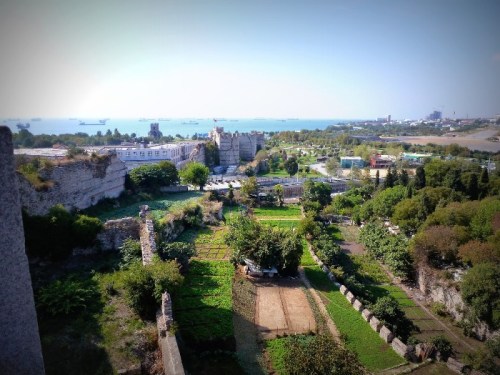
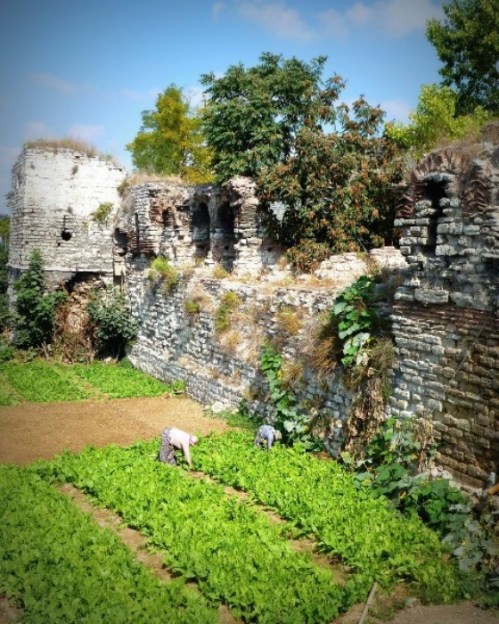
The Orchards lining the Land Walls of Constantinople, now Istanbul.

The Orchards lining the Land Walls of Constantinople, now Istanbul.

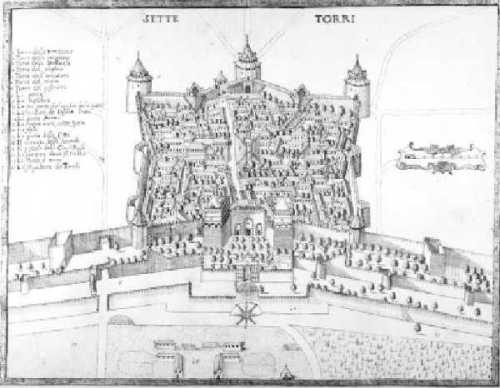
If you want any more proof that our contemporaries often have little or no respect for the world’s cultural treasures, just look to Istanbul, Turkey, where authorities are destroying the Yediluke Orchards in the name of progress.  So-called modernization usually guts the ancient past.  The Yediluke Orchards are a prominent feature of the Seven Towers Fortress; a vast complex that has stood for some 1,600 years.

Built during the Byzantine Empire, the Seven Towers Fortress was part of the former Constantinople; the historical metropolis established around 650 B.C. that sat on the Black Sea, as Istanbul does now.  It joined Europe and Asia and served as the base for the early Christian Church.  Constantinople was a major cultural, religious and political center for centuries.  Even now, contemporary Istanbul is the proverbial gateway between Europe and Asia.

Depiction of the Seven Towers Fortress, c. 1685, Francesco Scarella.

Depiction of the Seven Towers Fortress, c. 1685, Francesco Scarella.

The Yediluke Orchards run along the outer walls of the Seven Towers Fortress and supplied residents with food.  Today, as city officials destroy the orchards, local citizens have begun to protest.  As you might expect when people try to stop their government from committing atrocities of any kind, they became subject to police brutality.  We’ve seen this happen before though.  In the North African city of Timbuktu, ancient manuscripts were destroyed amidst carnage unleashed by Al-Qaeda-backed rebels.  In Belize recently, workers almost completely destroyed a 2300-hundred-year-old Mayan period to use the rocks for road fill.

If it was left up to we writers, poets, painters and other artists, wars would not erupt over such trivial matters as oil and diamonds and our ancient past would be kept in tact.  It’s too much to ask of our political leaders to relinquish their cherished power for the sake of humanity.  But alas, my rationale is viewed as too utopian for practical application.

In Istanbul, citizens continue to protest destruction of the Yediluke Orchards.  I can only hope they win the battle.

Thanks to Sedef’s Corner.

Even now, the Yediluke Orchards serve a purpose.

Even now, the Yediluke Orchards serve a purpose.

1 Comment

Filed under Art Working

All Clear!

_67475572_eliz

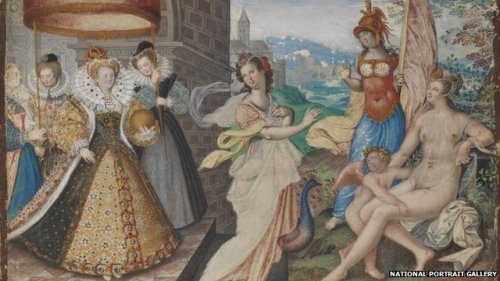
Next time you plan a garage or yard sale, take a closer look at what you have: it actually might be worth more than a couple of bucks.  When a family in southeast England decided to have a clearance sale last year, they didn’t think much of a postcard-size painting of Queen Elizabeth I they found amidst the unwanted items.  Officials with England’s National Portrait Gallery now say it dates to around 1590.

“It does show you what is to be found in people’s attics unknown and unrecorded,” says the Gallery’s Dr. Tarnya Cooper.

Elizabeth appears as Paris, holding an apple, alongside the goddesses of marriage, war and love.  Paris, also known as Alexander or Alexandros, was a prominent figure in Greek mythology.  The painting is credited to Isaac Oliver, a French-born English painter who lived around the same time as Elizabeth.

“It’s unlikely that the original owner knew what they had,” says Cooper.  “We are clear we are looking at a very high quality image by a 16th century artist.”

The painting is undergoing conservation and will be part of a display of Elizabethan artifacts later this year.

1 Comment

Filed under Art Working

Feather Frenzy

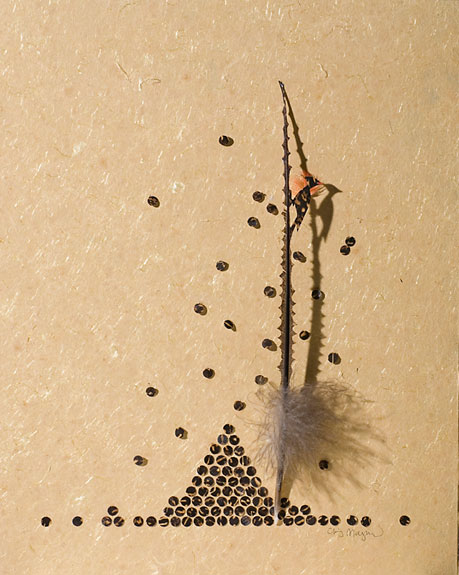
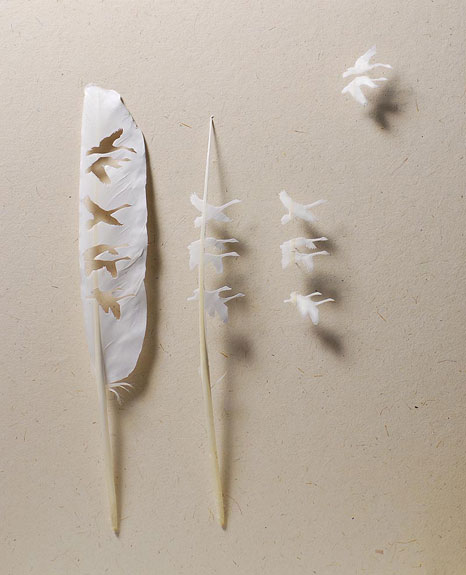
If I told you Chris Maynard has an obsession with feathers, you might wonder what the hell that means.  But, artists rarely can explain why they do what they do; their work just shows it all.  For Maynard, feathers serve as an artistic medium in the same way paint or clay does to others.  They show “life’s perfection,” he says, in the way they conform to a bird’s body.  “Their complexity as a covering beats any clothing we make.”

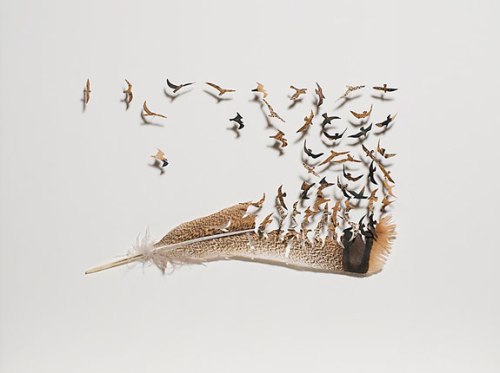
Based in Olympia, Washington, Maynard’s passion developed when he began photographing feathers several years ago.  Then, he started to arrange them into various “shadow boxes,” before creating his own unique art form.  His creations are literally feather-light silhouettes of various types of birds from the actual plumage.

Maynard doesn’t harm, or poach, any birds to obtain the feathers; instead, collecting them from zoos, aviaries and bird rescue organizations.  He mostly uses parrot and pheasant feathers to sculpt replicas of hummingbirds, cranes, swans and others.  He sketches designs in a notebook, but spends time outdoors, observing the real thing.  Once back in his studio, he dons “big nerdy magnifying glasses” to see the feather’s details and utilizes eye surgery tools he inherited from his father, an ophthalmologist.  His academic background in entomology may have given him an edge in handling such delicate items, but he clearly has a passion for avian creatures.

“I hope that seeing birds in a different light through my artwork will encourage appreciation of avian life and hence a desire to conserve it,” says Maynard.

Amazon parrot and macaw feathers.

Amazon parrot and macaw feathers.


Turkey feather.

Turkey feather.


Crow feather.

Crow feather.


Great Argus pheasant wing feathers.

Great Argus pheasant wing feathers.


Great Argus pheasant feather and two small macaw feathers.

Great Argus pheasant feather and two small macaw feathers.


Mute swan feathers.

Mute swan feathers.

1 Comment

Filed under Art Working