Here
in Texas, as well as in other predominantly conservative regions of the United
States, the term “liberal” is equal to demonic.
Personally, I consider myself a political and social moderate – which,
to most conservatives – still means liberal.
Anything to the slightest left of the small-minded rhetoric of
right-wing, Judeo-Christian ideology is blasphemously liberal. But, as you surely know by now, I deplore
being placed in boxes to suit other people’s needs and desires. Those who have dared to always end up with a
rectal thermometer-style rebuke from me.
Their rules don’t apply to me.
But,
for the past 30 years, liberals have allowed themselves to be defined by the
opposition. They’ve hidden their true
sentiments about politics and social order within the lockboxes of their
minds. Outspoken liberals have been
relegated to the coastal U.S. and urban America. Thus, they are viewed as elitists and
globalists; cretins who dismiss the notion of “American exceptionalism”
(whatever the hell that’s supposed to mean).
In
truth, liberal means educated and open-minded; compassionate and
understanding. I’m steadfast in my own
outlook and opinions. Overall, I’m just
left of the center, which – again – means extremist, bleeding-heart,
bed-wetting liberal to the right-wingers.
They can call me whatever name they wish, if it makes them feel
empowered in their MINI Cooper of a mind.
I’ve endured worst name-calling grade school.
But,
if being liberal means…
I believe true freedom begins
with free speech and the right to vote and not with a gun.
I believe the United States was
founded on religious freedom and separation of church and state and not
Judeo-Christian beliefs.
I don’t believe White males have
all the answers.
Europe is not the foundation of
civilization.
I read more than the Christian
Bible and a TV guide.
Men and women possess different
attributes, but are still equal
The human race is really the only
race on Earth.
There is life beyond this planet.
Industrial enterprises don’t have
the right to profitably pollute the environment.
Queer people aren’t diabolically
dangerous.
…then
you can call me a liberal. I call myself
a human being with my own thoughts and opinions. And I don’t have to run any of these by other
folks, just to get their approval.
As the 2020 elections approach – almost too quickly – here in the U.S., I’m almost amused at the thought of who’s going to grab the Democratic presidential nomination and how they will combat (faux) President Donald Trump. Key word here – almost. A lifetime of watching political battles rage across the media spectrum and nearly three decades of making every effort I could to register my own vote, along with discussing a variety of issues with family, friends, coworkers, gym partners and strangers, have perhaps left me cynical and jaded. I feel that usually happens once you get past the half-century mark in birthdays. Not only is my body now wanting to lead a life of its own, so is my mind. Can I get a new persona?
But, despite the anguish and
frustration, I realized something crucial a while back. Every election cycle candidates for whatever office
rushes out to visit potential constituents; shaking hands, kissing babies (born
or unborn), eating virtually everything that approaches their lips, and – of course
– dishing out a cadre of promises. Then,
as often happens, they get into that designated office and find out it just doesn’t
work out that simply. So they disappoint
us and shove their spokespeople and p.r. reps before our faces to explain why
things didn’t go as planned. So, what’s new
this year?
Nothing, really. Yet, I know THEY seek our votes for a certain
high-profile position and – if elected – they will get paid with OUR tax
dollars. Ultimately, THEY work for
US. We DON’T work for them. WE employ them, in fact, based upon their
qualifications for the job (in theory), and THEY are assigned specific duties,
according to that particular role. These
are not full-time, permanent roles for them; they are CONTRACT jobs. In other words, they are nothing more than
glorified TEMP WORKERS.
Whether it’s the U.S. presidency, a
governorship, a judgeship or a spot on a local school board, they present
themselves to us as job candidates and ask to be hired. WE, the People, analyze their skills and
experience and make our decisions afterwards.
We are charged with the complex responsibility of assessing their
viability for the job and choosing whether to grant them that role. In all cases, the majority rules; regardless,
WE, the People, are essentially their employers. Again, the salaries for those positions comes
out of our tax dollars.
They are contracted out for an X period
of time, and when that term is up – if they’ve chosen to continue – WE, the
People, review their job performance and decide if we want to renew their contract. We look at what they’ve done and how they’ve handles
themselves during their tenure. Both work
performance and attitude matter equally.
As with the initial hiring process, the majority rules. So, while some of us may be thrilled to see
the official re-hired, many among us aren’t.
Sadly, that’s just how it is.
These election events are always
difficult and frustrating. It’s not that
they can be difficult and frustrating; they ARE difficult and frustrating! Things don’t always turn out clearly. Evidence: the 2016 U.S. elections.
And no official in their right mind (and
understand many of them aren’t from the very beginning) will take their
contract renewal for granted. Evidence:
the 2018 Senate race here in Texas. Republican
Junior Senator Ted Cruz almost lost to Democratic opponent Beto O’Rourke. Cruz had coasted easily to his 2012 maiden
run and perhaps assumed last year’s contest would be equally undramatic. As I always love to see happen to such arrogance,
Cruz assumed wrong and won by literally a handful of votes.
It is such an unpleasant task to sort
through the chaos and the rhetoric and determine who is best equipped for that
designated position. But it is what We,
the People, have to do to keep our society functioning properly and soundly. Democracy is one thing that can’t be
automated.
Just remember, my friends, the people
who run for office are asking for our votes.
That simply means THEY work for US.
We, the People, hire them and we can fire them. They all have to remember that. But so do we.
I keep having to look at the slew of calendars I have scattered throughout the house – the National Geographic, ASPCA, military veterans and one displaying houses I get every year from my real estate friend. They all assure me of the same thing: it’s 2019 – not 1919. Or 1969. Or even 1999. Nope! It’s 2019, my friends. We’re at the end of the second decade of the 21st century. Oh wait! Yes. I had to check again: 2019 – the two and the zero being the key factors here.
I have to do this because of the recent series of tirades Donald Trump has lavished upon certain members of Congress. Would somebody get the damn phone away from him?!
As if anyone should be surprised, our Dear Leader hasn’t quieted down verbal attacks against non-Whites who dare to speak their minds against him. Via his Twitter feed while safely ensconced in the White House, he created quite a stir recently, when he assailed four alphamore U.S. congresswomen, Alexandria Ocasio-Cortez, Ilhan Omar, Ayanna Pressley and Rashida Tlaib. Denouncing them as “The Squad”, he became enraged, after they criticized him for his response to the growing migrant crisis along the southern border – among other issues.
Ocasio-Cortez had already
identified herself as a socialist when she won New York’s 14th Congressional
District, which includes parts of the Bronx and Queens boroughs – both of which
have large non-White populations. In fact,
I think non-Hispanic Whites are so scarce in the Bronx they might qualify for
endangered species status.
Trump didn’t hold anything back when he assailed the four congresswomen (an attribute his devotees love) that, if the lawmakers “hate our country,” they can “go back” to the “broken and crime-infested” countries “from which they came”. For the record, Ocasio-Cortez, Pressley and Tlaib were all born and raised here in the United States; thus making them, well, natural-born Americans. Omar emigrated to the U.S. with her family as a child; the clan fleeing their Somali homeland, as it sunk further into political and social chaos. But she is now an American citizen. Omar has been openly critical of Israel’s treatment of Palestinians, which garners the usual cries of anti-Semitism from all sides. But a statement about the 09/11 terrorist attacks as “some people did something” makes me think suspiciously of her. Yet, one has to look at that verbiage within the context of her entire speech. To her credit, she’s also said: “I do not blame every single white person when we have a white man who massacres children at a school, or moviegoers in a movie theatre. And I think this really horrendous narrative that says, as a Muslim, I’m supposed to explain, apologize, for the actions of someone who’s also terrorizing me, is absurd.”
Now Trump has gone after Congressman Elijah Cummings who represents Maryland’s 7th District, which includes Baltimore. Describing the majority-Black area as a “rodent-infested mess” where “no human being would want to live”, he drew widespread condemnation from Democrats and independents. I don’t know what incited that particular discourse, but it’s obvious Trump likes to play the proverbial race card when things get rough in the political arena, which is something like, oh…100% of the time. And I’ve found that, if you go for the jugular by mentioning race, ethnicity, gender or sexuality, you’ve essentially lost the debate. You’ve run out of legitimate things to say; you’ve exhausted your gallery of facts and logical points, but you want to keep arguing because you just absolutely have to have the last word.
As I’ve stated before, not everything wrong with America is the fault of White males. But again, I have to look at one of my calendars. Seriously?! We’re still dealing with this shit in 2019?! I heard that “go back” crap when I was in high school! It was a similar comment from a fellow student that propelled me into my first and only fight in high school – towards the end of my senior year. During my alphamore year a substitute teacher said my last name is un-Christian. I took that up with the school principal before I told my parents about it. I was concerned my proud father would go to the school and want to kick some old White ass.
I heard a little less racist language while in college. Key words – “a little less”. Occasionally, some idiot would throw a “you
people” in my face, and I was just as quick to slur right back at them. By the 1990s, ironically, the people slinging
racist vitriol at me the most were Black or other Hispanics.
So, how is it that this kind of talk has worked its way
back into the mainstream? Retro may be
cool in some nightclub situations, such as retro-70s. (I try to ignore “Retro 90s” nights!) But it’s not necessarily cool with a spoken
language. Never mind that Trump’s “go
back” comment might be illegal in a workplace setting. I’m still perplexed that we’ve gone from No-Drama-Obama
to Czar Trump in a virtual blink of our collective eyes.
But, after 200 or so years of civil rights progress, it seems we’ve now started rolling backwards. To we Trump detractors, this is not news. Trump had pumped fuel into the “Birther” movement: the band of morons who questioned the birthright of President Obama. He never acknowledged he’d been wrong when he said his “researchers” had learned some odd things about Obama. Yet, he sat in the Oval Office next to Obama and called him a great man. Amazing how brave some people get when they’re behind a phone or a computer, isn’t it? It’s so different in person.
Thinking back to my high school tenure doesn’t bring back
many good memories. I was so shy and
introverted I often fell prey to bullies.
So I try NOT to think about that period.
It was so long ago anyway. Yet,
that “go back” shit slammed into my conscious harder than seeing a Windows 3
screen.
My mother used to recount the
number of times people had called her “half-breed” because her father was German-American
and her mother was Mexican. My father
told me of the day an older White woman at the printing shop where he worked
said she saw “a bunch of Mexicans” working on a lawn and thought of him. He responded by saying something like, “Well,
I saw a herd of cows in a field on my way to work and thought of you.”
A friend of mine once asked how is
it that, in such a large city as Dallas, our fathers happened to know each
other.
“All those old Mexicans knew each
other!” I replied. “They were all crammed
into the same neighborhoods and went to the same schools. They had to stick together. It was a matter of survival.”
She’s only a few years younger
than me, and my answer seemed to surprise her.
But she understood what I was saying.
In high school – and to some
extent, even in college – I often felt isolated because I was one of the few Hispanic
kids. But I was as much American as I was
then and still am now. Some of my Spanish
ancestors were here in Texas long before the Mayflower pilgrims; my Indian ancestors
long before them. So I always pulled
that from the depths of my mind whenever some fool threw a “go back” at me.
I suspect Donald Trump’s presidency is the final battle cry of the “Angry White Male” – the withering group of individuals who still feel they should run everything and should be allowed to say what they want. But, as a mostly White male myself, I know Trump gives all White men a bad name. I’ll never criticize people who voted for him in 2016. They had that right, and it’s not up to anyone else to decide what their selection should be. I definitely disagree with a recent essay by Pastor John Pavlovitz about Hillary Clinton’s “deplorables” comment three years ago.
But still…“go back”? I’m hearing that again? From the president of the United States? Pardon me just a moment. Yes…still 2019. Time just won’t stop or roll backwards, no
matter how much we beg.
Weather-wise, Sunday, June 9, 2019, was supposed to be like Saturday, the 8th – hot and dry. But I awoke that morning to a surprisingly silver-gray sky. And I was startled around 12:30 local time, when the winds abruptly accelerated. Within minutes hot and dry became wet and windy – and destructive. Weather systems, of course, don’t always follow mortal meteorological predictions, and Sunday, June 9 is a prime example. The sudden storm surprised even the most…ahem…seasoned local weather forecasters, as it engulfed the entire Dallas / Fort Worth metropolitan area. Heavy winds shattered windows, dislodged massive trees, and – as anyone would expect – downed a multitude of power and telecommunication lines.
Literally tens of thousands of people suffered power
outages for days; some not seeing it return until the following Friday. Local utility companies had to seek outside
help; both clearing debris – mainly the millions of shredded tree branches –
and reinstalling power lines. Many businesses
remained shuttered for lack of power; thus costing millions in lost products
(entire grocery stores had to be cleaned out, for example) and lost time.
One of my elderly aunts had no power for a couple of days
and no landline telephone service for four days. She had her cell phone, but as a widow living
alone in a small, darkened 70-plus-year-old house, she was frightened. Another aunt and uncle went without power for
more than a day. My uncle is old school
in that he had stocked up on candles, flash lights, batteries and bottled water
– all to accompany a generator and some firearms. If it hadn’t been for that generator,
everything in their refrigerator would have spoiled. That happened to literally thousands of
people across the area in the days following the storm; including a friend of
mine who had no power for four days.
Like the aforementioned aunt, he also had a cell phone, but unlike the
other two relatives, he has no generator.
So he sweltered, while throwing out good food and prayed no one would
sneak into his house at night. He didn’t
go to work because he feared someone would do just that, while he was gone
during the day.
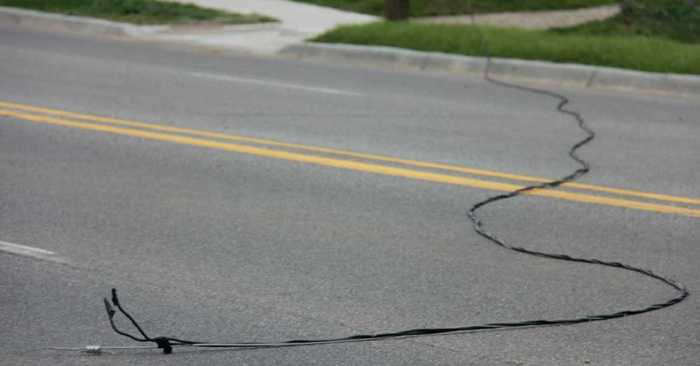
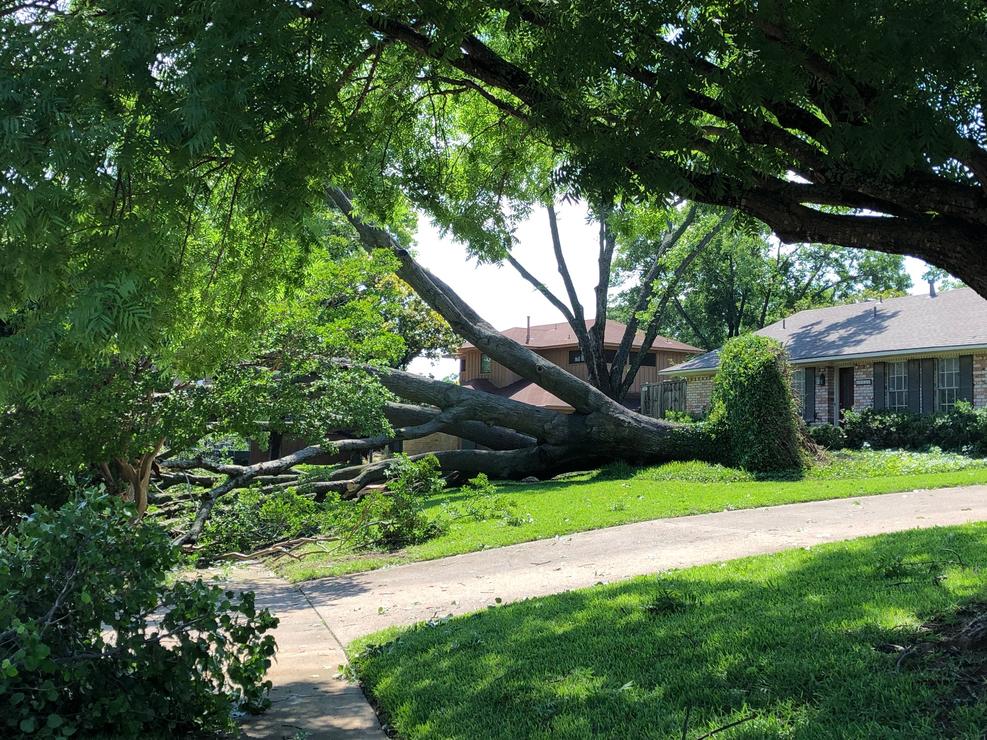
This was a common sight throughout the Dallas / Fort Worth metropolitan area after the June 9 storm.
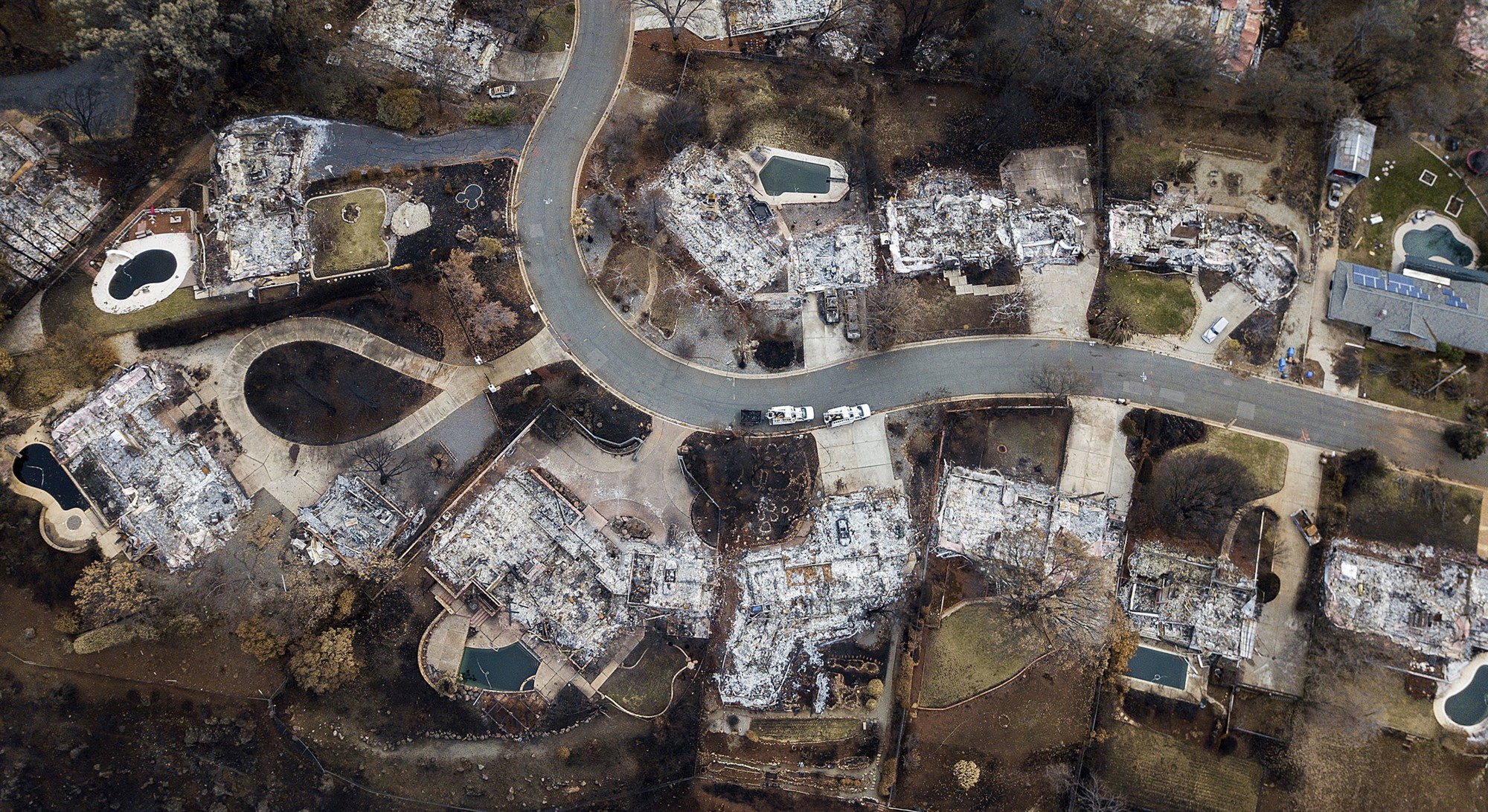
In 2018, a series of catastrophic wildfires terrorized California. The Golden State has become accustomed to annual fires, but last year proved especially brutal – and deadly. The blazes killed more than 100 people, consumed some 1.8 million acres (728,420 ha) of land, and cost roughly USD 3 billion. In at least one instance, power lines weren’t just a casualty of fire; they were the cause. The “Camp Fire” in Northern California was the worst of all the events; killing 85 people and destroying more than 13,000 structures. The town of Paradise, for example, was almost completely incinerated. It all might have been avoided, if some power lines hadn’t been live when they were toppled by high winds. Recently, California’s Pacific Gas & Electric agreed to pay $1 billion in damages to the U.S. government.
This year has already proven both deadly and costly in terms of natural disaster. Unusually heavy rains have generated massive flooding events across the country; especially, though, in the massive Mississippi River Basin and its tributaries. Records are being broken in almost every state with rainfall and high water levels. Here in Northeast Texas we’re coming to the end of one of the wettest springs since data has been gathered, starting in the 1880s. The heavy rainfall has been great for lakes and dams, but there really is something called too much of a good thing. Flooding isn’t just forcing people out of their homes. It’s also drowning farming and ranch land; flushing out sewer systems; and shutting down highways. And, as always, power and telecommunication lines are among the victims.
I’m fully aware that we mere mortals can NOT control the weather, even though we think we can. As much as we believe our latest digital and electronic machinery, coupled with a ubiquitous cybercloud, can now predict where every hurricane will make landfall and which weather system will cause flooding, we still have no means of controlling any of nature’s wrath. Yet, it’s hard for me to believe that, at the end of the second decade of the 21st century, we’re still dealing with downed power and telecommunication lines for long periods of time.
I’m not the first to speculate openly about this dilemma. A variety of individuals – from average citizens to seasoned utility experts – have proposed interring as many power lines as possible throughout the U.S. One factor, however, always rears its ugly head with each debate: money. Time and labor are also critical elements – which of course, tie back into funding. It seems rather simple on the face of it: dig as many trenches as possible and bury those lines in some kind of sturdy container. But, as the old saying declares, everything looks great on paper.
In 2011, the Public Service Commission of Wisconsin published a report, “Underground Electric Transmission Lines”, in which they state, “The estimated cost for constructing underground transmission lines ranges from 4 to 14 times more expensive than overhead lines of the same voltage and same distance. A typical new 69 kV overhead single-circuit transmission line costs approximately $285,000 per mile as opposed to $1.5 million per mile for a new 69 kV underground line (without the terminals). A new 138 kV overhead line costs approximately $390,000 per mile as opposed to $2 million per mile for underground (without the terminals).”
How would any regional or state utility firm fund such an extreme difference? There are at least three immediate solutions:
Raise property taxes on individual homeowners.
Raise utility rates for homes and businesses.
A combination of both
All are plausible, but raising property taxes and utility
rates is never popular. If you want to
see riots in the streets, starting jacking up taxes and utility rates on
people; most of whom already feel they pay too much for such services. I can empathize. As much as we need power companies, it’s a
proverbial love-hate relationship. Kind
of like what the U.S. has with Saudi Arabia.
Since the turn of this century, technical improvements
with cable technology, grounding methods, and boring techniques have made the
interment of power lines more possible.
That is, from a technological perspective, that goal is within
reach. But, remember that everything on
paper analogy!
Initial costs for such a massive undertaking would have
to go to planning and organizing. We
can’t just grab a back hoe and some shovels and start digging. Deciding where and when to dig will take
high-level planning from the most experienced infrastructure specialists. Determining how far down to dig is another
conundrum, as they have to look for, say, local water tables and even old
mining shafts. That alone will take
years.
Once digging begins, a slew of other factors come into play: traffic disruptions, power outages and weather. In residential areas, homeowners would have to grant permission to dig on their properties. If they don’t allow it, how would a utility company get around that? Would they invoke the concept of “eminent domain”? Or would they somehow be able to avoid that particular property? And how much would that little detour cost? In any given neighborhood, one obstinate resident could delay the entire project – which, in turn, will cost money in lost time. If local governments force the eminent domain option on someone, the situation might result in pricy litigation. In worst case scenarios, it literally could turn fatal.
Knowing the U.S. federal government – that is, knowing
its inability to budget wisely – the national debt could balloon under such a
massive project. Our global credit
rating – which suffered greatly after the 2008 economic downturn – might, once
again, be adversely impacted.
On a national security level, it could put us in a vulnerable position. The city of Dallas, for example, with a population close to 3 million and home to a regional branch of the Federal Reserve Bank, could be in the midst of a major transfer of power sources (that is, switching to the new system) when a monster tornado strikes. New York City could find itself in the same situation when another 9/11-style terrorist attack occurs. San Francisco, home to another major branch of the Federal Reserve Bank, might be in the middle of construction when a catastrophic earthquake hits; much like the 1989 Loma Prieta temblor. Chicago, the third most populous city in the U.S. and home to one of the busiest international airports in the world, as well as a major shipping port on Lake Michigan, might also be mired in a construction mess when a powerful sunstorm knocks out communication satellites. Call me a pessimist, but we have to be prepared for those dreaded worst case scenarios, while hoping for the best results.
And that’s just the planning, construction and implementation of the systems. Time capsules are a fun and delightful project for school kids. But burying something like telephone lines comes with its own set of future costs and complications.
“Maintenance.
The cost of maintenance for underground lines is difficult to assess. With so many variables and assumptions final
estimates would be subjective at best. Predicting
the performance of an underground line is difficult, yet the maintenance costs
associated with an underground line are significant and one of the major
impediments to the more extensive use of underground construction.
Major factors that impact the maintenance costs for
underground transmission lines include:
Cable repairs. Underground lines are better
protected against weather and other conditions that can impact overhead lines,
but they are susceptible to insulation deterioration because of the loading
cycles the lines undergo during their lifetimes. As time passes, the cables’ insulation
weakens, which increases the potential for a line fault. If the cables are installed properly, this
debilitating process can take years and might be avoided. If and when a fault occurs, however, the cost
of finding its location, trenching, cable splicing, and re-embedment is
sometimes five to 10 times more expensive than repairing a fault in an overhead
line where the conductors are visible, readily accessible and easier to repair.
In addition, easement agreements might require a utility
to compensate property owners for disruption in their property use and for
property damage caused by the repairs to the underground cables.
Line outage duration. The duration of underground line outages vary widely depending on the operating voltage, site conditions, failure, material availability and experience of repair personnel. The typical repair duration of cross-linked polyethylene (XLPE), a solid dielectric type of underground cable, ranges from five to nine days. Outages are longer for lines that use other nonsolid dielectric underground cables such as high-pressure, gas-filled (HPGF) pipe-type cable, high-pressure, fluid-filled (HPFF) pipe-type cable, and self-contained, fluid-filled (SCFF)-type cable. In comparison, a fault or break in an overhead conductor usually can be located almost immediately and repaired within hours or a day or two at most.
During the extended line outages required for underground
line repairs, services to customers are disrupted. The length of customer outages can be
mitigated using redundant feeders, but the duration of such outages is still
longer than those associated with overhead lines, and they have additional
costs associated with them.
Line modifications. Overhead power lines are
easily tapped, rerouted or modified to serve customers; underground lines are
more difficult to modify after the cables have been installed. Such modifications to underground power lines
are more expensive because of the inability to readily access lines or relocate
sections of lines.”
As overwhelming as it is, I still feel it’s a worthwhile investment. It’s a long-term process and a necessity for national security and prosperity. Establishing the first telecommunication infrastructure (telegraph lines) in the 19th century was a massive undertaking, but ingenuity and determination made it happen. Those same attributes were utilized with the construction of railroads and again with the interstate highway system. We did it with the lunar and space shuttle programs. Remember, the ancient Romans built the Colosseum in the 1st century C.E., most of which remains standing. But at least they had wheels and large beasts to assist them. The Mayans and the Aztecs built massive stone temples without wheels or draft animals. The U.S., or any developed nation, surely could place thousands of miles of power and telecommunication lines underground.
Homes leveled by the Camp Fire on Valley Ridge Drive in Paradise, California, December 2018. Photo: Noah Berger / Associated Press.
This series of photos shows the extent of the damage throughout the Dallas / Fort Worth area following the June 9 storm.
*Full disclosure: I worked at SAIC’s Dallas office from 2002 to 2010, first as a document scanner and archivist, then as a technical writer.
Among my father’s favorite memories were the times he played baseball as a kid in his East Dallas neighborhood. Growing up in those environs more than six decades, with scores of other Hispanic families, ago gave him a sense of community and freedom. He had plenty of others, he once told me: holding me for the first time; buying this suburban Dallas home; working in the yard; and playing with our dogs.
“I keep reliving those moments over
and over,” he said, following another late night talk. “If I could go through them again, I would.”
Most of my own best memories occurred in the 1990s – the best decade of my life so far. And one of the greatest was my 1991 trip to Ixtapa, México – a small hamlet on the nation’s Pacific Coast, northwest of Acapulco and far from the touristy ruckus of Cancun and Cozumel. That was the furthest away I’d ever been from home at the time and only the third time I’d been outside of the U.S. My first two international trips also were to México; college spring break jaunts that were hazy and less relaxing.
Ixtapa was incredibly soothing and
quiet. It was the first time I’d ever
seen the Pacific Ocean, or any ocean for that matter. The closest I’d come to an ocean was the Gulf
of México. On my first night, the
pounding of the waves along the shoreline echoed deep into my mind and lulled me
to sleep. While I savored the beach and
the warm weather, my parents feared for my life; that I’d be kidnapped by local
hoodlums. That had crossed my mind, too,
but I was enjoying the simple sights too much to worry.
The Ixtapa excursion allowed me to
live out a few of my dreams: lounging along the waterline for hours; roaming
through a quiet Mexican town, wallowing in the community without boisterous
intruders or Americanized visages; stuffing myself with as much food in the
all-you-can-eat buffets; and, of course, consuming plenty of alcohol.
Sitting in the sand, wearing a
skimpy Speedo, and letting sea water roll around me remains one of the best
therapies I’ve ever had. I thought, if
some giant tsunami accosted the beach and sucked me into the Pacific depths, I probably
wouldn’t mind. Another fantasy didn’t develop
until the moment I stepped onto the beach, beneath a cloudy sky. I didn’t get to experience it, which is
probably a good thing. It might have killed
me.
A tall islet laden with tropical
vegetation languished innocuously offshore – perhaps a mile at the most. I thought it beckoned me, and after a couple
of days, I dared to attempt a brief excursion to its narrow shores. I tried swimming out to it, but quickly
realized the allure was strictly my own cogitation. And I wisely returned to shore.
I returned home looking like I’d been attacked by some animal rights activists, which startled family, friends and coworkers. I couldn’t praise Ixtapa highly enough. I loved it then and I love it now. I hope I can visit again. If not now, then maybe in another life – if there is such a thing.
I’m not thinking of reincarnation,
but rather, a life beyond this one. The post-Earth
kind of life. Out there. Wherever it is.
I’ve never been so arrogant as to
say I know exactly what will happen to me after I die. I’m certainly not a self-righteous
evangelical Christian or “72 virgins at the end of the hallway” maniac. But, for the bulk of my life, I’ve wondered
what happens to us when we cross over to that “Other Side.” What do people do? How do they navigate time and space? Why do they not visit us back here more often,
especially when we call out their names in prayer?
I don’t know. But I’ve begun to ponder a simple possibility
– why would they come back here? For any
reason. As much as they love us. Why return to Earth? They’ve served their time in this life. So, what awaits them – all of us – on that “Other
Side”?
All of those happy moments they
experienced. The people who have gone
before us are, perhaps, reliving the best times of their lives. They’re once again experiencing those events
that gave them the most pleasure and made them feel the happiest. I don’t suppose this would include the times
they might have hurt other people for pleasure – whether it was accidental or
deliberate. Certainly not deliberate! I imagine others who shared those grand moments
slide in and out of the reoccurrences. A
sort of crossing time and space.
Therefore, my father is reliving the
days he played baseball in his youth; when he first met my mother; holding me
shortly after I’d been born; caressing my dog, Wolfgang, just a few years ago. He absolutely loved that little four-legged
monster! Petting him was one of the
simplest – yet best – pleasures my father had.
All of those things made him feel
good. Why in the hell would he come back
here to help me with Earthly troubles? Why
would anyone want to give up reliving those special times to deal with plumbing
problems and credit card debt? They’ve already
dealt with that shit!
I can’t imagine my father trading in
the joy of having his own lawn for a day of listening to me moan about lower
back pain! Who in their right mind would
want to make that kind of trade off?!
That’s why we don’t see our dearly
departed that much. And it’s why
tampering with séances and Ouija boards is dangerous. Disturbing the dead may be the subject of
many bad jokes. But I think it’s
wrong. It’s also kind of pointless. Imagine you’re undergoing a full body massage
and a relative interrupts to tell you they got into a road rage incident. Wouldn’t you be pissed and want to startle
the crap out of them, as they got ready for bed?
What’s it really like on that “Other
Side”? How is it living out there? Again, I don’t know. And I’m really not eager to find out anytime
soon! I have more stories I want to
publish. I want to adopt another dog. So, I’ll continue paying my Earth-bound
dues. And one day I hope to lounge in
that Ixtapa surf for hours – not concerned with anything.
After more than four decades of watching American politics in action – I’m old enough to remember Watergate – I’ve come to realize the U.S. Constitution is a fluid document. It’s more of a guide than a text carved into stone or marble. That’s why it’s been amended 27 times over the past 240 years. Therefore, as a devoted yet concerned citizen (meaning, pissed off at the crappy way things are going), I propose 3 additional amendments to the U.S. Constitution:
Amendment XXVIII
Note: This Amendment affects Section 1 of the 22nd Amendment.
Section 1: No person shall be elected to the Office of the President more than once, and that term is limited to six (6) consecutive years.
Section 2: If the Vice-President, or any other designated official ascends to the Office of President within one (1) calendar year from the day the originally elected President is sworn in, that person will be able to serve as Chief Executive only for the remainder of that particular term. That person will not be allowed to seek election as President on their own.
Section 3: If the Vice-President, or any other designated official ascends to the Office of President within no less than one (1) calendar year and one (1) calendar day from the day the originally elected President is sworn in, that person will be able to serve as Chief Executive only for the remainder of that particular term. That person will then be allowed to seek election as President on their own for only one term of six (6) consecutive years. Therefore, the longest any one individual can serve as Chief Executive is one (1) calendar day short of eight (8) consecutive years.
Amendment XXVIIII
Section 1: All candidates for the Office of President who enter the first primary in their respective field will be subjected to a mandatory physical exam by an independent, non-partisan medical professional selected by the current Surgeon General. The results of this exam will be made public no more than one (1) calendar day after that initial primary election.
Section 2: All candidates for the Office of President who enter the first primary in their respective field will be subjected to a mandatory psychological exam by an independent, non-partisan medical professional selected by the current Surgeon General. The results of this exam will be made public no more than one (1) calendar day after that initial primary election.
Amendment XXX
Candidates for the Office of President must submit their financial records, including tax filings, to both Houses of the U.S. Congress within ninety (90) calendar days from the day they announce their candidacy. Failure to comply within the allotted period will result in automatic disqualification from the election process. That person will not be allowed to resume their candidacy, but will be allowed to seek the Office of President for the next appropriate election. That person will then be subjected to the same protocol set forth in this Amendment. Failure to comply within the allotted period for a second time will result in both automatic disqualification from the current election process and forbiddance from seeking the Office of President or the Office of Vice-President at any time in the future.
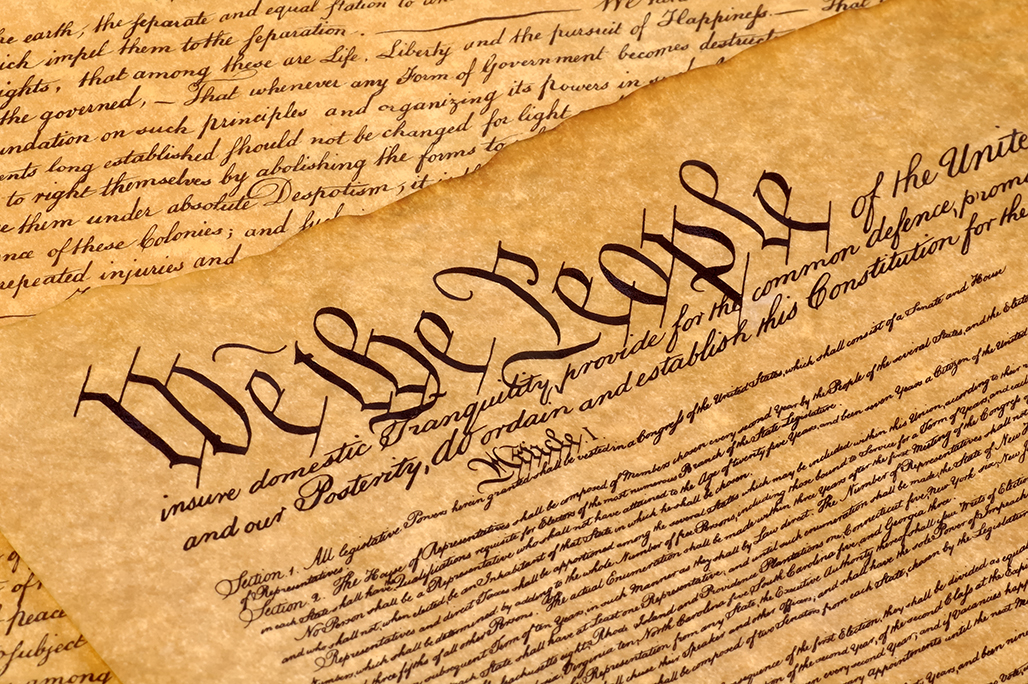
Please let me know what you folks think! We, the People, must take more and better control of our nation’s leadership – just as our Founding Fathers (and Mothers) intended.
As if things couldn’t get any stranger since the election of Donald Trump, the so-called actor known as Jussie Smollett has made a sad name for himself by apparently staging an assault on himself and claiming it was a hate crime. Investigators in Chicago – where the alleged attack occurred – arrested Smollett on Thursday, the 21st, and charged him with fakery. (Fakery is essentially the same as dumbfuckery.) I’d heard of the show Empire, but I’d never heard of Smollett. I mean, who has? In the high-pressure universe of television entertainment, people are only as good as their last scandal. But, if Smollett seriously wanted to advance his career, there are a number of things he could’ve done, instead of conjuring up a hate crime scenario.
To help him – and other would-be assholes who have dared even thinking of doing the same – I’ve composed a list of things Smollett might have done to enhance his notoriety.
Take acting lessons.
Post nude selfies to social media.
Get arrested with marijuana in his underwear.
Pose for Playgirl.
Announce he’s turned heterosexual.
Express his support for Donald Trump.
Rent an expensive sports car and wreck it.
State publicly he hates queer people.
Fake a seizure while on a plane.
Claim he had a one-night fling with Anderson Cooper.
Go to work part-time for Wal-Mart and say he needed the gig to supplement his income.
Say he has 4 testicles.
Travel to Acapulco for vacation and “disappear” for a few days.
Get into a fight with an old woman in a wheelchair.
Say he’s trying to find a child he thinks he fathered 20 years ago.
Start wearing a t-shirt that says, ‘I Beat Vitiligo.’
Visit a therapist claiming he’s a masturbation addict.
Tell everyone he’s NOT vegan and eats gluten.
Publicly condemn scientology.
Say he hates Oprah Winfrey and Ellen DeGeneres.
On a more serious note, I have to confess my disdain for Smollett. I’ve known plenty of non-White people who have been victimized by hate crimes (beyond name-calling), and most of the queer people I’ve known could recount one or more harrowing tales of hate crime episodes. For Smollett to pay someone to inflict an attack on him, just for the sake of seeing his acting career skyrocket, is an offense to REAL victims of hate crimes. It may also prevent future victims from reporting these events, lest they be questioned and even mocked. You know the right-wing establishment is going to have a field day with this shit, don’t you!
Fabricating criminal behavior won’t advance anyone’s career, but it can set back the progress marginalized groups have made towards equality. The public truly doesn’t care about the notoriety of a little-known actor on a ubiquitous television show. But we do care about people who have fallen victim to hate and oppression. Smollett can now fade into the obscurity where he was already languishing. Maybe Wal-Mart will hire him.
The jokes were seemingly endless. “No hard evidence.” “Won’t stand up in court.” This was part of the chaos surrounding the infamous John and Lorena Bobbitt fiasco from two decades ago. In June of 1993, Lorena Bobbitt was an Ecuadorian immigrant living in Arlington, Virginia and married to a former U.S. Marine, John Bobbitt. Lorena claimed John returned home in a drunken rage one night and raped her. In retaliation, she grabbed a kitchen knife and severed his penis. Then, she fled their apartment with the organ in her hand, dropping it into a field.
The story quickly made international headlines, and Lorena Bobbitt became an instant feminist heroine. And then, the jokes started – about John Bobbitt. Everyone, it seemed, especially television and radio talk show hosts, had a good time with it. Women in my own workplace laughed out loud about it, carrying on as if they were discussing the antics at a family dinner. But, I noticed no one made fun of Lorena Bobbitt.
Exactly one year after the Bobbitt incident domestic violence took a deadlier turn when O.J. Simpson was charged with murdering his ex-wife, Nicole Brown Simpson, and a friend of hers, Ron Goldman. Shortly after Simpson’s arrest, a group of women’s rights activists, led by Los Angeles-based feminist attorney Gloria Allred, demanded that Simpson be put to death, if he was found guilty. Legal semantics did not concern them in that Simpson qualified for the death penalty under California law because supposedly he’d murdered two people at the same time. Too many men, they declared, had murdered their female partners and gotten away with it. They wanted an example made of Simpson. Keep in mind that they called for Simpson’s life even before he was arraigned in court and long before the actual trial began. But, amidst all the talk about the volatile relationship between Simpson and his ex-wife, one person was consistently left out of the picture: Ron Goldman. He was hardly mentioned. In fact, he was almost always referred to as “her friend,” meaning Nicole Simpson’s. It took a lawsuit by Goldman’s father to bring Ron’s name to the forefront. But, even now, Ron is still often referred to as “Nicole’s friend.”
Four months after the Simpson case erupted family violence took yet another tragic turn. In York, South Carolina, Susan Smith placed her two young sons in her car and rolled the vehicle into a local lake whereupon the boys drowned. Smith claimed that a man had carjacked her. As with the Simpson case, race played a significant role because Smith had specifically stated a Black man had committed the crime. As officials scoured the local area for the missing car, they also descended on every Black man in the county. Not just those with a criminal record, of which there were few. Virtually every Black make who passed through York, South Carolina found himself with a target on his back. Finally, after intense scrutiny, Smith confessed to the unthinkable: she had fabricated the entire story, from the kidnapping to the pleas for her boys’ return, and led police to her car. She had driven it into a local lake – her toddlers strapped into their car seats. The boys’ bodies were still entombed in the submerged vehicle.
The media did a good job of showing many women lovingly holding onto their children, as if to emphasize that most women wouldn’t dream of behaving like Susan Smith. In the Simpson case, however, the media didn’t make any effort to note that most men don’t abuse, much less murder, their wives or ex-wives.
Then, during her trial, Smith made a stunning accusation. She claimed her stepfather, Beverly Russell, had molested her as a teenager. And, after Smith was found guilty and sentenced to life in prison, the focus suddenly shifted away from her and her dead young sons and onto Russell. And the same band of feminists who had been so quiet throughout the trial suddenly rose up in anger, demanding that Russell be investigated. And, just like Ron Goldman, Smith’s two sons were lost in the heated discussion about domestic violence.
I thought of these cases Both the Bobbitt and Simpson cases brought the ugly specter of domestic violence into a new light. Virtually every analysis of this subject, however, has focused on males as the aggressors. If anyone mentions the term battered husbands, they are met with incredulity. But, in a 1974 study of couples in which violence had occurred, researcher Richard Gelles found that while 47% of the men initiated the violence on a wife or girlfriend, 33% of the women did the same to a husband or boyfriend. In 1980, Gelles joined with fellow researchers Murray Straus, a pioneer in family violence research, and Suzanne Steinmetz, another prominent sociologist, to analyze an even greater number of similar situations and found that the percentages had increased exponentially – for women. In 1999, University of Wisconsin psychology professor Terrie Moffitt confirmed those findings and added that, contrary to feminist proclamations, women don’t often initiate violence as a measure of self-defense. They are often the aggressors.
Admittedly, roughly 75% of arrestees in domestic violence cases are male. But, does that mean men simply are more violent? Or, that police are more likely to arrest men? Still, the idea of women being violent is somewhat foreign. It contradicts the stereotype of the helpless, passive female.
So, just how many battered men are there in this country? No one knows. Despite years of analysis – even of that particular subject – researchers still can’t present an accurate count. To feminists, this proves that domestic violence is strictly male-on-female and nothing else. But, to those studying this issue from an analytical perspective, it points to a cultural definition of manhood. Men who are abused emotionally or physically by women are considered weak; the objects of ridicule; less than human.
To me, it points to a long-held assumption that violence against men is perfectly acceptable; that the male life is expendable. It starts in infancy, when many newborn males in the United States are routinely circumcised without any type of anesthetic relief and for no established medical purpose. The procedure became common in the early 1950s in the U.S. and soon reached a peak of roughly 90% within a few years. That figure remained relatively steady for the next 30 years, when it began to decline. By 2010, the rate of newborn male circumcisions had dropped to an astonishingly low 40%. But that’s been a difficult battle to fight. It’s still perfectly legal to sever part of an infant male’s penis for the ridiculously mere purposes of religious means or aesthetic sensibilities. Any efforts to ban the procedure – even at a local level – have always been met with hostility and ultimately abandoned.
Yet, in the 1990’s, the issue of so-called female circumcision became prominent, and women’s rights activists pushed for laws to ban the procedure in this country. They achieved that in 1996 with the passage of the Female Genital Mutilation Act, which received 100% support from all members of the U.S. Congress and took effect immediately. Opponents of FGM declared that female circumcision is worst because it removes all of the genitalia, while male circumcision only removes part of the penis. That’s like saying, if you’re going to hurt somebody, stab them. But, for God’s sake, don’t shoot them. Still, FGM never has been practiced in the U.S. or most other developed nations. Personally, I’d never heard of it until the early 1990s.
On the issue of child abuse, male children are six times as likely to endure physical abuse and ten times as likely to suffer injury than their female counterparts. Some school districts, even at the elementary level, maintain policies that forbid corporal punishment from being administered to girls, but not boys.
And then, there’s Selective Service. Mandatory military service for men in the U.S. ended nearly half a century ago, but Selective Service was reinstated in 1980. All males in this country are required to register for Selective Service within thirty days of turning 18. While there’s no penalty for late registration, there are some severe penalties for failing to register; such as an inability to obtain financial assistance for college, find employment, or get a driver’s license. Non-registrants can be fined several thousands of dollars and be imprisoned. Even men who are only children or only sons and those who are physically disabled (but can leave their residence under their own power) are required to register. Selective Service means young men can be drafted into the military in times of national crisis; meaning they can be forced into a war; meaning they could get killed. It turns young men into cannon fodder. Yet, all of that is perfectly acceptable.
Not until 2013 did the United States finally allow women already enlisted in the military to serve in combat roles. But they still can’t be conscripted. And Americans remain squeamish about the thought of women coming home in body bags, or with missing limbs. Apparently, though, we’ve made peace with seeing men return like that.
In the realm of capital punishment, men comprise 98.5% of death row inmates. Death penalty opponents often point out the racial disparities in meting out capital punishment, which are valid. But, in reality, the death penalty is more sexist than racist. And, when women are sentenced to die, the objections are especially boisterous. In 1984, Velma Barfield of North Carolina became the first woman executed in the United States since the Supreme Court reinstated capital punishment eight years earlier. At the time, she was only the tenth woman executed in the U.S. since 1900. Barfield poisoned a number of people to death, including her own mother. But, when she was sentenced to death, a tidal wave of protests, including some by religious leaders, ensued. And, the same cacophony of protests surrounded the execution of Karla Faye Tucker here in Texas in 1998. No one actually has declared that it’s immoral to execute a woman, even if she is a proven killer. But, it seems to be implied.
I’m not trying to defend the likes of John Bobbitt or O.J. Simpson. Neither has been an upstanding citizen. And, no one really knows what happened those two different nights so many years ago, except the parties involved. The police had been called to the Bobbitt home several times in the months preceding the knife incident. As one observer put it, to say that John and Lorena Bobbitt had marital problems is like saying Jeffery Dahmer had an eating disorder. It somewhat trivializes the entire matter.
Violence is violence, regardless of gender, race, age, or any other attribute. It’s morally wrong and it serves no purpose. We need to stop putting prices on people’s lives and categorizing violence according to how much injury the victim incurs. Despite decades of progress regarding basic human rights, most societies – even those with high standards of living and educational rates like the U.S. – seem to believe it’s okay to kill men. Except in rare cases of self-defense, it is not okay to kill anybody.
“And why is it that when you’re dining here today to honor me as Hispanic Officer of the Year, I look around the room full of ranking officers, and the only other Hispanics I see are waiters and busboys? As far as I’m concerned, you can keep your awards.” – René Enriquez, as Lte. Ray Calletano, “Hill Street Blues”, 1983
“A part of me wants to kick their ass. A part of me feels sorry for their stupid ignorant selves. But if you’ve never been farther south than Nuevo Laredo, how the hell would you know what Mexicans are supposed to look like?
There are green-eyed Mexicans. The rich blond Mexicans. The Mexicans with faces of Arab sheiks. The Jewish Mexicans. The big-footed-as-a-German Mexicans. The leftover French-Mexicans. The chaparrito compact Mexicans. The Tarahumara tall-as-a-desert-saguaro Mexicans. The Mediterranean Mexicans. The Mexicans with Tunisian eyebrows. The negrito Mexicans of the double coasts. The Chinese Mexicans. The curly-haired, freckle-faced, red-headed Mexicans. The Lebanese Mexicans. Look, I don’t know what you’re talking about when you say I don’t look Mexican. I am Mexican. Even though I was born on the U.S. side of the border.” – Sandra Cisneros, Caramelo, Chapter 72. Copyright 2003, Vintage Books.
Recently FX Networks announced the premier of “Mayans MC,” a spinoff of their highly popular, award-winning “Sons of Anarchy.” Airing from 2008 to 2014, “Sons of Anarchy” followed the lives of an outlaw motorcycle club in the fictional town of Charming, California. Exploring government corruption, personal loyalty, racism, redemption and the vigilante spirit, it’s sort of what you’d get if the Hells Angels produced a show for the Hallmark Channel. “Mayans MC” essentially continues the storyline, but with a Latino cultural flair. While the real Mayans charted the night skies, these “Mayans” are drug runners who immediately encounter another gang, Los Olvidados (The Forgotten Ones). They might as well have called it ‘Mean Ass Mexicans on Motorcycles.’ I guess not much has changed since 1983.
It’s slightly reminiscent of “Kingpin,” a severely short-lived series that dealt with “the machinations of an ambitious Mexican family . . . displayed in graphic detail as the family faces challenges from both the United States Drug Enforcement Agency and from the dangerous underworld in which they work.” The show was the brainchild of the late David Mills, a “light-skinned black man whose racial identity was not always evident to those around him” and who “wrote white characters and black characters with equal zeal.” Okay, great. He may have placed Black and White folks on equal levels, but he kept Hispanics on the criminal platform. There are more colors in the rainbow of equality than black and white.
The start of 2005 saw the debut of “Jonny Zero,” a Fox series about an ex-con named Jonny Calvo, played by the underwhelming Frankie G. (Gonzales), who returns to his old neighborhood to begin life anew. He naturally finds it tough to stay on the right side of the law because his former employer seeks his tough-guy services to engage in new criminal activity, while the FBI wants him to snitch on that same former employer. Decisions! Decisions! Aside from taking place in that most Latino of all American metropolises, New York City, “Jonny Zero” was also filmed there. I presume that was meant to lend it a sense of gritty urban realism. Fortunately, like “Kingpin”, “Jonny Zero” lasted all of a nano-second in TV land.
Even now, in this allegedly post-civil rights era America, Hispanics are still portrayed on television as gang bangers, maids and illegal immigrants.
In 2011, Demián Bichir received praise and a Best Actor Oscar nomination for his role in “A Better Life”, the story of a Mexican immigrant father who chooses to remain in the U.S. and work as a gardener in Los Angeles. His goal is simple: do for his kids what the movie’s title says to do. It’s supposed to be melodramatic and sweet and, perhaps, make the case for a more sentimental view of illegal immigration.
In an interview last year, actor Benito Martinez lamented, “I had all these images of elegance and range and style, so when I, naively, was trying to build my career, those were my examples,” the soft-spoken Martinez says. “But what I was getting in the ‘80s as a young Latino actor was, ‘You’re going to be a gang member and you’re going to go in and rob the bank.’ I had to then learn about pigeonholing. I had to learn the power of no.”
Martinez’s latest role? A migrant laborer on a tomato farm on ABC’s “American Crime”. The “power of no” often runs hard up against the need to pay bills and beef up a resume. The show was cancelled last year.
Another ABC program, “Modern Family,” has been heralded as a depiction of America’s ethnic diversity. But the main female character – portrayed by the immensely untalented Sofia Vergara – is yet another Hispanic trope: the sexpot.
Twenty years ago critics wondered aloud why the highly popular show “Friends” didn’t feature any Black characters, given that it took place in New York City. Well, it didn’t have any Asian or Hispanic characters either.
Again, not much seems to have changed for Latinos in popular culture since 1983. The late Lupe Ontiveros once calculated that she’d portrayed maids and housekeepers some 200 times in her 30+ years as a professional actress. Yes, I’ve seen plenty of Hispanic housekeepers – have even known a few. But most of the Hispanics I’ve seen and known throughout my life – even those outside my own family – have been well-educated, well-spoken, gainfully-employed, law-abiding, military-serving U.S. citizens. These are MY people – not the illiterate wetbacks scurrying across the border at midnight or hyper-violent drug cartel leaders. I’m not familiar with those latter groups. I can’t identify with them. Neither can most other Hispanic-Americans.
So why don’t we see more of us on television or in the movies? I suppose my life as a 50-something freelance technical writer taking care of his elderly mother is too bland for the American entertainment – an industry still dominated by mostly White (usually Jewish) men. And I won’t start a life of crime just to get attention and maybe a reality TV show! Hell, that would cut into my writing time!
The ordinariness of the average Hispanic-American is perhaps why I had such a hard time getting my debut novel published. Traditional publishing houses couldn’t see the reality in a book with Hispanic characters who are well-educated and speak perfect English. Yes, one publisher actually told me that a little more than a decade ago! That’s why I’ve resorted to self-publishing, which I’ll get to in a different essay.
The only way I see things changing for the general American perception of Hispanics – aside from letting the ‘Old Guard’ die off – is for Latinos to get angry. Yes, just flat out pissed off and demand more AND better from the entertainment industry. To some extent, that’s already happened with the cancellation of shows like “Kingpin” and “Jonny Zero”. But we have to point out – forcefully – to TV and film producers that they don’t have a true understanding of who we all are. Who we really are. Stereotypes are pathetically old school and don’t have a place in 21st century societies.
Years ago some White people at my father’s workplace told him he wasn’t like “other Mexicans”; that he was “different.” He honestly didn’t know what to make of it, but I did when he mentioned that to my mother and me at dinner one evening. “They’re stereotyping you, Dad,” I told him.
The U.S. Senate hearings for Judge Brett Kavanaugh’s nomination to the Supreme Court have gone from the mundane (replete with the standard and predictable inquiries into the candidate’s judiciary paper trail) to the hyper-dramatic. Not since Clarence Thomas’ 1991 confirmation has an otherwise routine and constitutionally required procedure descended into the chaos normally reserved for daytime melodramas.
The Thomas fiasco was a ready-made soap opera. Gossip columnists and entertainment industry executives all felt they’d died and gone to ‘Trash TV Heaven.’ In general, only the nerdiest of academic scholars viewed SCOTUS hearings with rapt attention. But the Thomas proceedings quickly devolved into a media event when the Senate discovered – among the slew of Thomas documents – a complaint by one of his former colleagues, Anita Hill, accusing the judge of sexual harassment on the job. Hill had worked for Thomas in the early 1980s, when he was head of the Equal Employment Opportunities Commission. The hearings had technically concluded, and a vote was about to take place. Then Nina Totenberg, a correspondent with National Public Radio (NPR), received a copy of an affidavit Hill had completed several weeks earlier in response to a Senate request for any and all information regarding her dealings with Thomas. Such requests are standard for Supreme Court nominations, as well as other high-level government positions. The vote on Thomas most likely would have taken place without further discussion had the Hill affidavit not appeared. (The source of the leak to Totenberg has never been revealed.)
The vote was delayed, and the soap opera commenced. Hill described in graphic detail how Thomas asked her out repeatedly during their time working together. She made it clear, however, that he never touched her and never threatened her. But his behavior made her uncomfortable, and she was concerned for her job. Apparently, he got the message and stopped. Hill wasn’t the only woman to file a formal complaint against Thomas, but she had been the first. And she was the only one called to testify before the Senate during Thomas’ hearing. Despite her testimony, Thomas was confirmed 52-48, in one of the narrowest Supreme Court votes in history.
The controversy – especially the sight of an all-male Senate committee questioning Hill – prompted a feminist backlash. Months later, 1992 was dubbed the “Year of the Woman”. It also happened to be an election year, which subsequently saw large numbers of women elected to public office across the nation. It also put Bill Clinton into the White House. As anyone of a certain age might recall, Clinton became the focus of his own sexual indiscretions. Ironically, many of the same people who demonized Clarence Thomas championed Bill Clinton and proclaimed accusations of his flirtatious peccadillos were simply good old-fashioned sludge politics. Or what Hilary Clinton deemed a “vast right-wing conspiracy.”
Apparently, the New Feminist Order didn’t include the likes of Gennifer Flowers or Paula Jones. I recall plenty of women scoffing at the news that – in 1990 – Jones visited then-Governor Bill Clinton in his hotel room late at night on the promise of a job offer.
“What a dumb broad!” my mother told me one day. She, as well as some of my female friends and colleagues, laughed at the idea that Jones believed Clinton would invite her to his hotel room at 11:00 p.m. wanting to conduct a job interview. Right-wing sycophants portrayed Jones as a naïve 20-something who didn’t know any better. James Carville, Clinton’s campaign manager, remarked, “Drag a $100 bill through a trailer camp and there’s no telling what you will find.”
When Clinton’s sexual tryst with Monica Lewinsky came to light, self-righteous conservatives actually tried to impeach him for lying about it under oath. But again, no word came from the feminist camp. In fact, they were suspiciously silent throughout the entire ordeal. Clinton supported abortion, so I guess that’s all some women’s rights activists cared about.
Personally, I always liked Bill Clinton (Hilary not so much) and didn’t appreciate the news media focused so much attention on his hormonally-driven conquests. Yes, he likes women. He’s also one of the smartest and most verbally eloquent men ever to serve as Chief Executive. What a stark contrast to his immediate successor or the buffoon currently in the White House! But, if character counts – as so many social and religious conservatives proclaim – why are sexual indiscretions more important than, say, financial irregularities? Conservatives were quick to defend Thomas and just as quick to defend Trump. But they championed the ousting of Clinton because he got a blow-job from some unknown overweight intern. Conversely, liberals were quick to defend Clinton, but had no problems dragging Thomas through the mud. Character may be important for public officials, but politics keeps interfering.
All of that came back – like another “Rocky” sequel – recently with the Kavanaugh ordeal. This situation is different, however, but much more disturbing. Dr. Christine Blasey Ford came forward about her traumatizing encounter with Kavanaugh in the summer of 1982, when both were high school students. Whereas Clarence Thomas allegedly asked Anita Hill out on dates repeatedly and made one too many off-color jokes, Blasey Ford claims Kavanaugh and another teenage boy ambushed her at a house, dragged her into a bedroom and tried to rape her. If true, Blasey Ford is recounting an incident that goes far beyond mere uncouth behavior. It’s a harrowing tale of a felonious assault; one where she literally felt she could die at the age of 15.
I know first-hand what both sexual harassment and general bullying-type harassment on the job can do to a person’s sense of self-worth. I know it happens. I’ve experienced it from men AND women. In the fall of 1985, I was a naïve 21-year-old working at a country club when my openly gay male supervisor admitted to me one night that he’d “really like to suck your dick off.” It startled me more than it offended, but I didn’t know what to do. Working at a retail store just a few years later, I got into a verbal altercation with my immediate supervisor who threatened to “bounce me right out of here.” We eventually made amends, realizing it was just a bad misunderstanding.
While working at a large bank in downtown Dallas a few years after that, a woman came up behind me as I stood at a copier and literally jabbed a well-manicured fingernail into my back. We’d had an ongoing dispute about some otherwise small business matter.
“Oh please tell me you didn’t just poke me in the back like that!” I said to her.
She promptly jabbed me in the chest with that same finger and said something like, “I’ll stick it up your ass…”
Whereupon I literally shoved her back and told her never to touch me again. She marched out of the room and had someone call security on me. When I relayed what all had happened, attention turned back to her; she had merely said I’d “physically accosted” her in the copier room for “no good reason.” I informed management that, if I lost my job because of that, she’d “better come out with me” or the bank will buy me a new vehicle and give me an early retirement.
In 2006, while laboring as a contractor at a government agency elsewhere in downtown Dallas, a woman with the security division deliberately ran into me, as I and a male colleague started to enter through a secure doorway. I didn’t see her approach; she’d moved in on me that quick. She then grabbed my upper left arm and demanded to see my badge. When I told her (shouted at her) never to touch me again, she threatened to walk me out of the building. My immediate supervisor was more upset with me for talking back to her than the fact she’d literally attacked me. Again, I threatened legal action.
“I can be a real asshole about this,” I told him, “and tell everyone she hit me and tried punch and scratch me.”
My constituent vouched for the veracity of what happened. I suppose if he hadn’t been with me, I might have lost that job. But I had no fear of that. I would have ensured the same happened to her. But the matter quietly (amazingly) went away. Still, my supervisor and a few others seemed to be more upset that I’d actually had the nerve to talk back to a woman and not that she grabbed my arm.
I’m aware that, in this politically correct society, gender politics has taken an ugly turn. And it seems, whenever men are accused of sexual abuse and harassment of females, they are presumed guilty until proven innocent and the burden of proof lies with them. In other words, the standard protocol of due process is undermined. But only in those cases where a female – especially an adult White female – is victimized. Or claims to be have been victimized.
It was with all of that in mind that I viewed the life story scuffles between Brett Kavanaugh and Christine Blasey Ford. I compelled myself to view it all with an open mind and hear both sides of each tale. I noted that Anita Hill had been subpoenaed to testify before the Senate Judiciary Committee in 1991, but that Dr. Blasey Ford had written to her local congresswoman about a one-time incident with Kavanaugh five presidents ago. And, when the Senate asked Blasey Ford to testify under oath, she agreed (via her attorneys), but only after a long list of conditions were met.
Who is she, I asked myself. Why is JUST NOW coming forward with this? And how pertinent is it to Kavanugh’s confirmation? His judicial record opposing abortion and gay rights, while recklessly supporting large corporations is more critical.
Even after listening to Blasey Ford’s statement and all the vitriolic after-effects, I wondered where this would lead. Then I witnessed with some degree of amusement Kavanaugh literally lose it, as he tried to defend himself and rebut Blasey Ford’s claims. The once-stoic, almost bland, jurist melted into near hysteria. His loudly defensive behavior was telling. I’ve been around long enough to know that people who grow hostile in such a manner are most likely guilty of the accusations laid before them.
But then, I realized something even more important; something about Blasey Ford. She had stated repeatedly that, while her involuntary interaction with a teenage Kavanaugh was a “sexual assault,” it didn’t culminate (apparently) in an actual rape. Neither Kavanaugh nor his friend managed to penetrate any part of her body with some part of theirs. She credits much of that to the fact she fought so hard – terrified for her life – and that she had on a one-piece bathing suit, which would be more difficult to tear off.
Yet, if she had fabricated this entire story, or at least had embellished it, there would be no such ending. If the story was born from the mind of a bitter middle-age female, both boys would have penetrated her somehow or another. In fact, there probably would have been more assailants. She would have ended up bruised and bloodied; stumbling out of the house naked and screaming. But that’s not what she says happened. That’s what made me realize she can’t be lying about this.
It’s not that I doubted her altogether. I didn’t have an opinion either way about the alleged incident. I’ve become accustomed to seeing male public figures – politicians and sports stars alike – be targeted by supposedly scorned women. Almost every man who has entered public life (at least here in the U.S.) has fallen victim to a plethora of accusations from a gallery of victims. And, once again, understand that men accused of sexual violence in this country aren’t always accorded due process.
But now, I realize Blasey Ford can’t be lying. It’s still odd that she wrote to her local congresswoman about Kavanaugh just this past summer. Yet, I’m certainly glad she did. Now other stories about Kavanaugh are coming to light; stories of his alleged drunken binges in high school and college; of verbal slurs and physical attacks. The accusers are both women and men. It’s not that the men are more believable – at least not to me.
Kavanaugh had portrayed himself as a studious, virginal, choir boy-type puppy dog in his youth; a kid who volunteered to help old women cross the street and attended church as he was headed for the priesthood. He proclaimed as much before the Judiciary Committee. Under oath. In public. With his wife and daughters seated behind him. Now all of that’s in question.
If character really does count – and we know it does sometimes – then people like Kavanaugh don’t stand a chance. And it’s fair game to dredge up their past indiscretions the way archaeologists dredge up ancient coins.
Sadly, this fiasco is not quite over. It will continue into this coming week. Sometimes, true-life soap operas are just too overbearing. Stay tuned.






 Chief Writing Wolf