

November 4, 2012 – 48 Days Until Baktun 12

Survivalist Tip: Hurricane Sandy’s assault upon the northeastern United States should remind everyone how vulnerable we are to this type of weather phenomenon. Tropical storm systems have been striking most coastlines of the world since the beginning of time and aren’t going to stop just because someone builds a million dollar beach front home. It’s important for you to understand just what a hurricane is and what it does.
As I mentioned in a previous post, the term “hurricane” is an anglicized version of Huracán, a Taino Indian deity. The Mayans and other indigenous cultures of the Americas documented these types of storms and respected them for the power they held and the damage they could impose. It’s one reason, for example, why Europeans didn’t find many people already populating what is now southern Louisiana or the Carolinas’ Outer Banks. Native Americans knew those regions were at risk for hurricane strikes. Hurricanes are also known as typhoons and cyclones.
As the name implies, a tropical hurricane is a storm system with a low-pressure center that forms in the world’s tropical regions. Conversely, an arctic hurricane is a low-pressure storm system that forms in either the Arctic or Antarctic Circles. The latter are more commonly known as blizzards. In the Northern Hemisphere, hurricanes rotate in a counter-clockwise direction, and in a clockwise direction in the Southern Hemisphere. Full-fledged hurricanes normally don’t form in the Atlantic Ocean because the region lacks a weather system called the doldrums, which occurs when air rises, but does not move.
A tropical hurricane usually begins as a tropical disturbance, which then becomes a tropical wave, a tropical depression, a tropical storm and finally, when its winds reach a minimum speed of 74 mph, a hurricane. The rotation of the Earth, in turn, generates the rotation of the storm.
Several factors have to come together for a hurricane to form, but its primary energy source is heat – both from water and air. While an initial warm core system, such as an organized thunderstorm, is necessary for the formation of a tropical cyclone, a large flux of energy must also lower atmospheric pressure more than a few millibars, about 0.10 inch of mercury. The inflow of warmth and moisture from the underlying ocean surface is critical for tropical cyclone strengthening. Condensation leads to higher wind speeds, as a fraction of the released energy is converted into mechanical energy; the faster winds and lower pressure then cause increased surface evaporation and thus even more condensation. Much of the released energy drives updrafts that increase the height of the storm clouds, speeding up condensation. By that point, the storm has developed an eye; the winds rotating immediately around that eye are the fastest and the most consistent. It is this wind speed that meteorologists measure.
While a hurricane’s winds are deadly enough, the greatest danger is the storm surge – the water that the hurricane shoves out of its way as it approaches land. This type of ocean water movement behaves differently than tsunamic waves, which are generated by some kind of seismic activity, or a submarine landslide. Like tsunamis, though, storm surges stretch the height of the ocean body, from the surface to the floor. But, the waves are more dome-shaped. High and low tides also factor into the damaging effects of storm surges. In the case of high tides (such as with Hurricane Sandy), they’re particularly deadly.
Once on land a hurricane usually collapses because it has been cut off from its vital water supply. But, some can travel far inland. In 1969, Hurricane Camille struck the U.S. Gulf Coast and died out as a tropical depression off the coast of Virginia. Heavy rainfall is closely associated with hurricanes. Unlike normal storm systems – which dissipate after releasing all their moisture – hurricanes suck up water from the ocean and recycle it. Rainfall amounts can be astounding. A typhoon that struck the Philippines in 1940 dumped a total of 8 feet of rain.
Despite their damaging effects, hurricanes actually serve a purpose. Because they are essentially heat engines, they redistribute heat that builds up in tropical regions. They can end droughts, squash forest fires, and replenish lakes and reservoirs. When Hurricane Georges struck the U.S. Gulf Coast in 1998, it obliterated a massive infestation of mosquitoes and gnats.
I know this is a lot of information to digest in one sitting – and I’ve barely touched the surface of it! But, like I said, it’s important to comprehend how hurricanes function. They are a critical part of our world’s climate and environment. Just remember – Huracán doesn’t care if you’ve carefully planned a vacation to a coastal hotspot. When that bitch gets mad, run!
Filed under Mayan Calendar Countdown
50,000 Pumpkins!
As they do every year, the Dallas Arboretum is holding a pumpkin festival, “Pumpkin Village,” which makes artistic use of perhaps the most maligned and abused of American vegetables. Through November 21, 2012, these unique displays of the mighty gourd prove they’re not just for Halloween jack-o-lanterns or medieval cannon fodder.







Filed under Art Working
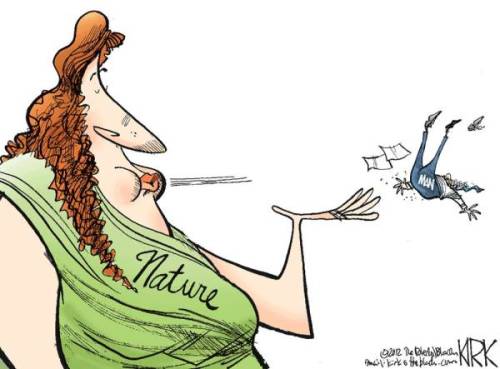
Humane Society Still Rescuing Animals After Hurricane Sandy

In the ongoing calamity that is Hurricane Sandy, the American Society for the Prevention of Cruelty to Animals remains determined to rescue vulnerable animals. Here’s where everyone can help. Text either ANIMALS to 20222 or PREVENT to 25383 to donate $10 to the ASPCA, or simply visit the ASPCA web site.
Filed under News
November Is National American Indian Heritage Month

Since 1990, November has been marked as “National American Indian Heritage Month.” Efforts to set aside at least a day to honor America’s indigenous peoples go back to 1915, when Red Fox James, a member of the Blackfoot nation, rode horseback from state to state calling for a day to honor Native Americans. The first “American Indian Day” was declared on the second Saturday in May 1916 by the governor of New York. Several states celebrate the fourth Friday in September. In Illinois, legislators enacted “American Indian Day” in 1919. Presently, several states have designated Columbus Day as Native American Day, but it continues to be a day observed without any recognition as a national legal holiday. It’s way past time for that to change. Meanwhile, please check out the “Native American Heritage Month” site for local activities.
Image courtesy “White Wolf Pack.”
Filed under News
The “Long Island Express” of 1938
Hurricane Sandy’s assault upon New England has drawn comparisons to an infamous hurricane that took pretty much the same course 74 years ago. Known colloquially as the “Long Island Express,” the Category 4 tempest struck on September 21, 1938, killing nearly 700 people and leaving more than 63,000 others homeless.
More than two weeks earlier, a French meteorologist took note of a powerful dust storm that swept westward across the Sahara desert. Initially, the hurricane took aim for Puerto Rico, before turning abruptly northward and setting its sights on Florida. South Florida residents were already leery of such storms; it had been just three years since the notorious “Labor Day Hurricane,” a Category 5 behemoth that killed more than 400 people. But, the September 1938 hurricane veered eastward at the last minute and spared the Floridian peninsula. It then crept up the east coast and at first appeared to head out into the Atlantic, before suddenly shifting back westward and slamming first into the tiny fishing village of Montauk, Long Island. It literally caught New England residents off guard. The U.S. Weather Bureau (now the National Hurricane Center) ultimately denied any responsibility. The Jacksonville, Florida office would track storms as far north as the Carolinas’ Outer Banks; when they reached Cape Hatteras, the Washington, D.C., office would take over. However, a junior weatherman, Charles Pierce, in Washington predicted the hurricane’s path with astonishing accuracy. But, the Bureau reaffirmed their initial belief that the storm looked like it would head out into the North Atlantic and then claimed residents of the northeast were not “hurricane-minded.” Alas, the storm and its devastation didn’t receive the national attention it would today. Back then the country’s focus was on the lingering Great Depression and the Nazis’ growing power in Europe.
PBS’ American Experience series features an excellent documentary, “The Hurricane of ’38,” that provides firsthand accounts of the storm from survivors. R.A. Scotti’s book, “Sudden Sea: The Great Hurricane of 1938,” also provides detailed insights into the catastrophe.
Here are some of the many pictures of that storm’s aftermath.
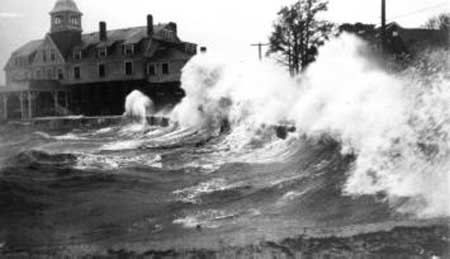

Atwood Machine Company – Willimantic, Connecticut
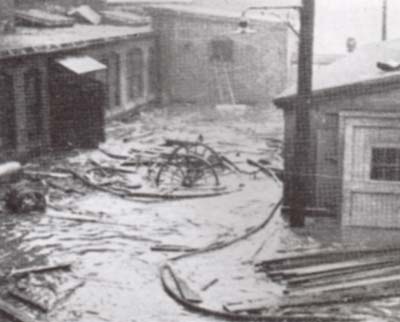
East Hartford, Connecticut
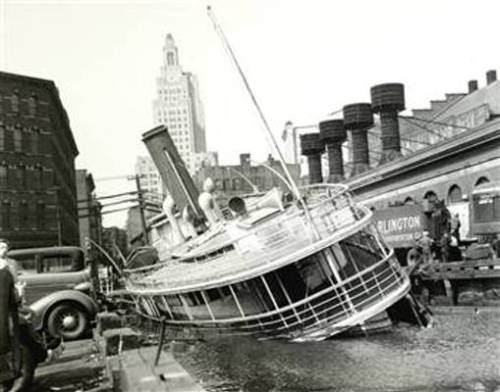
Providence, Rhode Island
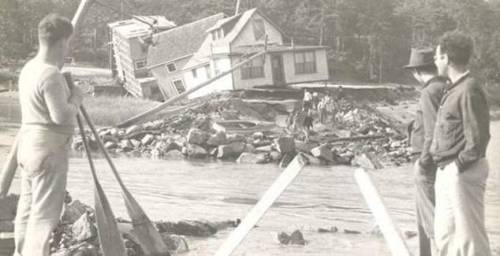

Napatree Point, Rhode Island

Actress Katharine Hepburn beside the remains of her family’s Connecticut home
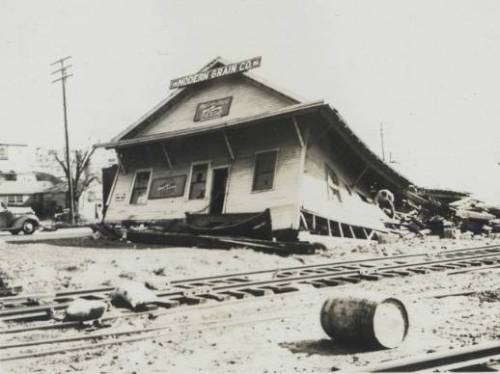
Rhode Island
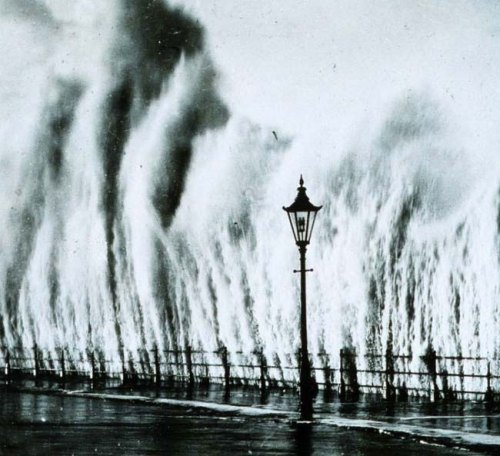
New York City


Providence, Rhode Island
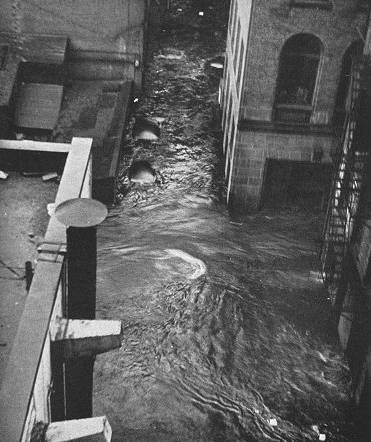
Providence, Rhode Island

Long Island
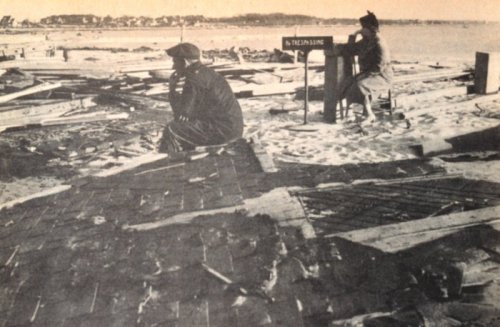
Long Island
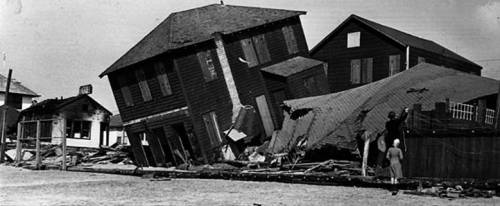
Long Beach, Long Island
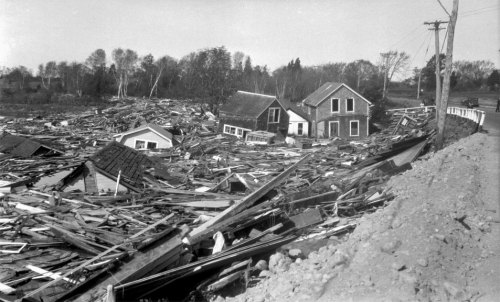


Worcester, Massachusetts
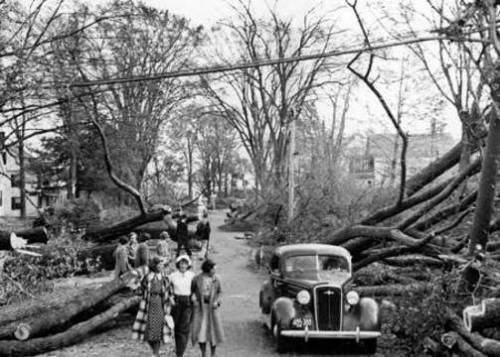
Belchertown, Massachusetts
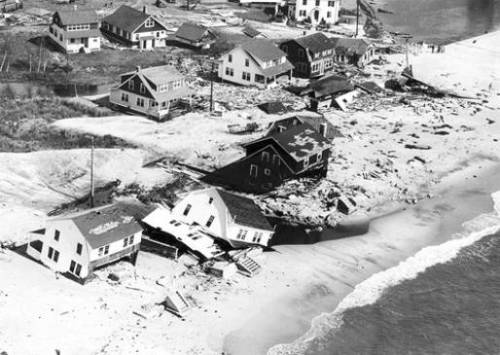
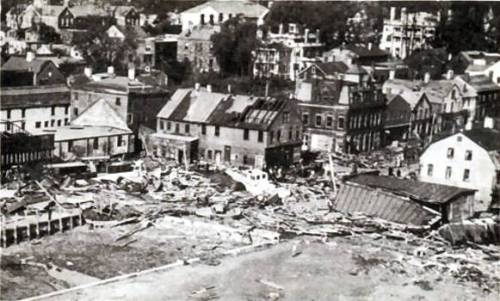
Cranston, Rhode Island
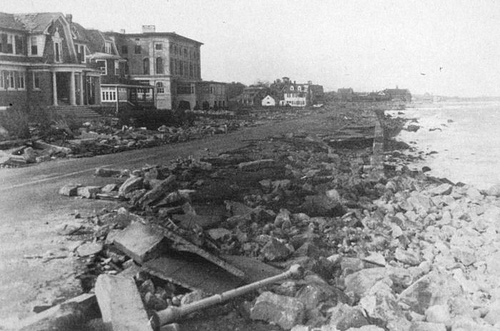
Narragansett, Rhode Island
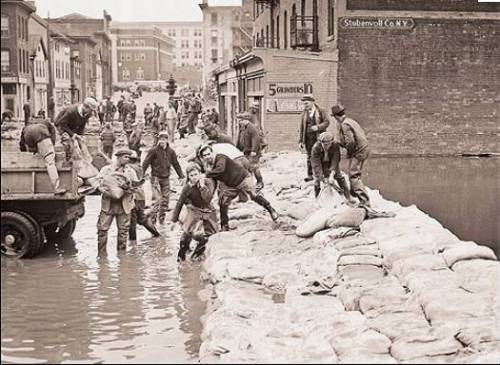
Boston, Massachusetts

Long Island
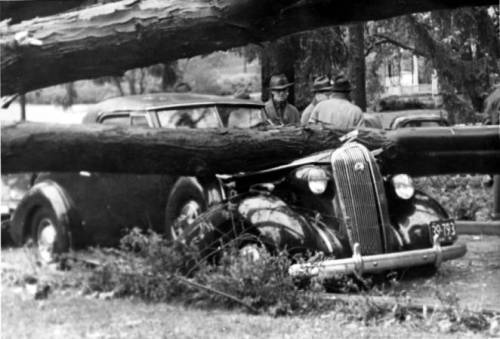
Amherst, New Jersey
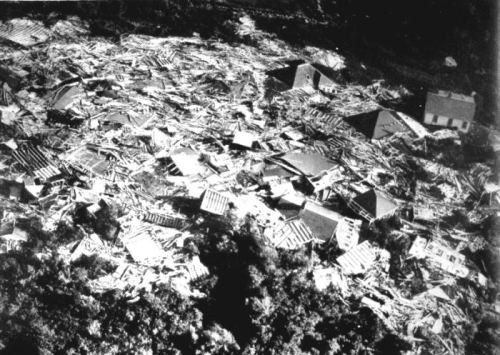
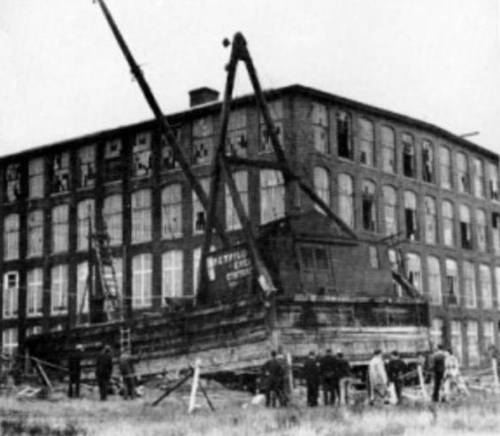
New Bedford, Massachusetts
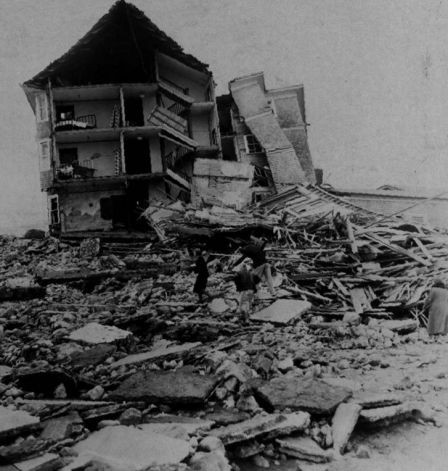
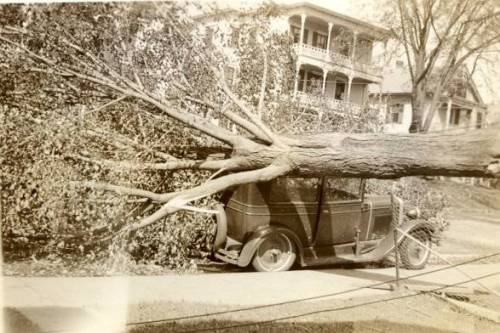
Southbridge, Massachusetts

Thompson, Connecticut
Saving the Animals, Too
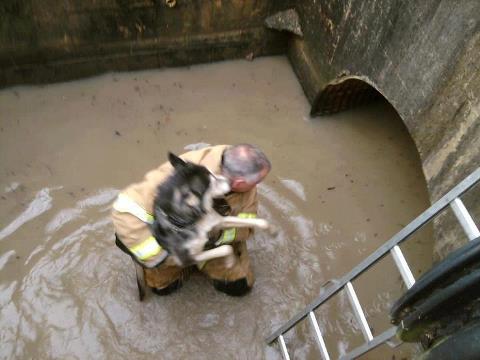
Unlike Hurricane Katrina, there has been a concerted effort to save animals along with people in the wake of Hurricane Sandy. As many coastal residents evacuated ahead of the storm, they brought their pets with them to shelters. And, for those trapped in their homes by the floodwaters, their pets are being rescued along with them. This is in stark contrast to the Katrina debacle, when not only were animals refused entry into shelters, the Coast Guard and other rescue personnel forced people to leave their pets behind.
Filed under News
 Chief Writing Wolf
It’s the Queers Again!
“The hurricanes of the last ten years are four times worse than the hurricanes of the 1990s and twelve times worse of the hurricanes of the 70s and 80s, now this is interesting because I would say that the United States has not been honoring God very much, am I out on a limb here? The United States of America is more pro-abortion than ever before, certainly is funding more abortions than ever before; the United States is far more homosexual than it was in the 1990s, I mean there are hundreds of times more high school homosexual clubs and programs, and you’ve got California bringing all their pro-homosexual indoctrination into public schools. This stuff was not happening in the 1980s and 1990s, it’s happening now, it’s been happening for the last twelve years. America is not doing well in the macro-culture, okay? There is a God in the heavens and in the past, sins like homosexuality and the shedding of innocent blood have really irritated Him.”
– Pastor Kevin Swanson, trying desperately to shed light on the causes of Hurricane Sandy.
If homosexuals caused Hurricane Sandy, you’d think they would have directed it to hit some place like Alabama or Texas, instead of New York. When you can’t explain things, just blame the damn queers! For the record, Swanson is the same lunatic who once said “Kermit the Frog” merited the death penalty.
“Father, forgive them, for they know not what they do.” – Luke 23:24.
1 Comment
Filed under News
Tagged as Hurricane Sandy, Pastor Kevin Swanson, stupid comments