Tag Archives: friends

Final Thoughts

“Thank you,” muttered the pastor, already looking more tired than when the service started.  “Now, would anyone else like to say a few last words before we proceed to the cemetery?”

I took a deep breath and stood.  “Yes, I would.”

“Very well.”

I looked briefly at the crowd and swallowed hard.  “I have to say my friend was a unique individual.”

Obnoxious little bastard!

“He never seemed to meet a stranger.”

Only made friends if they could do something for him.

“He could be funny and engaging.”

And rude and stupid!

“I always had the best time with him.”

If he didn’t run out on the tab – which he did more than once!

“We even thought of going into business together at one point.”

He had the looks, but I had the brains.

“A graphic arts business.”

Bastard wanted to turn it into a porn thing.

“It was a great idea, and I knew we’d go places with it.”

After a while, I wanted his ass to go straight to hell!

“I think we did our best, but you know how everything looks great on paper!”

He kept screwing up things!

“Still…I was sad when he got sick.”

Payback, bitch!

“I just keep thinking of those better times.”

Good one.

“And wished…in a way, he was still here.”

What?!

“Yeah, I do.”

Okay, now you’ve lost it!

“I know that sounds odd.”

That’s one way of putting it!

Everyone looked at me…confused.

Now you have their attention.

“Yeah…despite everything, I already miss him.”

More quizzical stares.

You know they’re going to talk about you after this is over, don’t you?

“I don’t care.”

Oops!  Didn’t mean to say that out loud!

“Excuse me.”  I couldn’t help but notice the raised brows and twisted mouths.

Might as well keep going.

I turned to the photo beside the coffin.  “Goodbye, my friend.  I hope to see you on the other side.”

And you really mean that?

“I really mean that.”

Several people turned to look at me.  I didn’t care.  As big a pain in the ass as he was…I already miss my friend.

5 Comments

Filed under Wolf Tales

And Life Continues

As many of you might remember, one of my best friends, Robert, died last October.  Late on December 23, I learned that another long-time, close friend, Carl, died earlier that day.  We had met in 1990 at the bank where we both worked.  We bonded over such mundane things as rock music and being Texas natives.

Last month I was equally startled to find out another longtime friend, Randy, had died following a freak accident at home; he fell down some stairs and never regained consciousness.  He passed away just days before his birthday.  We had met through a local Toastmasters group in 2001.  A veteran of the U.S. Post Office, Randy had finally retired a few years ago.

Thus, since October, I’ve lost three friends – and my already small social circle has decreased even further.  Damn!

As my parents often said, it’s hell getting old!  And here’s another adage: aging isn’t for wimps!

But, as I’ve discussed with a few friends over the past couple of years, I’m at that age where I lose relatives and friends to death and not because I owe them money.  It’s part of life.

In the late 1990s I saw a program on TV about people pushing the centenarian point in their lives and what their longevity secrets were.  None seemed to possess any mystical key to putting mileage on their personal odometers, but they all had one unique attribute that can’t be measured in facts and statistics.  They were able to accept the death of loved ones with few questions.  It hurt, of course – but they understood such things happen.  Our present realm is often brutal and cold.  People die.

But people certainly live.  And we can’t truly live if we break down every time someone we know and love leaves permanently.

Last year I came across an online editorial that noted millennials are referring to the 1980s and 90s as the “late 1900s”.  Well…they are!  And, as I told a close friend, I’m glad I lived through them!  So did he – who will be 60 next month.

I told that same friend, as well as a few others, that I’m happier now than I have been in years.  I have the same feeling that I did around the turn of the century, when the world seemed wide open and the future belonged to everyone with dreams.

For the most part, it still does.

1 Comment

Filed under Essays

Another Friend Gone

Robert in 1997

My father planted pink spider lilies decades ago in our front yard, but at some point years later, he decided to dig them up.  Shortly before his oldest sister, Amparo, died in February 1998, he was surprised to see several of those plants had re-surfaced.  Over the next several years we both noticed that a number of those pink spider lilies would inexplicably pop up in various spots across the front yard.  And then someone we knew – a relative, a friend, a neighbor – would die soon afterwards.  That was an omen, he told me – someone we knew was going to die.  Those lilies sprung up across the front yard shortly before my father’s death in June of 2016 and again before my mother’s death four years later.  They even arose before my dog Wolfgang died in October of 2016.  They came up again in early 2022 just weeks before my friend, Paul, died and again the following year, just before another friend, David, died unexpectedly.

A few weeks ago I spotted a few of those blooms near the front door.  And now, for the third time in as many years, I’ve lost a close friend.  Robert Souza died early Wednesday morning, the 16th.  He turned 62 last month.  A Massachusetts native, he’d moved to Texas in 1983 to attend some kind of religious school.  That didn’t seem to work out, but he always retained some degree of spiritual faith.  Oddly, despite living in Texas for so long, he still had that uniquely Bostonian accent.  We met through mutual friends in February 1994 and found we had a few things in common: muscle cars, rock music and animals.

Robert had been through a lot personally, including some serious health problems, and even an attempted carjacking/robbery in 1997 where he took six bullets.  I wrote about that in 2013.  Despite everything, he always managed to get through it.  This latest bout with severe pneumonia, however, proved insurmountable.

I’m afraid Robert’s death will mark the end for his mother – a retired nurse in her 80s who still lives in Massachusetts.  She lost her young son, George, to ALS five years ago.  Robert returned to Massachusetts for the funeral and stayed longer with his mother.  Knowing all about his health concerns, she just wanted him to be with her for a little while.  Now this.

After my friend David died in 2023, Robert and I discussed how we had reached the point in our lives where we lose people we know and love.  I often joked that he was too mean to die; that he needed to soften up a little before God accepts him into the Kingdom.  I guess he softened up without me realizing it!

My friend Paul who died of liver cancer in 2022 had told me years earlier of strange things surrounding him and his family.  He lost his father, two nephews and his older brother over a six-year period.  And in the weeks preceding each death he noticed a slew of black birds nearby.  One even flew alongside him as he drove down a highway.  Alarmed, he told me, he’d honked several times, but the bird continued flying beside his car.  Even when he slowed or sped up, the bird remained a constant presence.  Only when he exited did it fly away.  The experience left him shaken, he recounted.  Shortly afterwards his brother died.

A few days before my mother passed away I had a close family friend stay with her, while I went to the store.  When I exited the building and approached my truck I was startled to see a small group of black birds gathered atop my truck.  They remained, even when I got into the vehicle – literally close enough for me to touch them – and departed only when I started the engine.  Earlier this week I went to the same store and – as I approached the entrance – noticed a single black bird on the ground ahead of me, just outside the automatic doors.  It turned in my direction, and I slowed my pace.  A few steps closer and the bird flew away.

Now I can only say I love you, my friend Robert, and I hope to see you on the other side.

6 Comments

Filed under Essays

Graying Wolf

“Damn!  You’re old as shit!”  That’s what Dan*, a friend and former colleague, texted to me last year after I’d informed him that I’d just turned 60.

“And you’re so ugly you almost hurt my feelings!” I replied with a laughing emoji.

Dan and I have always had that kind of friendship – if one of us didn’t insult the other, we might think we were mad.  It’s a man thing actually.

I’ve had those so-called “senior moments” where I walk into a room and wonder why.  I find myself occasionally losing my balance and stumbling or literally bumping into something.  A bruise just below my left knee hasn’t healed after several months.  It’s like a dark, small-scale version of Jupiter’s “Great Red Spot”.  A night light in my bedroom is one that I used to turn off at 10 p.m. because I generally have to sleep in total darkness.  Now I keep it on 24/7.

Albeit a former gymnast and taekwondo practitioner, I can no longer do deep knee bends.  My left knee in particular seems to get caught whenever I bend it.  In March of 2021, a close friend posted a picture on Facebook of himself squatting beside a vintage vehicle.  His wife and daughter had treated him to a vintage car show for his birthday.  I congratulated him and then added, ‘BTW, how long did it take u to stand back up from that squatting position? LOL!’

Earlier this year I wrote how I moved my Uncle Wes* and his cat, Leo, into my home.  Wes had just turned 84, and – after a hard life – his body is slowly giving out on him.  I don’t know how much longer he has, but I’m glad I can provide him a safe home in these final days.  And then I look in the mirror and think, ‘Damn!  With any luck (if you can call it that) I’ll be his age.’

My father was 83 when he died in 2016, and my mother was 87 when shed passed away four years later.  I have a few other relatives who have made it into their 80s.  My paternal grandmother died in 2001 at 97.  Aside from their longevity, all of them had one other thing in common: they had loved ones caring for them as they aged.

I did get some good news recently, though.  I had visited a local urologist, mainly for general male-specific healthcare, but also because I’d noticed a significant decline in energy and focus over the past couple of years.  I attributed the latter simply to age, but I wondered if I needed testosterone replacement therapy; a growing practice for older men.  I had some blood drawn at the urologist’s office and then visited the doctor again to discuss the results.

And the results were phenomenal.  I measured 534 ng/DL (nanograms per deciliter) of testosterone, which puts me in the 35-40 age range.  Most men my age fall into the 300 spectrum.  I won’t necessarily reclaim my lost title of “Stud Burger” (or maybe I will), but to say I’m as healthy as a 35-year-old feels pretty good.  The urologist doesn’t want to put me on any kind of hormone replacement therapy (HRT) as that could eventually hurt me more than help.

So the only possible cause of my fatigue is the result of another blood test by my regular doctor more than a month ago: low sodium levels.  I grew up in the 1970s and 80s, when high cholesterol and too much salt in one’s diet became alarm bells of concern.  I remember talk in the early 80s of actually trying to ban salt in processed foods.  It was met with the same response Ronald Reagan got when he tried to get the state of California to label ketchup as a vegetable.

A couple of months ago I was discussing age with a close friend who’s a few years younger than me.  I highlighted my concerns about my own aging; that I have no siblings (and therefore no nieces or nephews) and no children.  Going back to what I stated above: I’m getting older alone.

“I hear you, brother,” he responded.  He’s mostly in the same position, although he has a sister.

Regardless I have to say that I’d rather get to be this age – and experience the myriad agonies that come with it – than to die as a very young man.  I lost a close friend to AIDS in 1993; he was almost 32.  During my tenure working at a retail store in the 1980s, two of my teenage colleagues were killed in auto wrecks.  I look at photos of young military men and women who died in the Afghanistan and Iraq wars and recollect what I was doing at their age.

So I’m doing okay.  Gray hair or not – I’m at a good place in life.

*Named changed

3 Comments

Filed under Essays

Well Life

In my essay last month about turning 60, I declared I’ll never get “old”.  But I also have to emphasize that I’m in a better place now than I have been in years.  Much of it, I’m sure, has to do with the job I landed this past August.  More importantly, though, I’ve realized that all I’ve endured during my seven decades on Earth hasn’t just brought me here – it’s made me who I am.  We all base our views of reality on our own life experiences, and it’s something that none of us can change.  It’s just a natural progression of life.

But, while we can never change what happened way back when – one vice that has always personally tormented me – we can make use of those experiences and go forward.  We have to move ahead.  We have no choice.

For me, I’m feeling the same way now that I did around the turn of the century.  Over a decade ago – as I reflected on my life to date – I recalled the excitement of the new century and the new millennium.  Overall, the 1990s was the best decade of my life – even now!  I had come into my own as a person; finally understanding that I’m better than even I realized at the time.  I don’t want to sound like a talk show victim, but I grew up shy and introverted; characteristics that carried into my adulthood.  I didn’t boast the same level of self-esteem as my parents – something they never could understand.  Making friends was easy for them, but it was a chore for me.

By the 1990s, however, I had come to realize I didn’t need a large gallery of friends to be whole and complete.  And eventually I accepted my introverted personality as perfectly normal for me.  Two years ago I got into a heated text message debate with a long-time acquaintance who insinuated my introverted nature is a sign of mild autism.  Excuse me?  He worked in the mental health field, so he knew all about those things.  I’m a tech writer, so I’m not familiar with autism. Yet to me, it’s one step above mental retardation.  I was offended – and shocked that he would make that assumption about me.  We were cyber-friends and had communicated for years.  But although we’d never met in person, I had believed he knew me well enough to understand who I am.  He kept trying to reassure me that he wasn’t labeling me as retarded; that retardation was a completely different cerebral condition.  But I remained unconvinced.

That I’ve never had many friends and I’m not a fan of my fellow humans is no indication of a mental disorder on my part.  It’s indicative that people generally have pissed me off to the point where I want little do with them.  That’s why the remote nature of this job is ideal.  I might add that my years of reading, writing, jogging and weightlifting have been extremely therapeutic for me; in other words, they prevented me from either killing myself or becoming a serial killer.

But the period from 1996 to the summer of 2001 was a time of personal renewal; a realignment of my spirituality and priorities.  The world seemed wide open, and the future looked endless.  I felt euphoric, perhaps even naïve.  I have that same feeling now, but I view it with greater caution.  I’m much older and won’t take anything for granted.  I know I have more years behind me than I do ahead of me, so I continue to pursue my various ambitions.  I’ve made it this far – thus I’m not going to give up on myself at this point.  I’ve given up on so many assorted dreams and projects in the past and almost gave up on life altogether.

And yet, I’m still here.  Everyone needs to understand they’re worth the troubles that life throws at them.  You’re all worth something.  Please understand that and keep moving forward.

2 Comments

Filed under Essays

I Miss You, My Friend

As my 60th birthday approached last weekend, I thought of an old friend who had a birthday at the end of October.  We haven’t actually spoken in years and last communicated via Facebook.  But I don’t have any contact with him now.

Because of Donald Trump.

Max* was an interesting character.  Born into a large familiar from Eastern Europe, he lived in a number of different places because of his father’s career.  All of that afforded him not just an extraordinary education but an incredible life experience.  He became well-versed in the arts and humanities; a polyglot who could communicate with most anyone.

I admired him on many levels; even envied him.  Just listening to him made me feel smarter.  We discussed a number of issues; seeming to solve all the world’s most vexing problems.

Then Donald Trump entered the fray of politics, and I watched almost helplessly as Max descended into the madness of right-wing extremism.  I tried to remain reasonable; thinking it was something of a phase.  Max couldn’t be this delusional, I told myself; he’s too much of an intellect to be persuaded by this charlatan of a man.

But my thoughts – nearly prayer-like after a while – had no effect.  Max remained a devout Trumpist.  I realized he’d been seduced when he posted a portrait of Francisco Franco, the long-serving Spanish dictator, to his Facebook page.  I’ve often referred to Franco as Western Europe’s last totalitarian ruler; an autocrat who suppressed political dissent and an open media.  Trump reminded me of him – someone who despised his critics and launched vocal tirades against them to state his point.  His contemporaries included Brazil’s Jair Bolsarano and Hungary’s Viktor Orbán.  When Max posted that photo of Franco, I was appalled.  I guess I shouldn’t have been so upset, but it genuinely shocked me.  I quickly pointed out Franco’s dismal record on basic democratic principles and human rights, but a written response on a social media site is almost pointless.  Max had already fallen for the Trump rhetoric and seemed to concur with some of it.  When Trump referred to some African nations as “shithole countries”, for example, Max noted he’d lived in Africa briefly during his youth and could identify with Trump’s description of the region.

“Really, bro?” I replied at one point.

But again – pointless.

How do you persuade someone who’s consumed that proverbial Kool-Aid?  Long answer: education and persuasion.  Short answer: you don’t.  As smart as Max is, I honestly didn’t know what overture would be appropriate.  So…I just let it all go.

I genuinely hate that sensation – ending a friendship because of political opinions.  I’d never had that experience before.  Friends have died or simply faded into their lives, but I’ve never had one dissipate because of politics.

This past Saturday, November 4, another close friend, Preston*, treated me to lunch for my birthday.  As with Max, he and I often engaged in cerebral conversations, which I absolutely love.  I’ve known Preston much longer than I knew Max.  Our exchange migrated to politics and the 2020 election.  Preston is a Trump voter, but he doesn’t appear to be a devout loyalist.  Still, he feels fraud prevailed in the last presidential election.  I feel it prevailed in the 2016 election and highlighted that Trump didn’t win the popular vote.

“I have to respectfully disagree,” he said.

I looked at him and mentioned by former friend Max and what happened with us.  “Dude!” I said.  “I’ve already lost one friend because of political differences!  I’ll be damned if lose another!  Especially you!”

I told Preston I love and respect him too much to let politics drive a wedge between us.  So, we dropped the matter and moved on to other things.

I miss you, my friend Max.  I genuinely miss you and your views on the world and hearing you talk about your life experiences.  But you made the choice to become blinded by the rantings of a pathological madman; you caused this division between us.  I’m certain you’re not exactly upset or mortified – and quite frankly neither am I.

I just hate to see a good friend fade away in the morass of politics.

*Name changed

4 Comments

Filed under Essays

Empty

Recently the U.S. Department of Health and Human Services released a report on a surprising, yet intriguing subject: loneliness.  According to various studies and surveys, isolation and a lack of social connectivity has become epidemic.  The COVID-19 pandemic may have exacerbated what was already problematic for millions of Americans.

“Our epidemic of loneliness and isolation has been an underappreciated public health crisis that has harmed individual and societal health,” declared U.S. Surgeon General Dr. Vivek Murthy.  “Our relationships are a source of healing and well-being hiding in plain sight – one that can help us live healthier, more fulfilled, and more productive lives.  Given the significant health consequences of loneliness and isolation, we must prioritize building social connection the same way we have prioritized other critical public health issues such as tobacco, obesity, and substance use disorders.  Together, we can build a country that’s healthier, more resilient, less lonely, and more connected.”

The physical health consequences of poor or insufficient connections are dire.  They include a 29% increased risk of heart disease; a 32% increased risk of stroke; and a 50% increased risk of developing dementia for older adults.  Lack of social connections is estimated to increase the risk of premature death by more than 60%.

In addition to our physical health, loneliness and isolation contribute substantially to mental health challenges.  In adults, the risk of developing depression among people who report feeling lonely often is more than double that of people who rarely or never feel lonely.  Loneliness and social isolation in childhood increase the risk of depression and anxiety both immediately and well into the future.  And with an estimated one in five adults living with a mental illness in the U.S., addressing loneliness and isolation has become critical in fully addressing the mental health crisis in America.

For better or worse, the COVID-19 pandemic exposed the loneliness dilemma.  It also seems to have amplified it.  As businesses either switched to remote work or shut down altogether, people found themselves isolated in the name of good health.  I think much of this was foretold by the obsession with social media in the preceding two decades; where people would establish cyber relationships and call each other “friends”.

As an only child and a confirmed introvert, I’ve dealt with loneliness my entire life.  Sometimes I really do get lonely; other times I’m just alone.  I’ve always been a loner – something my parents never seemed to understand – and I’ve rarely done well in groups.  I get bored easily and quickly grow tired of dealing with people’s attitudes and personality quirks.  I put up with a lot of people’s disrespectful behavior towards me most of my life, which is the primary reason I don’t consider myself a people person.

But I have to admit I do get lonely sometimes.  I’m glad my parents had each other and me (and even my dog, Wolfgang to some extent) as they aged.  One of my uncles lives alone in a dingy apartment with a cat.  (An older cat died a few months ago, which devastated him.)  He can’t drive anymore, so he either takes a bus or has someone transport him somewhere.  I’ve taken him to a variety of doctor appointments over the past few years and grocery shopping almost every weekend for months now.  His stepdaughter lives closer, but she has her own health problems.

I have an aunt who also lives alone.  Her son, like me, is an only child, but he’s married and resides several miles from his mother.  She’s fortunate, though, in that a neighbor has access to her house and keeps an eye on her.  My aunt frightened me a few years ago, when she recounted how she fell in the bathroom one night and had to drag herself into her bedroom.  It took her hours just to get there.  But she was able to call her neighbor who contacted the fire department.  I stay in touch with my uncle and aunt, as well as other relatives and friends – even if it’s just via text message.

I only know a few of my neighbors and have little contact with most relatives.  I’ve never been married and I never had children, so I don’t know how life will be for me if I grow much older.  Loneliness will be just one factor in my later life.

Some years ago a friend expressed concern that I was becoming a hermit.  “Why should I go out?” I responded.  I lived with my parents, so I certainly couldn’t bring anyone home.  Then again, I hadn’t brought anyone home who I didn’t know since before the turn of the century.

A close friend keeps urging me to get a dog, as he did a couple of years ago.  Aside from two household plants that languish nondescriptly on a kitchen counter, I’m the only living being in this house.  (That doesn’t include the occasional insect that invades my quiet abode.)  I’d love to get a dog, but I’m just not in the right situation now to get one.

Dr. Murthy has established a six-point plan to help the U.S. deal with its loneliness epidemic:

  1. Strengthen Social Infrastructure: Connections are not just influenced by individual interactions, but by the physical elements of a community (parks, libraries, playgrounds) and the programs and policies in place. To strengthen social infrastructure, communities must design environments that promote connection, establish and scale community connection programs, and invest in institutions that bring people together.
  2. Enact Pro-Connection Public Policies: National, state, local, and tribal governments play a role in establishing policies like accessible public transportation or paid family leave that can support and enable more connection among a community or a family.
  3. Mobilize the Health Sector: Because loneliness and isolation are risk factors for several major health conditions (including heart disease, dementia, depression) as well as for premature death, health care providers are well-positioned to assess patients for risk of loneliness and intervene.
  4. Reform Digital Environments: We must critically evaluate our relationship with technology and ensure that how we interact digitally does not detract from meaningful and healing connection with others.
  5. Deepen Our Knowledge: A more robust research agenda, beyond the evidence outlined in the advisory, must be established to further our understanding of the causes and consequences of social disconnection, populations at risk, and the effectiveness of efforts to boost connection.
  6. Cultivate a Culture of Connection: The informal practices of everyday life (the norms and culture of how we engage one another) significantly influence the relationships we have in our lives. We cannot be successful in the other pillars without a culture of connection.

All of this is easier said than done, and every plan looks good on paper.  But I know something has to be done, if the nation’s overall health is to improve.  I only have a small collection of friends, but that’s all I personally need.  As with most everything else, it’s quality, not quantity, that matters.  And quality of life is always important.

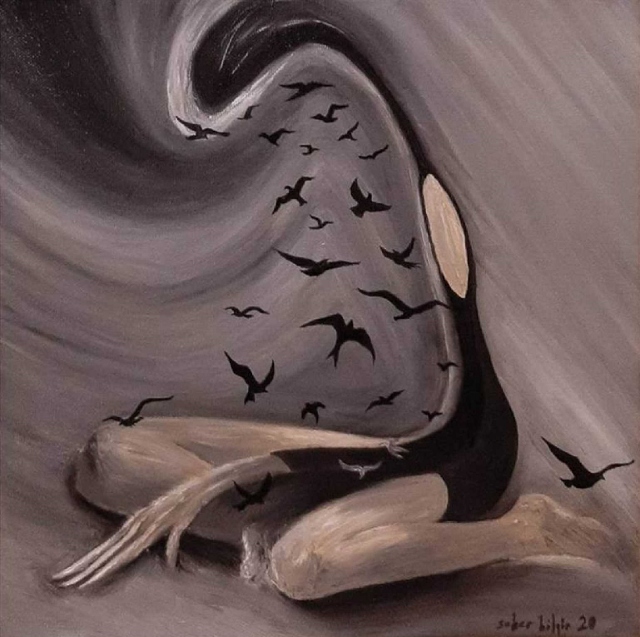
Image: Seher Bilgin

6 Comments

Filed under Essays

Damnit!  You Died and Didn’t Even Tell Me!

Over Easter weekend I learned that one of my closest long-time friends, David, died on April 4, at the age of 49.  He would have turned 50 on April 17.  I don’t know for certain, but I believe he’d succumbed to esophageal cancer.  I had spoken with him briefly last month when he told me he planned to visit a doctor.  He had trouble swallowing and – mostly shocking – weighed only 114 pounds at the time.  He later informed me that an X-ray showed his esophagus was bent and that his doctor had referred him to a gastroenterologist who referenced cancer.  That’s what I had thought, when he mentioned the initial X-ray findings.  The gastroenterologist wanted to rush him into surgery.  Afterwards I never heard from him again.  I had thought of calling him, when I decided to check that most ubiquitous of sources: Facebook.  That’s when I found out about his demise.

Damn!  And he didn’t have the decency to tell me.  You know…that’s kind of rude.

The news hit me especially hard because Easter weekend marked the first anniversary of the death of another close friend, Paul, who died after a year-long bout with liver cancer at the age of 55.  His death was considerably different in that I had been in constant contact with him and saw the end looming over the horizon.

I also saw the end with another friend, also named David, before his death in 1993.  That was the first time I’d actually lost a close friend to death, and it impacts me to this day.  People have always accused me of being too sensitive; in that I don’t often let things go.  That’s true to an extent.  I had a tendency to hold grudges.  But it’s tough to let go of the death of a close relative or friend.

David went quick, though.  According to one of his friends, the cancer was too advanced for doctors to do anything.  And I got mad again.  That’s just like a man!  Waited until the last fucking minute to take care of himself!  That’s so old school.  Men of my father’s generation did shit like that!  David was almost a whole decade younger than me.

Several years ago I watched a program on the lives of very old people; those who’d lived beyond 90 and how they managed to sustain themselves.  Aside from good genes and a positive outlook on life, they all seemed to have one pertinent thing in common: their ability to deal with the death of others around them.  As sad as it is to lose a loved one, we have to understand that it happens.  Some things may last forever, but no person can – at least not in this world.  Our capacity to accept that helps us move forward with our own lives.

So, as difficult as it’s been these past few weeks, I’ve had to accept David is gone.  My greatest consolation is that he’s not suffering anymore.

Good night, my friend.  I’ll miss you, but I’m glad you have begun your next journey in life.  As with everyone else I’ve lost, I hope to see you on the other side.

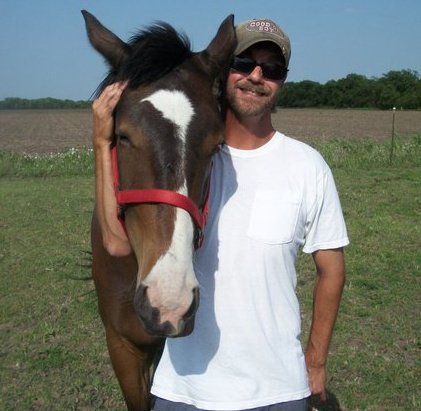
David in his natural element – with an animal

11 Comments

Filed under Essays

A House at 50

“Listen,” I said to my father, “you hear that?”

He didn’t know what I meant.

“Nothing.”

It was December 1972, and my 9-year-old self had never heard such quiet in a neighborhood.  This week marks 50 years since my parents and I moved into this home in suburban Dallas.  The area was newly-developed; former farm and ranch territory that comprised the hinterlands of a growing metropolis.  Family and friends wondered how my parents had managed to find the place.

We had been living in a two-bedroom apartment above a garage in the back of a house owned by my father’s oldest sister and her husband.  Located just north of downtown Dallas, it sat very near Harry Hines Boulevard – a lengthy industrial stretch of road that would later become more infamous as a haven for prostitutes and adult book stores.

My mother was in that apartment with a 17-day-old me on November 22, 1963, when she heard a cacophony of sirens and rushed to a window.  She saw the tail of President Kennedy’s motorcade rushing down Harry Hines, unaware of what had just happened moments earlier.

On the day we began moving into our new home, my aunt made herself scarce.  She had grown so accustomed to having us there that she couldn’t bear the sight of us packing up to leave.

It’s hard to imagine now, but not until we moved here did we get our first color television set.  A month later we finally got our phone.  I still have that number connected.  In 1972, Richard Nixon won a second term in the White House; Watergate reared its contemptuous head; violence marred the Summer Olympics in Munich; HBO launched; Polaroid introduced the SX-70 one-step instant camera; and three of my favorite films – “Cabaret”, “The Godfather”, and “The Poseidon Adventure” – came out.

My parents were excited because they were now living the American dream of home ownership.  My father was particularly enthusiastic to follow his mother’s tradition of gardening and quickly found paradise in the front and back yards.  I was thrilled with the prospect of getting a dog.  It was a promise my parents had made to me upon moving into the house.  They fulfilled it the following summer when they bought a German shepherd puppy I named Josh.  My mother had to swallow her phobia of large canines; having witnessed a man ravaged by a Doberman in the late 1930s.

My parents made friends with many of the neighbors, and I maintain a few of those friendships today.  They each had that type of personality, especially my father – they seemed to make friends with most anyone.  I, on the other hand, seemed naturally reticent to meet new people.  Regardless, our home became a refuge for most everyone we knew.  We often held parties and other gatherings; if for no other reason except to have a party or a gathering.  Family, friends and neighbors relished visiting.  This was a place where all good souls were welcome; where people could feel happy and safe.  We had food (real food – not just chips and dips!), music, beverages, laughter and plenty of love.  No one left here sad or dejected.  Drunk and tired, maybe – but never glum.

When my father lay in a hospital bed in May of 2016, he reiterated that he wanted to die here – in this house.  It was a wish I was able to grant him.  My mother also passed away here in 2020.

A few years ago I told an old friend, Paul, that I suspected I will die here, too, albeit alone.

“What’s wrong with that?” he asked.

“Nothing!” I replied.  It was more a statement than an omen.

So I’m alone now.  This house is quiet.  At a half century it’s showing its age.  But it’s mine; it’s where I grew up and where my parents drew their last breath.  It’s where so many people came to enjoy life.

It’s a house at 50, but it’s always been a home.

9 Comments

Filed under Essays

Missing This

In 1995, the British pop duo Everything But the Girl released “Missing”, a song that would become their greatest hit.  Tracey Thorn and Ben Watt paired up 40 years ago to create EBTG.  They found their title in the slogan of a store in their home town of Hull that promised to sell shoppers “everything but the girl”.  I feel they’re one of the most underrated musical acts of recent decades.  There was once a time – before the internet – when people could vanish from our lives and we relied on music like this to fill the void.  Music always seems to fill the void of whatever or whomever we’re missing.

My old friend, Paul Landin, had discovered EBTG in the late 1980s and became instantly fascinated with them.  He was especially enamored with Thorn.  I know he traveled to England at least twice in the 1980s, but I don’t know if he ever saw EBTG in concert there or anywhere.  Paul died in April after a year-long battle with liver cancer.  Shortly after his death, a mutual friend, Mike*, sent a Tweet to Tracey Thorn advising her that “one of her biggest fans” had passed away.  Paul and Mike had met at New York University in the early 1990s where they both studied filmmaking and found they had a mutual love of EBTG.  They couldn’t have been more different: Paul, a Mexican-American born and raised in Texas and Mike, a traditional “WASP” from upstate New York.

A few days after Paul’s death Mike told me he’d dreamed of our old friend.  “It might have been the edible I had last night,” he said via text, “but I felt his presence sitting across from me in the living room.  He was smiling and he said don’t worry, everything is going to be okay.”  Still, Mike lamented, he feels Paul had been cheated out of fulfilling his dreams of being a successful filmmaker/screenwriter.

Paul and I had a strange friendship; almost a love/hate type of interaction.  I supposed that was because we were so much alike in many respects.  Our fathers grew up together in East Dallas.  Paul and I even attended the same parochial grade school in the 1970s (I vaguely remember him) and were altar boys at the accompanying Catholic church.  We shared a love of good food and good cinema.  As fraught as our friendship could be at times, I still miss him and his quirky nature.

Tracey Thorn’s reply to Mike* back in April

I miss a lot of aspects of my life.  But isn’t that what happens to us as we get older?  With more years behind than ahead of us, we sort through the intricacies and chaos of our lives and wonder how we managed to make it this far.

I miss the gatherings my parents and I used to have at this house.  There often wasn’t a particular reason.  Third Saturday of the month?  Good enough!  Family, friends and neighbors would convene upon this simple home and have the best time imaginable.  We had food – real food!  Not just chips and dips.  People often brought dishes out of courtesy, but everyone knew they could actually have a meal.  Ours became the fun house; where people could gather and always feel they were loved and appreciated.

I miss Sunday lunches with my parents.  It was always a special occasion – even when I moved back here in 2007.  We talked about anything and everything.  Like music, food helps people bond.

I miss the 1990s and the excitement of heading into a new century and a new millennium.  In some ways I miss the apartment I moved into in May of 1991; a relatively small one bedroom/one bath abode.  For the first time in my life, I was truly on my own.  I miss happy hours with colleagues at the bank where I worked in Dallas at the time.  I still relish the period from 1996 to the spring of 2001, when most everything in my life seemed to go right.  I know I can never go back (past perfect is only possible in grammar), but I wish I could recapture that feeling of freedom and happiness.  I miss my blue and white lava lamp.

I miss the German shepherd, Josh, my parents and I had from 1973 to 1985.  When we moved to this house in suburban Dallas in 1972, my parents had promised they’d get me a dog.  Somehow I’d become enamored with German shepherds.  My mother had a phobia of big dogs.  As a child in México City, she’d seen a man attacked by a Doberman.  But she swallowed her fears for my sake.  Early on I noticed his eyes seemed to be tri-colored: mostly yellow-gold, but also green and blue.  We didn’t realize how big he was, until we brought him inside the house.  We would bring him in during the torrid Texas summers and (in his later years) during the occasional harsh winters.  Putting him to sleep on Easter Saturday 1985 was one of the most traumatic experiences we ever endured.  It’s not that we expected him to live forever, of course; we just never prepared ourselves for the end.

I miss my last dog, a miniature schnauzer I adopted from a former friend and roommate and named Wolfgang.  I loved the sound of his breathing at night, as he slept.  It remains one of the most soothing sounds I’ve ever heard in my life.  My parents also fell in love with him, after I moved back here in 2007.  My father especially developed a deeply personal relationship with Wolfgang.  I realized how strong that connection was on the day my father died in June of 2016, when the lights flickered, and Wolfgang ambled down the hall.  He stood before my parents’ closed bedroom door and turned to me.  I knew my father was gone.  Wolfgang died less than five months after my father did.  I still maintain my father returned and got him.

I miss my father, George De La Garza, Sr.  I love and miss my mother and everyone I’ve ever known and lost, but I miss my father the most.  We had a unique bond that couldn’t be matched by anything or anyone.  In my worst moments, I often wish he’d come back to get me.  But then, all the plans I’ve made for myself wouldn’t come to fruition.  And when I call to him and get no response, I realize it’s just not my time.  I know.  We could communicate without words.

My father and me, Christmas Eve 1992

So I continue and recollect the best moments of my past years and look forward to what I have left.  Still, I’m always missing someone or something.

We all miss someone or something from our lives.  Who or what do you miss?

*Name changed.

Image: Aeviternitas

3 Comments

Filed under Essays