Tag Archives: George W. Bush

Gallery of Nitwits

Well, just like the Earth didn’t self-obstruct when Barack Obama won his two elections, it hasn’t 75 7jpj56exploded now that Donald Trump has returned to the White House.  But at least there was never any (real) question that Obama actually won.  And I’m still feeling dismal.

It’s tough to remain faithful to the democratic process and the American vision of equality and happiness when someone like Trump keeps succeeding.  But this is life on planet Earth and it’s imperfect.  In fact, it’s downright screwy!

I don’t care what anyone says.  In my adult life, I’ve never seen anyone as incompetent or unqualified to claim the title of U.S. President than Donald Trump.  As I’ve stated before, I was embarrassed with George W. Bush in the White House.  But I’m incredibly disgusted with this former real estate magnate / pathetic reality TV star / tax cheat / draft dodger / womanizer in the same role.  U.S. politics has truly descended into madness.

Trump’s cabinet appointments have proven equally unfit for such prestigious and high-profile positions.   Former Congressman Matt Gaetz was the first of Trump’s appointments to come under intense scrutiny – and the first to withdraw his nomination.  Trump had wanted Gaetz to be his Attorney General, the nation’s top law enforcement official, despite not having any experience in the legal field – except as a litigant.

Trump’s second choice for the role, Pam Bondi, is Florida’s former attorney general and a corporate lobbyist.  Like the rest of Trump’s nominees, she’s a devout Trump supporter and apologist, but she actually made it through her confirmation hearing in one piece and is now overseeing the U.S. Justice Department.

For Defense Secretary, Trump picked Pete Hegseth, a former military veteran and FOX New TV host.  He also made it through his confirmation hearing – despite tales of his excessive alcohol consumption and sexual harassment allegations.  In this latter respect, he’s Trump “Light”.

Three other Trump nominees – Robert F. Kennedy, Jr., for Health and Human Services Secretary, Kash Patel for FBI Director, and Tulsi Gabbard for Director of National Intelligence – are facing tougher paths.  Kennedy, son of the late and legendary former U.S. Attorney General, ran as an independent candidate in last year’s presidential race.  But his past comments questioning the efficacy of vaccines, including COVID-19, have come back to haunt worse than one of Trump’s ex-wives.  He’d once declared that AIDS in Africa “is an entirely different disease from Western AIDS” and claimed that work done by the U.S. Centers for Disease Control and Prevention is akin to that of Nazi death camps.  He also propagated a popular conspiracy theory that vaccines cause autism in children.

Patel said recently that, if chosen as FBI Director, he’d terminate as many of the agency’s employees as possible and shut down its headquarters building, before reopening it as a museum to the “deep state”.  That “deep state” reference is common among right-wing conspiracy theorists, especially after FBI investigations into Trump’s antics during his first term in office.

Gabbard, a former Democratic congresswoman from Hawaii and a military veteran, may have the toughest road of all of them.  She has insinuated that Russia had some justification for invading Ukraine three years ago; denouncing the administration of Ukrainian president Volodymyr Zelensky as a “corrupt autocracy”.  She backed Russia’s unfounded claims that the U.S. and Ukraine have collaborated to engage in clandestine biological warfare.

One of my closest friends, Preston*, is a Trump voter who had told me last year that he was concerned – if Vice-President Kamala Harris won the presidency – she’d send U.S. troops into Ukraine.  He has two young adult sons who could face military conscription, if a military draft was enacted – which hasn’t occurred since the early 1970s.  I can identify with that sentiment.  In 1991, I feared something similar would happen with the Persian Gulf War, when I was in my mid-20s.  Preston believes wholeheartedly in Trump (which I don’t hold against him), but I’m worried now that Trump could send U.S. troops into the Middle East to help Israel fight against Iran.  Both those countries have nuclear weapons.

Another disquieting possibility is that Trump will enact the classic Republican tax cuts – that bullshit “trickle-down” economics regimen every GOP official has pushed onto the American people for over a century; the kind that has always shoved the U.S. into financial despair.  It happened with the Great Depression of the 1930s, the savings and loan crisis of the early 1990s, and the Great Recession less than two decades ago.  Trump’s round of tax cuts and deregulation measures during his first term only exacerbated the trauma of the COVID-19 pandemic.  I fear it’s going to happen again, and the U.S. will find itself in more economic distress.

But don’t blame people like me.  I didn’t vote for either Trump or Harris, but – as with Hillary Clinton in 2016 – I have to concede Harris would have been the lesser of two evils.  That’s never a pleasant position in which voters should find themselves, but it’s how I view politics in the U.S.

Now we’ll just have to see what shenanigans occur with Trump 2.0.  Fasten your seatbelts.

*Name changed

3 Comments

Filed under Essays

Self-Inflicted

“When fascism comes to America, it will be wrapped in the flag and carrying a cross.”

Sinclair Lewis, 1935

I had a certain sensation deep inside of me; the same kind of feeling when I know something dramatic – either good or bad – is about to happen.  This time it was bad, and I almost felt sick.  Donald Trump has been reelected to the U.S. presidency.  He becomes only the second president in U.S. history to win a second term that didn’t immediately follow the first.  He also has the dubious distinction of being the first indicted criminal to be elected.  Little could be stranger or sadder for the American people.  I suppose, though, that too many people drank that proverbial Kool-Aid offered by the Republican despot; a man who openly admires the likes of Vladimir Putin and Kim Jong-Un; who has advocated violence against others; who has threatened to imprison anyone who disagrees with him; who incited a riot nearly four years ago; and who has demonstrated no true respect for average, working Americans.

I am embarrassed by and disgusted with many of my fellow Americans who helped put Trump into office.  The Democratic Party, however, really has no one but themselves to blame for this chaos.  Their leadership stood by as Joe Biden and Bernie Sanders ran for president in 2020.  With all due respect to those two gentlemen, their time had come and gone.  The window to run for and win the U.S. presidency is small.  I felt Biden and Sanders would have better served the country by giving speeches and writing books about the value and importance of democracy and how people like Trump pose the worst threat to our constitutional freedoms.

For the Democrats, the 2020 presidential race began with the most diverse slate of candidates – and ended with the same tired old figures that traditionally represented both parties: old White men.  Now understand I’m a mostly White male and have no qualms about it.  But this nation boasts too varied a population to rely upon the same types of people to lead us.

And it’s not that the U.S. isn’t ready for a female president.  We’re way past ready.  It’s just that the Democrats (and the Republicans for that matter) have never chosen the right women to lead them.  I’ve always said Hillary Clinton was too divisive a figure.  While I loved Bill “Who’s Your Daddy” Clinton, I personally never cared for Hillary.  And, although Kamala Harris made history by becoming the first female vice-president in U.S. history, she didn’t do enough to separate herself from Biden.

In 1993 Canada elected its first female prime minister, Kim Campbell, and highly patriarchal and staunchly Roman Catholic México just elected its first female (and Jewish) president, Claudia Scheinbaum.  Thus far, eighteen other women either have been elected or ascended to the highest office in their respective countries in the Western Hemisphere:

Jeanine Áñez, Bolivia, 2019-20

Rosalía Arteaga, Ecuador, 1997

Michelle Bachelet, Chile, 2006-10 and 2014-18

Dina Boluarte, Peru, since 2022

Sylvanie Burton, Dominica, since 2023

Xiomara Castro, Honduras, since 2022

Violeta Chamorro, Nicaragua, 1990-97

Eugenia Charles, Dominican Republic, 1980-95

Laura Chinchilla, Costa Rica, 2010-14

Cristina Fernández de Kirchner, Argentina, 2007-15

Lidia Gueiler Tejadam, Bolivia, 1979-80

Mireya Moscoso, Panama, 1999-2004

Mia Mottley, Barbados, since 2018

Ertha Pascal-Trouillot, Haiti, 1990-91 (acting president)

Michèle Pierre-Louis, Haiti, 2008-09

Dilma Rousseff, Brazil, 2014-16

Portia Simpson-Miller, Jamaica, 2006-07 and 2012-16

Claudette Werleigh, Haiti, 1995-96

Trump does not represent me – never has and never will.  He has proclaimed total disrespect for people who aren’t exactly like him.  And I’m certainly not like him.  I’m not a wealthy, full-blooded Caucasian womanizer who cheated on his taxes and has disdain for the American military.  I feel that he’s a genuine threat to free speech and the right to vote, but – like most conservatives – has the full support of gun rights advocates.  This latter band of extremists has always placed the value of firearms above free speech and the right to vote – and certainly above the lives of human beings.

One of my concerns with Trump’s return to the White House is that he will implement the so-called Project 2025 – a federal policy agenda created by the Heritage Foundation, a far-right conservative outfit that is a borderline hate group.  Many officials in Trump’s first administration took part in the project’s creation, which demands a complete overhaul of the government based on staunchly conservative ideology.  That philosophy features opposition to the usual causes: abortion and reproductive freedom and queer rights, but also immigration and racial equity.  Moreover, Project 2025 calls for unwarranted surveillance on specific individuals; using force to quell protestors; and targeting journalists who they deem enemies of the state.  This might sound familiar to those schooled in global political history.  They’re the same kind of tactics the Nazis and the former Soviet Union used on its own civilians.  Argentina pursued the same agenda during its “Dirty War”, and North Korea is doing it now.

I don’t know what’s next for America, but I see nothing good on the horizon.  I’m certain my conservative friends and relatives will assume I’m being paranoid, even hysterical.  Yet I felt similar sensations of foreboding when George W. Bush became president in 2000.  And I was right.  The U.S. ended up both in war and a recession.

I’m almost certain it will happen again.

2 Comments

Filed under Essays

X Matters

The U.S. Supreme Court commenced its latest term October 2, and after the previous two years of drama and shocking decisions, the American populace is wondering what’s next.  Among the upcoming decisions:

Lindke v. Freed – A case in which the Court will decide whether a public official’s social media activity can constitute state action only if the official used the account to perform a governmental duty or under the authority of his or her office.

Murray v. UBS Securities LLC – A case in which the Court will decide whether, under the Sarbanes-Oxley Act of 2002, a whistleblower must prove his employer acted with a “retaliatory intent” as part of his case in chief to succeed on a retaliation claim.

Rudisill v. McDonough – A case in which the Court will decide whether a veteran who has served two separate and distinct periods of qualifying service is entitled to receive all of the education benefits at once from programs associated with both periods of service.

United States v. Rahimi – A case in which the Court will decide whether 18 U.S.C. § 922(g)(8), which prohibits the possession of firearms by persons subject to domestic-violence restraining orders, violates the Second Amendment.  (Both domestic violence experts and gun rights supporters are closely watching this particular case.)

Vidal v. Elster – A case in which the Court will decide whether the refusal to register a trademark under 15 U.S.C. § 1052(c) violates the Free Speech Clause of the First Amendment when the mark contains criticism of a government official or public figure.

The 2022 Dobbs decision upended the long-standing belief the High Court always moves the nation forward.  It wasn’t akin to the 1954 Brown decision, which reversed the 1896 Plessy ruling.  It was such a regressive move that even legal scholars remain stunned.  Afterwards, Justice Clarence Thomas – the longest-serving member of the Court and a conservative darling – declared the Dobbs decision opened the possibility for reversals of other cases, such as Obergefell v. Hodges that legalized same-sex marriage.  Curiously he said nothing of the 1967 Loving v. Virginia case that legalized interracial marriage.  (Thomas is currently married to a White chick.)

As upsetting as the Dobbs decision was, I know the case that will galvanize Americans; that is, the decision that – if reversed – will incite a revolution.  It is the one case that will drive Americans into the voting booth more than abortion, education, guns, queers or voting itself – Miller v. California, the 1972 decision that technically legalized pornography.  (Also see United States v. Reidel.) Yes, among all the sentient issues plaguing our modern society, denying people the right to view sexual activity will culminate in a revolution that could rival the collapse of the Roman Empire.  In the mid-1980s, President Ronald Reagan – perhaps still angry about the Miller decision – launched a war on pornography.  His then-Attorney General, Edwin Meese, commissioned associates to investigate the adult film industry under the guise of protecting children, which is indeed a noble effort.  But in reality, Reagan’s self-righteous demeanor drove his efforts to limit free speech; to stifle those who dared to disagree with him.  We saw much of the same two decades ago as critics of President George W. Bush were assailed.  Both extremist conservatives and liberals just don’t like when people have something negative to say about their lifestyles.  The same groups don’t have any problem, though, dictating what’s appropriate for others.  Conservatives, in particular, don’t like anything sexual.  It sends them into epileptic fits.

Regardless I can assure everyone that any U.S. Supreme Court assault on pornography will be taken seriously.  It has a lot to do with finances.  As of 2022, the adult film industry in the U.S. profited about $97 billion.  And that kind of money buys a certain amount of power.

The Reagan Administration failed to shut down pornography in the U.S.  Despite the AIDS epidemic, the adult film industry forged ahead in the 1980s and continued growing.  And I can assure even the most ardent of conservatives can’t stop it.  Then again, many of those same conservatives often view pornographic material – they just won’t admit it.  They really can’t because it would undermine their own limited credibility.

No matter what happens with the High Court, I doubt few other matters will resonate with voters as the X factor.  There are few things more obscene to me than war and unfettered censorship.

Leave a comment

Filed under Essays

Shifted

The U.S. Supreme Court ended its first term of 2023 last month with some stunning decisions – stunning, but not surprising.  A year ago the Court finished with its shocking reversal of the 1973 landmark Roe v. Wade, which had legalized abortion in the United States.  Ending abortion in this country had been a long-standing goal of social and religious conservatives and they finally accomplished that mission.  But this time the Court went further in their swing to the far right by ending affirmative action in college admissions and allowing religion to be used to discriminate.

In Students for Fair Admissions, Inc. v. President and Fellows of Harvard College, the Court ruled that the admissions programs used by the University of North Carolina and Harvard College violate the Constitution’s equal protection clause (the 14th Amendment), which bars racial discrimination by government entities.  The 14th Amendment has been utilized to undermine entrenched discrimination for decades.  It has manifested its power in such SCOTUS decisions as Brown v. Board of Education of Topeka and Miranda v. Arizona.  Ironically, the Students for Fair Admissions ruling reversed a 20-year-old case, Grutter v. Bollinger, which declared race as a plausible factor in college admissions policies.  Have things really changed for the better in two decades?  All of this also reminds me of the Regents of the University of California v. Bakke, in which a White man, Allan Bakke, sued the University of California Medical School at Davis for refusing to admit him; the school had reserved 16 places in each entering class for qualified ethnic minorities.  Bakke had applied twice to the school and been denied twice, despite having a high GPA and test scores.  SCOTUS ruled that, while race was a qualifying factor in college admissions, the University of California policy at the time, indeed, violated the Constitution’s 14th Amendment.

I have to admit I support their affirmative action decision.  As noble a philosophy as it was, I feel affirmative action has run its course, and – as we march further into the 21st century – it’s time we truly become a color blind society.  Actually it’s way past time.  But, as with campaign promises and many business plans, things look great on paper.  Personally I don’t feel affirmative action has helped me.  It hasn’t hurt me, but it certainly hasn’t helped me.  I never asked for special rights or considerations.  But, like I told a friend years ago, while legislation may have forced the playing field to become level, are all the players on the field playing on the level?

It’s the Creative 303 decision, however, that concerns me the most.  Last year the Supreme Court made perhaps its most controversial decision in decades with the Dobbs ruling that effectively ended the constitutional right to an abortion.  But, in the 2022 Carson v. Makin ruling, the Court chipped even further away at that cherished separation between government and religion, when it declared the state of Maine had violated the constitution when it refused to make public funding available to students attending religious schools.  In general religious institutions don’t pay taxes; therefore, they’ve traditionally been unable to access tax money at either the state or federal level.  The reasoning was practical: anyone who receives government funding should follow certain rules and regulations.  People taking unemployment insurance, for example, have to conduct a minimum number of job searches weekly; otherwise, they can’t receive that money.

In the Creative 303 case, Colorado web site designer Lorie Smith had allegedly refused to design a site for someone planning a same-sex wedding; declaring that it was an affront to her religious beliefs and therefore, violated her First Amendment rights.  It’s similar to another case from Colorado, Masterpiece Cake Shop v. Colorado Civil Rights Commission, in which Jack C. Phillips, the owner of Masterpiece, refused to bake a wedding cake for a male couple on the grounds that it violated his religious beliefs; he simply didn’t believe in same-gender unions.  The couple, Charlie Craig and David Mullins, filed suit, claiming Phillips was in violation of Colorado’s Anti-Discrimination Act.  The Supreme Court ultimately ruled in Philips’ favor, decreeing that the Colorado statute violated “the State’s duty under the First Amendment not to use hostility toward religion or a religious viewpoint as a basis for laws or regulations.”

But no sooner had the Creative 303 ruling been made than news arose that Smith may have fabricated her initial claim.  The man who supposedly asked her to design a web site for a same-gender wedding states he never worked with her.  Smith, however, cited the man – identified only as “Stewart” – in 2017 court documents and included his phone number and email address.  But “Stewart” says he didn’t even know his name had been invoked in the original lawsuit until a report with “The New Republic” contacted him.

“I was incredibly surprised given the fact that I’ve been happily married to a woman for the last 15 years,” said Stewart, who declined to give his last name for fear of harassment and threats.  He noted that he’s a designer himself and could have created his own web site if necessary.

One of Smith’s lawyers, Kristen Waggoner, insisted Stewart’s name and other information had been submitted to her client’s web site and denied the entire claim had been fabricated.  But she suggested an internet troll had made the request to Smith; adding that’s it occurred with other clients.  Ironically, the aforementioned Jack C. Phillips was also Waggoner’s client.

Regardless, I have to wonder if this revelation doesn’t render the Creative 303 ruling invalid.  Even if an internet troll had made the initial application, Smith’s attorneys should have verified every detail of the case.  That’s what lawyers are supposed to do.

Getting a matter before the U.S. Supreme Court is no small feat; they don’t take on minor traffic infractions.  That’s why so many of their decisions are monumental and can reshape society.  And thus, it’s why people are rightfully concerned about the implications of the Creative 303 edict.  If religious ideology can be the basis for discrimination, who’s to say a business owner can’t refuse to service a prospective client under such a pretense?  Technically businesses have the right to refuse service to anyone, but that’s generally happened only under the most egregious of circumstances.  A bar or nightclub, for example, can refuse to admit someone who’s visibly intoxicated.  I’ve seen signs on doors declaring “no shirt, no shoes, no service”.

Years ago another friend told me I discriminate whenever I choose one food item over another.  “That’s not discrimination,” I told him, “that’s selection.”  But he was a conservative, so I guess I understood why he couldn’t make that distinction.

Still, I certainly hope many Black, Hispanic and queer conservatives are happy with their votes for George W. Bush and Donald Trump.  Despite not winning the popular vote in their respective elections, they were able to place five justices on the U.S. Supreme Court.  That has never happened before in the history of U.S. legal jurisprudence.  All five of those individuals have now set back decades of civil rights advancements.  A truly democratic society is supposed to protect all of its citizens from bigotry and oppression.  I fear we’re doing the opposite in the United States.

2 Comments

Filed under Essays

Best Quotes of the Week – July 30, 2022

“I do not believe that we made any progress. In fact, I think the party got worse.”

Dale Carpenter, former president of Log Cabin Republicans, a GLBT political group, expressing disappointment about their acceptance within overall Republican Party

For years LCR has tried – and repeatedly failed – to garner the attention of Texas’ Republican Party.

I’ve known a few queer conservatives over the years and was always stunned at how they idolized Ronald Reagan and voted for the likes of George W. Bush and Donald Trump, despite the GOP’s hostility towards them.  So to know that a former LCR operative has essentially admitted defeat is somewhat of a vindication for me.

“Look, we pursue justice without fear or favor.”

U.S. Attorney General Merrick Garland, to NBC News’ Lester Holt, about the possibility former President Donald Trump could be criminally prosecuted for his role in the Capitol Hill riot of January 6, 2021

Garland added, “We intend to hold everyone, anyone who was criminally responsible for the events surrounding January 6, for any attempt to interfere with the lawful transfer of power from one administration to another, accountable.  That’s what we do.”

1 Comment

Filed under News

Next!

“First they came for the Communists
And I did not speak out
Because I was not a Communist

Then they came for the Socialists
And I did not speak out
Because I was not a Socialist

Then they came for the trade unionists
And I did not speak out
Because I was not a trade unionist

Then they came for the Jews
And I did not speak out
Because I was not a Jew

Then they came for me
And there was no one left
To speak out for me.”

Martin Niemöller

We’re still in shock here in the U.S.  In just a matter of weeks, the conservative majority on the U.S. Supreme Court undid decade’s worth of progressive social reforms.  The reversal of Roe vs. Wade last month garnered the most attention, but they didn’t stop with that.

In Vega vs. Tekoh, the High Court ruled that a violation of Miranda rights doesn’t provide a basis for civil damages.  The original Miranda vs. Arizona decision ensured people accused of criminal behavior have the right to legal counsel and to remain silent in the face of police interrogation.  Miranda was decided in line with the U.S. Constitution’s Fifth Amendment, which had already established certain guidelines for addressing criminal procedures.  The Vega ruling now ensures that law enforcement can act with impunity.  I suspect it’s a response to the vitriolic reactions to high-profile police killings over the past…well, several decades; the ‘Black Lives Matter’ protests and all that.  In Vega, the SCOTUS majority noted that, if the original Miranda court intended to create a constitutional right versus a prophylactic rule, it would have definitively declared that immediately upon deciding Miranda.  The 1966 Court knew how to use its words, the current Court essentially declared, and those words used were not “constitutional right.”  See how verbiage can be twisted so easily by academics?

In West Virginia vs. the U.S. Environmental Protection Agency, the Court undercut the latter’s efforts to regulate greenhouse gases.  SCOTUS agreed with Republican-led states and energy companies that the 1970 Clean Air Act gave the EPA too much power over carbon emissions.  The decision was also a strike back against the 2015 Clean Power Plan – an Obama-era policy that targeted adverse climate change.  To environmentalists, it wasn’t surprising that energy conglomerates were adamant in reversing the CPP, as well as the CAA.  But the West Virginia ruling falls in line with the belief of conservatives that climate change is a hoax.  That’s why energy companies overwhelmingly support Republican candidates.  I have to note West Virginia is a top coal producer.  It also ranks as one of the poorest states in the union.

In his statement regarding the Dobbs ruling, Justice Clarence Thomas suggested the Court should revisit other high-profile rulings, including Griswold vs. Connecticut, which declared the legal usage of contraceptives; Lawrence vs. Texas, which struck down anti-sodomy laws; and Obergefell vs. Hodges, which legalized same-sex marriage.  Curiously, he didn’t call for a review of Brown vs. Topeka Board of Education, which declared that racial segregation in schools was unconstitutional or Loving vs. Virginia, which legalized interracial marriage.  I guess this is because overturning these decisions would impact Thomas, a Negro married to a White chick.  It’s amazing how some people have no problems enacting laws that wouldn’t affect them personally.

In the 1983 film “The Star Chamber”, Michael Douglas portrays a relatively young judge who becomes engaged with a group of other jurists who find the legal system has gone awry in favor of criminals and decide to enact vigilante justice to right those perceived wrongs.  They hire assassins to kill certain criminals who have escaped incarceration.  The movie is replete with scenes where highly articulate lawyers help defendants get out of trouble.  In one early scene, Hal Holbrook’s character tells Douglas, “Someone has hidden justice inside the law.”  It’s an attempt to justify the group’s brutal actions.

That’s how I often view the legal system.  Charismatic lawyers prancing around even the most heinous of crimes with carefully-crafted verbiage; a kind of Tolkien-style language only they understand, but something the rest of us have to deal with toiling away in the trenches of reality.  I certainly don’t recommend assassination as a viable resolution to our nation’s political ills.  That’s where the treasured right of voting comes into play.  People need to take their voting rights seriously and understand the significance of not voting.  We’ve seen the fruits of voter apathy in my home state of Texas.  In recent years, the right to vote has come under fire from conservatives.  As with many other rights, this isn’t a surprise.  Conservatives have always tried to suppress voting.  You know…the way totalitarian regimes like Russia have.  I’ve noted more than once that the (fair and legitimate) elections of Barack Obama prompted (mostly White) conservatives to launch their assault on the First Amendment to the U.S. Constitution.  During their convention last month, the Texas Republican Party called for repeal of the 1965 Voting Rights Act, which guarantees the right to vote regardless of race.  They did this because…well, because that’s what conservatives do – at least here in the U.S.  They were quick to abolish fascism in Europe during World War II, but weren’t so eager to do the same at home.

With this in mind, I wonder if many conservative queers who voted for the likes of George W. Bush and Ted Cruz are satisfied with their decisions.  Along with many mainstream right-wingers, some are ecstatic that Roe was overturned.  But now, I hate to see their reactions at the thought of reversing Lawrence or Obergefell.  But the neo-Nazi clowns who have targeted the so-called “liberal agenda” for years are coming for their faggot asses next!  I just hope they’ll be happy sitting in their designer closets polishing their Ronald Reagan Glee Club pins.

If anyone in the U.S. believes democracy is functioning just perfectly and nothing is wrong, they need to consider this: five of the current justices on the Supreme Court were chosen by presidents who did NOT win the popular vote.  George W. Bush didn’t really win the 2000 presidential election and he barely won the 2004 election; yet he was able to appoint two justices – Samuel Alito and John Roberts.  Donald Trump certainly didn’t win the 2016 presidential election (perhaps the most corrupt in U.S. history), but he was able to appoint three justices to the Court: Neil Gorsuch, Brett Kavanaugh and Amy Coney-Barrett.  Gorsuch’s selection came because Republicans refused to grant President Obama’s nominee, Merrick Garland, the decency of a hearing upon the death of Antonin Scalia in 2016; claiming it was an election year and the next president should choose the nominee.  However, Barrett’s nomination came after the death of Ruth Bader Ginsberg in 2020.  The same band of Republicans who denied Garland a hearing rammed through Barrett’s confirmation without hesitation.

I don’t know if most Americans fully comprehend the significance of the Dobbs decision that overturned Roe.  It could lead to much worse.  But this is what happens when people don’t bother to vote in even the most mundane of elections.  Liberals seem especially reticent to take local races seriously.  I can only recommend everyone concerned about our democracy to make that concerted effort to vote.  I understand how many people feel their votes don’t count, particularly after the 2000 and 2016 presidential elections and all the corruption involved in both.

Yet, democracy is not a natural form of governing.  Humanity is more likely to construct an oligarchy-style system.  In worse case settings, totalitarianism can take root, as it almost did with Donald Trump in the White House.  People need to be wary of the current U.S. Supreme Court and its fascist leanings, disguised as social conservatism.  (Then again, fascism and conservatism are pretty much the same ideology.)

It’s starting with the Roe reversal.  Unless we place more moderates into public office, it will only get worse.

Bottom image: Michael de Adder

3 Comments

Filed under Essays

Gaffe of the Week – May 21, 2022

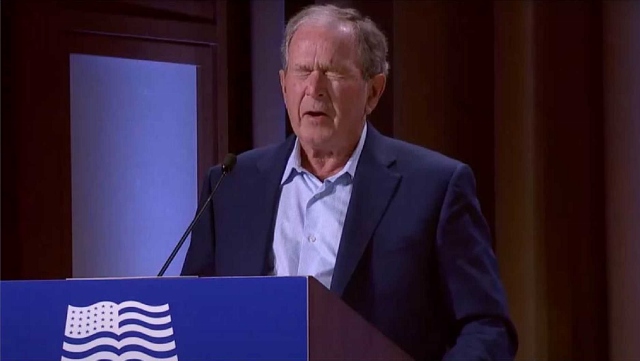
“The result is an absence of checks and balances in Russia, and the decision of one man to launch a wholly unjustified and brutal invasion of Iraq – I mean of Ukraine.”

Former President George W. Bush, in a speech criticizing Russian President Vladimir Putin

Leave a comment

Filed under News

Best Quotes of the Week – May 14, 2022

“The wife of a Supreme Court justice doing what Ginni Thomas did is utterly unheard of in the history of the United States.  Justice Thomas, talking about [the] legitimacy of institutions – either the White House or the court itself – he should recuse himself, which he refuses to do, from any case involving the president of the United States and the election.”

Carl Bernstein, condemning Supreme Court Justice Clarence Thomas for criticizing Americans opposed to the possibility of Roe vs. Wade being reversed

Describing Thomas as “rogue” and “disingenuous”, he added, “There is a real failure of institutions, especially on the Supreme Court, by a rogue justice who would not say, ‘I’m going to step aside.’”  Bernstein also noted that Thomas’ wife, Virginia (Ginni) Thomas, had worked to overturn the outcome of the 2020 presidential election.

Thomas had given a speech at the 11th Circuit Judicial Conference in Atlanta last week chastising people for “becoming addicted to wanting particular outcomes.”  The Court, Thomas said, “can’t be an institution that can be bullied into giving you just the outcomes you want.  The events from earlier this week are a symptom of that.”

It has to be noted that, in December 2000, Thomas was among the SCOTUS justices who ordered the state of Florida to stop counting ballots for the presidential election; thus handing George W. Bush the presidency.

“I’m a rape victim myself.  And when you realize what’s happened in your life, the trauma, the emotional, the mental, the physical trauma in a woman’s life, that decision ― she should make that decision with her doctor and between her and her God.”

Rep. Nancy Mace, in an interview with CBS News’ “Face the Nation”

Mace added that, while she backs abortion rights and wants to see abortion laws handled at the state level, she would personally only support anti-abortion legislation in South Carolina that has exceptions for rape, incest and in cases where the woman’s life is in jeopardy.

“Is the state of Mississippi going to force those girls and women who have this tragedy inside them to carry the child to term?  Are you going to force them to do that?”

Jake Tapper, interviewing the Governor of Mississippi Tate Reeves about the possibility the U.S. Supreme Court will overturn the landmark 1973 Roe vs. Wade decision

It was a Mississippi case that led to this critical moment in judicial history.  Tapper also asked Reeves if the state will force mothers to carry a child to term, even if the fetus is detected with “serious or fatal abnormalities that will not allow [it] to live outside the womb,” and in cases of incest.

Reeves argued that abortion procedures overwhelmingly happen in elective cases while incest is a much more uncommon circumstance by comparison.  “If we need to have that conversation in the future about potential exceptions in the trigger law, we can certainly do that,” he said.

Leave a comment

Filed under News

Hypocrisy in Action

I’ve often noted that conservatives can be incredible hypocrites.  For years they said no divorcee would be elected to the presidency.  Then they got Ronald Reagan, the nation’s first divorced Chief Executive, whose wife was the nation’s first divorced First Lady.  They dubbed Bill Clinton a draft dodger and condemned him for protesting against the Vietnam War while he was in college.  Then they elected George W. Bush who earned a comfortable spot in the Texas National Guard in 1968 and failed to complete his tenure.  They also elected Dick Cheney who claimed he had “other priorities” during the 1960s.

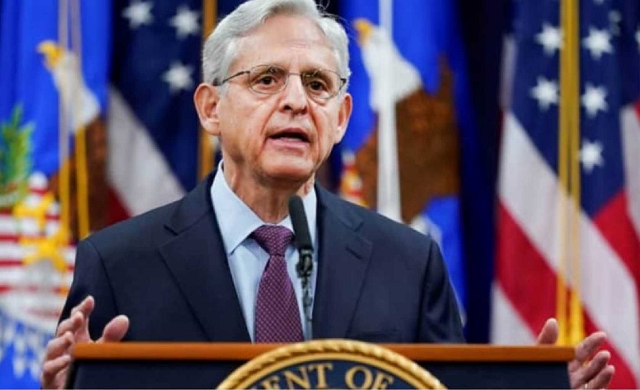
Conservative hypocrisy has reared its bigoted head once again – this time in a letter to U.S. Attorney General Merrick Garland.  Republican Senators Ted Cruz, Ron Johnson, Mike Lee, Rick Scott and Tommy Tuberville submitted the correspondence to Garland complaining about what they perceive to be a double standard in punishment by the U.S. Department of Justice against the January 6 Capitol Hill rioters.  In contrast, they declare, many of the various protestors to the George Floyd killing who became violent haven’t met the same degree of discipline.

In part, the letter states:

“DOJ’s (U.S. Department of Justice) apparent unwillingness to punish these individuals who allegedly committed crimes during the spring and summer 2020 protests stands in stark contrast to the harsher treatment of the individuals charged in connection with the January 6, 2021 breach of the U.S. Capitol Building in Washington, D.C. To date, DOJ has charged 510 individuals stemming from Capitol breach.  DOJ maintains and updates a webpage that lists the defendants charged with crimes committed at the Capitol. This database includes information such as the defendant’s name, charge(s), case number, case documents, location of arrest, case status, and informs readers when the entry was last updated.  No such database exists for alleged perpetrators of crimes associated with the spring and summer 2020 protests.  It is unclear whether any defendants charged with crimes in connection with the Capitol breach have received deferred resolution agreements.”

Please.  Spare me the anxiety.

The five angry White male senators don’t seem to understand the difference in the two events.  While some of the Floyd protestors devolved into rioting and vandalism, the original intent was to demonstrate against police violence; a recurring dilemma in the U.S.  The intent of the Capitol Hill rioters, however, was to disrupt congressional business and kill someone – most notably Vice-President Mike Pence.

Conservatives have warned about threats to national security posed by Islamic vigilantes and illegal immigrants for as long as I can remember.  But, these weren’t the people who stormed Capitol Hill on January 6, 2021, as Pence oversaw certification of the 2020 presidential election.  The rioters were mostly White people – many of them former military and/or law enforcement – from across the country who felt their dear leader, Donald Trump, had been cheated out of a second term by a corrupt electoral system.  I can almost hear Al Gore and Hillary Clinton laughing.

But I don’t recall bands of angry liberals storming Capitol Hill in January 2001, demanding Al Gore be lynched.  I also don’t remember seeing similar renegades bursting into Capitol Hill in January 2017, calling for Joe Biden’s head.  And it’s obvious to most of us with more than half a brain that the 2000 and 2016 presidential elections were fraudulent.  Yet conservatives denounced anyone voicing their disdain to those two events as whiners and sore losers.  We were justified, though, in protesting.  But we never got violent.  No one smashed windows, kicked in doors and hollered for blood to be spilled.  Neither Al Gore nor Hillary Clinton stood before angry supporters, urging for violent retribution against Congress.

It’s ironic, however, that Merrick Garland is in a leadership position.  Five years ago President Obama nominated him to replace Antonin Scalia on the U.S. Supreme Court.  Republicans – who held a majority in the Senate – refused to grant Garland the decency of a fair hearing.  Yet, they rushed through the nomination of Amy Coney Barrett last year, following the death of Ruth Bader Ginsburg.

Again – hypocrisy in action.

1 Comment

Filed under History

Barrett Block

“It has been 80 years since a Supreme Court vacancy was nominated and confirmed in an election year. There is a long tradition that you don’t do this in an election year.”

Sen. Ted Cruz (R-TX), February 14, 2016, “Meet the Press”

“The court — we are one vote away from losing our fundamental constitutional liberties, and I believe that the president should next week nominate a successor to the court, and I think it is critical that the Senate takes up and confirms that successor before Election Day,” Cruz said. “This nomination is why Donald Trump was elected. This confirmation is why the voters voted for a Republican majority in the Senate.”

Cruz, September 18, 2020, hours after the death of Supreme Court Justice Ruth Bader Ginsburg

If hypocrisy was a virtue, many politicians would be among the most honorable of citizens.  Sadly, political environments seem to have no room for such people.  Hypocrisy reigns, as U.S. Senate Republicans rammed through the nomination of Judge Amy Coney Barrett this week, in order to fill the seat left by the death Justice Ruth Bader Ginsburg last month.  Ginsburg’s failing health and ultimate death had been the subject for years among Supreme Court watchers.  Liberals and even moderates feared her death would come at such a pivotal moment in U.S. history as we’re in now.

Allegations of a double standard aside, my biggest concern with Barrett is her unwillingness to answer questions regarding one particular issue, the most sacred element of democracy: voting.  I’ve always found it odd that conservatives will move mountains to protect gun rights, but unleash similar amounts of energy to thwart voting rights.  It’s obvious this matter is critical because we are on the cusp of a presidential election.  Yet, the right to cast a ballot has come under threat since Barack Obama fairly and legitimately won his first election in 2008.  (Understand there’s never been any question of the validity of Obama’s elections.)  States with predominantly Republican legislatures suddenly became concerned with voter fraud and began implementing measures to combat it.  Similar reactions erupted after passage of the 1965 Voting Rights Act and ratification of the 26th Amendment to the U.S. Constitution in 1971.

My home state of Texas, for example, was among the first to tighten voter identification.  College ids and utility bills were nearly eliminated as proof of one’s existence or residency, but they retain their positions as supplemental forms of identification.  Other measures, such as fingerprints and retina scans were proposed – all in a futile attempt to combat the mystical voter fraud; much the same way Ted Cruz managed to fight off myriad communist sympathizers on the manicured grounds of Princeton University.

In the midst of the current COVID-19 pandemic, the idea of standing in crowded places to cast a ballot made many people shudder.  Generally, senior citizens and the disabled were among the few granted the privilege of mail-in voting.  But, as the novel coronavirus remains highly contagious, mail-in voting became more palatable.  Then, as if on cue, President Donald Trump and other right-wing sycophants raised the ugly specter of voter fraud.  And, of course, mail-in voting – just like the overall right granted by the 1st Amendment to the U.S. Constitution – was in jeopardy.

When voting rights advocates tried to compromise by pushing for drop-off ballot boxes, conservatives again balked.  On October 1, Texas Governor Greg Abbott mandated that only one drop-off box would be acceptable per county.  That works great for tiny Loving County (pop. 169), but not for massive Harris County (pop. 4.7 million).  U.S. District Judge Robert Pitman overruled Abbott; denouncing the governor’s proclamation as “myopically” focused.  But the governor persisted, and the 5th U.S. Circuit Court of Appeals agreed with him.

Earlier this week, however, Judge Barrett couldn’t seem to bring herself to declare the importance and value of voting rights.  Minnesota Sen. Amy Klobuchar asked Barrett about the freedom of the formerly incarcerated to regain their voting rights.  She highlighted one of Barrett’s 2019 dissent in Kanter v. Barr that voting should be granted only to “virtuous citizens.”  In the Kanter case, the U.S. Court of Appeals for the 7th Circuit ruled it reasonable that the litigant, Rickey Kanter, lose his right to own firearms after a felony conviction for mail fraud.  Barrett was the only member of the 3-judge panel to resist and brought up the “virtuous citizens” remark, which subsequently invoked discussions of what constitutes virtuous.  As with any moral declaration, the concept of virtue can be purely subjective.  Yet Barrett didn’t stop there.  In her dissent, she went on to write that the application of virtue should limit the right of citizens to vote and serve on juries.

I can’t count the number of times I’ve heard conservative political figures announce their support for ex-convicts to regain their right to bear arms, if they’ve served their full sentences.  None, however, have expressed similarly ardent advocacy for the same ex-convicts to earn back their right to vote.  I suspect this is because they all realize the significance of the power of voting and the power it gives even to the poor and disenfranchised.  Hence, measures in the past with poll taxes and “grandfather clauses”.

Barrett still wouldn’t clarify what she meant by “virtuous”.  In response to Klobuchar, she said, “Okay. Well, senator, I want to be clear that that is not in the opinion designed to denigrate the right to vote, which is fundamental … The virtuous citizenry idea is a historical and jurisprudential one.  It certainly does not mean that I think that anybody gets a measure of virtue and whether they’re good or not, and whether they’re allowed to vote. That’s not what I said.”

Klobuchar persisted.  In citing Justice Ginsburg’s writing in the landmark voting rights case Shelby County v. Holder, she asked, “Do you agree with Justice Ginsburg’s conclusion that the Constitution clearly empowers Congress to protect the right to vote?”

Shelby County v. Holder was crucial in the contemporary assault on voting rights.  It addressed Section 5 of the 1965 Voting Rights Act, which requires certain states and local governments to obtain federal preclearance before implementing any changes to their voting laws or practices and Section 4(b), which contains the coverage formula that determines which jurisdictions are subjected to preclearance based on their histories of discrimination in voting.  The seminal 1965 act was not-so-subtly aimed at southern states.  When the case arrived at the U.S. Supreme Court in 2013, where a 5-4 ruling declared Section 4(b) unconstitutional because it was based on data over 40 years old.  The high court didn’t strike down Section 5.  Previous research had showed that both sections had led to increases in minority voting since the 1960s.  Contemporary voting advocates, however, claimed that recent efforts – especially after Obama’s 2008 victory and mainly in the South – made it easier for election officials to impose greater restrictions on voting.

Again, Barrett just couldn’t (more likely wouldn’t) bring herself to state her position clearly.  “Well, Senator, that would be eliciting an opinion from me on whether the dissent or the majority was right in Shelby County,” she told Klobuchar, “and I can’t express a view on that, as I’ve said, because it would be inconsistent with the judicial role.”

Klobuchar then brought up alarming news that Atlas Aegis, a Tennessee-based company, was trying to recruit former members of the U.S. military to show up at various polling places while armed; all in a supposed effort to ensure the security of voting.  The image of such activity has become plausible as even President Trump advocates for armed poll-watchers to prevent voter fraud.  Whether these people should be armed with bazookas or cell phones hasn’t been made clear, but the threat is obvious.

“Judge Barrett,” asked Klobuchar, “under federal law, is it illegal to intimidate voters at the polls?”

“Sen. Klobuchar, I can’t characterize the facts in a hypothetical situation and I can’t apply the law to a hypothetical set of facts,” Barrett said.

Well, that’s a nice, safe response.  And I have to concede it’s only proper in such a setting.  A fair jurist can’t logically state a position without knowing the facts.  As the late Justice Antonin Scalia, Barrett’s self-admitted idol, once declared, “I want to hear your argument.”  But that should apply only to specific cases.  There should be no doubt about the concept of voting.

Barrett was also evasive in answers to other questions, such as abortion – the perennially key issue among conservatives – and the Affordable Care Act.  Trump had made it clear from the start of his presidential campaign that he wanted to overturn both the Supreme Court’s 1973 Roe v. Wade decision and the ACA.  While he and social and religious conservatives offer no concessions for Roe, the president often mentioned a replacement for ACA, which has yet to materialize and – as far as I’m concerned – doesn’t exist.  Roe will always remain a thorn in the fragile ribs of conservatives, but the idea of eliminating health care coverage for all citizens – particularly while we remain mired in this pandemic and flu season already underway – is infuriating.  Not-so-ironically the high court is set to review the validity of the ACA next month.  As with the upcoming election, Trump wants to ensure a conservative majority on the court before both events.

Trump has already stated – as he did in 2016 – that he will only accept the results of the election if he wins.  Whatever fool is surprised, please raise your hand now, so we full-brain folks can laugh at you!  Loudly.  Yet it’s clear: Trump realizes this election could end up like 2000, when the Supreme Court ordered the state of Florida to stop its ballot recount and thereby hand the presidency to George W. Bush.  That Bush’s younger brother, Jeb, was governor of Florida in 2000 wasn’t lost on most.  The “good-old-boy” network was alive and well at the turn of the century!

And it thrives in the anti-First Amendment actions of Republican governors across the nation.  I feel that Barrett is basically their puppet; their tool in resolutions to ensure a conservative majority in the Supreme Court.  As with any justice, Barrett’s place on the court could impact generations of people.  As a writer, I’m a strong free speech advocate, which equals the right to vote.  They’re intertwined.  And I feel that many conservatives view the 1st Amendment to the U.S. Constitution as available to only a handful – people like them.  People who share their narrow view of the world and what is appropriate in order to function within it.

Thus, the U.S. Senate’s kangaroo confirmation hearings for Barrett are ominous.

Leave a comment

Filed under Essays