Everybody has that one (maybe two or more) quirky relative who defies explanation. In my family’s case, that’s actually more of a rule. But when my little sister, Mandy, would say she’d see people, we honestly didn’t know what to say. No one likes to admit there’s mental illness in the family, right? I mean…as a kid, everyone has imaginary friends. But Mandy said she didn’t just have imaginary friends; she saw people. It was cute – until she was a teenager.
Then it got scary. ‘What’s wrong with Mandy?’ was a common question at family gatherings. We couldn’t say; no one seemed to know…what was wrong with Mandy.
“We’re cursed,” Mandy told me; she was about twelve. “Our family is cursed.”
“Yeah, we are,” I remember telling her that first time; thinking about the family events where someone got shit-faced drunk and started fighting.
“I’m serious!”
I tried to be understanding. But when someone says your family is cursed – especially if it’s a relative who has a reputation for saying shit like that – how do you respond?
I’m the oldest of the brood, and Mandy is the youngest; four boys and two girls. She was my baby; tiny even for my 12-year-old arms, when she was born. I helped to raise her, along with my brothers. Our parents were primary commanders, but I was second in charge. My brothers were tough to raise – as you would expect with boys. But Mandy turned out to be even more of a handful!
I don’t know what it was about her, but she could be so difficult. My mother always said it was because we girls tend to cause drama. Daddy would just sigh, as if saying, ‘Tell me about it,’ yet not wanting to be too honest.
I really can’t remember the first time Mandy said she saw someone who wasn’t there…in her bedroom. She pointed to her dolls. “Over there,” she told me.
But it was after our maternal grandmother, Martina, died. “Mamatina” – the witch of West Texas. Damn, that bitch was mean! And nasty. The droplets of blood from the garage into her kitchen said enough.
“You need to get out of here when you graduate,” my Aunt Nicoletta told me. I was 18 and had just attended my senior prom with a boy who said he felt nauseous every time he stepped into our house.
“That part of the family is too strange,” Nicoletta muttered. She was an in-law to my mother’s side. “Everybody knows that. They just won’t say it.”
I started saying it to myself before I graduated high school. Only a few other people would say it out loud.
Especially after meeting Mandy. “Our family is cursed!” she kept saying. I don’t know how many times I heard that from her.
My father would just quietly bob his head up and down. Marrying into my mother’s family was probably like an initiation into a biker gang. He had to endure a lot of misery and, once in, couldn’t escape. If anything, though, he injected a semblance of normalcy into the chaos. I’m certain he was glad when Mamatina died. Without making a sound, he let out a massive breath. I could hear it through the moaning at Mamatina’s funeral. Even the priest looked relieved. In this instance, Mexican mysticism didn’t blend well with Roman Catholic purity.
What would Jesus do?! Hell, what would Mother Mary do?!
I was certain Mamatina’s death would solve a lot of problems. And it did – for the most part. I had just earned my bachelor’s, and I noticed the air in the house had lightened.
Then, as I approached 30 and still not married, Mandy shocked me. “I’m pregnant.”
This had to be a joke, I told myself. But I uttered the eternal question: “What?”
“Yes.”
Raymond was a boy she knew from high school. He wasn’t weird…just plain and ordinary.
“He’s the perfect one,” Mandy said, “the perfect father.”
I then said the next best thing, “Um…okay.” I never knew what perfect was supposed to mean.
Raymond was present for the birth and even named the baby – Rose. It seemed ideal – and appropriate: a sweet-smelling blossom with thorns and a blood red pallor.
Mandy’s fingers looked white the moment she gripped the rails of the crib. Rose was about two months old. “We’re cursed,” I heard her mumble.
I sighed – not too heavy – my head bobbing slightly. “Okay.”
But it wasn’t…okay.
Mandy kept saying it – more than she ever had. “We’re cursed.” Our family was cursed.
Ordinary Raymond just ignored her, as he swaddled Rose in his skinny arms. Rose never cried, just sort of grunted. When she seemed distressed, Raymond was the only person who could calm her down. He’d pull off his shirt and press her tiny head against his chest; the left side – where she could hear his heartbeat.
Then came that one Saturday afternoon. I took some groceries over to the house for Mandy and Rose. Raymond was at work, and no one else was there.
Mandy looked disheveled, but was notably calm. I guess she’d been up all night.
That word – ‘cursed’ – kept running through my mind.
What does that mean?
“You know,” said Mandy.
Well…I did. In some ways, I understood what she meant.
Cursed…that one word hung over me like a chronic itch in the middle of my back, while wearing a heavy winter coat and driving.
That baby…Rose.
Mandy’s child.
Daddy’s head bobbed up and down as he thumbed through the TV channels.
Finally…I looked at Mandy. “What curse?” After all these years, I had never thought to ask her.
Her eyes flinched.
Rose fell silent.
“You know,” Mandy whimpered.
The air grew heavy. I mean…REALLY HEAVY.
Cursed.
Please! I entered Rose’s room and approached the crib. She looked…well, red.
Heavy air.
I turned back to the doorway and stepped into the hall.
Cursed?
What?!
Heavy air.
Really.
Heavy.
Air.
I turned around…looked at the crib.
Rose was quiet…still.
And – I saw someone.
Something sharp and cold plowed up into my spine. That itch.
I felt dizzy.
There…standing beside the crib…someone.
Some…thing.
Cursed.
A curse.
Someone…some…thing…a curse.
Something.
Smiled…it smiled…grinned…at me.
Mine.
What?
Mine.
I looked at Rose.
Mine…she’s mine.
Her?
Rose remained still.
It grinned…the someone…something…standing beside the crib.
It grinned again.
Her…this child…mine.
“I told you,” Mandy said, standing at the doorway.
That…something…blood red skin.
Heavy air…really…heavy.
I could hear Raymond’s heart beating.
And Daddy nodded.
The something grinned…mine. Its bony fingers gripped the crib railing. Blood-red skin. Mine.
In my essay last month about turning 60, I declared I’ll never get “old”. But I also have to emphasize that I’m in a better place now than I have been in years. Much of it, I’m sure, has to do with the job I landed this past August. More importantly, though, I’ve realized that all I’ve endured during my seven decades on Earth hasn’t just brought me here – it’s made me who I am. We all base our views of reality on our own life experiences, and it’s something that none of us can change. It’s just a natural progression of life.
But, while we can never change what happened way back when – one vice that has always personally tormented me – we can make use of those experiences and go forward. We have to move ahead. We have no choice.
For me, I’m feeling the same way now that I did around the turn of the century. Over a decade ago – as I reflected on my life to date – I recalled the excitement of the new century and the new millennium. Overall, the 1990s was the best decade of my life – even now! I had come into my own as a person; finally understanding that I’m better than even I realized at the time. I don’t want to sound like a talk show victim, but I grew up shy and introverted; characteristics that carried into my adulthood. I didn’t boast the same level of self-esteem as my parents – something they never could understand. Making friends was easy for them, but it was a chore for me.
By the 1990s, however, I had come to realize I didn’t need a large gallery of friends to be whole and complete. And eventually I accepted my introverted personality as perfectly normal for me. Two years ago I got into a heated text message debate with a long-time acquaintance who insinuated my introverted nature is a sign of mild autism. Excuse me? He worked in the mental health field, so he knew all about those things. I’m a tech writer, so I’m not familiar with autism. Yet to me, it’s one step above mental retardation. I was offended – and shocked that he would make that assumption about me. We were cyber-friends and had communicated for years. But although we’d never met in person, I had believed he knew me well enough to understand who I am. He kept trying to reassure me that he wasn’t labeling me as retarded; that retardation was a completely different cerebral condition. But I remained unconvinced.
That I’ve never had many friends and I’m not a fan of my fellow humans is no indication of a mental disorder on my part. It’s indicative that people generally have pissed me off to the point where I want little do with them. That’s why the remote nature of this job is ideal. I might add that my years of reading, writing, jogging and weightlifting have been extremely therapeutic for me; in other words, they prevented me from either killing myself or becoming a serial killer.
But the period from 1996 to the summer of 2001 was a time of personal renewal; a realignment of my spirituality and priorities. The world seemed wide open, and the future looked endless. I felt euphoric, perhaps even naïve. I have that same feeling now, but I view it with greater caution. I’m much older and won’t take anything for granted. I know I have more years behind me than I do ahead of me, so I continue to pursue my various ambitions. I’ve made it this far – thus I’m not going to give up on myself at this point. I’ve given up on so many assorted dreams and projects in the past and almost gave up on life altogether.
And yet, I’m still here. Everyone needs to understand they’re worth the troubles that life throws at them. You’re all worth something. Please understand that and keep moving forward.
Recently the U.S. Department of Health and Human Services released a report on a surprising, yet intriguing subject: loneliness. According to various studies and surveys, isolation and a lack of social connectivity has become epidemic. The COVID-19 pandemic may have exacerbated what was already problematic for millions of Americans.
“Our epidemic of loneliness and isolation has been an underappreciated public health crisis that has harmed individual and societal health,” declared U.S. Surgeon General Dr. Vivek Murthy. “Our relationships are a source of healing and well-being hiding in plain sight – one that can help us live healthier, more fulfilled, and more productive lives. Given the significant health consequences of loneliness and isolation, we must prioritize building social connection the same way we have prioritized other critical public health issues such as tobacco, obesity, and substance use disorders. Together, we can build a country that’s healthier, more resilient, less lonely, and more connected.”
The physical health consequences of poor or insufficient connections are dire. They include a 29% increased risk of heart disease; a 32% increased risk of stroke; and a 50% increased risk of developing dementia for older adults. Lack of social connections is estimated to increase the risk of premature death by more than 60%.
In addition to our physical health, loneliness and isolation contribute substantially to mental health challenges. In adults, the risk of developing depression among people who report feeling lonely often is more than double that of people who rarely or never feel lonely. Loneliness and social isolation in childhood increase the risk of depression and anxiety both immediately and well into the future. And with an estimated one in five adults living with a mental illness in the U.S., addressing loneliness and isolation has become critical in fully addressing the mental health crisis in America.
For better or worse, the COVID-19 pandemic exposed the loneliness dilemma. It also seems to have amplified it. As businesses either switched to remote work or shut down altogether, people found themselves isolated in the name of good health. I think much of this was foretold by the obsession with social media in the preceding two decades; where people would establish cyber relationships and call each other “friends”.
As an only child and a confirmed introvert, I’ve dealt with loneliness my entire life. Sometimes I really do get lonely; other times I’m just alone. I’ve always been a loner – something my parents never seemed to understand – and I’ve rarely done well in groups. I get bored easily and quickly grow tired of dealing with people’s attitudes and personality quirks. I put up with a lot of people’s disrespectful behavior towards me most of my life, which is the primary reason I don’t consider myself a people person.
But I have to admit I do get lonely sometimes. I’m glad my parents had each other and me (and even my dog, Wolfgang to some extent) as they aged. One of my uncles lives alone in a dingy apartment with a cat. (An older cat died a few months ago, which devastated him.) He can’t drive anymore, so he either takes a bus or has someone transport him somewhere. I’ve taken him to a variety of doctor appointments over the past few years and grocery shopping almost every weekend for months now. His stepdaughter lives closer, but she has her own health problems.
I have an aunt who also lives alone. Her son, like me, is an only child, but he’s married and resides several miles from his mother. She’s fortunate, though, in that a neighbor has access to her house and keeps an eye on her. My aunt frightened me a few years ago, when she recounted how she fell in the bathroom one night and had to drag herself into her bedroom. It took her hours just to get there. But she was able to call her neighbor who contacted the fire department. I stay in touch with my uncle and aunt, as well as other relatives and friends – even if it’s just via text message.
I only know a few of my neighbors and have little contact with most relatives. I’ve never been married and I never had children, so I don’t know how life will be for me if I grow much older. Loneliness will be just one factor in my later life.
Some years ago a friend expressed concern that I was becoming a hermit. “Why should I go out?” I responded. I lived with my parents, so I certainly couldn’t bring anyone home. Then again, I hadn’t brought anyone home who I didn’t know since before the turn of the century.
A close friend keeps urging me to get a dog, as he did a couple of years ago. Aside from two household plants that languish nondescriptly on a kitchen counter, I’m the only living being in this house. (That doesn’t include the occasional insect that invades my quiet abode.) I’d love to get a dog, but I’m just not in the right situation now to get one.
Dr. Murthy has established a six-point plan to help the U.S. deal with its loneliness epidemic:
Strengthen Social Infrastructure: Connections are not just influenced by individual interactions, but by the physical elements of a community (parks, libraries, playgrounds) and the programs and policies in place. To strengthen social infrastructure, communities must design environments that promote connection, establish and scale community connection programs, and invest in institutions that bring people together.
Enact Pro-Connection Public Policies: National, state, local, and tribal governments play a role in establishing policies like accessible public transportation or paid family leave that can support and enable more connection among a community or a family.
Mobilize the Health Sector: Because loneliness and isolation are risk factors for several major health conditions (including heart disease, dementia, depression) as well as for premature death, health care providers are well-positioned to assess patients for risk of loneliness and intervene.
Reform Digital Environments: We must critically evaluate our relationship with technology and ensure that how we interact digitally does not detract from meaningful and healing connection with others.
Deepen Our Knowledge: A more robust research agenda, beyond the evidence outlined in the advisory, must be established to further our understanding of the causes and consequences of social disconnection, populations at risk, and the effectiveness of efforts to boost connection.
Cultivate a Culture of Connection: The informal practices of everyday life (the norms and culture of how we engage one another) significantly influence the relationships we have in our lives. We cannot be successful in the other pillars without a culture of connection.
All of this is easier said than done, and every plan looks good on paper. But I know something has to be done, if the nation’s overall health is to improve. I only have a small collection of friends, but that’s all I personally need. As with most everything else, it’s quality, not quantity, that matters. And quality of life is always important.
Events in the month of May for writers and readers
Get Caught Reading Month
Short Story Month
May 1 – American Cheese Month; Arthritis Awareness Month; Asian American and Pacific Islander Month; Be Kind to Animals Month; Better Sleep Month; Couple Appreciation Day; Global Love Day; Indian Heritage Month; Jewish American Heritage Month; Labor History Month; May Day; Mental Health Awareness Month; Military Appreciation Month; Mother Goose Day; National Allergy and Asthma Awareness Month; National Anxiety Month; National Loyalty Day; National Meditation Month; National Pet Month; Phone In Sick Day
May 1-7 – Hurricane Preparedness Week
May 2 – International Harry Potter Day; Poem on Your Pillow Day
May 2-8 – Children’s Book Week
May 3 – World Press Freedom Day
May 4 – Greenery Day; National Day of Reason (U.S.)
May 4-10 – Red Cross Week
May 5 – Nellie Bly’s Birthday; Cinco de Mayo (México); Europe Day; National Cartoonists Day; National Silence the Shame (about mental illness) Day; National Space Day
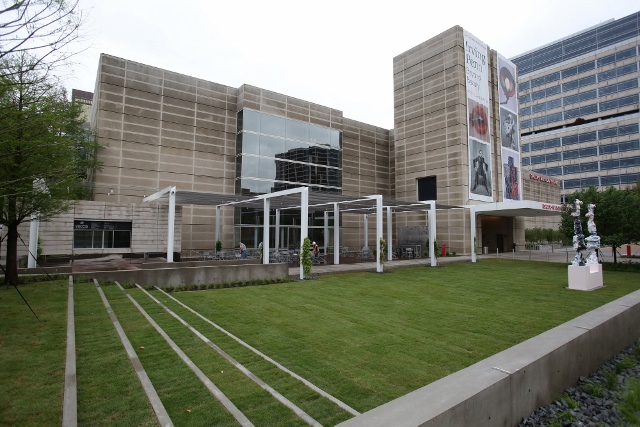
Feeling anxious or upset? A number of things exist to help you out – reading, walking, meditation, exercise. But have you ever thought of visiting a museum to ease that apprehension? Turns out that patronizing a museum might be one avenue of relief for anguished souls. A University of Pennsylvaniastudy entitled “Art Museums as Institutions for Human Flourishing” published in the Journal of Positive Psychology indicates as much.
The relatively new field of “positive psychology” studies “the strengths that enable individuals and communities to thrive.” It draws on research from a variety of academic disciplines while examining how the arts and humanities affect the human condition.
“We believe our collaborative and interdisciplinary work is all the more vital at a time when so many individuals and communities lack the levels of well-being they need to thrive,” said James O. Pawelski of UPenn.
Pawelski and colleague Katherine Cotter had already planned to study the effects of museums on people’s mental health when the COVID-19 pandemic hit. Since so many museums were forced to shut down, the duo compiled and reviewed over 100 research articles and government and foundation reports.
They discovered that visiting a museum reduced stress levels, frequent visits decreased anxiety, and viewing figurative art lowered blood pressure. They also found that museum visits lowered the intensity of chronic pain, increased a person’s life span, and lessened the likelihood of being diagnosed with dementia. And those living with dementia saw mental and physical benefits as well: Spending time in a museum induced more dynamic stress responses, higher cognitive function, and improvements in the symptoms of depression.
Going to a museum also left elementary schoolers feeling “restored” and even made medical residents feel less emotionally exhausted.
To most artists, this shouldn’t be surprising. Writers, painters, musicians and the like have always had the ability to unite people when politicians couldn’t. And now, our desires to make people’s lives better has been vindicated once again.
As The Chief continues his technical writing pursuits, I periodically encounter some odd elements.
In the email below, for example, the recruiter either wasn’t familiar with the English language or they tried to be inspirational. But yeah! There are few things more exciting than looking for a job! I mean what reasonable person doesn’t enjoy the rigor of composing a perfect correspondence to a potential employer – especially if they’re desperate to find a job.
Then there’s this beauty below. While applying for another tech writing job last December, I had to complete a section which asked a question I’d never seen before.
Neurodivergent?! I actually had to look that up – and was offended they’d made such an inquiry.
For years companies have been taking people’s fingerprints and making copies of their driver’s licenses. I never had a problem with that and always acquiesced. It was just part of the hiring process.
I’ve also undergone drug screenings, which entail urinating into a plastic cup. I still find that more intrusive than anything and – after my last such screening a few years ago – vowed never to do it again. In that incident I inadvertently starting washing my hands after stepping out of the room, which I didn’t know was forbidden. I’d already handed the cup to the gloved associate who had been standing immediately outside. When she practically hollered at me for reaching towards the sink, one of her colleagues (they were both female) passed by and made some chicken-shit comment about men not being able to follow instructions. They began laughing to which I promptly responded, “Excuse you!” That seemed to upset them, but I will not be disrespected. Imagine if male associates had said something similar to a woman.
Now some employers are asking for proof of COVID vaccinations. And exactly what type of shot I received! And from where! That’s when I stop being conciliatory. I simply told one recruiter ‘NO’. I would not tell them exactly what type of anti-COVID vaccine I received, much less provide a copy of the card displaying my personal data. If it’s a remote position, who really cares if I’m vaccinated?! I received both shots, each of which made me ill.
Understand I’m not some right-wing extremist or a Canadian truck driver. I think the COVID hysteria has reached a crescendo.
But neurodivergent?! That’s a new one, which I find as intrusive as the cup thing.
Several years ago a human resources associate with the energy company where I worked asked if I’d had personality disputes with coworkers.
“Come on now,” I replied. “You’ve been around long enough to know, when you gather different people from different backgrounds in one location to work together, inevitably there’ll be some conflict.”
My elaborate answer seemed to surprise her. I surmise she was accustomed to hearing something like, ‘Oh never!’ Or, ‘Of course not. I get along with everybody. I’m a people person.’
But she had to concede I was right. A company never knows what they’re going to get when they hire someone new.
Neurodivergent?!
This moment came a few months after I’d had a heated text discussion with a long-time acquaintance who lives in California. He was involved with two younger men – a couple he’d met on a dating site. He described one of them as somewhat anti-social, adding that the guy’s mental aptitude fell along the autism spectrum. He went further, though, declaring that people who aren’t good in dealing with other people are borderline autistic.
It stunned me. I’ve never been good in dealing with other people. My parents could never understand why I had such a tough time making friends. But no one had ever deemed me autistic. To me autism is just one step above mental retardation. My California acquaintance tried to assure me he wasn’t insinuating I’m mentally retarded, but I remain unconvinced. He doesn’t really know me. We’ve never even met. So I found his cyber-assessment of me as autistic insulting.
I answered no to the “neurodivergent” inquiry, but I wished there had been another option: ‘Who gives a shit!’
This COVID-19 pandemic has taken so much from the average person – no matter where in the world they live. Here in the U.S. we’re trapped in a nightmarish scenario with a disoriented leader heralding recent gains in the stock market, while millions remain unemployed. I’m sure those struggling to pay utilities are thrilled to know Fortune 1000 companies are enjoying record stock prices.
One of the most severe – and underrated – effects is the impact the scourge has had on people’s psyches. Emotional, mental and physical health always become subconscious victims of any national crisis. People are just trying to survive.
Personally, I’m in a vortex of angst and frustration. My freelance writing enterprise – as meager as it was – has pretty much collapsed. I’m fortunate I have some money saved from previous work, but I know that won’t last forever. Or even much longer. After my mother’s death this past June, though, I began to feel sick. Friends and relatives thought I was in a state of grief, which I was for the most part. But I thought I’d contracted that dreaded novel coronavirus. I had many of the symptoms. I had hoped my seasonal allergies had started to hit me early. Then again, perhaps it was the stress of dealing with my mother’s health. One friend suggested I was suffering from a lack of iron and Vitamin D. Still, I finally reconciled, it may be all of the above. Fighting so many battles at once takes a toll on the body. And mind.
Because of the pandemic, health clubs were among those businesses shuttered across the nation in an effort to contain the spread. I last visited my gym in mid-May; shortly before the rehabilitation center where my mother had been staying shoved her out because her Medicare benefits had been exhausted. (That’s another story!)
But even after my gym reopened in June, I still haven’t visited. Again it was that awful sickness. I didn’t know what was wrong. I’ve taken to doing basic calisthenics and walking along an exercise trail behind my home in recent weeks in the middle of the day. I used to go running, but I don’t have the strength right now. Key words: right now. Once you take off a long time without doing any kind of exercise besides laundry and loading and unloading the dishwasher, it’s a tad bit difficult to get back to normal. But even that little bit still makes me feel good.
Seven years ago I wrote about my tendency to visit my local gym on Saturday nights, when hardly anyone was present. I commented that only lonely fools like me did such a thing. At the turn of the century, working out on a Saturday night was unmanageable. But the gym I had at the time was open 24 hours. It was a perfect time to jog on a treadmill and lift weights, I realized, with such a sparse crowd. No one was there to be “seen”. That quiet time – with various types of music blaring from the myriad speakers lingering overhead – allowed me to think of every aspect of my life.
I left that gym in 2017 to join another local gym that closed unexpectedly a year later. After a lengthy hiatus, I joined my current gym last year. This is an old-school gym with no fancy juice bars or chic workout gear. Loud rock and rap music bounces around the concrete walls. It boasts an outside area with non-traditional workout gear, like tractor tires and tree stumps. Men can go shirtless. People there sweat – they don’t perspire! It’s not for suburban soccer moms or GQ cover models. (No offense to soccer moms!) I feel more than comfortable in such an environment.
I know it’s tough to take one’s mental and physical health into consideration if you’re unemployed or underemployed. But I also know you don’t have to belong to any kind of health club to care for your own health. Mental health experts are concerned about the severity this pandemic is having on people’s well-being. Quarantines are literally driving people crazy. And to drink too much alcohol and/or consume illegal drugs. Or contemplate hurting themselves. A bad economy helps none of that. I can identify with all of that. I really do feel that kind of pain.
Just walking the other day, carrying a water bottle and letting the sun emblazon my bare torso, helped me mentally. It didn’t make everything magically disappear once I returned home. I knew it wouldn’t. But maintaining one’s health – as best as possible, even in the worst of times – is vital. It can’t be overemphasized.
Allow The Chief to pull his Stradivarius from behind the
toilet paper and bathroom cleaning supplies and attempt whole-heartedly to
extract a bit of sympathy from you. This
past Monday, October 21, I awoke feeling disoriented. I can’t explain it exactly, but I simply
felt…weird. Yes, I realize you folks
have come to expect that from me, especially since I’m a writer, and a troubled
mindset is one of the drawbacks of the creative spirit.
I’ve encountered this sensation before – only once
previously, though. But, on this past
Monday, it felt more intense and painful.
I kept feeling that anything and everything I did – no matter how small
or mundane – wasn’t right. I couldn’t
open a door in the right way. I couldn’t
even pick up a piece of trash the right way.
I mean, EVERYTHING I did wasn’t right.
I keep thinking it might be related to my allergies. The summer to fall transition is almost always
the worst for me. But, every few years, I
have a period like now, where it hits harder than freight train striking a
vehicle stuck on the tracks. Simple over-the-counter
and / or home-based remedies won’t help.
I have to visit my family doctor and get some high-caliber, prescribed
medicine. This year, he gave me
three. Feeling tired and lethargic comes
with the territory. I’ve always said my
worst allergies follow the hurricane season in the Atlantic / Caribbean basin. And, this time around, the storm was a
Category 5.
I’m pretty much over all that mess now. But…that overwhelming disoriented feeling. Is that related to my allergies and / or the
prescribed medicines? I know some
high-octane medicines have a myriad of potential side effects. In fact, reading the list of side effects – diarrhea,
fatigue, nausea – makes me wonder if they’re worth the trouble. Let’s see, what do I prefer? A runny nose or a runny ass? Too many choices! Like trying to find a book to read while
eating cereal.
Then again, are my years of frequent alcohol consumption finally
coming back to haunt me, like the fact I never attended a high school
dance? I consider myself a recovering
alcoholic, but I still haven’t given it up permanently. Smoking, yes, but I can’t resist a good
screwdriver or wine cooler! I just watch
myself.
Perhaps, this is what life is like headed towards age 60 –
meaning the seventh decade of my existence.
As a youth, I recall my parents – mainly my mother – opining that life
begins at 40. At that time, people,
indeed, seemed to have reached the apex of happiness with family, career,
etc. Now, I hear that 50 is the new
40. Medical advances have made it more
likely people will live into their 80s and 90s.
Thus, 50 really is becoming middle age for many Americans.
I just don’t know.
But I feel friends and family are likely to scoff at me, if I mention
aloud that I’m feeling incredibly disoriented.
‘So, what’s new?’ they might say.
‘Tell me something I DON’T know!’
Okay, okay! You don’t have to rub
it in, like sandpaper mistaken for…well, toilet paper.
I’m only putting this out there – to this audience, my
faithful followers – because I’m not really ashamed of it. It’s just frustrating and annoying. Okay, it pisses me off! It interferes with my daily activities. I can’t even work on my creative
writing. That disoriented sensation
blocks my artistic mind from producing anything. So, I just go to sleep.
As with the last time this happened, I realized I just
needed to stop trying so hard to understand it and merely take a shower and
plunge into my bed with its 10-year-old mattress. I’m curious to know, however, what you folks
think. Has this happened to you and, if so,
how did you deal with it? Remember, if
you don’t take this seriously, we’ll hear about more drama from the British royal
family!




 Chief Writing Wolf