Tag Archives: race

Home Somewhat Free

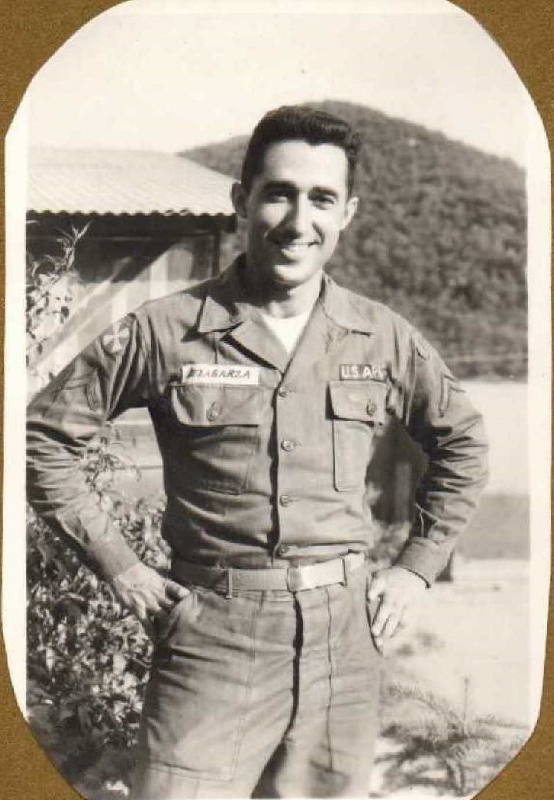
My father, George De La Garza, Sr., in South Korea in 1954

This is my father’s recollection of returning home from military service in Korea.

I had thought of joining the military when I got older.  My older brother, Jesse, did.  He was 17 and failing out of school when he enlisted in the U.S. Army in the summer of 1942.  They shipped him out to the Pacific region.  He was stationed on some remote island, when he killed his first person.  He said it was at night, and Jesse and his commanding officer were hidden in some thick foliage – looking for…whatever.  Then they spotted a Japanese solider approaching.  Jesse’s CO ordered him to kill the guy…“or I’ll kill you first and then him.”  He was still 17 and had no choice.  Jesse saw other casualties – adults and children; soldiers and civilians – in the wicked and bloody chaos of World War II’s Pacific theatre.  He caught malaria, before returning home.

Jesse received a slew of awards, including a Purple Heart by Gen. Douglas MacArthur himself.  He got an honorable discharge and quickly came back to Dallas.  One Saturday morning me and Jesse, our younger brother, and some other friends visited a local barbershop.  As sat conversing in Spanish and English, the shop’s owner approached and – in his heavy Scottish brogue – ordered us to leave.  “We don’t cut Mexicans’ hair.”

Here we all were – born and raised in the Dallas area, not causing any ruckus – and a foreign-born man tells us to leave.  At some point over the next couple of days, a massive rock found its way through the large glass window of that shop.  I swear I don’t know how that happened!

That experience kind of left me bitter about this great country and the freedom it was supposed to have.  I no longer had any desire to join the military.

Then came Korea – and I had no choice.

I had just turned 21 in January 1954, when my father drove me to the Greyhound bus station in downtown Dallas – just like he’d done with Jesse more than a decade earlier.  I had rarely been outside of Dallas and never outside of Texas.  I arrived at Fort Bliss in El Paso, a little scared and not knowing what to think.  After basic training, they put me on another bus to Los Angeles, then a train to Seattle, and finally a ship to Korea.

From what I understood later, Korea wasn’t nearly as bad as World War II, but when is there ever a pleasant war?  More importantly I understood why Jesse never wanted to talk about his own experiences.

By then the U.S. armed forces had been (forcibly) integrated, so men of all shapes, sizes and colors served together.  I developed close friendships with many of my Black comrades.  I could envision these connections lasting a lifetime.

It was only two years, but it felt like decades.  We left Korea on a ship for Seattle.  Once there we had to take a train down to Los Angeles.  I stood with my Black buddies on the platform, before we had to board.  My friends started walking away from me.

“Hey, guys, where are you going?” I asked, still innocent – naïve actually.

“We have to go to the rear of the train,” one of them called back to me.

The rear of the train – where the Negroes had to go.

Oh yeah, I told myself.  We’re back in America – the land of the free.

3 Comments

Filed under Wolf Tales

Self-Inflicted

“When fascism comes to America, it will be wrapped in the flag and carrying a cross.”

Sinclair Lewis, 1935

I had a certain sensation deep inside of me; the same kind of feeling when I know something dramatic – either good or bad – is about to happen.  This time it was bad, and I almost felt sick.  Donald Trump has been reelected to the U.S. presidency.  He becomes only the second president in U.S. history to win a second term that didn’t immediately follow the first.  He also has the dubious distinction of being the first indicted criminal to be elected.  Little could be stranger or sadder for the American people.  I suppose, though, that too many people drank that proverbial Kool-Aid offered by the Republican despot; a man who openly admires the likes of Vladimir Putin and Kim Jong-Un; who has advocated violence against others; who has threatened to imprison anyone who disagrees with him; who incited a riot nearly four years ago; and who has demonstrated no true respect for average, working Americans.

I am embarrassed by and disgusted with many of my fellow Americans who helped put Trump into office.  The Democratic Party, however, really has no one but themselves to blame for this chaos.  Their leadership stood by as Joe Biden and Bernie Sanders ran for president in 2020.  With all due respect to those two gentlemen, their time had come and gone.  The window to run for and win the U.S. presidency is small.  I felt Biden and Sanders would have better served the country by giving speeches and writing books about the value and importance of democracy and how people like Trump pose the worst threat to our constitutional freedoms.

For the Democrats, the 2020 presidential race began with the most diverse slate of candidates – and ended with the same tired old figures that traditionally represented both parties: old White men.  Now understand I’m a mostly White male and have no qualms about it.  But this nation boasts too varied a population to rely upon the same types of people to lead us.

And it’s not that the U.S. isn’t ready for a female president.  We’re way past ready.  It’s just that the Democrats (and the Republicans for that matter) have never chosen the right women to lead them.  I’ve always said Hillary Clinton was too divisive a figure.  While I loved Bill “Who’s Your Daddy” Clinton, I personally never cared for Hillary.  And, although Kamala Harris made history by becoming the first female vice-president in U.S. history, she didn’t do enough to separate herself from Biden.

In 1993 Canada elected its first female prime minister, Kim Campbell, and highly patriarchal and staunchly Roman Catholic México just elected its first female (and Jewish) president, Claudia Scheinbaum.  Thus far, eighteen other women either have been elected or ascended to the highest office in their respective countries in the Western Hemisphere:

Jeanine Áñez, Bolivia, 2019-20

Rosalía Arteaga, Ecuador, 1997

Michelle Bachelet, Chile, 2006-10 and 2014-18

Dina Boluarte, Peru, since 2022

Sylvanie Burton, Dominica, since 2023

Xiomara Castro, Honduras, since 2022

Violeta Chamorro, Nicaragua, 1990-97

Eugenia Charles, Dominican Republic, 1980-95

Laura Chinchilla, Costa Rica, 2010-14

Cristina Fernández de Kirchner, Argentina, 2007-15

Lidia Gueiler Tejadam, Bolivia, 1979-80

Mireya Moscoso, Panama, 1999-2004

Mia Mottley, Barbados, since 2018

Ertha Pascal-Trouillot, Haiti, 1990-91 (acting president)

Michèle Pierre-Louis, Haiti, 2008-09

Dilma Rousseff, Brazil, 2014-16

Portia Simpson-Miller, Jamaica, 2006-07 and 2012-16

Claudette Werleigh, Haiti, 1995-96

Trump does not represent me – never has and never will.  He has proclaimed total disrespect for people who aren’t exactly like him.  And I’m certainly not like him.  I’m not a wealthy, full-blooded Caucasian womanizer who cheated on his taxes and has disdain for the American military.  I feel that he’s a genuine threat to free speech and the right to vote, but – like most conservatives – has the full support of gun rights advocates.  This latter band of extremists has always placed the value of firearms above free speech and the right to vote – and certainly above the lives of human beings.

One of my concerns with Trump’s return to the White House is that he will implement the so-called Project 2025 – a federal policy agenda created by the Heritage Foundation, a far-right conservative outfit that is a borderline hate group.  Many officials in Trump’s first administration took part in the project’s creation, which demands a complete overhaul of the government based on staunchly conservative ideology.  That philosophy features opposition to the usual causes: abortion and reproductive freedom and queer rights, but also immigration and racial equity.  Moreover, Project 2025 calls for unwarranted surveillance on specific individuals; using force to quell protestors; and targeting journalists who they deem enemies of the state.  This might sound familiar to those schooled in global political history.  They’re the same kind of tactics the Nazis and the former Soviet Union used on its own civilians.  Argentina pursued the same agenda during its “Dirty War”, and North Korea is doing it now.

I don’t know what’s next for America, but I see nothing good on the horizon.  I’m certain my conservative friends and relatives will assume I’m being paranoid, even hysterical.  Yet I felt similar sensations of foreboding when George W. Bush became president in 2000.  And I was right.  The U.S. ended up both in war and a recession.

I’m almost certain it will happen again.

2 Comments

Filed under Essays

Shifted

The U.S. Supreme Court ended its first term of 2023 last month with some stunning decisions – stunning, but not surprising.  A year ago the Court finished with its shocking reversal of the 1973 landmark Roe v. Wade, which had legalized abortion in the United States.  Ending abortion in this country had been a long-standing goal of social and religious conservatives and they finally accomplished that mission.  But this time the Court went further in their swing to the far right by ending affirmative action in college admissions and allowing religion to be used to discriminate.

In Students for Fair Admissions, Inc. v. President and Fellows of Harvard College, the Court ruled that the admissions programs used by the University of North Carolina and Harvard College violate the Constitution’s equal protection clause (the 14th Amendment), which bars racial discrimination by government entities.  The 14th Amendment has been utilized to undermine entrenched discrimination for decades.  It has manifested its power in such SCOTUS decisions as Brown v. Board of Education of Topeka and Miranda v. Arizona.  Ironically, the Students for Fair Admissions ruling reversed a 20-year-old case, Grutter v. Bollinger, which declared race as a plausible factor in college admissions policies.  Have things really changed for the better in two decades?  All of this also reminds me of the Regents of the University of California v. Bakke, in which a White man, Allan Bakke, sued the University of California Medical School at Davis for refusing to admit him; the school had reserved 16 places in each entering class for qualified ethnic minorities.  Bakke had applied twice to the school and been denied twice, despite having a high GPA and test scores.  SCOTUS ruled that, while race was a qualifying factor in college admissions, the University of California policy at the time, indeed, violated the Constitution’s 14th Amendment.

I have to admit I support their affirmative action decision.  As noble a philosophy as it was, I feel affirmative action has run its course, and – as we march further into the 21st century – it’s time we truly become a color blind society.  Actually it’s way past time.  But, as with campaign promises and many business plans, things look great on paper.  Personally I don’t feel affirmative action has helped me.  It hasn’t hurt me, but it certainly hasn’t helped me.  I never asked for special rights or considerations.  But, like I told a friend years ago, while legislation may have forced the playing field to become level, are all the players on the field playing on the level?

It’s the Creative 303 decision, however, that concerns me the most.  Last year the Supreme Court made perhaps its most controversial decision in decades with the Dobbs ruling that effectively ended the constitutional right to an abortion.  But, in the 2022 Carson v. Makin ruling, the Court chipped even further away at that cherished separation between government and religion, when it declared the state of Maine had violated the constitution when it refused to make public funding available to students attending religious schools.  In general religious institutions don’t pay taxes; therefore, they’ve traditionally been unable to access tax money at either the state or federal level.  The reasoning was practical: anyone who receives government funding should follow certain rules and regulations.  People taking unemployment insurance, for example, have to conduct a minimum number of job searches weekly; otherwise, they can’t receive that money.

In the Creative 303 case, Colorado web site designer Lorie Smith had allegedly refused to design a site for someone planning a same-sex wedding; declaring that it was an affront to her religious beliefs and therefore, violated her First Amendment rights.  It’s similar to another case from Colorado, Masterpiece Cake Shop v. Colorado Civil Rights Commission, in which Jack C. Phillips, the owner of Masterpiece, refused to bake a wedding cake for a male couple on the grounds that it violated his religious beliefs; he simply didn’t believe in same-gender unions.  The couple, Charlie Craig and David Mullins, filed suit, claiming Phillips was in violation of Colorado’s Anti-Discrimination Act.  The Supreme Court ultimately ruled in Philips’ favor, decreeing that the Colorado statute violated “the State’s duty under the First Amendment not to use hostility toward religion or a religious viewpoint as a basis for laws or regulations.”

But no sooner had the Creative 303 ruling been made than news arose that Smith may have fabricated her initial claim.  The man who supposedly asked her to design a web site for a same-gender wedding states he never worked with her.  Smith, however, cited the man – identified only as “Stewart” – in 2017 court documents and included his phone number and email address.  But “Stewart” says he didn’t even know his name had been invoked in the original lawsuit until a report with “The New Republic” contacted him.

“I was incredibly surprised given the fact that I’ve been happily married to a woman for the last 15 years,” said Stewart, who declined to give his last name for fear of harassment and threats.  He noted that he’s a designer himself and could have created his own web site if necessary.

One of Smith’s lawyers, Kristen Waggoner, insisted Stewart’s name and other information had been submitted to her client’s web site and denied the entire claim had been fabricated.  But she suggested an internet troll had made the request to Smith; adding that’s it occurred with other clients.  Ironically, the aforementioned Jack C. Phillips was also Waggoner’s client.

Regardless, I have to wonder if this revelation doesn’t render the Creative 303 ruling invalid.  Even if an internet troll had made the initial application, Smith’s attorneys should have verified every detail of the case.  That’s what lawyers are supposed to do.

Getting a matter before the U.S. Supreme Court is no small feat; they don’t take on minor traffic infractions.  That’s why so many of their decisions are monumental and can reshape society.  And thus, it’s why people are rightfully concerned about the implications of the Creative 303 edict.  If religious ideology can be the basis for discrimination, who’s to say a business owner can’t refuse to service a prospective client under such a pretense?  Technically businesses have the right to refuse service to anyone, but that’s generally happened only under the most egregious of circumstances.  A bar or nightclub, for example, can refuse to admit someone who’s visibly intoxicated.  I’ve seen signs on doors declaring “no shirt, no shoes, no service”.

Years ago another friend told me I discriminate whenever I choose one food item over another.  “That’s not discrimination,” I told him, “that’s selection.”  But he was a conservative, so I guess I understood why he couldn’t make that distinction.

Still, I certainly hope many Black, Hispanic and queer conservatives are happy with their votes for George W. Bush and Donald Trump.  Despite not winning the popular vote in their respective elections, they were able to place five justices on the U.S. Supreme Court.  That has never happened before in the history of U.S. legal jurisprudence.  All five of those individuals have now set back decades of civil rights advancements.  A truly democratic society is supposed to protect all of its citizens from bigotry and oppression.  I fear we’re doing the opposite in the United States.

2 Comments

Filed under Essays

Best Quotes of the Week – March 12, 2022

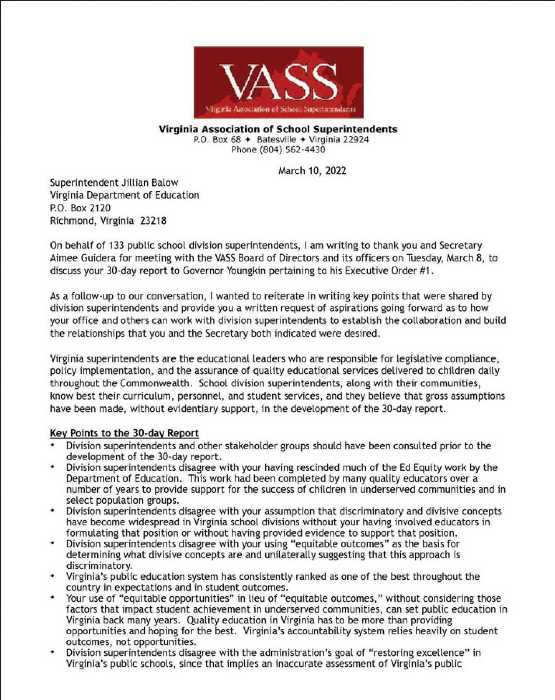
“Division superintendents disagree with your assumption that discriminatory and divisive concepts have become widespread in Virginia school divisions.”

Howard Kiser, executive director of the Virginia Association of School Superintendents, in a letter to Jillian Balow, the state superintendent of schools, regarding Virginia Gov. Glenn Youngkin’s “tip line” set up to let parents complain about teachers and principals

All 133 Virginia public school division superintendents have urged Youngkin to scrap the “tip line” and have asked him to stop his campaign against the teaching of “divisive” content in schools.

The superintendents were reacting to a report Balow issued last month aimed at fulfilling promises Youngkin made during his campaign last year to end the teaching of critical race theory (CRT), an academic framework for studying systemic racism.  The concept had never been on the Virginia’s curriculum, but the first executive order Youngkin issued within hours of being inaugurated January 15 was aimed at banning CRT.  He later announced the establishment of the tip line for parents to tell the state about teachers or principals exposing students to materials deemed objectionable.

“Republicans are anxious — very anxious indeed — to tell us that Republican Congressman Madison Cawthorn doesn’t speak for his fellow Republicans.  Sen. Lindsey Graham rushed to the microphone to assure us that Cawthorn is an outlier ‘in the largest sense possible on our side.’”

Charlie Sykes, regarding Rep. Madison Cawthorn’s denouncement of Ukrainian President Volodymyr Zelensky in a column for The Bulwark

Sykes added, “This is also important to remember: Until about five minutes ago, Cawthorn’s remarks were more or less basic talking points among the MAGA right — and not just talking points, but holy script. His attitude is deeply embedded in the right’s DNA. So, it’s easy to imagine Cawthorn today, looking around at his GOP critics and asking: Dude, what do you mean ‘outlier?’ I’m just saying what we’ve all been saying for years now! He’d have a point.”

Leave a comment

Filed under News

Best Quotes of the Week – June 26, 2021

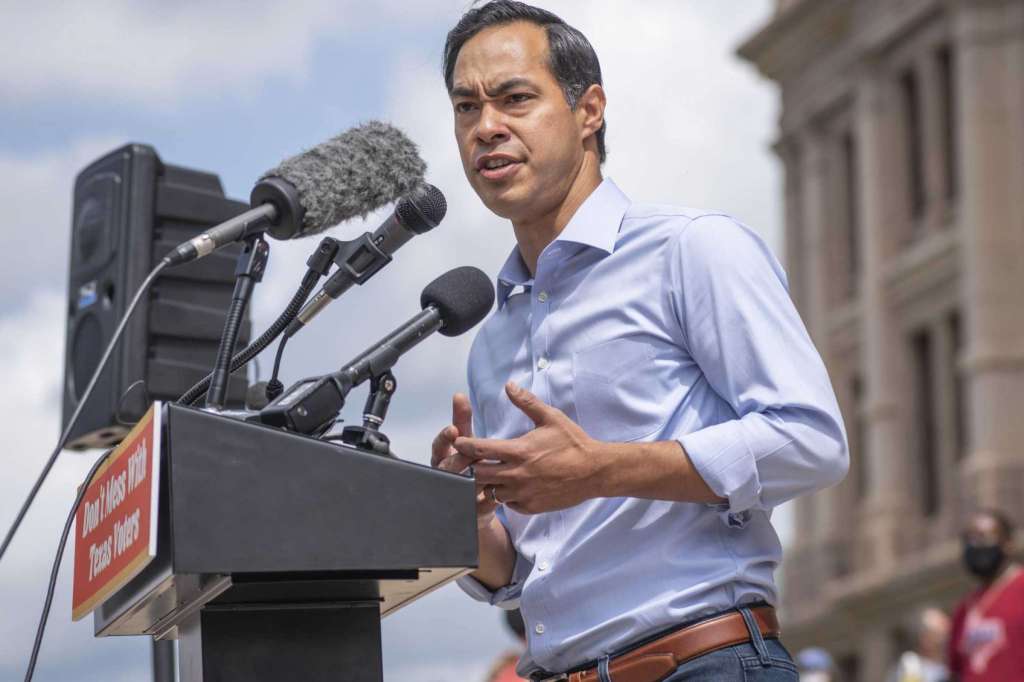
“They’re trying to rig the system to stay in office as long as they can, try to suppress the vote to make it harder – especially for Black and brown communities to vote in Texas – and we’re not going to let them.  We’re going to fight back. We’re going to say no, and we’re going to show up.”

Julian Castro, former U.S. Secretary of Housing and Urban Development, during a rally for federal voting rights legislation in front of the Texas Capitol

“Tucker Carlson didn’t serve.  His biggest achievement is having nine lives in the world of cable news.  Making a bowtie famous, and getting away with promoting conspiracy theories, night after night after night.”

Brianna Keilar, responding to Tucker Carlson’s criticism of Gen. Mark Milley, Chair of the Joint Chiefs of Staff, and noting the FOX News host didn’t serve in the U.S. military

Keilar added, “That isn’t just a dog whistle.  It’s a white whistle…He is white rage!”

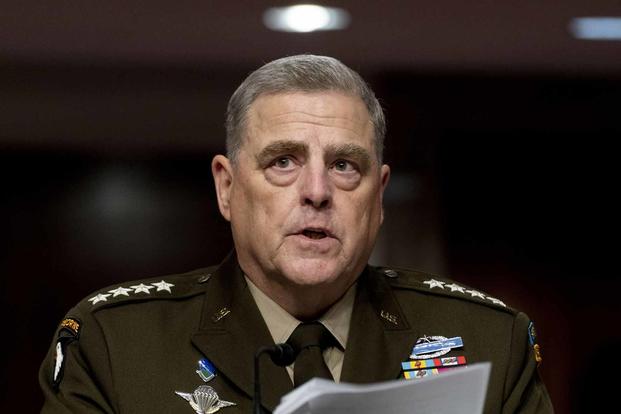
“I want to understand White rage, and I’m White.  What is it that caused thousands of people to assault this building and try to overturn the Constitution of the United States of America?  What caused that?  I want to find out.”

Gen. Mark Milley, Chair of the Joint Chiefs of Staff, about the January 6 Capitol Hill riots and the U.S. military’s efforts to push for more diverse and inclusive standards

Conservative critics have painted the new military policies as Marxist and generally anti-American.

Leave a comment

Filed under News

Best Quotes of the Week – June 19, 2021

President Joe Biden points to Opal Lee after signing the Juneteenth National Independence Day Act, in the East Room of the White House, Thursday, June 17, 2021, in Washington.  Lee, a 94-year-old Texan, had campaigned for holiday.  From left, Rep. Barbara Lee, D-Calif, Rep. Danny Davis, D-Ill., Opal Lee, Sen. Tina Smith, D-Minn., Vice President Kamala Harris, House Majority Whip James Clyburn of S.C., Sen. Raphael Warnock, D-Ga., Sen. John Cornyn, R-Texas, obscured, Rep. Joyce Beatty, D-Ohio, Sen. Ed Markey, D-Mass., and Rep. Sheila Jackson Lee, D-Texas. (AP Photo/Evan Vucci)

“This day doesn’t just celebrate the past. It calls for action today.”

President Joe Biden, upon signing the Juneteenth National Independence Day Act on June 17

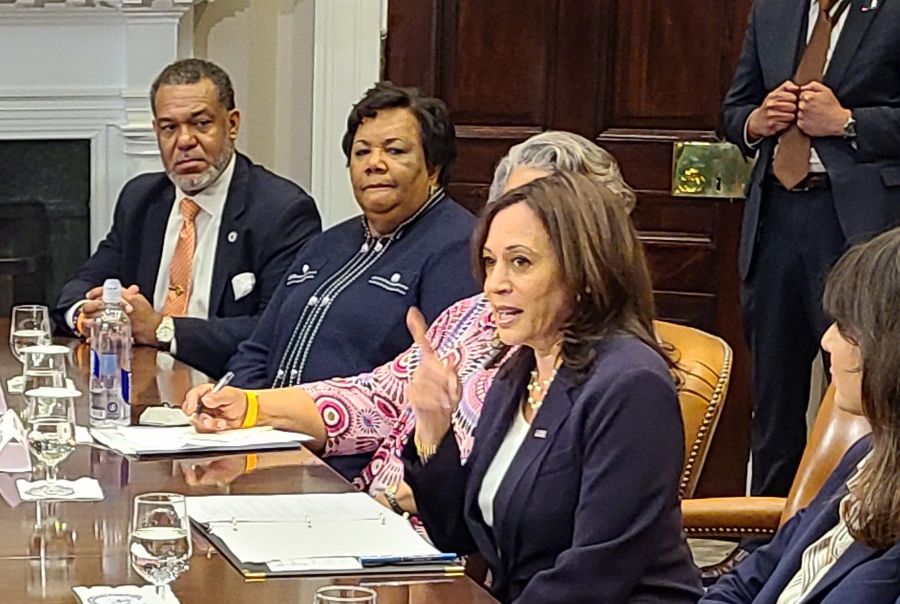
“You are courageous leaders and American patriots.”

Vice-President Kamala Harris, praising a group of Texas Democrats for walking out on a state legislative session in protest of a strict new voting bill

“Without a national standard for voting rights and voting reform, states are going to just chip away at the rights of voters state by state. Hopefully, this might inform minds and shape opinions when folks are in that Senate cloakroom wrestling over how they’re going to proceed with HR1 and HR4.”

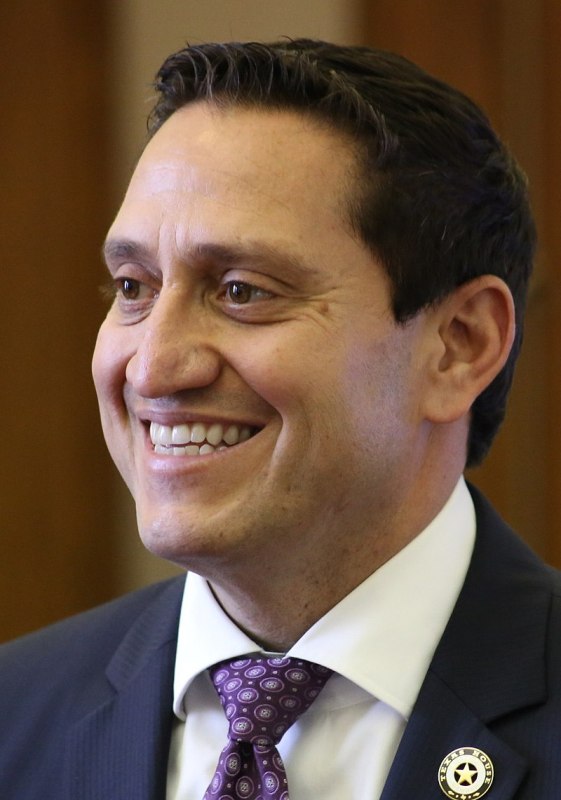
Texas State Rep. Trey Martinez Fischer, about the Texas Democratic walk-out

6 Comments

Filed under News

Best Quotes of the Week – May 1, 2021

“Madam Speaker, Madam Vice President…no president has ever said those words from this podium, and it’s about time.”

President Joe Biden, at the start of his state of the union address

“No, I don’t think America is a racist country, but we also do have to speak truth about the history of racism in our country.”

Vice President Kamala Harris, on ABC’s “Good Morning America”, in response to Sen. Tim Scott’s assertion that America is not a racist country

Leave a comment

Filed under News

Best Quotes of the Week – March 20, 2021

“The investigation is ongoing.  We don’t yet know, we’re not yet clear about the motive.  But I do want to say to our Asian-American community that we stand with you and understand how this has frightened and shocked and outraged all people.  But knowing the increasing level of hate crime against our Asian-American — our brothers and sisters — we also want to speak out in solidarity with them and acknowledge that none of us should ever be silent in the face of any form of hate.”

Vice-President Kamala Harris, regarding a series of shootings in the Atlanta, Georgia area that seemed to target people of Asian extraction

“Your president and your party and your colleagues can talk about issues with any other country that you want, but you don’t have to do it by putting a bull’s-eyes on the back of Asian Americans across this country, on our grandparents, on our kids.  This hearing was to address the hurt and pain of our community to find solutions and we will not let you take our voice away from us.”

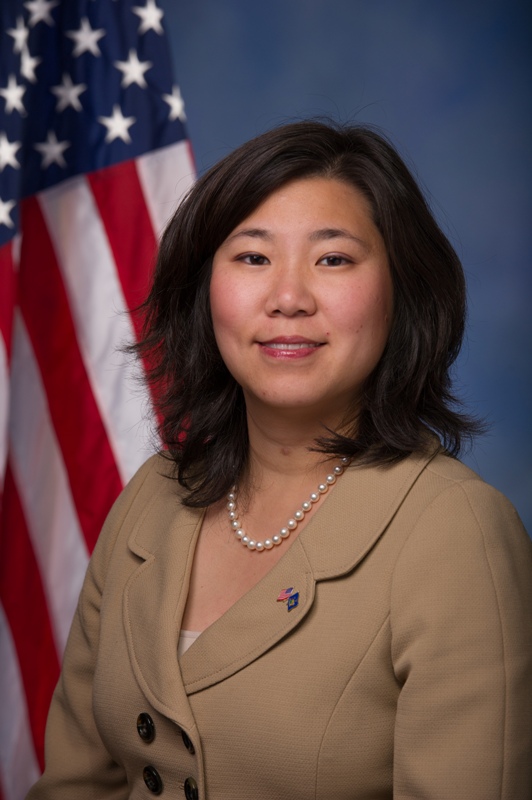
U.S. Rep. Grace Meng (D-NY), responding to comments by Rep. Chip Roy (R-TX), during hearings about attacks on Asian-Americans (See “Worst Quotes of the Week – March 20, 2021” below.)

“Every other living former president – or most of them, not all of them – has participated in public campaigns.  They did not need an engraved invitation to do so.  So, [Donald Trump] may decide he should do that.  If so, great.  But there are a lot of different ways to engage, to reach out to ensure that people of a range of political support and backing know the vaccine is safe and effective.”

White House Press Secretary Jen Psaki, responding to a reporter’s question if President Joe Biden would appreciate former President Donald Trump join COVID-19 vaccine campaigns, along with other former Chief Executives

Psaki also stated, “Well, if former President Trump woke up tomorrow and wanted to be more vocal about the safety and efficacy of the campaign, of the vaccine, certainly we’d support that.”

Leave a comment

Filed under News

Best Quotes of the Week – December 12, 2020

“The mountains of misinformation are not helping the process; they’re only hurting it.”

Geoff Duncan, Republican lieutenant governor of Georgia, responding to Donald Trump’s relentless claims the elections were “stolen”

Two runoff elections for senator in Georgia on January 5 will determine control of the U.S. Senate.

“I personally think my company should pay me workers compensation for brain damage for having to read that lawsuit and related filings.  It really is one of the stupidest bits of performative leg humping we have seen in the last five years. These attorneys general are willing to beclown themselves and their states all to get in good with the losing presidential candidate.   The suit is absurd on its face.  These states seek to interfere in the internal affairs of other states when those states are not actually electing the president, but allowing their voters to choose members of the Electoral College.  Were this to succeed, which it will not, the states will start suing each other at every election as a bit of theater.”­

Erick Erickson, far-right social conservative and evangelical Christian fundamentalist radio host, in an essay on his blog

Erickson endorsed Trump’s reelection campaign, but criticized a lawsuit filed by Texas Attorney General Ken Paxton, denouncing it as “one of the stupidest bits of performative leg humping we have seen in the last five years.”

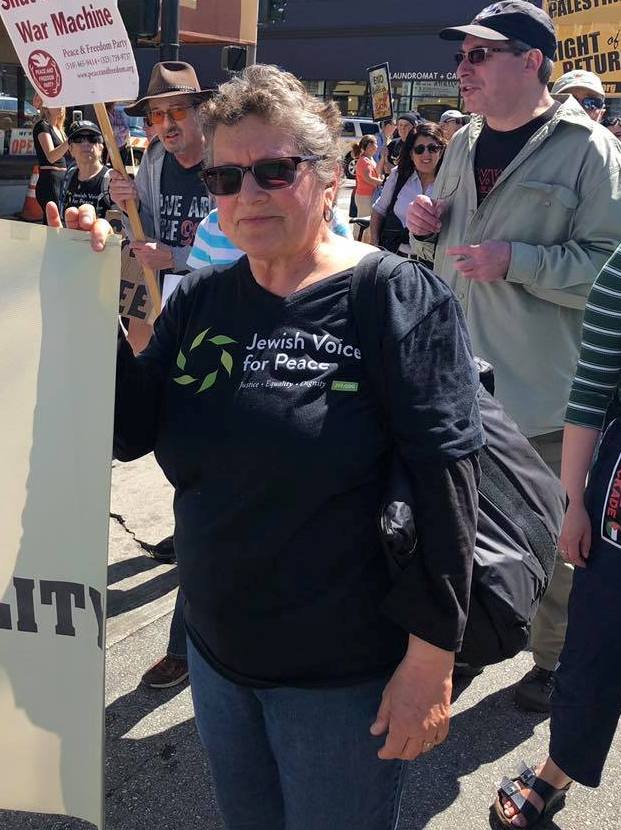
“We believe our Jewish community needs to be able to join and partner in solidarity with communities of color like Arab Americans, Black Americans, Indigenous people who are facing systemic injustice and be able to listen to their narratives just as we expect other communities to listen to our narrative as Jews.”

Ellen Brotsky, a volunteer leader for Jewish Voice for Peace, an organization devoted to combating all forms of ethnic and racial bias

JVP and their supporters are concerned recent changes to school curriculums about ethnic inclusivity in the state of California are overlooking people of Middle Eastern extraction.

“The allegations in the lawsuit are false and irresponsible.  Texas alleges that there are 80,000 forged signatures on absentee ballots in Georgia, but they don’t bring forward a single person who this happened to. That’s because it didn’t happen.”

Jordan Fuchs, Georgia’s deputy secretary of state, responding to a lawsuit filed by Texas Attorney General Ken Paxton against Georgia, Michigan, Pennsylvania and Wisconsin whose election results handed the White House to President-elect Joe Biden

In the suit, Paxton claims pandemic-era changes to election procedures in those states violated federal law and is asking the U.S. Supreme Court to block the states from voting in the Electoral College.

“I feel so privileged to be the first.”

Margaret Keenan, age 90, upon becoming the first person in Great Britain to receive the Pfizer-BioNTech COVID-19 vaccine shot outside of clinical trials

Leave a comment

Filed under News

Misquoted Quote of the Week – September 5, 2020

“Didn’t Jesse Jackson say that when he looks behind him and he sees a group of young Black males walking behind him, he’s more scared than when he sees a group of White youths walking behind him.  Does that make him a racist?”

U.S. Attorney General William Barr, in an interview with CNN’s Wolf Blitzer.

Jackson had told CNN that back in the 1990s his family lived in a “drug-infested neighborhood,” where “a family member’s son was killed right in front of my house, killed right in front of my wife, a drug thing.”

Jackson said that he had been talking about “the young man” who killed his relative.  “If he comes behind me, I would be afraid,” Jackson said.

“Now what Mr. Barr said is the opposite about what I meant about crime,” he said.  “Those shot in Wisconsin, the killings in Ferguson and the killing in Atlanta, Breonna (Taylor) and George Floyd, all of those were police killings that had nothing to do with who was coming down the street.”

“I would love to have a conversation with William Barr,” Jackson added.

Leave a comment

Filed under News