Tag Archives: words

Words

Several years ago actress turned animal rights activist Brigitte Bardot found herself in legal trouble with French authorities.  The former screen siren openly condemned the Islamic practice of animal slaughter during the Aid al-Kabir holiday. She’d been in such a predicament before – several times.  French law doesn’t actually forbid disparaging religious ideology, but it looks down sharply upon it, as it can be considered slander or worse, a conduit to hate-obsessed violence.

It’s surprising, considering France fought hard against Nazi occupation during World War II.  One tenet of Nazism is that anyone who speaks out against the government is deemed a traitor.  But, short of slander or threats of violence, criticism of governing bodies and religion is free speech.  Imprisoning anyone, or even threatening to levy a monetary penalty for such views, runs counter to that.

All of it strikes hard for me – and other writers and artists – here in the U.S., as we witness ongoing assaults on various forms of free speech.  Book bans remain a primary source of concern.  And with Republicans in charge of the White House and both houses of Congress, the attacks continue.  Social extremists have always been opposed to any viewpoint that doesn’t conform to their standards – whether it’s coming from the left or the right.  The voices of moderates seem to get lost in the chaos.

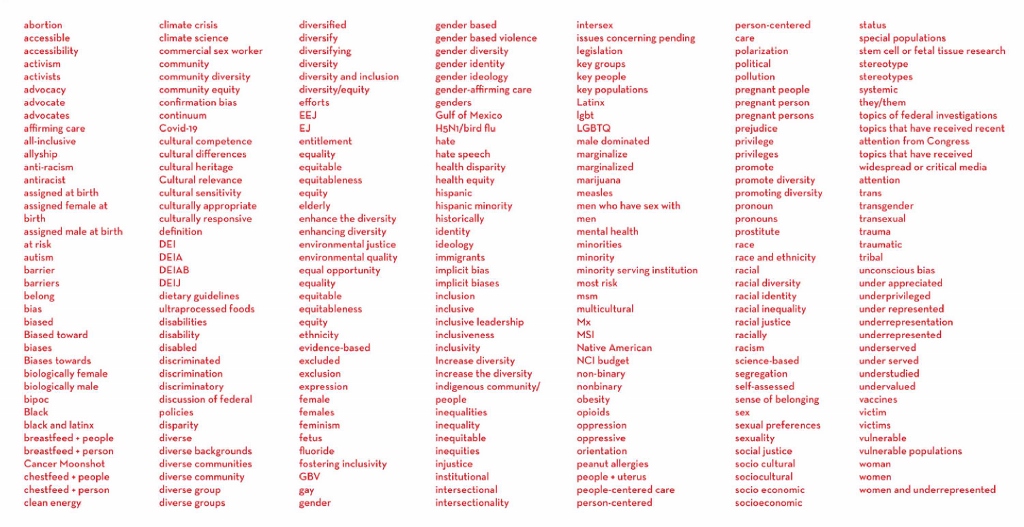
Recently the U.S. government – under pressure from the Trump administration – compiled and presented a list of words that are forbidden on federal web sites and other documentation.  They include such terms as “biologically male”, “clean energy”, “inequality”, and “woman”.  This is real!  I have a tendency towards creating outrageous stories, but I’m not intoxicated or deranged.  Well…not yet.

Regardless, the list definitely isn’t a manifestation of liberal outrage at the most right-wing president in decades.  It’s a result of years of conservative ideology designed to put people and institutions in categories and re-enshrine bigotry and hatred into the American conscience.  The leftward shift in culture and politics in the U.S. beginning in the late 1950s eventually met the hostility of Reaganesque antipathy towards anything viewed as different or the other.  The Trump era is the culmination of it all.

Those in formerly marginalized groups who also voted for Trump and his ilk shouldn’t be surprised – but they are.  For example, Cuban-Americans voted overwhelmingly for Trump, as they often have for the Republican Party.  As Cuba has been under communist rule since 1959, those fleeing the country have been given special protection from American law.  The same luxury hasn’t been granted to people fleeing war and violence in other Latin American nations, such as El Salvador and Guatemala.  However, the Trump Administration’s efforts to reform immigration law have started to impact thousands of Cuban immigrants.  Now, Cuban-Americans have the audacity to be horrified at the betrayal.  Remember the adage: be careful what you wish for; you might just get it.

We also need to recall the words of Martin Niemöller:

“First they came for the socialists, and I did not speak out – because I was not a socialist. Then they came for the trade unionists, and I did not speak out – because I was not a trade unionist. Then they came for the Jews, and I did not speak out – because I was not a Jew. Then they came for me – and there was no one left to speak for me.”

Trump and his cronies appear to be going after anyone who doesn’t fit the narrow definition of who he is.  His hypocrisy is glaring.  He never outwardly espoused any religious fervor until he first ran for president, but now says Christian ideology should be taught in schools.  If he believes in true biblical content, then consider the Christian Bible’s 7th commandment: “Thou shalt not commit adultery.” Exodus 20:14.

There are others.

“I am a stranger and an alien residing among you; give me property among you for a burying place, so that I may bury my dead out of my sight.” Genesis 23:4

“The sinless one among you, go first. Throw the stone.” John 8:6-11

“Love the Lord your God with all your heart and with all your soul and with all your mind and with all your strength. Love your neighbor as yourself. There is no commandment greater than these.” Mark 12:30-31

I’m sure this would be too much for him to handle.  It’s too much even for some devout Christians to handle!

Whatever words someone wants to use, they shouldn’t be frightened into compliance.  Russia, Iran and North Korea do that.  No truly democratic society wants to echo such autocratic leadership.
Leave a comment

Filed under Essays

Changing Dahl’s

“The problem with the world is that the intelligent people are full of doubts, while the stupid ones are full of confidence.”

Charles Bukowski

Fragile souls have infected the American conscious.  In ongoing efforts to accommodate every type of human who could possibly exist on Earth, language is being reconstructed and new words are being created.  Thus, a new type of censorship has taken hold.  As a writer, I’m devoutly opposed to any type of literary censorship.  No matter how offensive some writings may be, people should always be allowed to read them and determine whether or not they find it palatable.  No one, but no one has the right to make those decisions for others.

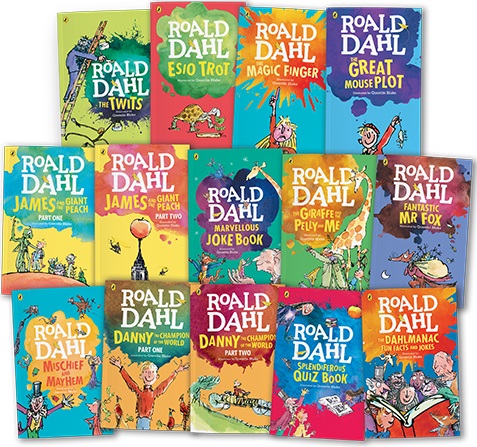
But does this include editing?  Are books written years ago now subject to contemporary sensibilities?  Roald Dahl – author of such legendary children’s tomes as “Charlie and the Chocolate Factory” and “James and the Giant Peach” – has become the latest target of political correctness, as his publisher, Puffin Books, has decided to edit some of those famous works.

For example, in “Charlie and the Chocolate Factory”, the character of Augustus Gloop is no longer “fat” but now “enormous”. In “The Twits”, Mrs. Twit is no longer “ugly and beastly”; she’s just “beastly”.

Other passages have been rewritten.  In the original version of “James and the Giant Peach”, the Centipede sings: “Aunt Sponge was terrifically fat / And tremendously flabby at that,” and, “Aunt Spiker was thin as a wire / And dry as a bone, only drier.”

In the amended interpretation, he sings: “Aunt Sponge was a nasty old brute / And deserved to be squashed by the fruit,” and, “Aunt Spiker was much of the same / And deserves half of the blame.”

Even the mundane term “female” has rendered vile.  The character of Miss Trunchbull in “Matilda” – described as a “most formidable female” – has now metamorphosed into a “most formidable woman”.

In a nod to the burgeoning transgender movement, gender neutral terms are now popular.  The Oompa-Loompas in “Charlie and the Chocolate Factory” are now “small people”, instead of “small men”; while the Cloud-Men in “James and the Giant Peach” are now “Cloud-People”.

Really?

The Roald Dahl Story Company explained the alterations by declaring, “it’s not unusual to review the language” during a new print run and any changes were “small and carefully considered”.

Puffin made the changes in concert with Inclusive Minds, an entity founded in 2013 that – according to their web site – “works with the children’s book world to support them in authentic representation, primarily by connecting those in the industry with those who have lived experience of any or multiple facets of diversity.”  It’s curious that Inclusive Minds emphasizes that they “do not edit or rewrite texts, but provide book creators with valuable insight from people with the relevant lived experience that they can take into consideration in the wider process of writing and editing.”

Okay, great, wonderful!  I have no problem with inclusion.  During high school and even college, I rarely found the Spanish and Indian portions of my heritage included in literature and popular cultural formats, such as television.  I certainly didn’t see any positive representations of queer people.

But, while inclusivity is great from a cultural perspective, it’s ridiculous and personally offensive to me as a writer to see books published long ago rewritten to cater to new levels of awareness.  We can’t go back and change what happened a lifetime ago.  No matter how much someone wishes things had been different way back when, they just can’t alter the past.  They simply can’t.  Dahl was a product of his time; he said and wrote what was commonly acceptable in his day.  If you read his books and don’t like the verbiage, then don’t read them!  It’s the same with a TV show; if you don’t like it, DON’T WATCH IT!

I understand that some things are blatantly offensive.  That’s just how it is.  If we ban every book that someone finds offensive, we wouldn’t have anything to read!  Stop the madness.  It’s not going to help move society forward.

17 Comments

Filed under Essays

Word of the Week – July 30, 2022

Notionate

[NO-shuh-nit]

Adjective

English, 19th century

Notional. Existing as or based on a suggestion, estimate, or theory; not existing in reality.  Given to fanciful thinking or exaggerated imagination.

The term is a combination of the English word “notion,” from the Latin “nōtiō,” with the suffix “-ate,” with creates an adjective based on “notion.”

“Notionate” has been overtaken in English by its synonym “notional,” and exists today mainly as a regional expression in the Southern U.S., Northern Ireland, and in Scotland. In nearly all contexts, the term has been used to describe a state of exaggerated imagination. For example, a person describing their grandfather as “old-fashioned and notionate” might be implying that the man is very superstitious and believes in ghosts, elves, or other notionate creatures.

Example: My tendency towards notionate thinking as a kid helped me get through the difficulties of those years.

Leave a comment

Filed under News

Word of the Week – July 23, 2022

Irrupt

[i-ˈrəpt]

Verb

Latin, 19th century

To enter suddenly or forcibly; to become suddenly active; referring to a natural population, to expand suddenly in numbers due to a change in the natural balance

Irrupt is very close in sound and meaning to erupt, though only irrupt can mean to enter a room uninvited.

Example: After recent Supreme Court decisions, I feel the number of concerned voters will irrupt into positive social change.

Leave a comment

Filed under News

Word of the Week – July 16, 2022

Eunomy

[YOO-nə-mee]

Noun

Ancient Greek

Equal law, or a well-adjusted constitution of government.

This word comes from the ancient Greek “eu-,” meaning “well, good” and “-nomy,” rooted in the Greek “​​nómos,” meaning “law or custom.” The word “eunomy” can easily be mistaken for “euonym” because they are anagrams for each other. While the former means “equal law,” the latter is “a name well suited to the person, place, or thing named.” Both have the Greek suffix “eu-” that means “good.” The “-onym” in “euonym” is the Greek root for “name.”

Example: After the last few months, I’m no longer certain our government is a true eunomy.

Leave a comment

Filed under News

Word of the Week – July 9, 2022

Inveigle

[in-VAY-ɡəl]

Verb

French, 15th century

Persuade (someone) to do something by means of deception or flattery. Gain entrance to (a place) by persuading (someone) with deception or flattery.

Inveigle is a verb that can be used with an object – “She inveigled him into giving her a better table.”  Or it can be used in a sense specifically related to gaining entry to a place – “He inveigled himself into the meeting room.”  Either way, there’s some trickery afoot.

You might claim that you made a good case for your request, but if your persuasion involved deception or flattery, you need to learn the verb inveigle.  It comes from an Old French verb “aveugler”, meaning to blind. Just don’t turn a blind eye to your true motivations.

Example: I feel the most conservative members of the U.S. Supreme Court inveigled their way onto the bench.

Leave a comment

Filed under News

Word of the Week – July 2, 2022

Trenchant

[TREN-chənt]

Adjective

Middle English, 13th century

Being sharp, intense, and forceful. Characterized by energy and effectiveness

Trenchant is often used to describe commentary or criticism. If you have a trenchant delivery, you’re known for your biting wit. An obsolete definition of trenchant means physically having a sharp blade. While the adjective is now used in a more figurative sense, a powerful, trenchant remark can still leave wounds.

Example: My trenchant descriptions of U.S. politics alienates some people, but excites others.

2 Comments

Filed under News

Word of the Week – June 25, 2022

Ratiocinate

[rash-ee-OH-sin-ate]

Verb

Latin, 17th century

Form judgments by a process of logic. Reason.

This word comes from the Latin word “ratiocinat,” which means “deliberated; calculated.”  To ratiocinate, you must develop your critical and logical thinking skills.

Example: In working through my science fiction novel, I have to ratiocinate through the menagerie of characters and situations I’ve created.

Leave a comment

Filed under News

Word of the Week – June 18, 2022

Esemplastic

[es-em-PLAS-tik]

Adjective

Greek, early 19th century

Molding into one; unifying.

While constructed from Greek root, this word was coined by Samuel Taylor Coleridge, likely from the German “ineinsbildung,” meaning “forming into one.” The word “esemplastic” can be traced back to a singular source: English poet and philosopher Samuel Taylor Coleridge. In his 1817 autobiography, “Biographia Literaria,” he formed the word by combining the Greek phrase “es hen,” meaning “into one,” with “plastic.” This fulfilled his desire for a term that depicted the imagination’s ability to meld vastly different experiences into a unified form — such as crafting various sensations, images, and experiences into a poem.

Example: I always try to relay my work experience to potential employers in an esemplastic manner.

Leave a comment

Filed under News

Word of the Week – June 11, 2022

Eudaemonism

[yoo-DEE-mə-niz-əm]

Noun

Greek, early 19th century

A system of ethics that bases moral value on the likelihood of actions producing happiness.

“Eudaemonism” entered English in the 19th century from the Greek “εὐδαιμονία,” meaning happiness, with the suffix “-ism” to indicate a system of belief or practice.  “Eudaemonism” is based on the Greek term “eudaemonia,” introduced by Aristotle.  Aristotle’s “eudaemonia” described the positive condition of doing and living well.  It was not, in fact, a synonym for happiness, but rather it described a greater state of positive existence, which combined wisdom, contemplation, virtue, and other beneficial attributes for personal success.

Example: Through all the anxiety and drama, I detected a true sense of eudaemonism in viewing the opening session of the January 6 Committee hearings.

Leave a comment

Filed under News