Category Archives: Essays

Don’t You Understand? They’re Victims!

“The Devil made me do it!”

Flip Wilson

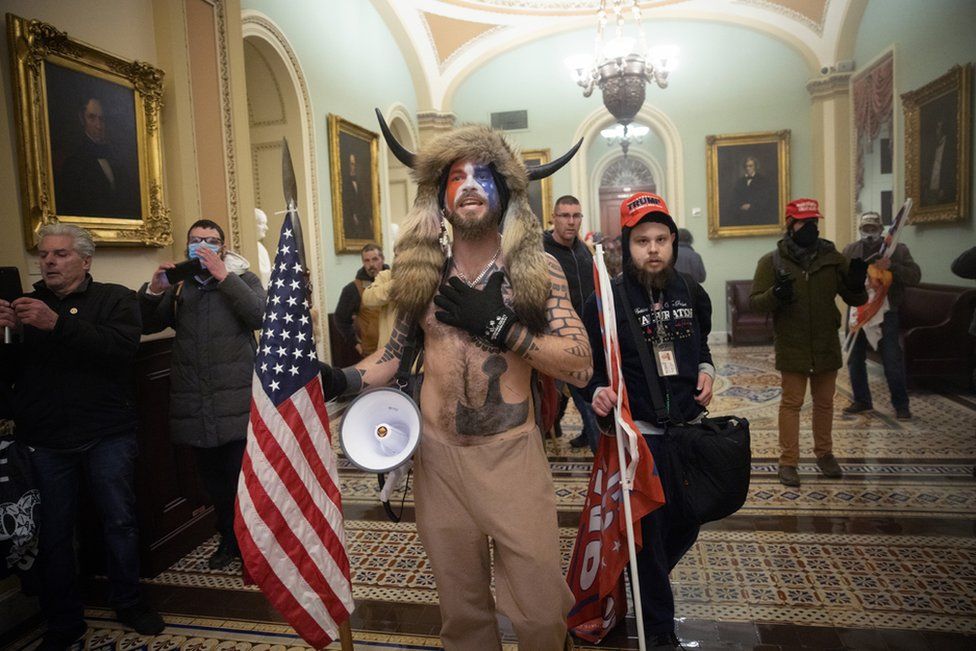
You have to understand something about the people who stormed the U.S. Capitol on January 6.  They’re not entirely responsible for their actions.  They had merely responded to the words of their newly-formed deity, Donald Trump.  In the hours leading up to the siege, Trump had infused them with idea that he had been wronged by the voting process; that the 2020 elections had been manipulated by covert gangs of leftist forces determined to enforce abortions and gun confiscations upon helpless, red-blooded, bible-carrying Christian American citizens to ensure his loss.  He was a victim, Trump maintained, and vicariously so were his minions.

CHARGE!!!!!!!!!

Thus, the Trumpians had been victimized by the same queer-loving renegades and they were justified in storming the Capitol, tearing through offices, screaming like children told to come in for dinner, threatening others because they got their feelings hurt – all while dressed like ghosts of the Civil War and refugees from a Comic-Con conference gone wrong.

Please!

The Capitol Hill warriors are no more victims of enraged rhetoric than porn stars are of poor script-writing.  For years conservatives have proclaimed the tenets of individual freedom and personal responsibility.  They declared such values in reactive angst to a welfare society and relentless victimhood proclamations.

They loathed when non-White people bemoaned centuries of Euro-colonial oppression and systemic racism.  They rolled their eyes at the thought of women hollering about sexual harassment in the workplace and on college campuses.  They snickered at queer folks complaining of innate homophobia on the job and in school.

Then the U.S. Congress met on January 6, 2021 to certify Joe Biden as the winner of last year’s presidential contest, and – as Dante Alighieri once wrote – all hell broke loose.

The Trumpian crowd became maddened by the process and felt they had no other recourse but to subvert that constitutional mechanism in the most violent manner possible.  Their voices and votes had been ignored and they had to stop the madness.

So, in the name of Ronald Reagan, where the hell was all that talk of personal responsibility?  Where were the people to take ownership of themselves and their actions?  In other words, why do the Capitol Hill rioters suddenly see themselves as victims of…well, anything?!

They all sound like a bunch of – oh, God!  A bunch of minorities, women and queers!  Pass the rifle and heaven forbid!  Now these “victims” have placed themselves in the same category as tree-loving, pot-smoking, Muslim-loving liberals!

What’s going to happen next?  The magnetic poles will switch sides – like communist traitors – and life as we know will extinguish itself?

Again – please!

I personally don’t care to hear the anguished state of mind of these mentally- challenged pencil-dick and cavern-cunt imps.  What happened with last year’s presidential elections is something known as democracy.  It’s the sustenance upon which civilized societies survive.  We cannot exist without it.  The goons who stormed the Capitol three weeks ago didn’t fall victim to the verbiage of Donald Trump; they were victims of their own damned stupidity.  If they truly were swayed by Trumpian oratory, they are as gullible as a child believing in Santa Claus.  They roared into that building because what was left of their brain cells had perished in the swamp of their own hysteria.

It’s just so incredibly interesting that these right-wing extremists who wrap themselves in the American flag and cry freedom – while waving the loser traitorous Confederate flag – are suddenly helpless and violated.  They couldn’t help themselves.  Their faux president told them to do it.

The reality is quite simple: they’re violent and they’re stupid.  But they aren’t victims.

Flip Wilson on “The Ed Sullivan Show” January 11, 1970

Leave a comment

Filed under Essays

Dead Friend

Have you ever had a friend with whom you disagree on something?  You know what I mean – someone you’ve known for a while; shared things with; commiserated with; know some of their family; treated to lunch or dinner for their birthdays.  I have a few of those friends.  As a bonafide introvert, I don’t have many friends in the first place, so I value those relationships I’ve managed to maintain over any length of time.

I had one such friend, Pete*, until recently.  He and I have known each other for over 30 years.  Ironically, we attended the same parochial grade school in Dallas.  I didn’t know him back then, as he’s three years younger.  Even more curious is that our fathers had known each other; they grew up in the same East Dallas neighborhood and attended the same high school.  When Pete’s father died several years ago, my father was heartbroken, as the two hadn’t spoken in a while.  I attended the funeral service at a church in downtown Dallas.  In turn, Pete attended my father’s memorial service in 2016; his sister and her young daughter joined him.

Pete used to host annual Christmas gatherings at his apartment; his sister and her two sons, along with many of that family’s mutual friends, joining us.  In effect, I became part of their family.  I was fond of Pete’s parents, as he was of mine, and was truly excited when one of his nephews joined the U.S. Marine Corps in 2006.

So what happened?

Politics.

Last month “The New Yorker” published an editorial on the sudden and unexpected support for Donald Trump among Latinos.  In Texas trump won a larger share of the Latino vote in the last election than he did in 2016.  Reading the piece left me stunned – and curious.  How could a man who made such derogatory comments about Mexicans in general, the same one who hurtled rolls of paper towels at people in Puerto Rico, find greater support from others in those same groups?  Even though Trump had disparaged Mexican immigrants, I felt it was just a small step away from demonizing all people of Mexican heritage or ethnicity; people whose Indian and Spanish ancestors had occupied what is now the Southwestern U.S. since before Trump’s predecessors arrived on the East Coast.  Many of those people are also among the nation’s working class; the blue collar workers who form the unappreciated and under-appreciated backbone of any society.  And yes, even the white collar workers, such as myself, who have struggled through the chaos of corporate America.  Regardless of race or ethnicity we’re the ones who suffered the most in the last Great Recession and in the ongoing COVID-19 pandemic.  That an arrogant, elitist, tax-cheating buffoon of a charlatan can find kindred souls in this crowd truly boggles my mind.

Pete, on the other hand, said the editorial made “perfect sense” so him.  He had already expressed some support for Trump, especially in relation to his reactions to China.  He then went on to demonize both Joe Biden and Kamala Harris; dubbing them “evil” and decrying what he perceived to be their socialist agenda.  In other words, Pete was reiterating the paranoid mantra of right-wing extremists.

But he went further.  He bemoaned the stimulus payments coming out of Washington; claiming they were unnecessary and that anyone suffering financial distress during the pandemic and the ensuing economic downturn deserved no help or sympathy; that they should have prepared better for such a calamity.

Seriously?

I pointed out that I was one of those people struggling now.  I had taken off a lot of time to care for my aging parents and had managed to save some money over the years; adding that a lot of that hard-earned money was now gone and reminding him I have had trouble – like so many others – finding a job.  I also noted that it’s that people don’t or won’t save money; it’s that they can’t – not with both the high cost of living and stagnant wages.

Pete sounds like many evangelical Christian leaders – the folks he once denounced as the heathens of Christianity – the idiots who propagate the myth that poverty is a result of moral failings; that people choose to be poor because they have no desire to work hard and sacrifice.  He got upset with me over that; he – a devout Roman Catholic – being compared to an evangelical Christian?!  The people who read and study only half the Christian Bible?!  How dare I make such an analogy!

But that’s how I felt.  Then and now.  His new-found beliefs and sudden change of attitude are one reason why I left the Catholic Church and why I no longer align with any branch of Christianity.

I reiterated my discussions with Pete to friends and a relative who his both agnostic and generally conservative.  The latter considers himself a Republican and has been very successful in life.  He also subscribes to “The New Yorker” and had read that particular editorial.  And he found it “awful” that so many Texas Latinos supported Trump who he does not like.  He also noted that anyone can experience financial problems and that a lack of personal resources isn’t always a sign of any kind of moral failings.  Like me he was raised Roman Catholic, but – unlike me – is not in any way spiritual.  He also reassured me that I’m not a failure.  A few other friends have told me the same.  At times like this, I need that kind of support.

It’s a shame I felt the need to sever ties with Pete.  I mean, how does a 30-plus-year friendship come to an end over an editorial?  Is that something that needed to happen?  I wonder if I was overreacting or my past hyper-sensitive persona had suddenly resurrected itself.

I’d like to know if any of you folks have encountered the same dilemma.  Have you ever felt the need to end a friendship with someone over such strong personal disagreements?

*Name changed.

2 Comments

Filed under Essays

Blood Sporting

Tom Freeman’s painting of the August 24, 1814 burning of the White House by British troops during the War of 1812. (White House Historical Association)

In the fall of 1989, the world watched the Soviet Union begin to crumble, as its various satellites in Eastern Europe started breaking free from the decades-long grip of the terrorist state.  The seminal moment came in November when the Berlin Wall was torn down, and the democratic west joined with the communist east to form the New Germany.  That edifice had been both literal and ideological; a true line between freedom and tyranny.

A month later came another equally stunning and even more sanguineous event; one that gained plenty of international attention, but seems to have faded into history.  Shortly before Christmas gangs of angry Romanians stormed the central palace and captured President Nicolae Ceausescu and his wife, Elena.  The duo was subjected to a trial and sentenced to death; afterwards they were garroted.  Their demise was similar to that of Italian dictator Benito Mussolini and his mistress, as World War II came to an end.  Bands of anti-fascist citizens captured them after ambushing their convoy and rushed them through a trial, before stringing them up like wild animals.

I imagine the mobs who invaded the U.S. Capitol building this past Wednesday felt equally aggrieved and outraged by what they perceived to be an unfair presidential election.  Spurred on by the vitriolic rhetoric of their dear leader, Donald Trump, they amassed in Washington from all over the country and launched their angry assault.  In behavior similar to that of developing countries, these renegades overwhelmed Capitol Hill police and managed to enter the arena where lawmakers had convened just moments earlier.

That January 6 was a critical day.  That’s when elected officials gathered to certify that Joe Biden had won the U.S. presidency two months ago and would be sworn into office as the nation’s 46th president on January 20.  The gangs of right-wing ideologues who disrupted that stately process demanded otherwise.

This is the first time since 1814 that the U.S. Capitol had been invaded.  And that was in the midst of the War of 1812; during the early days of the American republic.  Great Britain was still trying to regain control of its former colony and succeeded in burning down the capitol.  That was over 200 years ago.  Last Wednesday came during a war of ideology and political differences.

I have never seen anything like it in my life.  Indeed, it is something more emblematic of nations around the world struggling through the growing pains of a new democracy or any new regime change.  It’s similar to what happened in Cuba on New Year’s Day 1959, when Fidel Castro led a ragtag band of rebels into the presidential palace in Havana to overthrow the brutal dictator Fulgencio Batista.  Like Ceausescu and Mussolini, Batista had held onto power for many years through bloodshed and terrorism.  He suppressed free speech and sought to annihilate anyone who dared to disagree with him.  Unlike Ceausescu and Mussolini, however, Batista was able to leave Cuba and live out his life in peaceful exile – and wealth – in Spain.

The people who stormed into the U.S. Capitol building on Wednesday aren’t freedom-loving patriots.  They’re domestic terrorists; redneck hooligans supported and agitated by a psychopathic narcissist who didn’t fairly win the U.S. presidency in 2016.  They weren’t the least bit upset over the blatantly fraudulent elections of that year and 2000.

For decades conservatives have lobbed conspiracy theories about mobs of left-wing anarchists swarming into American homes to seize firearms and bibles and force everyone to love Muslims and queer people.  That has never happened.  It didn’t happen after the raucous turmoil of the 2000 presidential elections and it didn’t happen four years ago.  As upset as liberals were then, groups of enraged tree-loving abortionists and pot-smokers didn’t invade Washington and trash lawmakers’ offices.  The biggest threat came from within the bastions of conservatism.

I hope devout Trumpists are happy with themselves.

One Capitol Hill police officer, Brian D. Sicknick, has now succumbed to his injuries.  Four protesters also died; one of them shot to death.  I’m saddened by Sicknick’s death, but I don’t give a damn about the others.  Like people who drink alcohol heavily their entire lives and develop cirrhosis, they brought this upon themselves.  The Capitol Hill police chief has resigned, and – as of this writing – nearly 20 people have been arrested in connection with Wednesday’s mayhem.  Insurrection is a federal offense, and treason is technically punishable by death.  The legal machinations over this debacle will play out for years.

And Donald Trump will go down in history as a president who fomented a riot and placated the rioters.

The nation will move forward, as time does – whether anyone on the far left or far right like it or not.  The spirit of a truly democratic society can’t be quashed.  It never has and it never will.

7 Comments

Filed under Essays

Glamor Tyranny

Portrait of Francisco Franco

“When I feed the poor, they call me a saint.  But when I ask why the poor are hungry, they call me a communist.”

– Brazilian Archbishop Hélder Câmara

Last month marked the 45th anniversary of the death of Francisco Franco, Western Europe’s last dictator.  Afterwards Spain finally transitioned into a democratic state; something it had tried when it elected a new government in 1931.  During the “Second Republic”, Spaniards deposed King Alfonso XIII and reduced the powers of the military, the Roman Catholic Church and property-owning elites.  But, just two years later, a center-right coalition won a majority in the elections and they brought in Franco.  Franco had gained some notoriety for fighting against an insurgency in Spanish-controlled Morocco amidst World War I.  In 1926, at the age of 33, he became the youngest general in all of Europe.  But, as the “Second Republic” proceeded, Franco grew critical of the new government and was subsequently banned to a military outpost in the Canary Islands.  By 1936 right-wing extremists had fomented plans for a military coup.  Apparently Franco was initially opposed, but joined the effort as it took shape.

The 1936-39 Spanish Civil War actually began in Morocco, as right-wing activists launched concerted efforts to regain control.  By 1939 they had won – at the cost of 1 million lives – and Franco became Spain’s eminent ruler.  Spain’s “White Terror” induced a culture of repression and execution; a persecution of democratic supporters of a truly tolerant government.  Civil wars in any country are brutal and destructive, and Spain’s conflict was no different.  During Franco’s reign, an estimated 150,000 people were executed or mysteriously vanished.  That’s a modest assessment.  Personally, as with the Nazi Holocaust or the Cambodian massacre, I believe the official estimates are politically polite.

Early last month a friend posted a photo (a formal portrait) of Franco on his Facebook page.  One of his friends replied by declaring that Franco would have never let Spain become the socialist state it is now.  I responded by noting that Franco was a dictator who opposed free speech and freedom of religion.  Franco imprisoned and executed thousands of political opponents, while thousands more disappeared.  Like Argentina, Guatemala and other Latin American nations, Spain emerged as a totalitarian state, where anyone who dared criticize the leadership was deemed a rebel and summarily prosecuted.  No one among the Spanish populace ostensibly was brave enough to stand up to such totalitarian shenanigans, until Franco died.  But it is what it is.  Calls for revolution are always easier than actually revolting.

I don’t believe either my friend or his friend responded to my comment.  I guess I should have been shocked by the aforementioned Facebook posts.  But ultimately it didn’t surprise me, since my friend is a devotee of Donald Trump.  He once posted photos of himself and Spanish dignitaries at a diplomatic function in Houston.  But seeing his post about Franco angered me.

I’ve noticed some conservatives hold a certain degree of sentimentality for dictators and autocrats.  Hence Trump’s conciliatory behavior towards the likes of Russia’s Vladimir Putin or North Korea’s Kim Jong Un.  Both Putin and Jong Un live in relative luxury, while essentially holding an iron grip on power.  North Korea is particularly egregious in this dichotomy.  They still won’t acknowledge the brutal severity of a 1990s-era famine in which up to 3.5 million people perished.

Trump is also in line with Brazil’s Jair Bolsarano who openly longed for the period of the nation’s military rule; a time when – like many other nations in Latin America – thousands disappeared, were imprisoned or turned up dead.  Bolsarano has often been dubbed as “Trump of the Tropics”.

I’m sure the analogy flattered Bolsarano, and it sounds appropriate.  Like Trump Bolsarano denounced COVID-19 as a “little flu” and downplayed it, even when he contracted the virus.  As with any European-style colonialist, Bolsarano lamented that Brazil didn’t succeed in eliminating the nation’s indigenous populations.  He doesn’t seem to realize North America’s indigenous peoples were NOT completely obliterated from the continent.  Yet, Bolsarano ultimately will go to his grave knowing his sanguineous ideals failed.  And I couldn’t be happier.

I also couldn’t be happier knowing Donald Trump will NOT be President of the United States after noon (EST) on January 20, 2021.  Fortunately, our beloved democratic process functioned as designed last month.  The United States isn’t like Franco’s Spain or Latin America of the past; where military dictatorships commanded every aspect of people’s lives, or like Putin’s Russia where one person can hold the reins of power for infinite years, or Kim Jong-Un’s North Korea where a single clan of dynastic brutes can cripple the minds and bodies of their subjects.

I feel Donald Trump came as close to an autocrat as we’ve ever had.  It was a frightening prospect, especially knowing he actually wanted to delay the November 3 elections.

But American democracy prevailed over Trump’s fascist tendencies.  That’s how all civilized societies should operate.

Leave a comment

Filed under Essays

A 2020

I know I’m not alone in wishing this year a speedy demise.  It certainly can’t end soon enough.  On January 1, I personally felt I was at the precipice of a new beginning.  I planned to finish and publish my second novel; a minor accomplishment that didn’t materialize last year.  I also hoped to work towards upgrading my house.  My father’s fetish for candles many years ago left soot marks throughout most every room.  I also wanted to plant a couple of trees in the front yard.  All sorts of good things loomed across the horizon!  But, if you want to see the Great Creator’s sense of irony, announce your plans for the future.

At the end of January, my mother suffered a stroke; one bad enough to render her left side almost completely immobile.  I had to admit her to a rehabilitation center and almost felt like I was abandoning her.  She made good progress and started to regain movement on her left side, especially her arm.  Then her Medicare benefits ran out, and the center had to discharge her.  Basically they evicted her because she didn’t have enough money.  So she returned home and went on hospice care.  She passed away in June.

By then, however, the COVID-19 pandemic had hit, and the economy starting tanking.  As my mother’s health deteriorated here at the house, I also fell ill and thought I’d contracted the C plague.  Nasty visions of me lying in bed gasping for air, while my mother wilted in her own bed and hospice nurses tried getting into the house, burdened my days and nights.  One morning local firefighters ambushed my front door with loud bangs.  They’d been told a COVID victim might be trapped inside.  A man stood on the porch with a heavy tool designed to breach everything from storm doors to bad attitudes.

After my mother died, I learned she had no beneficiary payouts from her two pension funds.  Like so many Americans, I was unemployed and exhausting what funds I’d garnered from previous work.  I couldn’t qualify for unemployment insurance, and no stimulus money was headed my way.  I had to borrow money to pay basic utilities.  Then I did receive money from an insurance policy I didn’t know existed.  That became the brightest spot in my dismal life so far.

I’ve stabilized myself now, even as I remain jobless with minimal prospects.  More importantly, I know I’m not alone in my feelings of despair and loneliness.

The U.S. is still mired in the depths of the most cantankerous presidential election in decades.  The pandemic shows no signs of abating.  And the economy remains brittle.  Adding to the agony is that the Atlantic / Caribbean hurricane season just won’t quit.  Even though it’s technically scheduled to cease on November 30, tell that to nature.  Some fools tried that with the pandemic – ordering it to end by X date – and the scourge replied with a middle finger.

Such is 2020.  Everything that could go wrong this year has gone wrong.  We’ve reached the point, nevertheless, that any kind of mishap is answered with, ‘It’s 2020.’

The number 2020 is supposed to signify perfect vision.  And, at this moment, we’ve seen how perfectly screwed up things can get.  Thus, in the future, perhaps for generations to come, any crisis will be dubbed ‘A 2020’.

Had a bad day at work or school?  Just tell people it was a 2020.

A rough trip through the airport?  A 2020 escapade.

Burned food in the oven?  You made a 2020.

How was it with your in-laws over?  It was so 2020.

You get the message.  Now, on to New Year’s!

Leave a comment

Filed under Essays

Done with That!

Is it over?  Maybe?  I know COVID-19 is still here; lingering in the air like burnt popcorn.  But this year’s elections?  Alas, have all those campaigns shrunk back into the gutters from whence they came?  Has it all finally come to an end?

Well…no, it hasn’t.  On the White House front, Herr Trump hasn’t – won’t – concede!  So, as the nation eagerly awaits his administration’s demise, I feel certain of one thing.  NO MORE FUCKING POLITICAL EMAILS!

Or at least fewer of them.  American politics descended into the morass of anger and hate years ago; becoming a subset of demonology.  Whereas I was once highly engaged in political campaigns – at least as a voter and eager news watcher – I have grown as cynical as most everybody else.  While some relatives, friends and acquaintances of mine supplanted images of themselves on Facebook with their preferred candidate, I quickly began deleting large numbers of political-oriented emails from my daily inbox.  I didn’t truly read them anyway.  With so much personal family drama and job seeking these past few years, I often found myself with little time to read what I really wanted.  I know political campaigns need more money than substance to function.  It most cases it’s like one giant episode of the Kardashian clan.  Is there a purpose to any of this?

The frequent opponent-bashing is my biggest grievance.  How is it that sullying the reputation of your adversary has become more important than highlighting your own record?  If you can do no better than slaughter the other person in effigy, why are you seeking this particular office?

That’s why many of my fellow Americans have grown cynical and pessimistic right along with me.  They see the futility of it all.  It makes no sense.  Candidates for public office should always begin by detailing their own accomplishments and criticize their rivals at the very end – and only if they have the facts to substantiate their claims.

But with the close of the 2020 election season – from the presidency on down to local sheriff – I hope my email inbox won’t get stuffed with myriad political emails; the kind I either just simply delete or send to the spam folder – requests to sell me a reverse mortgage, ads for Chinese Viagra and offers from lonely Ukrainian housewives to be mine forever (although the latter two can seem enticing).

Regardless, I feel we all can move forward – until…  AAAH!!!  2024!!!

5 Comments

Filed under Essays

Good, Democracy

It’s almost over, people!  The 2020 U.S. presidential election is almost done.  I can see the light of sanity peering above the horizon; struggling and gasping as it may be.  But it’s here.  As with just about everything else this year, it certainly can’t arrive soon enough.

As of this moment, it appears Joe Biden will be the nation’s 46th Chief Executive.  I was more excited when I got the battery replaced in my truck back in July.  I’ve never felt so disillusioned with a political campaign as I have these past few months.  I mean, here’s what we had in our two principal choices: a narcissistic autocrat and an antiquitous swamp creature.  Try to choose the lesser of two evils amidst that morass!

Yet, I still feel optimistic about one thing: democracy seems to be functioning nicely in the United States; the nation that has promoted itself as “The Beacon” of freedom for more than a century.  Despite all of the hateful rhetoric and angry Twitter-speak, I see a semblance of hope in our future.  People are lamenting the lengthy recounts in some states, but that means enough citizens decided to exercise their right to vote more than their right to watch television and either mailed in a ballot or stood in line at the polls.  I was able to walk in and out of a nearby voting facility with no problem last week.  I ignored the slew of political signs glutting the grounds around the place and a local newspaper’s “recommendations” for whom I should vote.  (I have a better idea!  I recommend said newspaper let ME decide!)

As expected, faux-President Donald Trump hasn’t conceded and has already launched a series of lawsuits to stop the various ongoing recounts.  He and his minions had tried to suppress the vote all year long.  And, as with conservative attempts to undermine Barack Obama’s presidency, THEY FAILED!  They couldn’t stop the vote!  They just couldn’t.  New-age voter suppression tactics – equally anticipated from the right-wing – didn’t play out.

Conservatives have always tried to undermine the voting process.  Grandfather clauses and poll taxes segued into fire hoses and violent police officers in the 20th century.  That then morphed into voter ID laws, cutting the number of early voting days, limiting voting places and – finally – to sabotaging the entire postal system.  And, just like many White southerners have been fighting the U.S. Civil War for over 150 years and STILL haven’t won, right-wing extremists STILL couldn’t stop people from voting this year!

The post-election violence forecast by many hasn’t materialized.  Yes, a number of folks on all sides have been protesting.  But that belies an incredible number: 160 million.  That’s the estimated number of people who voted this year; the highest number since 1900.  Considering that more people aged 18-25 voted in the first season of “American Idol” than in the 2000 presidential election, it’s phenomenal!

Thus, democracy is working for us here in the United States.  The system is still imperfect, of course, but it’s operating as intended.  As tough as it’s been this year, that’s a good thing.

Now, damnit, let’s not see or hear another political ad for at least another year!

Leave a comment

Filed under Essays

A Personal Review

“I couldn’t put it down.”

What author doesn’t love to hear that?!  Especially about their debut novel!

I had a late lunch/early dinner (I’ll call it “lunner”) at a nearby restaurant.  It had been a full, yet satisfying day.  On many levels, things are starting to improve for me.  I won’t go into dramatic detail, but I felt better Friday than I had in months.  The stress of dealing with aging parents and now unemployment in the midst of a global pandemic has beaten my mental and physical health down worse than anything I’ve ever experienced.

So I decided to treat myself for a good meal and a couple of mixed drinks.  My favorite server, Kendra*, was staffing the bar, and after providing my first beverage, suddenly told me how much she loved my novel, The Silent Fountain.  I have known Kendra for a few years and only through the restaurant where she works – long and hard.  It seems every time I visit the place, Kendra is there.  I had provided her an autographed copy of the book back in June, shortly after my mother died.  Friday was the first time I’d been to the restaurant since then.

I didn’t expect Kendra to bring up The Silent Fountain.  Her reaction to it was extraordinary.  It’s my nature to be suspicious of people most of the time.  I don’t know Kendra that well, but I like her.  She has a pleasant and personable demeanor.  Still, it took me a little while to accept fully how much she seems to like my book.  I thought she might be exaggerating just to make me feel good and because I’m somewhat of a regular who tips very well.  So I just let her talk.

And I quickly realized the impact the tale had on her.  In fact, it had the effect I hope to achieve with my readers – for this and all of my stories.  The characters and the locale meshed with the pastoral imagery to create the universe in Kendra’s mind that I envisioned in my own.  A few others who have read it so far have had mostly the same response.

It’s intoxicating to hear all of that, but I have to temper my literary ego with sanity.  Writers work hard to compose a world – realistic or fantastic – within their stories.  We always want to attain that level of likeability as raconteurs; as someone who can dream up a tale – no matter how outrageous – and still be credible.  But then isn’t that what all artists want?

I’ve come to accept that I may never become rich and famous with my writing, and that’s genuinely fine with me.  I don’t write stories – and I didn’t start this blog – to become acclaimed and unbelievably wealthy.  Admittedly, that would be great and ideal, but it simply isn’t realistic.  And no one should engage in any kind of artistic pursuit with that goal in mind.  It’s foolish.

But if I don’t achieve any kind of notoriety until after I die, then that would be just as good for me.  We are still consuming the writings and other artworks of people who passed away long ago.  Kendra is just one person, yet her opinion meant so much to me.  She expressed what I hoped someone would feel when they read that book.  Again, that’s what every artist wants: to be appreciated.

*Name changed.

2 Comments

Filed under Essays

Barrett Block

“It has been 80 years since a Supreme Court vacancy was nominated and confirmed in an election year. There is a long tradition that you don’t do this in an election year.”

Sen. Ted Cruz (R-TX), February 14, 2016, “Meet the Press”

“The court — we are one vote away from losing our fundamental constitutional liberties, and I believe that the president should next week nominate a successor to the court, and I think it is critical that the Senate takes up and confirms that successor before Election Day,” Cruz said. “This nomination is why Donald Trump was elected. This confirmation is why the voters voted for a Republican majority in the Senate.”

Cruz, September 18, 2020, hours after the death of Supreme Court Justice Ruth Bader Ginsburg

If hypocrisy was a virtue, many politicians would be among the most honorable of citizens.  Sadly, political environments seem to have no room for such people.  Hypocrisy reigns, as U.S. Senate Republicans rammed through the nomination of Judge Amy Coney Barrett this week, in order to fill the seat left by the death Justice Ruth Bader Ginsburg last month.  Ginsburg’s failing health and ultimate death had been the subject for years among Supreme Court watchers.  Liberals and even moderates feared her death would come at such a pivotal moment in U.S. history as we’re in now.

Allegations of a double standard aside, my biggest concern with Barrett is her unwillingness to answer questions regarding one particular issue, the most sacred element of democracy: voting.  I’ve always found it odd that conservatives will move mountains to protect gun rights, but unleash similar amounts of energy to thwart voting rights.  It’s obvious this matter is critical because we are on the cusp of a presidential election.  Yet, the right to cast a ballot has come under threat since Barack Obama fairly and legitimately won his first election in 2008.  (Understand there’s never been any question of the validity of Obama’s elections.)  States with predominantly Republican legislatures suddenly became concerned with voter fraud and began implementing measures to combat it.  Similar reactions erupted after passage of the 1965 Voting Rights Act and ratification of the 26th Amendment to the U.S. Constitution in 1971.

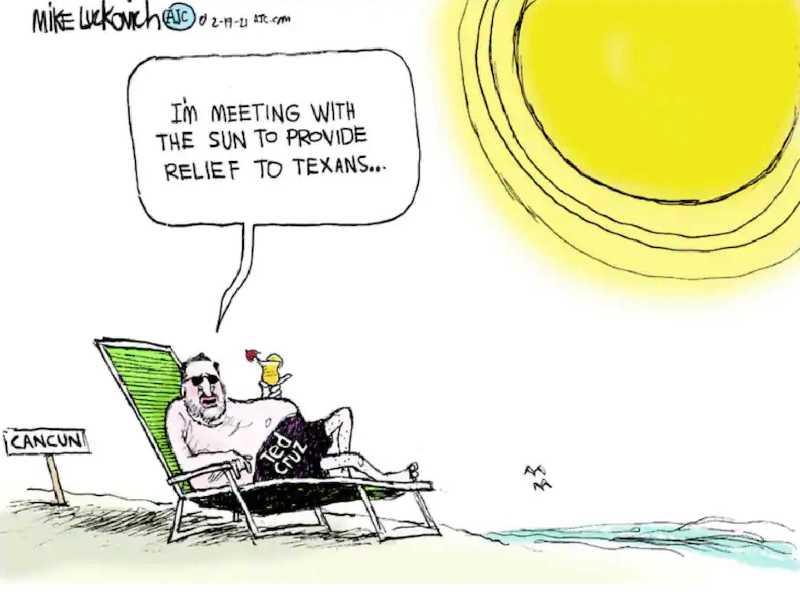
My home state of Texas, for example, was among the first to tighten voter identification.  College ids and utility bills were nearly eliminated as proof of one’s existence or residency, but they retain their positions as supplemental forms of identification.  Other measures, such as fingerprints and retina scans were proposed – all in a futile attempt to combat the mystical voter fraud; much the same way Ted Cruz managed to fight off myriad communist sympathizers on the manicured grounds of Princeton University.

In the midst of the current COVID-19 pandemic, the idea of standing in crowded places to cast a ballot made many people shudder.  Generally, senior citizens and the disabled were among the few granted the privilege of mail-in voting.  But, as the novel coronavirus remains highly contagious, mail-in voting became more palatable.  Then, as if on cue, President Donald Trump and other right-wing sycophants raised the ugly specter of voter fraud.  And, of course, mail-in voting – just like the overall right granted by the 1st Amendment to the U.S. Constitution – was in jeopardy.

When voting rights advocates tried to compromise by pushing for drop-off ballot boxes, conservatives again balked.  On October 1, Texas Governor Greg Abbott mandated that only one drop-off box would be acceptable per county.  That works great for tiny Loving County (pop. 169), but not for massive Harris County (pop. 4.7 million).  U.S. District Judge Robert Pitman overruled Abbott; denouncing the governor’s proclamation as “myopically” focused.  But the governor persisted, and the 5th U.S. Circuit Court of Appeals agreed with him.

Earlier this week, however, Judge Barrett couldn’t seem to bring herself to declare the importance and value of voting rights.  Minnesota Sen. Amy Klobuchar asked Barrett about the freedom of the formerly incarcerated to regain their voting rights.  She highlighted one of Barrett’s 2019 dissent in Kanter v. Barr that voting should be granted only to “virtuous citizens.”  In the Kanter case, the U.S. Court of Appeals for the 7th Circuit ruled it reasonable that the litigant, Rickey Kanter, lose his right to own firearms after a felony conviction for mail fraud.  Barrett was the only member of the 3-judge panel to resist and brought up the “virtuous citizens” remark, which subsequently invoked discussions of what constitutes virtuous.  As with any moral declaration, the concept of virtue can be purely subjective.  Yet Barrett didn’t stop there.  In her dissent, she went on to write that the application of virtue should limit the right of citizens to vote and serve on juries.

I can’t count the number of times I’ve heard conservative political figures announce their support for ex-convicts to regain their right to bear arms, if they’ve served their full sentences.  None, however, have expressed similarly ardent advocacy for the same ex-convicts to earn back their right to vote.  I suspect this is because they all realize the significance of the power of voting and the power it gives even to the poor and disenfranchised.  Hence, measures in the past with poll taxes and “grandfather clauses”.

Barrett still wouldn’t clarify what she meant by “virtuous”.  In response to Klobuchar, she said, “Okay. Well, senator, I want to be clear that that is not in the opinion designed to denigrate the right to vote, which is fundamental … The virtuous citizenry idea is a historical and jurisprudential one.  It certainly does not mean that I think that anybody gets a measure of virtue and whether they’re good or not, and whether they’re allowed to vote. That’s not what I said.”

Klobuchar persisted.  In citing Justice Ginsburg’s writing in the landmark voting rights case Shelby County v. Holder, she asked, “Do you agree with Justice Ginsburg’s conclusion that the Constitution clearly empowers Congress to protect the right to vote?”

Shelby County v. Holder was crucial in the contemporary assault on voting rights.  It addressed Section 5 of the 1965 Voting Rights Act, which requires certain states and local governments to obtain federal preclearance before implementing any changes to their voting laws or practices and Section 4(b), which contains the coverage formula that determines which jurisdictions are subjected to preclearance based on their histories of discrimination in voting.  The seminal 1965 act was not-so-subtly aimed at southern states.  When the case arrived at the U.S. Supreme Court in 2013, where a 5-4 ruling declared Section 4(b) unconstitutional because it was based on data over 40 years old.  The high court didn’t strike down Section 5.  Previous research had showed that both sections had led to increases in minority voting since the 1960s.  Contemporary voting advocates, however, claimed that recent efforts – especially after Obama’s 2008 victory and mainly in the South – made it easier for election officials to impose greater restrictions on voting.

Again, Barrett just couldn’t (more likely wouldn’t) bring herself to state her position clearly.  “Well, Senator, that would be eliciting an opinion from me on whether the dissent or the majority was right in Shelby County,” she told Klobuchar, “and I can’t express a view on that, as I’ve said, because it would be inconsistent with the judicial role.”

Klobuchar then brought up alarming news that Atlas Aegis, a Tennessee-based company, was trying to recruit former members of the U.S. military to show up at various polling places while armed; all in a supposed effort to ensure the security of voting.  The image of such activity has become plausible as even President Trump advocates for armed poll-watchers to prevent voter fraud.  Whether these people should be armed with bazookas or cell phones hasn’t been made clear, but the threat is obvious.

“Judge Barrett,” asked Klobuchar, “under federal law, is it illegal to intimidate voters at the polls?”

“Sen. Klobuchar, I can’t characterize the facts in a hypothetical situation and I can’t apply the law to a hypothetical set of facts,” Barrett said.

Well, that’s a nice, safe response.  And I have to concede it’s only proper in such a setting.  A fair jurist can’t logically state a position without knowing the facts.  As the late Justice Antonin Scalia, Barrett’s self-admitted idol, once declared, “I want to hear your argument.”  But that should apply only to specific cases.  There should be no doubt about the concept of voting.

Barrett was also evasive in answers to other questions, such as abortion – the perennially key issue among conservatives – and the Affordable Care Act.  Trump had made it clear from the start of his presidential campaign that he wanted to overturn both the Supreme Court’s 1973 Roe v. Wade decision and the ACA.  While he and social and religious conservatives offer no concessions for Roe, the president often mentioned a replacement for ACA, which has yet to materialize and – as far as I’m concerned – doesn’t exist.  Roe will always remain a thorn in the fragile ribs of conservatives, but the idea of eliminating health care coverage for all citizens – particularly while we remain mired in this pandemic and flu season already underway – is infuriating.  Not-so-ironically the high court is set to review the validity of the ACA next month.  As with the upcoming election, Trump wants to ensure a conservative majority on the court before both events.

Trump has already stated – as he did in 2016 – that he will only accept the results of the election if he wins.  Whatever fool is surprised, please raise your hand now, so we full-brain folks can laugh at you!  Loudly.  Yet it’s clear: Trump realizes this election could end up like 2000, when the Supreme Court ordered the state of Florida to stop its ballot recount and thereby hand the presidency to George W. Bush.  That Bush’s younger brother, Jeb, was governor of Florida in 2000 wasn’t lost on most.  The “good-old-boy” network was alive and well at the turn of the century!

And it thrives in the anti-First Amendment actions of Republican governors across the nation.  I feel that Barrett is basically their puppet; their tool in resolutions to ensure a conservative majority in the Supreme Court.  As with any justice, Barrett’s place on the court could impact generations of people.  As a writer, I’m a strong free speech advocate, which equals the right to vote.  They’re intertwined.  And I feel that many conservatives view the 1st Amendment to the U.S. Constitution as available to only a handful – people like them.  People who share their narrow view of the world and what is appropriate in order to function within it.

Thus, the U.S. Senate’s kangaroo confirmation hearings for Barrett are ominous.

Leave a comment

Filed under Essays

Dialogue

Last Wednesday’s debate between Vice-President Mike Pence and Sen. Kamala Harris was a glaringly stark contrast to the crap-fest between Donald Trump and Joe Biden the previous week.  For the most part, Pence and Harris showed those two other old curmudgeons how to remain relatively calm and focused during discussions about critical national issues.

I say ‘for the most part’ because of Pence’s tendency to interrupt Harris – the same way Trump repeatedly interrupted Biden – and to ramble beyond his slated time limit – again, like Trump.  I feel that both Trump and Pence fit the unpleasantly stereotypical image of the angry White male: men who believe only those exactly like them are qualified to speak out on any concern facing the country and should be allowed to speak adnauseam about it.

Harris, meanwhile, showed restraint and decorum by politely stating, “I’m speaking,” with a bright grin.  Many observers, especially women and non-Whites, viewed this as a typical response for someone like Harris.  Women and non-Whites, it seems, are always expected to maintain a sense of calm in the face of indignity and disrespect.  Otherwise, they’d be viewed as uppity or bitchy.  Harris, in effect, had to stay polite and professional; for if she had done a Joe Biden and yelled, “Shut up!” to Pence, political pundits – particularly those on the conservative end who already hate her for the mere fact she’s a dark-skinned woman daring to campaign for a national office, much like they did with Barack Obama – would have mercilessly slayed her.

Pence never really answered any question from moderator Susan Page who proved as equally powerless as Chris Wallace during the Trump-Biden fiasco.  But, for we independent observers – that is, those of us not satisfied with either Trump or Biden – Pence’s blatant disorientation during the debate signaled how dysfunctional the current White House administration is in the face of dual crises: the failing economy and the expanding COVID-19 pandemic.

To me Trump, Biden and Pence represent America’s past: still fighting the U.S. Civil War; the civil rights movement of the 1960s and 70s; law-and-order mantras; the Cold War; a caste society.  Harris, on the other hand, represents America’s future: attacks on economic inequality and social injustices; ending war; giving ALL citizens the chance to prove their merit and their value in a 21st century world.

Time doesn’t stagnate, except in the minds of conservatives.  Regardless of what one thinks of the vice-presidential debate, the 2020 presidential campaign continues.  It can’t end soon enough.

Leave a comment

Filed under Essays