History Wash

“History, despite its wrenching pain, cannot be unlived, but if faced with courage, need not be lived again.”

Maya Angelou

Last November, when he won reelection by a large margin, Florida Governor Ron DeSantis declared that “Florida is where woke comes to die.”  I still don’t know who created the term “woke”, much less why or when.  But it’s become the latest toy in the diaspora of political angst.  If “woke” means historically accurate or aware, then those of us with at least half a brain are more than fully “woke”.  I can’t say the same for the conservative mindset.

In the latest salvo against historical accuracy, the state of Florida’s education board approved a spate of standards in teach African-American history.  The new measures require lessons on race to be taught in an “objective” manner that doesn’t “indoctrinate or persuade students to a particular point of view”.  Excuse me?  Objective?  Indoctrinate?  Only social conservatives in the Deep South would view solid history studies as indoctrination.

Not to be outdone on the ignorance scale, an Oklahoma education official, Ryan Walters, has declared that the notorious 1921 Tulsa race massacre – which resulted in the bloody deaths of some 300 African-Americans – wasn’t actually about race and that teachers should not “say that the skin color determined it”.  The 1921 Tulsa event remains one of the most sanguineous racial events in U.S. history.  It’s similar to a 1923 slaughter in Rosewood, Florida.  But, in the eyes of social (and mostly White) conservatives, they apparently were just really bad days.

Not surprisingly, these changes in teaching regimens have generated controversy – and anger.  In response to Walters’ claim, Alicia Andrews, chair of the Oklahoma Democratic Party, stated, “How are you going to talk about a race massacre as if race isn’t part of the very cause of the incident?”

In response to the recent Florida measures, the Florida Education Association, a statewide teachers union, denounced the new policy as a “big step backward.”  Andrew Spar, president of the association, issued a press release asking, “How can our students ever be equipped for the future if they don’t have a full, honest picture of where we’ve come from? Florida’s students deserve a world-class education that equips them to be successful adults who can help heal our nation’s divisions rather than deepen them.”

This is why we progressives view conservatism with disdain.  To us, conservative ideology is often regressive; holding onto false narratives of life’s events and who people are.  It’s also an improper revision of what happened way back when.  In 2015, controversy erupted when one of the biggest publishers of school textbooks, McGraw-Hill presented a tome that deemed African slaves as “immigrant workers”.  The caption accompanied a map of the United States in a section about immigration and read: “The Atlantic Slave Trade between the 1500s and 1800s brought millions of workers from Africa to the southern United States to work on agricultural plantations.”

The verbiage had gone unnoticed until the mother of a 15-year-old high school student raised hell over it.  McGraw-Hill promptly recalled the book and issued a public apology.

And that is what people have to do now when they encounter something so outrageous.  Ignorance is not education.  Just as the truth always comes to light, so does history.  Revising it to fit a particular narrative won’t change the facts.

Leave a comment

Filed under Essays

In Memoriam – Tony Bennett, 1926-2023

“To me, life is a gift, and it’s a blessing just to be alive.  And each person should learn what a gift it is to be alive no matter how tough things get.”

Tony Bennett

Leave a comment

Filed under News

Shifted

The U.S. Supreme Court ended its first term of 2023 last month with some stunning decisions – stunning, but not surprising.  A year ago the Court finished with its shocking reversal of the 1973 landmark Roe v. Wade, which had legalized abortion in the United States.  Ending abortion in this country had been a long-standing goal of social and religious conservatives and they finally accomplished that mission.  But this time the Court went further in their swing to the far right by ending affirmative action in college admissions and allowing religion to be used to discriminate.

In Students for Fair Admissions, Inc. v. President and Fellows of Harvard College, the Court ruled that the admissions programs used by the University of North Carolina and Harvard College violate the Constitution’s equal protection clause (the 14th Amendment), which bars racial discrimination by government entities.  The 14th Amendment has been utilized to undermine entrenched discrimination for decades.  It has manifested its power in such SCOTUS decisions as Brown v. Board of Education of Topeka and Miranda v. Arizona.  Ironically, the Students for Fair Admissions ruling reversed a 20-year-old case, Grutter v. Bollinger, which declared race as a plausible factor in college admissions policies.  Have things really changed for the better in two decades?  All of this also reminds me of the Regents of the University of California v. Bakke, in which a White man, Allan Bakke, sued the University of California Medical School at Davis for refusing to admit him; the school had reserved 16 places in each entering class for qualified ethnic minorities.  Bakke had applied twice to the school and been denied twice, despite having a high GPA and test scores.  SCOTUS ruled that, while race was a qualifying factor in college admissions, the University of California policy at the time, indeed, violated the Constitution’s 14th Amendment.

I have to admit I support their affirmative action decision.  As noble a philosophy as it was, I feel affirmative action has run its course, and – as we march further into the 21st century – it’s time we truly become a color blind society.  Actually it’s way past time.  But, as with campaign promises and many business plans, things look great on paper.  Personally I don’t feel affirmative action has helped me.  It hasn’t hurt me, but it certainly hasn’t helped me.  I never asked for special rights or considerations.  But, like I told a friend years ago, while legislation may have forced the playing field to become level, are all the players on the field playing on the level?

It’s the Creative 303 decision, however, that concerns me the most.  Last year the Supreme Court made perhaps its most controversial decision in decades with the Dobbs ruling that effectively ended the constitutional right to an abortion.  But, in the 2022 Carson v. Makin ruling, the Court chipped even further away at that cherished separation between government and religion, when it declared the state of Maine had violated the constitution when it refused to make public funding available to students attending religious schools.  In general religious institutions don’t pay taxes; therefore, they’ve traditionally been unable to access tax money at either the state or federal level.  The reasoning was practical: anyone who receives government funding should follow certain rules and regulations.  People taking unemployment insurance, for example, have to conduct a minimum number of job searches weekly; otherwise, they can’t receive that money.

In the Creative 303 case, Colorado web site designer Lorie Smith had allegedly refused to design a site for someone planning a same-sex wedding; declaring that it was an affront to her religious beliefs and therefore, violated her First Amendment rights.  It’s similar to another case from Colorado, Masterpiece Cake Shop v. Colorado Civil Rights Commission, in which Jack C. Phillips, the owner of Masterpiece, refused to bake a wedding cake for a male couple on the grounds that it violated his religious beliefs; he simply didn’t believe in same-gender unions.  The couple, Charlie Craig and David Mullins, filed suit, claiming Phillips was in violation of Colorado’s Anti-Discrimination Act.  The Supreme Court ultimately ruled in Philips’ favor, decreeing that the Colorado statute violated “the State’s duty under the First Amendment not to use hostility toward religion or a religious viewpoint as a basis for laws or regulations.”

But no sooner had the Creative 303 ruling been made than news arose that Smith may have fabricated her initial claim.  The man who supposedly asked her to design a web site for a same-gender wedding states he never worked with her.  Smith, however, cited the man – identified only as “Stewart” – in 2017 court documents and included his phone number and email address.  But “Stewart” says he didn’t even know his name had been invoked in the original lawsuit until a report with “The New Republic” contacted him.

“I was incredibly surprised given the fact that I’ve been happily married to a woman for the last 15 years,” said Stewart, who declined to give his last name for fear of harassment and threats.  He noted that he’s a designer himself and could have created his own web site if necessary.

One of Smith’s lawyers, Kristen Waggoner, insisted Stewart’s name and other information had been submitted to her client’s web site and denied the entire claim had been fabricated.  But she suggested an internet troll had made the request to Smith; adding that’s it occurred with other clients.  Ironically, the aforementioned Jack C. Phillips was also Waggoner’s client.

Regardless, I have to wonder if this revelation doesn’t render the Creative 303 ruling invalid.  Even if an internet troll had made the initial application, Smith’s attorneys should have verified every detail of the case.  That’s what lawyers are supposed to do.

Getting a matter before the U.S. Supreme Court is no small feat; they don’t take on minor traffic infractions.  That’s why so many of their decisions are monumental and can reshape society.  And thus, it’s why people are rightfully concerned about the implications of the Creative 303 edict.  If religious ideology can be the basis for discrimination, who’s to say a business owner can’t refuse to service a prospective client under such a pretense?  Technically businesses have the right to refuse service to anyone, but that’s generally happened only under the most egregious of circumstances.  A bar or nightclub, for example, can refuse to admit someone who’s visibly intoxicated.  I’ve seen signs on doors declaring “no shirt, no shoes, no service”.

Years ago another friend told me I discriminate whenever I choose one food item over another.  “That’s not discrimination,” I told him, “that’s selection.”  But he was a conservative, so I guess I understood why he couldn’t make that distinction.

Still, I certainly hope many Black, Hispanic and queer conservatives are happy with their votes for George W. Bush and Donald Trump.  Despite not winning the popular vote in their respective elections, they were able to place five justices on the U.S. Supreme Court.  That has never happened before in the history of U.S. legal jurisprudence.  All five of those individuals have now set back decades of civil rights advancements.  A truly democratic society is supposed to protect all of its citizens from bigotry and oppression.  I fear we’re doing the opposite in the United States.

2 Comments

Filed under Essays

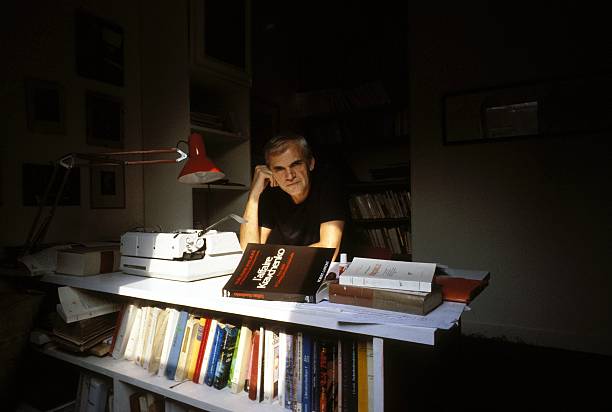
In Memoriam – Milan Kundera, 1929-2023

“The worth of a human being lies in the ability to extend oneself, to go outside oneself, to exist in and for other people.”

Milan Kundera

Leave a comment

Filed under News

Happy Fourth of July 2023!

“We must be free not because we claim freedom, but because we practice it.”

William Faulkner

Leave a comment

Filed under News

A New Deal for the American Indian

In light of this week’s decisions by the U.S. Supreme Court that seem to undercut the value of the “Great American Experiment”, here’s a great piece about one of the most progressive presidents of the 20th century – Franklin D. Roosevelt.

"The Chief"'s avatarWolfsonian-FIU Library

In the final paragraph of the address he delivered at the Democratic National Convention on July 2, 1932, Democratic presidential candidate, Franklin Delano Roosevelt concluded his speech with the words: “I pledge you, I pledge myself, to a new deal for the American people.” That promise of a “new deal” was taken up by his campaign, the press, the public, and later historians of the era to describe the wide scope of economic experiments, reforms, and alphabet-soup programs prescribed by FDR as remedies for the Great Depression. The federal government’s relations with Indian tribes would also undergo a radical departure from policies and practices that could be traced back to the earliest years of European colonization and the foundation of the American Republic. Although far from perfect and predictably paternalistic, the Roosevelt Administration’s dealings with the aboriginal peoples living on reservations in the United States most definitively constituted a “New…

View original post 1,921 more words

Leave a comment

Filed under News

Marlene and Her Mother

Marlene, I’m okay.

Mother?

Yes.

Where are you?

I’m alright.  Don’t worry.

I am worried.  I’m so sorry.

Well…it’s okay for now.  But I’m alright.

I hope so.  I’m so sorry for everything.  I just wished I’d been a better daughter.

Well, you did what you could.

But it wasn’t enough.

You did what you could.

So…how is it?  Over there?

Here on the other side?

Yes.

It’s wonderful!  It’s so much better than even I expected.

How…how so?

I can’t describe it.

Just give me an idea…if you can.

Why are you so curious about this?

I just am!  I mean…who wouldn’t be?

Well…it’s like you’re so eager to join me.

Well…no – not yet.

Not yet?  Really?

Well…please tell me something about it.  What it’s like.

I can’t help but laugh.  You have everything you wanted now.  The house, the furniture, my jewelry…everything.

I know.  I just realize how…rough it’s been.

Rough?  For you?

Um…yes.

Interesting to hear you say that.

I’m sorry, Mother.  I really am.

Are you?

Yes.

Why?  Why do you say that now?

I…I…I just…do.  I don’t know why.

You don’t know why?

Well…I…I guess…

What?

I was just wondering…how you felt.

About…?

This…everything.

You got everything you wanted – all of it.

I know.

And you wanted to know what it’s like here?  On this side?

Yes.

I know everything.  But I wanted to hear you say it.

Please forgive me.

Oh yes.  I can forgive you.

You can?

Of course.  I regret nothing.  I want nothing.  Unlike you.

I’m sorry.

Why?  Why are you saying it like that?

I just…do…just…sorry.

Why?  This is all because of you.

I…I…can’t…

Why are you at a loss?

I…I…just…I just am.

You know what happened.  I regret nothing.  My mind is clear.

I know.

So tell me – why do you want to know so badly what it’s like here on the other side?  After all…you’re the one who sent me here.

8 Comments

Filed under Wolf Tales

July 2023 Literary Calendar

Events in the month of July for writers and readers

Good Care Month

National Anti-Boredom Month

National Blueberry Month

National Culinary Arts Month

National Lost Pet Prevention Month

National Picnic Month

Read an Almanac Month

Social Wellness Month

South Asian Heritage Month

Wild About Wildlife Month

  • July 1 – American Zoo Day; Canada Day; International Joke Day
  • July 1-7 – Clean Beaches Week
  • July 2 – Freedom from Fear of Speaking Day; World UFO Day
  • July 3 – Air Conditioning Appreciation Day; International Plastic Bag Free Day
  • July 4 – U.S. Independence Day
  • July 6 – International Kissing Day
  • July 7 – Global Forgiveness Day; Tell the Truth Day; World Chocolate Day
  • July 11 – E.B. White’s Birthday; International Essential Oils Day; World Population Day
  • July 14 – Bastille Day (France)
  • July 17 – World Day for International Justice; World Emoji Day
  • July 18 – Nelson Mandela International Day; World Listening Day
  • July 20 – International Chess Day; Space Exploration Day (U.S.)
  • July 21 – Ernest Hemingway’s Birthday
  • July 22 – World Brain Day
  • July 24 – International Self-Care Day
  • July 25 – National Wine & Cheese Day (U.S.)
  • July 29 – International Tiger Day
  • July 30 – International Friendship Day; Paperback Book Day; World Day Against Trafficking in Persons
  • July 31 – J.K. Rowling’s Birthday

Famous July Birthdays

Other July Events

Leave a comment

Filed under News

Juneteenth 2023

“Juneteenth was never about commemorating a delayed proclamation, but about celebrating a people’s enduring spirit.”

Annette Gordon-Reed

Juneteenth

Leave a comment

Filed under News

I Carry This

The crucifix pictured above is something I carry with me whenever I leave the house.  Although I was raised Roman Catholic, I am not devoutly religious and don’t subscribe to any religion.  I’m more spiritual, if anything.  But the crucifix is something that connects me to my father who died seven years ago.  He used to carry it around in his car.  After he passed, I started toting it around with me.  Everywhere!  Whenever I leave the house – no matter where I go – it’s in my pocket.

Once, a couple of years ago, I had the sudden urge for a late-night cheeseburger, so I hopped into my truck and scampered to a nearby burger joint.  (I normally don’t eat fast food, but this was a weak moment for me.)  After I returned home, I began emptying my pockets – and was startled to realize I didn’t have the crucifix with me.  I hurried back out to the truck and feverishly searched as much of it as I could; working up a minor sweat and panicking.  I was genuinely upset and almost horrified.  How could I lose something so important to me?  And, more importantly, where could it be?

I rushed back into the house, breathing heavily and completely frantic.  I didn’t know where to look next.  But then I returned to my bedroom and pulled open the dresser drawer where I keep my keys and other such items – including the crucifix.  And there it was – sitting quietly atop a handkerchief.  I hadn’t taken it with me when I left to get the food.  The sense of relief was immense – and almost laughable.

I got that upset over an old crucifix?  Well…yes!

I don’t know where my father got it or when.  I don’t even know at what point he placed it into the side panel of his 2002 Chevy Malibu.  But it’s obviously old.  My parents gathered a large collection of crucifixes over the years, which I still have.

As I declared, it’s simply something that connects me to my father.  On this Father’s Day weekend, it’s even more important.

I’m curious to know if any of you have similar items; something that bears such personal significance to you – and only you – that it’s become an integral part of your life.  Please share.

3 Comments

Filed under Essays