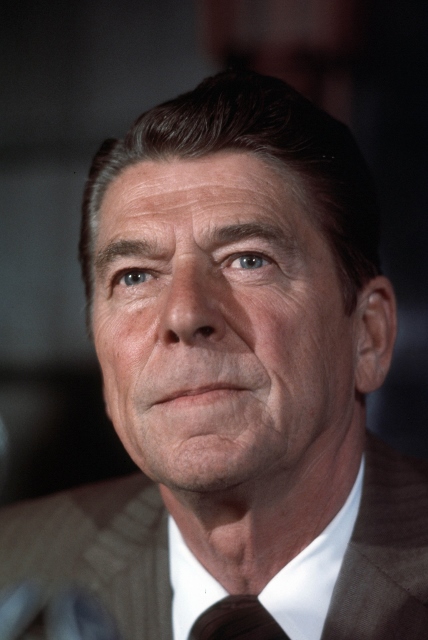
“We establish no religion in this country. We command no worship. We mandate no belief nor will we ever. Church and state are and must remain separate.”
“We establish no religion in this country. We command no worship. We mandate no belief nor will we ever. Church and state are and must remain separate.”
Filed under History

Trenchant
[TREN-chənt]
Adjective
Middle English, 13th century
Being sharp, intense, and forceful. Characterized by energy and effectiveness
Trenchant is often used to describe commentary or criticism. If you have a trenchant delivery, you’re known for your biting wit. An obsolete definition of trenchant means physically having a sharp blade. While the adjective is now used in a more figurative sense, a powerful, trenchant remark can still leave wounds.
Example: My trenchant descriptions of U.S. politics alienates some people, but excites others.
Filed under News
During a debate for the Republican nomination in Wyoming, current Rep. Liz Cheney explains her position on the January 6 Committee.
Filed under News

Ketanji Brown Jackson is sworn in as the latest U.S. Supreme Court Justice by Chief Justice John Roberts on Thursday, June 30. Jackson replaces retiring Justice Stephen Breyer and becomes the first African-American woman on the SCOTUS. Equally important is that – for the first time in U.S. history – four women sit on the High Court. Brown-Jackson’s husband, Patrick Jackson, stands beside her.
Filed under News
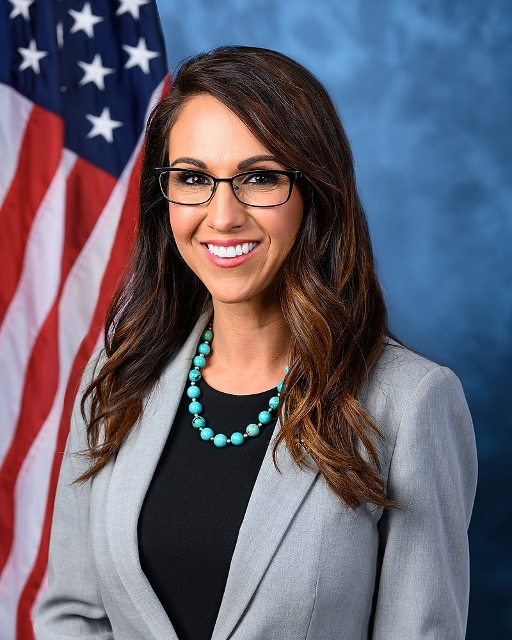
“The reason we had so many overreaching regulations in our nation is because the church complied. The church is supposed to direct the government. The government is not supposed to direct the church. That is not how our Founding Fathers intended it. And I’m tired of this separation of church and state junk that’s not in the Constitution. It was in a stinking letter and it means nothing like what they say it does.”
Rep. Lauren Boebert, in a speech to parishioners at a Colorado church, referring to an 1802 letter from Thomas Jefferson to the Danbury Baptist Association in Connecticut
The letter declared, in part, that the 1st Amendment to the U.S. Constitution established a “wall of separation between church and state”.

“I do care. I actually do care to address that and I’m really shocked. I’m actually appalled that Fox News would take a defamatory story like that and we are pursuing legal action against this drag queen, I’m appalled that you would bring that up when you have not talked about our stolen election.”
Kari Lake, a former journalist and current Republican candidate for governor of Arizona, responding to comments she allegedly had made about drag queens
The subject came up during an interview Lake granted to FOX News’ Bret Baier, when Baier inquired about a “Washington Post” story stating that stated: ‘Arizona GOP gubernatorial candidate Kari Lake who has attacked drag queens as dangerous to children attended the shows of drag queen Richard Stephens for 20 years and once hired him to perform at her home.’
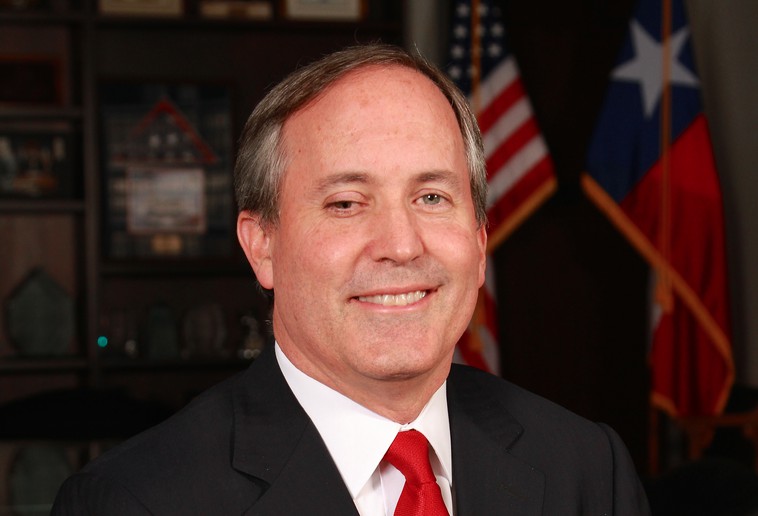
“My job is to defend state law and I’ll continue to do that. That is my job under the Constitution and I’m certainly willing and able to do that.”
Kenneth Paxton, Texas Attorney General, about Lawrence v. Texas, a 2003 Supreme Court ruling that overturned a state anti-sodomy law and made all such laws invalid nationwide
Filed under News

“We will not live in a world, not in my city, where our rights are taken from us or rolled back. Fuck Clarence Thomas!”
Lori Lightfoot, Mayor of Chicago, reacting to the U.S. Supreme Court’s reversal of the Roe v. Wade decision and Justice Clarence Thomas’ statement that other rulings should be considered, including same-sex marriage
Lightfoot is Chicago’s first openly-queer mayor.

“Mr. Justice Thomas had much to say today about my loving marriage. Oddly he didn’t have much to say about his ‘Loving’ marriage.”
Andrew McDonald, Connecticut Supreme Court Justice, about U.S. Supreme Court Justice Clarence Thomas
McDonald, who is openly queer and married his husband Charles Gray in 2009, was referring to the 1967 Loving vs. Virginia ruling that legalized interracial marriage.

“I’m the Sheriff of Bexar County, but also a Dad of two beautiful and intelligent young women. As their Dad I will defend my daughters’ ability to do what they feel is right with their own bodies and to love whomever they choose. My job is chasing predators, rapists, and human traffickers, not someone exercising a right… If it’s truly about protecting children, how about starting with the ones in our schools?”
Javier Salazar, Sheriff of Bexar County, Texas, announcing he won’t prosecute women seeking abortion
Filed under News

Events in the month of July for writers and readers
Filed under News
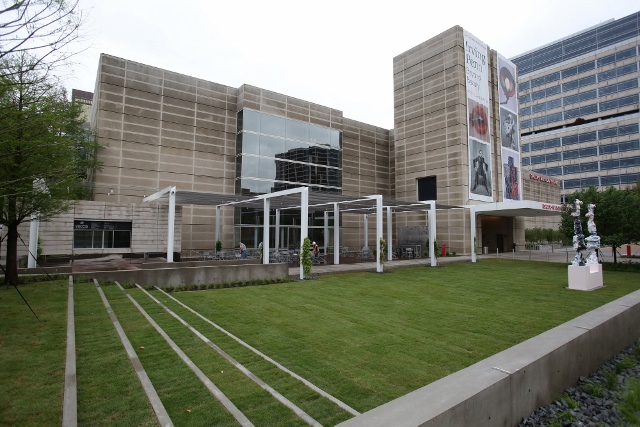
Feeling anxious or upset? A number of things exist to help you out – reading, walking, meditation, exercise. But have you ever thought of visiting a museum to ease that apprehension? Turns out that patronizing a museum might be one avenue of relief for anguished souls. A University of Pennsylvania study entitled “Art Museums as Institutions for Human Flourishing” published in the Journal of Positive Psychology indicates as much.
The relatively new field of “positive psychology” studies “the strengths that enable individuals and communities to thrive.” It draws on research from a variety of academic disciplines while examining how the arts and humanities affect the human condition.
“We believe our collaborative and interdisciplinary work is all the more vital at a time when so many individuals and communities lack the levels of well-being they need to thrive,” said James O. Pawelski of UPenn.
Pawelski and colleague Katherine Cotter had already planned to study the effects of museums on people’s mental health when the COVID-19 pandemic hit. Since so many museums were forced to shut down, the duo compiled and reviewed over 100 research articles and government and foundation reports.
They discovered that visiting a museum reduced stress levels, frequent visits decreased anxiety, and viewing figurative art lowered blood pressure. They also found that museum visits lowered the intensity of chronic pain, increased a person’s life span, and lessened the likelihood of being diagnosed with dementia. And those living with dementia saw mental and physical benefits as well: Spending time in a museum induced more dynamic stress responses, higher cognitive function, and improvements in the symptoms of depression.
Going to a museum also left elementary schoolers feeling “restored” and even made medical residents feel less emotionally exhausted.
To most artists, this shouldn’t be surprising. Writers, painters, musicians and the like have always had the ability to unite people when politicians couldn’t. And now, our desires to make people’s lives better has been vindicated once again.
Image: Dallas Museum of Art
Filed under Art Working