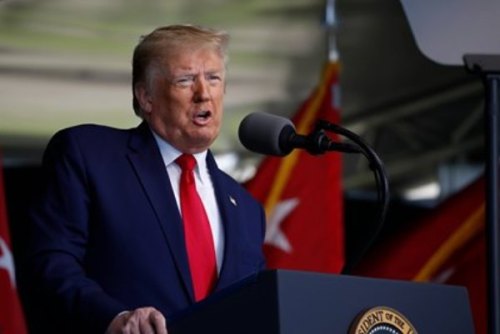
“I did something good: I made Juneteenth very famous. It’s actually an important event, an important time. But nobody had ever heard of it.”
– Donald Trump, announcing the “discovery” ahead of this weekend’s visit to Tulsa, Oklahoma, for a campaign rally.
The U.S. Secret Service had to inform our disoriented “leader” that June 19 (“Juneteenth”) is already a well-known date in American civil rights history.
“In Title VII, Congress adopted broad language making it illegal for an employer to rely on an employee’s sex when deciding to fire that employee. We do not hesitate to recognize today a necessary consequence of that legislative choice: An employer who fires an individual merely for being gay or transgender defies the law.”
– U.S. Supreme Court Justice Neil Gorsuch, writing for the majority in Bostock v. Clayton County, Georgia, No. 17-1618, which outlaws discrimination based on sexual orientation and gender identity.
It’s a typical story: White woman claims Black man assaulted her; mob of White men become enraged and launch a hunt for said perpetrator; any Negro male is automatically presumed guilty; exact details supposed incident are unknown. This was the scenario in May of 1921, when a young White female, Sarah Page, in Tulsa allegedly screamed after a young Black man, Dick Rowland, entered the elevator she operated. Even today the circumstances of the exchange between Page and Rowland remain unclear. But, in 1921, scores of hate-filled White men didn’t need to know such minutia. The White woman’s words were the only details they needed.
And thus, commenced what is now known to be the worst race-based riot in U.S. history. Police found Rowland and charged him sexual assault. The sheriff had refused to hand Rowland over to bands of outraged Whites. The throngs of self-proclaimed vigilantes stormed through Tulsa’s Black-dominated Greenwood neighborhood to exact further revenge. Greenwood featured a district known as “Black Wall Street;” where businesses owned and operated by African-American residents had become an incredibly independent and thriving economy within a city of some 100,000.
When the initial chaos was over, upwards of 300 Greenwood-area residents were dead and thousands left homeless. Some Black veterans of World War I (then called the “Great War”) had taken up arms in defense of their community, which surely incentivized the angry White men to continue their violent retribution.
The same madness would occur in Rosewood, Florida two years later. A White woman reported that a Black man had entered her home and attacked her. The woman’s husband gathered a group of about 500 Ku Klux Klan members and began a hunt through the area for any Black man they could find. They learned that a Black member of a prison chain gang had escaped and believed Black residents of Rosewood were helping him hide. The mobs then systematically tore through town, killing whoever they could (mostly Black men) and driving out most of the survivors. The entire community of Rosewood was decimated. The story of what happened remained largely unknown until at least the 1980s.
The story of Tulsa still remains largely unknown. I’d heard of the horror some 30 years ago and wondered why such a calamity would be so obscure. I now know why. Like much of Native American history, true aspects of the African-American experience are often overwhelmed by the cult of American greatness; the “Manifest Destiny” myths stained heavily with Eurocentric viewpoints. The Tulsa Massacre has received greater attention in recent months because of the tragic deaths of several African-Americans. Its significance has grown even more within the past couple of weeks, as Donald Trump was set to stage a campaign rally in Tulsa today. But that’s been postponed to tomorrow.
COVID-19 concerns aside, the event would have been held on one of the most historic dates in American history. On June 19, 1865, news of the Emancipation Proclamation reached the state of Texas – more than two years after then-President Abraham Lincoln had signed it. The decree established “that all persons held as slaves” within the rebellious states “are, and henceforward shall be free.”
Known as Juneteenth, the event is now celebrated as a turning point in the U.S. Civil War; bringing an end to one of the bloodiest conflicts on American soil. The Emancipation Proclamation forcibly freed millions of people from the carnage of slavery; granting them the dignity of their humanity; something that had been stolen from their ancestors ensnared in the traps of slave traders on the beaches of West Africa.
That Donald Trump – one of the most cognitively-challenged and covertly racist presidents the U.S. has ever had – would hold a reelection rally on this date and 99 years after one of the single worst racial holocausts in modern American history speaks to an incredible level of ignorance among the historical elite and certainly of its arrogance. Knowing Trump, this shouldn’t be surprising. But the partiality of U.S. history also shouldn’t be surprising.
Many factors of our history – some dating back thousands of years – have been absent from the historical account. For decades, myths persisted that Native Americans willingly bowed down to Christianity and that Blacks lived happily within an enslaved existence. Even now, for example, many Americans believe most Hispanics are Latin American immigrants; when, in fact, the history of Hispanics in the U.S. goes back further than that of other Europeans and is tied inexorably with Native American history. In other words, it IS American history.
Anger over Trump’s June 19 convocation forced organizers to reschedule it for the 20th. But that won’t solve the dilemma of deliberate ignorance – just like civil rights legislation didn’t make all racial transgressions moot. The 1965 Voting Rights Act eliminated many of the barriers to voting obstruction. But, since the election of Barack Obama in 2008, we’ve seen Republican-dominated state legislatures try to roll back some of those protections under the guise of preventing voter fraud.
A photographic overview of Tulsa’s Greenwood area after the 1921 race riot and massacre. (Greenwood Cultural Center)
Much of the anger among Whites in 1921 was that Tulsa’s Greenwood section was prosperous and independent. The same happened with the Tigua community 18 years ago, when the state of Texas shut down their casino under the ruse of combating illegal gambling. The Tiguas had become wealthy and independent with proceeds from the casino; thus, lifting most out of poverty and off of welfare. But they hadn’t gotten permission from the conservative, predominantly White state legislature; an affront of unimaginable proportions the latter. Therefore, then-Governor Rick Perry and then-State Attorney General John Cornyn forced the casino to close. Many of the Tigua have now slipped back into poverty and back onto state assistance. Even as of last year, Texas is still trying to stop the Tiguas from becoming self-sufficient.
Again, anyone with a clear mind shouldn’t be surprised. Economic independence and wealth translates into political power. The voices and experiences of those communities are no longer silenced. That, in turn, upsets the self-appointed power elite – and the oppression begins. It used to come at the end of firearms and sticks. Now it comes with legislation.
It’s too easy to dismiss the ignorance of people like Donald Trump. But it’s also dangerous. And it does a disservice to the American conscious.
We can never truly make amends for incidents like Tulsa. We can, however, honor such brutal transgressions by remembering them; remembering exactly what happened and not deleting any feature of those accounts because some are uncomfortable with it. Again, that’s a disservice to the American conscious.
“This may be a lot of things, this moment we are living through, but it is definitely not about Black lives – and remember that when they come for you, and at this rate, they will.”
“We’re not the country of just the president, we have a Congress, we have a Supreme Court, but, most of all, we have the people of the United States, the ones who vote. The ones who vote him in and the ones who vote him out. I couldn’t vote for him in 2016. I certainly cannot in any way support President Trump this year.”
– Colin Powell, former U.S. Secretary of State and chairman of the Joint Chiefs of Staff, stating he will vote for Joe Biden in November because President Donald Trump has “drifted away” from the Constitution, is a chronic liar and is “dangerous to our country.”
I looked at Tom* with what he later described as a scowl. “Are you serious?” I asked.
“Um…yeah,” was his only reply. He then looked embarrassed – almost as if he realized he’d just said the wrong thing. Or, in this case, just pissed me off.
It was the fall of 2002, and we’d known each other for a few years and been roommates since May. Things weren’t turning out as well as I’d hoped. Pooling resources is supposed to help people get through tough time. So far, the only thing that had turned out well was the new puppy he got in August, after the death of his last dog.
I like Tom – for the most part. You never really know someone unless you either spend the night with or move in with them. Tom and I had never spent the night. I do have standards! But Tom was smart and highly-educated; something of a wild man with few bounds.
He was a little like me: a native Texan of mixed ethnicity (in his case, German and Indian) who graduated high school in 1982 and attended the University of North Texas (although I didn’t arrive there until 1984). But he was more conservative, and our political discussions on race and gender often went sideways with his right-wing logic.
This evening’s conversation was a perfect example. I can’t remember what set it off, but I had mentioned that the modern civil rights movement “had to occur”; that it had to take place. He refuted that claim; calmly stating that it had been completely unnecessary; that eventually society would “come around” and realize it was only fair to give all people a chance; that folks just “needed to wait”.
Thus, my…scowl.
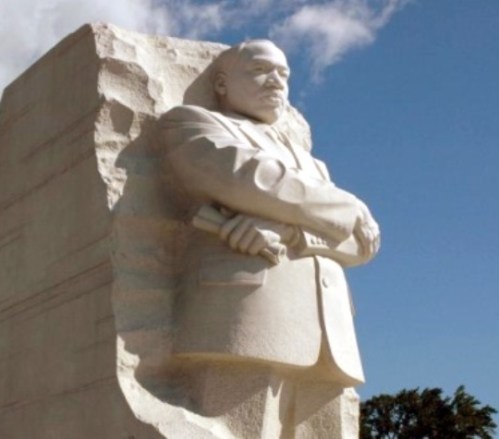
“Wait?” People had already waited – more than 400 years, from the arrival of the first Europeans to the 1950s, when Martin Luther Kind launched his quiet revolution.
People had waited through the American Revolution, the U.S. Civil War, World Wars I and II, Korea and Vietnam. People had waited through every major political and social event since the Salem Witch Trials for an equal place in American society. People had waited through the name-calling, beatings, shootings, stabbings, lynchings and relocations.
People had waited. Long enough. And that’s why everything finally exploded in the 1960s. I believe the catalyst was the assassination of John F. Kennedy. Just a few years into the decade, the first U.S. president born in the 20th century was cut down by a delusional madman (or a cavalcade of them, depending on who you ask); thus squelching a promising future to an American that was moving irreversibly forward. But the centennial of the Civil War – a conflict about one group of humans owning another group, not property – helped fuel the embers of dissatisfaction. People had finally said, ‘I’ve had it. This is it. We’ve done everything possible to make ourselves valuable and worthy of a seat at that great American banquet table.’
And, in the midst of the mayhem, old White fools like Richard Nixon and Ronald Reagan stood around saying, ‘I don’t know why they’re so upset. They live in a free country.’
Define free.
A high school English teacher once said all that happened in the 1960s was boiling in the 1950s. The Korean War – the sadly “forgotten war” – was a blight in an otherwise great decade. It was marked by the creation of the grandest economy at the time and included the seminal Brown v. Topeka Board of Education.
Tom didn’t know what to say to me after my rant. It was more of a lecture. I can get emotional with those sensitive issues, but I’d maintained my decorum – each of us standing there in boxer shorts chugging beers. He was truly speechless – a rarity for him. But alas… he had to concede I was right. Or more, that he could see my point.




 Chief Writing Wolf