“The problem with the world is that the intelligent people are full of doubts, while the stupid ones are full of confidence.”
Fragile souls have infected the American conscious. In ongoing efforts to accommodate every type of human who could possibly exist on Earth, language is being reconstructed and new words are being created. Thus, a new type of censorship has taken hold. As a writer, I’m devoutly opposed to any type of literary censorship. No matter how offensive some writings may be, people should always be allowed to read them and determine whether or not they find it palatable. No one, but no one has the right to make those decisions for others.
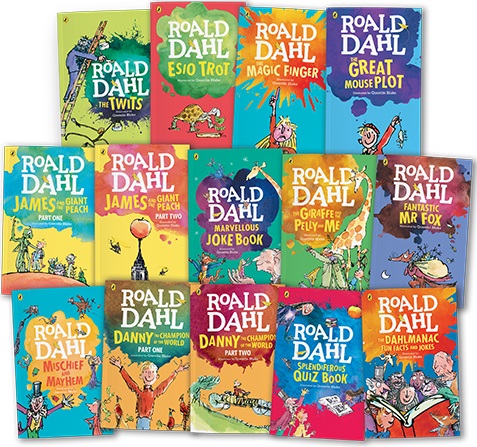
But does this include editing? Are books written years ago now subject to contemporary sensibilities? Roald Dahl – author of such legendary children’s tomes as “Charlie and the Chocolate Factory” and “James and the Giant Peach” – has become the latest target of political correctness, as his publisher, Puffin Books, has decided to edit some of those famous works.
For example, in “Charlie and the Chocolate Factory”, the character of Augustus Gloop is no longer “fat” but now “enormous”. In “The Twits”, Mrs. Twit is no longer “ugly and beastly”; she’s just “beastly”.
Other passages have been rewritten. In the original version of “James and the Giant Peach”, the Centipede sings: “Aunt Sponge was terrifically fat / And tremendously flabby at that,” and, “Aunt Spiker was thin as a wire / And dry as a bone, only drier.”
In the amended interpretation, he sings: “Aunt Sponge was a nasty old brute / And deserved to be squashed by the fruit,” and, “Aunt Spiker was much of the same / And deserves half of the blame.”
Even the mundane term “female” has rendered vile. The character of Miss Trunchbull in “Matilda” – described as a “most formidable female” – has now metamorphosed into a “most formidable woman”.
In a nod to the burgeoning transgender movement, gender neutral terms are now popular. The Oompa-Loompas in “Charlie and the Chocolate Factory” are now “small people”, instead of “small men”; while the Cloud-Men in “James and the Giant Peach” are now “Cloud-People”.
Really?
The Roald Dahl Story Company explained the alterations by declaring, “it’s not unusual to review the language” during a new print run and any changes were “small and carefully considered”.
Puffin made the changes in concert with Inclusive Minds, an entity founded in 2013 that – according to their web site – “works with the children’s book world to support them in authentic representation, primarily by connecting those in the industry with those who have lived experience of any or multiple facets of diversity.” It’s curious that Inclusive Minds emphasizes that they “do not edit or rewrite texts, but provide book creators with valuable insight from people with the relevant lived experience that they can take into consideration in the wider process of writing and editing.”
Okay, great, wonderful! I have no problem with inclusion. During high school and even college, I rarely found the Spanish and Indian portions of my heritage included in literature and popular cultural formats, such as television. I certainly didn’t see any positive representations of queer people.
But, while inclusivity is great from a cultural perspective, it’s ridiculous and personally offensive to me as a writer to see books published long ago rewritten to cater to new levels of awareness. We can’t go back and change what happened a lifetime ago. No matter how much someone wishes things had been different way back when, they just can’t alter the past. They simply can’t. Dahl was a product of his time; he said and wrote what was commonly acceptable in his day. If you read his books and don’t like the verbiage, then don’t read them! It’s the same with a TV show; if you don’t like it, DON’T WATCH IT!
I understand that some things are blatantly offensive. That’s just how it is. If we ban every book that someone finds offensive, we wouldn’t have anything to read! Stop the madness. It’s not going to help move society forward.