Tag Archives: women

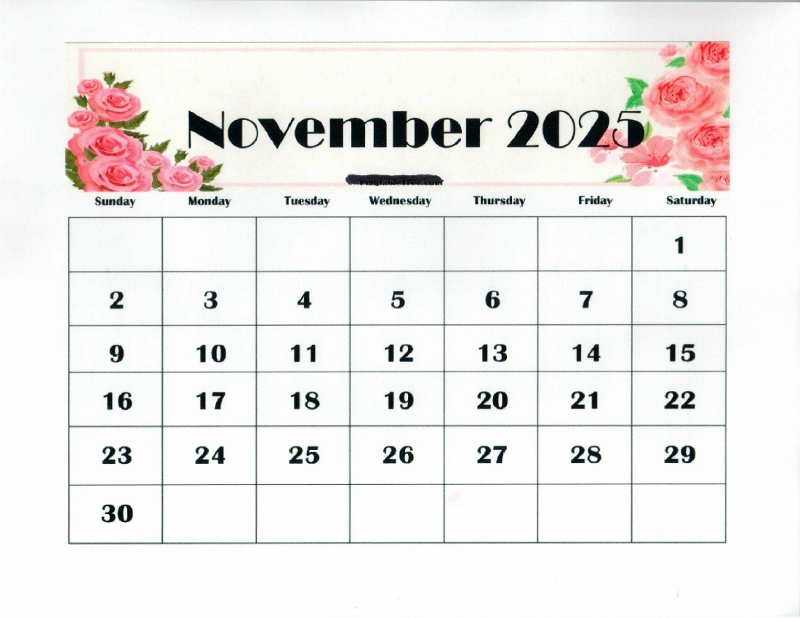
November 2025 Literary Calendar

Events in the month of November for writers and readers

Defeat Diabetes Month

National Family Literacy Month

National Memoir Writing Month

Native American Heritage Month

National Novel Writing Month (NaNoWriMo)

Picture Book Month

  • November 1 – Author’s Day; Day of the Dead; World Vegan Day
  • November 2 – All Soul’s Day; International Day to End Impunity for Crimes Against Journalists
  • November 3-9 – International Children’s Book Wee
  • November 6 – Plan Your Epitaph Day
  • November 9 – Book Lovers Day; International Day Against Fascism and Anti-Semitism; World Adoption Day; World Freedom Day
  • November 10 – World Science Day for Peace and Development
  • November 10-14 – National Young Readers Week
  • November 11 – Veterans Day (U.S.)
  • November 12 – World Pneumonia Day
  • November 13 – World Kindness Day
  • November 15 – Day of the Imprisoned Writer; I Love to Write Day
  • November 16 – International Day for Tolerance
  • November 18 – Margaret Atwood’s Birthday; High-Five a Librarian Day
  • November 19 – International Men’s Day
  • November 20 – World Philosophy Day
  • November 21 – Voltaire’s Birthday
  • November 25 – International Day for the Elimination of Violence Against Women
  • November 27 – Thanksgiving (U.S.)
  • November 29 – Louisa May Alcott’s Birthday
  • November 30 – International Computer Security Day

Famous November Birthdays

Other November Events

Leave a comment

Filed under News

November 2024 Literary Calendar

Events in the month of November for writers and readers

National Family Literacy Month

National Memoir Writing Month

Native American Heritage Month

National Novel Writing Month (NaNoWriMo)

Picture Book Month

  • November 1 – Author’s Day; Day of the Dead; World Vegan Day
  • November 2 – All Soul’s Day; International Day to End Impunity for Crimes Against Journalists; Plan Your Epitaph Day
  • November 4 – Book Lovers Day
  • November 9 – International Day Against Fascism and Anti-Semitism; World Adoption Day; World Freedom Day
  • November 10 – World Science Day for Peace and Development
  • November 11 – Veterans Day (U.S.)
  • November 12 – World Pneumonia Day
  • November 13 – World Kindness Day
  • November 14 – Young Readers Day
  • November 15 – Day of the Imprisoned Writer; I Love to Write Day
  • November 16 – International Day for Tolerance; World Philosophy Day
  • November 18 – Margaret Atwood’s Birthday; High-Five a Librarian Day
  • November 19 – International Men’s Day
  • November 21 – Voltaire’s Birthday
  • November 25 – International Day for the Elimination of Violence Against Women
  • November 28 – Thanksgiving (U.S.)
  • November 29 – Louisa May Alcott’s Birthday
  • November 30 – International Computer Security Day

Famous November Birthdays

Other November Events

Leave a comment

Filed under News

Glassed

Around the turn of the century, I saw news that a women’s college here in the U.S. had contemplated admitting men within a year or two.  The shock and outrage from the female student body was as palpable as it was vociferous.  Ironically the institution had a male chancellor at the time.  He tried explaining to the crowd that the college was trying to maintain its viability, but his voice was suffocated by the intense hysteria.  You would have thought the incoming male students would be selected from a sex offender registry.  I’m sure those young women had long since bought into the feminist myth that all men are naturally prone to violence, especially sexual assault.  Almost immediately, however, the college rescinded its decision, much to the delight of the students.  That same male chancellor made the announcement by unfurling a banner that bore the term “For Women Again”.  The crowd erupted into cheers of relief; some even popping open bottles of champagne.

At the bank where I worked at the time, the subject arose during a lunch conversation.  I was the only man in the small group, and my female colleagues collectively agreed that they understood the reticence of that college’s students to admit men.  But, of course, I had to opine by highlighting the obvious anger those young women expressed at the initial announcement.  “I wonder what those little girls will do when they enter the adult world and have real problems.  And there’ll be men all over the place, and there’s not a goddamn thing they can do about it.”

I suppose my constituents weren’t surprised by the statement, but to some extent, they had to concur.  There was a time when the genders were explicitly separated, and everyone seemed fine with it.  Men did this, and women did that.  And things functioned relatively well.

But I pointed out that, if women want true equality, they have to accept that men are part of that equation.  In many ways, for centuries, men have excluded women from the decision-making process; claiming there was a “place” for them.  Women have fought back and demanded a place at that proverbial decision-making table.

Oddly one of the women sitting with me in that lunch room didn’t believe women should be in positions of power, such as the U.S. presidency.  “We have too many emotional and hormonal problems!” she said, much to the shock and chagrin of the other women.  She wasn’t the first woman from whom I’d heard that.  But this was 2000, and I was certain such beliefs had been relegated to ancient times – like dial phones.

A few years before that particular conversation a similar debate arose among me and some female colleagues at the bank; another one about gender parity.  I noted that, if women wanted true equality with men, they needed to start registering for Selective Service – like the men have to do.  In the U.S., Selective Service is the most blatant form of sexism.  The current system was reinstated in 1980 by then-President Jimmy Carter.  Every male in the U.S. born since January 1, 1960 has to register for it within 30 days of their 18th birthday.  In the face of a never-ending Cold War and the sudden Iranian hostage crisis, it was a call-back to an older time in America.  There’s no penalty for late registration, but there are plenty of punishments for failure to register – including jail time and a six-figure fine; no admittance to college; and no financial aid.  The issue was a big one when I was in high school and it became a concern during the 1991 Persian Gulf War.

In the aforementioned workplace conversation, one of my female colleagues – the mother of a single college-aged son – responded, “When men get pregnant,” before storming off.  Another woman concurred with a laugh.  But I pointed out that men have to register for Selective Service; otherwise, face some serious legal repercussions.  Women, on the other hand, don’t have to have children if they don’t want.  There is no law that compels women to get pregnant.  My female cohorts couldn’t offer a logical reply.

All of that came back to me last week, when Vice-President Kamala Harris accepted the Democratic Party’s nomination as presidential candidate.  She’s only the second woman and the first non-White woman to be so honored.  This year’s presidential campaign has literally turned out to be the oddest in decades; certainly the most unusual in my lifetime.  And at the age of 60, I don’t have too many first time experiences left.

I started coming of age in the 1970s, just as the contemporary feminist movement was making more concerted inroads into a patriarchal American society.  I recall how just being male seemed to become anathemic.  Many women demanded full and complete equality with men in every aspect of civilization.  Yet, by the 1990s, I noticed some women (and men) expected a double standard.

Women can’t reasonably demand to be treated as equals to men in business and politics, yet still expect to be placed in the same category as infants and children when it comes to their health and welfare.  In other words, don’t insist on being given the chance to be the CEO of a major corporation, a governor, a Supreme Court justice, or president of the United States and still want to be the first ones in the lifeboat when the ship hits the ice berg.

If you want equality, I’ll give you equality.  But, remember the old saying: be careful what you wish for; you might just get it.  When it comes to progressive attitudes, I sometimes think of the 1967 film “Guess Who’s Coming to Dinner”.  Spencer Tracy and Katherine Hepburn portray a liberal San Francisco couple whose all-inclusive ideology is tested when their daughter (Katherine Houghton) introduces her fiancé (Sidney Poitier) to them.  While the movie is rife with stereotypes, the general message is essential: how sincerely should people value and hold onto their beliefs.  The presidency of the United States has often been deemed the ultimate “glass ceiling” for women.  As we march further into the 21st century, members of every previously-marginalized group need to consider how much shattered glass they want on the floor of progress.

Leave a comment

Filed under Essays

No Replacements

The outrage has been palpable.  A recent advertisement by Adidas featuring a man modeling a women’s swimsuit has sparked more controversy than a drag show being staged outside a pre-school.  It’s the latest volley in the ongoing and very contentious debate regarding transgender issues.  In the Adidas ad it’s almost too obvious that the model is a man – squared shoulders, a prominent bulge in the groin and a smattering of chest hair.  I don’t know what idiot thought this would be a good idea, but they need to find another career.  Advertising isn’t working for them.

Women across social and political spectrums are understandably upset.  In an editorial last year, New York Times columnist Pamela Paul wrote: “The noble intent behind omitting the word ‘women’ is to make room for the relatively tiny number of transgender men and people identifying as nonbinary who retain aspects of female biological function and can conceive, give birth or breastfeed.  But despite a spirit of inclusion, the result has been to shove women to the side.”

Also last year actress/singer Bette Midler made headlines when she tweeted: “WOMEN OF THE WORLD! We are being stripped of our rights over our bodies, our lives and even of our name! They don’t call us ‘women’ anymore; they call us ‘birthing people’ or ‘menstruators’, and even ‘people with vaginas’! Don’t let them erase you! Every human on earth owes you!”

Gillian Branstetter, a communications strategist at the ACLU, noted, “The notion that you can’t say the word ‘women’ strikes me as the notion that you can’t say ‘Merry Christmas.’  It’s a panic that is very absent from reality and attempts to position a growing, changing society as a threat.”

I agree with them.  That we are discussing what is female and male is the epitome of ludicrous.  There wouldn’t be an argument if the transgender crowd hadn’t become so vocal and vociferous in recent years.  I don’t understand the transgender matter and I’m not certain I want to understand it.  I do realize that some people may suffer from gender dysphoria.  But I don’t know at what point this matter goes from a medical discussion to a social dispute.

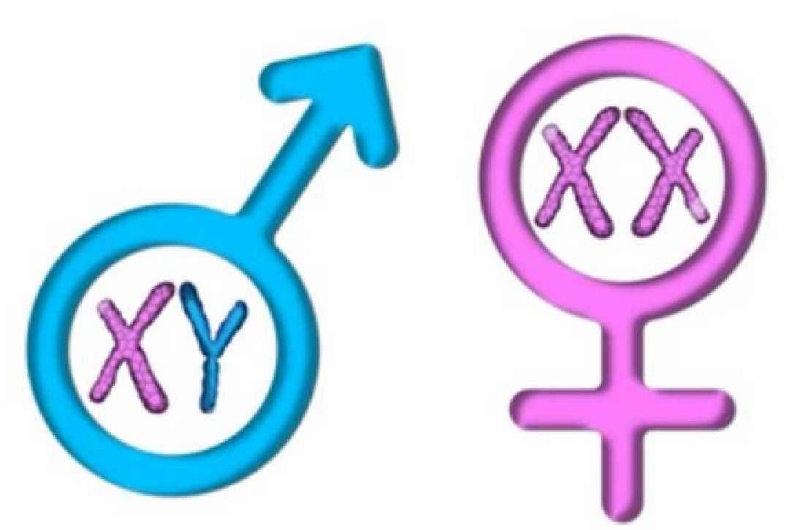
Yet, as the transgender debate ensues, I almost want to laugh.  For years, I’ve heard some women say emphatically that they do not need men; which is overtly cavalier because they need to know that men don’t necessarily need – or want – them.  And I can’t count the number of times I’ve heard women say they don’t even need men to procreate because they have sperm banks – which is like saying we don’t need farms because we have grocery stores.  I’ve also heard others – including some “enlightened” men – declare that males of the species overall are becoming irrelevant; that our Y chromosome has been shrinking over the past several millennia and will eventually vanish into the morass of human refuse.

All-female societies look great in sex videos, but the reality is starkly different.

As far as I can determine now, we can’t replace men and we can’t replace women – no matter how much hardcore feminists and delusional trans activists try.  The transgender movement has become unhinged in its efforts to become relevant and valued.  The anxiety over gender and “appropriate” roles for males and females is manufactured.  Humanity has made it this far without the restrictions bestowed by politically correct culture warriors who – like book censors – think they know what’s right for everyone else.

I don’t know if crap like the Adidas ad is an experiment in shock value; an attempt by media cretins to assert themselves into popular culture.  Despite their best efforts of the trans crowd and their sympathizers, gender is not subjective.

I am male and I’m proud of it.  I have no qualms and make no apologies for it.  Neither should anyone else.

3 Comments

Filed under Essays

Best Quotes of the Week – July 2, 2022

“We will not live in a world, not in my city, where our rights are taken from us or rolled back. Fuck Clarence Thomas!”

Lori Lightfoot, Mayor of Chicago, reacting to the U.S. Supreme Court’s reversal of the Roe v. Wade decision and Justice Clarence Thomas’ statement that other rulings should be considered, including same-sex marriage

Lightfoot is Chicago’s first openly-queer mayor.

“Mr. Justice Thomas had much to say today about my loving marriage.  Oddly he didn’t have much to say about his ‘Loving’ marriage.”

Andrew McDonald, Connecticut Supreme Court Justice, about U.S. Supreme Court Justice Clarence Thomas

McDonald, who is openly queer and married his husband Charles Gray in 2009, was referring to the 1967 Loving vs. Virginia ruling that legalized interracial marriage.

Bexar County Sheriff Javier Salazar with his family. Bexar County Sheriff’s office

“I’m the Sheriff of Bexar County, but also a Dad of two beautiful and intelligent young women. As their Dad I will defend my daughters’ ability to do what they feel is right with their own bodies and to love whomever they choose.  My job is chasing predators, rapists, and human traffickers, not someone exercising a right… If it’s truly about protecting children, how about starting with the ones in our schools?”

Javier Salazar, Sheriff of Bexar County, Texas, announcing he won’t prosecute women seeking abortion

Leave a comment

Filed under News

Best Quote of the Week – April 16, 2022

“Ms. Herrera’s case is a terrific example of exactly what we expect to happen. You can’t continue to say over and over again that abortion is murder and not expect that police and prosecutors are going to not treat it as murder.”

Lynn Paltrow, executive director of National Advocates for Pregnant Women

Lizelle Herrera, a 26-year-old South Texas woman, was arrested and jailed recently over a self-induced abortion just months after the state banned most abortions.  The murder charge has been dropped, but abortion rights advocates are still concerned about increasing attacks against abortion in judicial circles.

Leave a comment

Filed under News

Worst Quotes of the Week – May 15, 2021

“We’re not talking about eight-year-olds’ soccer.  We’re talking about post-puberty sports. We’re talking about girls who’ve worked their whole lives to earn a scholarship and not have to worry about being outplayed by a boy.”

Rep. Lauren Boebert, about the proposed Equality Act, which would ban discrimination based on gender and gender identity

Boebert also claimed the bill would lead to “women getting in an MMA ring and having their skulls crushed by a man,” among other things.

“Let’s be honest with the American people – it was not an insurrection, and we cannot call it that and be truthful.”

Rep. Andrew Clyde (R – GA), on the January 6 Capital Hill riots

A gun dealer in his first term in Congress, Clyde compared the riots to a “normal tourist visit”.

“It was Trump supporters who lost their lives that day, not Trump supporters who were taking the lives of others.”

Rep. Jody Hice (R-GA), presenting his version of the January 6 riots

Painting the rioters as victims, Hice noted that four of them died, including Ashli Babbitt who was fatally shot.  The other three suffered medical emergencies while part of the crowd laying siege to the Capitol.  Another victim is Capitol Hill police officer Brian Sicknick.

2 Comments

Filed under News

Photo of the Week – May 1, 2021

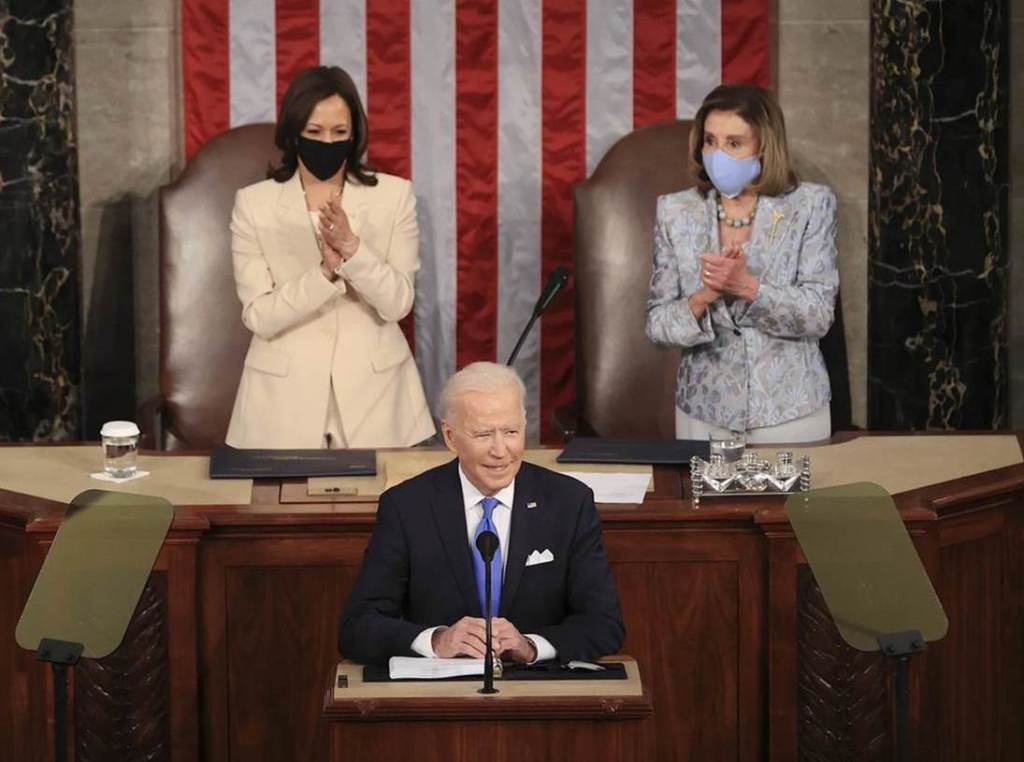
President Joe Biden’s first State of the Union address to Congress is notable for a historic first in the U.S.: Vice-President Kamala Harris and Speaker of the House Nancy Pelosi stood behind him.  There’s an old saying – behind every great man is a woman.  In this case, I guess it’s two women!  Although I can’t say if Biden is a great man – yet.  Regardless, I look forward to the day when an image like this is no major news event.

Leave a comment

Filed under News

Equalizing

Recently, Virginia became the 38th of the United States to ratify the Equal Rights Amendment.  It’s been a long-fought battle for proponents of dismantling all barriers to women achieving full and complete equality with males.  Earlier this month supporters became ecstatic when both chambers of the Virginia state house approved the amendment.

“We must begin to see a world without discrimination of any kind,” declared Virginia State Senator Mamie Locke.  “Equality based on sex is not just good for women, it is good for society.”

Ratification of the ERA reached a critical flashpoint in the 1970s, as more women entered the workforce and began seeking higher levels of education than at any time in U.S. history.  When Congress submitted the ERA to the states for ratification in 1972, it gave it a March 1979 deadline for 38 states to ratify it.  They didn’t make it.  In 1979, however, the U.S. Congress gave the ERA three more years to get ratified.  Again, it didn’t succeed.  By then, most judicial and legislative experts declared the amendment dead.  Even the U.S. Supreme Court, the only court to review it, acknowledged that.

Proponents remained undeterred.  The slew of legal machinations born of this ongoing effort is astounding, which is understandable.  Our education system often discusses our founding fathers, but – outside of Betsy Ross – says little about our founding mothers.  Yes, men devised and built much of the infrastructure and technology that has helped the United States become a wealthy, powerful nation.  The same is true for most other developed countries.  But women have been at the forefront of change and progress as well.  To deny their impact is essentially telling only half of the story.

Still, ERA critics state the ratification process has been unnecessarily complicated and even unconstitutional.  Others point to the 14th Amendment to the U.S. Constitution, which includes the term “equal protection of the laws,” and often refers to citizenship matters.  Supreme Court Justice Ruth Bader Ginsberg (undoubtedly the most progressive of all the Court’s judges) opined that any attempt to ratify the ERA would mean starting over again.

But, as the old saying goes, be careful what you wish for; you might just get it.  Full gender equality doesn’t just mean equal pay for equal work – which has been the crux of the argument.  It could also mean certain employment standards would have to be adjusted or eliminated.  For example, one could argue that physical fitness requirements for firefighters could be declared illegal based strictly on gender.  Some women may be able to meet those particular goals, while a number of men couldn’t.

A new argument that has arisen is that the ERA will prevent pro-life advocates and groups from protesting abortion, which is generally aimed at women.  It’s a dubious claim at best.  Perhaps some birth control methods could come under greater scrutiny.  Since birth control pills and IUD’s are consumed primarily by women, does that mean they will have to be deregulated and sold over-the-counter like condoms?  Or will condoms become available only by prescription?  That’s a disaster waiting to happen!

I personally want to see how ERA advocates react to women being compelled to abide by Selective Service.  Currently, all able-bodied, able-minded males in the U.S. are required to register for Selective Service within 30 days of their 18th birthday.  There’s no penalty for late registration, but there are a slew for non-registration.  Men who don’t register usually can’t enter college or get financial aid.  In some places, they can’t even graduate from high school, or could have their diploma rescinded.  They can’t obtain federal job training, or get jobs within the federal government.  All men who immigrate to the U.S. before their 26th birthday must register in order to garner full citizenship.  Failure to register is a felonious offense and punishable by up to 5 years in prison and a $250,000 fine.

Selective Service is the most blatant and deliberate form of gender discrimination.  The education penalties alone are violations of Title IX, an act passed by Congress in 1972 and directed towards ending gender imbalances in the education system (mainly college).  Contemporary feminists had argued that all-male schools, for example, are unconstitutional if they receive federal funding.  But, as I see it, Title IX means nothing, since Selective Service permits discrimination against males.

The Selective Service system refers, of course, to a military draft, which has not been in place in the U.S. since 1973.  While it basically means all young men must be available for compulsory military service, it actually means that group is expendable.  When the concept of women serving in combat positions in military conflicts arose, many people expressed horror at the thought of women coming home critically disabled or in body bags – as if we’ve made our peace with men returning in the same conditions.  Selective Service, therefore, makes young males cannon fodder.  Even some disabled men have to register for the draft; that is, if they can leave their dwelling under their own power.  If disabled men have to register, why shouldn’t able-bodied women be required to do the same?

How will the ERA affect family leave policies in the American workplace?  Most health insurance policies require coverage for pregnancy, and most companies allow for X amount of time off to care for a newborn.  But very few companies maintain paternity leave, and I don’t believe any insurance policies plans consider such time a medical issue.  Will pregnancy no longer be considered a unique medical condition, but rather, something chronic like diabetes?

Will the Violence Against Women Act have to be restructured to include men, or will it be eliminated altogether?  First enacted in 1994, the VAWA seeks to improve criminal justice and community responses to domestic violence, dating violence, sexual assault and stalking in the United States.  In effect, it’s also a highly sexist piece of legislation because it assumes either that only adult females are the victims of violence or that adult females are the only victims of violence who matter.  The law has been amended in recent years to include lesbian and transgender women – as if men, again, aren’t worth the trouble or should just be left to fend for themselves with laws and processes that don’t really help.

Currently in the U.S. vehicle insurance rates are slanted against males.  Most companies will lower insurance rates for females when they reach the age of 21, but only for males when they reach 25.  Men can earn lower insurance rates if they marry or have children.  Years ago women often couldn’t enter into a contractual agreement without a man as cosigner.  That’s now illegal, but will the ERA render the insurance rates’ gender disparities invalid?

Aside from forcing women into the military alongside men, one bloodcurdling fear among social conservatives is that the ERA will compel society to establish unisex public lavatories.  Early opponents seemed to focus on this in particular.  If that happens, will locker rooms fall to gender equality next?  Will doctors be forbidden from letting prospective parents know the gender of their baby after a sonogram?

As a writer, I wonder what the ERA might do to language.  It’s more common now to use the term humanity instead of mankind.  Will gender-specific pronouns fall out of favor or – worst – be outlawed?

How will the transgendered be impacted by the ERA?  Growing up there were only two genders: female and male.  Now we have such classifications as non-binary and cisgender.  Excuse me?

I know some of these issues seem almost comical, but we really have to think about what gender equality means.  I fully believe women are just as capable as men, when it comes to professional matters, such as business and law enforcement.  But men and women each possess qualities that are generally unique to our respective gender.  Neither set of attributes is superior to the other; they’re meant to work in concert with one another.  I’ve always said that, if gender and racial oppression hadn’t been in place for so long, we might have made it to the moon 200 or more years ago.  Telephones, motor vehicles and television could be ancient equipment by now.

But alas, our world hadn’t become that progressive until recently.  Still, aside from restroom signs and military deployments, gender is not always fluid and malleable.

What does gender equality mean to you?

Leave a comment

Filed under Essays

Best Quote of the Week – December 20, 2019

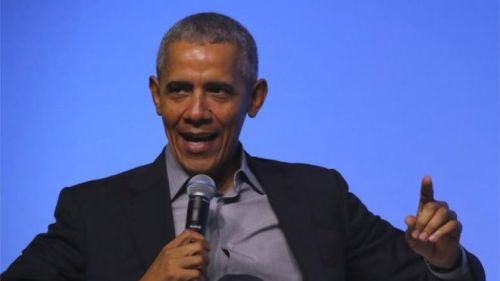
“I’m absolutely confident that, for two years if every nation on Earth was run by women, you would see a significant improvement across the board on just about everything… living standards and outcomes.”

President Barack Obama, speaking in Singapore

Leave a comment

Filed under News