Tag Archives: censorship

Banned Books Week 2025 – October 5-11

Every “Banned Books Week” because it highlights the ongoing fight against censorship.  But it’s become especially critical in recent years in what has generally been considered the world’s most powerful democracy.  Under our current leadership, we’re heading towards authoritarianism, and the number of book bans across the U.S. has increased and intensified.

The hysteria won’t stop – certainly not as long as we have right-wing extremists in the White House and both houses of Congress.  Just remember: no one has the right to determine what’s appropriate for others to read!  That’s counterintuitive to the First Amendment to the Constitution and won’t succeed.  It will only drive readership underground and ultimately lead to anarchy.

Authors Guild Censorship Tracker: Monitoring Threats to Free Speech and Authors’ Rights

PEN America: Banned Books List 2025

PEN America: The Normalization of Book Banning

Keep writing and keep fighting!

Leave a comment

Filed under News

Words

Several years ago actress turned animal rights activist Brigitte Bardot found herself in legal trouble with French authorities.  The former screen siren openly condemned the Islamic practice of animal slaughter during the Aid al-Kabir holiday. She’d been in such a predicament before – several times.  French law doesn’t actually forbid disparaging religious ideology, but it looks down sharply upon it, as it can be considered slander or worse, a conduit to hate-obsessed violence.

It’s surprising, considering France fought hard against Nazi occupation during World War II.  One tenet of Nazism is that anyone who speaks out against the government is deemed a traitor.  But, short of slander or threats of violence, criticism of governing bodies and religion is free speech.  Imprisoning anyone, or even threatening to levy a monetary penalty for such views, runs counter to that.

All of it strikes hard for me – and other writers and artists – here in the U.S., as we witness ongoing assaults on various forms of free speech.  Book bans remain a primary source of concern.  And with Republicans in charge of the White House and both houses of Congress, the attacks continue.  Social extremists have always been opposed to any viewpoint that doesn’t conform to their standards – whether it’s coming from the left or the right.  The voices of moderates seem to get lost in the chaos.

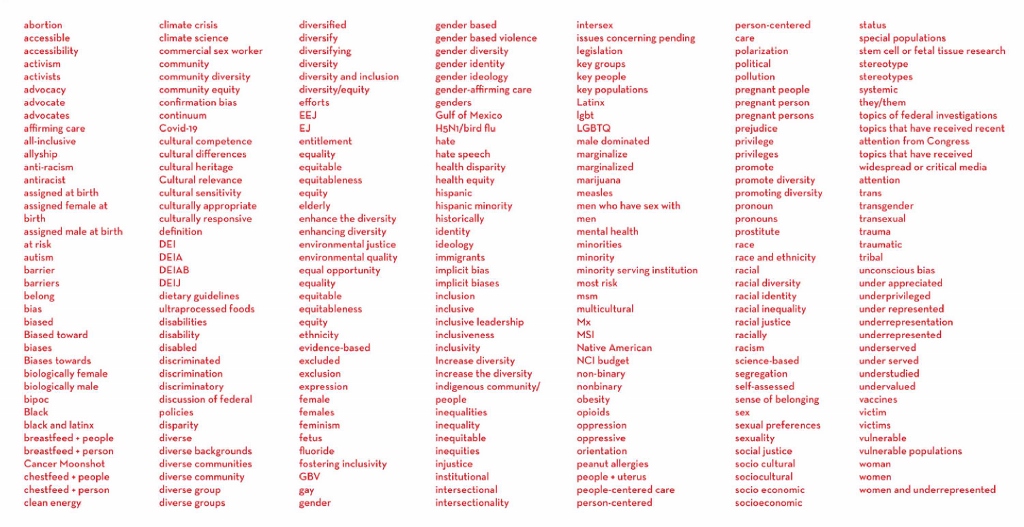
Recently the U.S. government – under pressure from the Trump administration – compiled and presented a list of words that are forbidden on federal web sites and other documentation.  They include such terms as “biologically male”, “clean energy”, “inequality”, and “woman”.  This is real!  I have a tendency towards creating outrageous stories, but I’m not intoxicated or deranged.  Well…not yet.

Regardless, the list definitely isn’t a manifestation of liberal outrage at the most right-wing president in decades.  It’s a result of years of conservative ideology designed to put people and institutions in categories and re-enshrine bigotry and hatred into the American conscience.  The leftward shift in culture and politics in the U.S. beginning in the late 1950s eventually met the hostility of Reaganesque antipathy towards anything viewed as different or the other.  The Trump era is the culmination of it all.

Those in formerly marginalized groups who also voted for Trump and his ilk shouldn’t be surprised – but they are.  For example, Cuban-Americans voted overwhelmingly for Trump, as they often have for the Republican Party.  As Cuba has been under communist rule since 1959, those fleeing the country have been given special protection from American law.  The same luxury hasn’t been granted to people fleeing war and violence in other Latin American nations, such as El Salvador and Guatemala.  However, the Trump Administration’s efforts to reform immigration law have started to impact thousands of Cuban immigrants.  Now, Cuban-Americans have the audacity to be horrified at the betrayal.  Remember the adage: be careful what you wish for; you might just get it.

We also need to recall the words of Martin Niemöller:

“First they came for the socialists, and I did not speak out – because I was not a socialist. Then they came for the trade unionists, and I did not speak out – because I was not a trade unionist. Then they came for the Jews, and I did not speak out – because I was not a Jew. Then they came for me – and there was no one left to speak for me.”

Trump and his cronies appear to be going after anyone who doesn’t fit the narrow definition of who he is.  His hypocrisy is glaring.  He never outwardly espoused any religious fervor until he first ran for president, but now says Christian ideology should be taught in schools.  If he believes in true biblical content, then consider the Christian Bible’s 7th commandment: “Thou shalt not commit adultery.” Exodus 20:14.

There are others.

“I am a stranger and an alien residing among you; give me property among you for a burying place, so that I may bury my dead out of my sight.” Genesis 23:4

“The sinless one among you, go first. Throw the stone.” John 8:6-11

“Love the Lord your God with all your heart and with all your soul and with all your mind and with all your strength. Love your neighbor as yourself. There is no commandment greater than these.” Mark 12:30-31

I’m sure this would be too much for him to handle.  It’s too much even for some devout Christians to handle!

Whatever words someone wants to use, they shouldn’t be frightened into compliance.  Russia, Iran and North Korea do that.  No truly democratic society wants to echo such autocratic leadership.

Leave a comment

Filed under Essays

Rapid Response Fund

As National Library Week 2025 comes to an end here in the U.S., I want to highlight Every Library’s “Rapid Response Fund”, a political action group for libraries.  As I’ve noted before, censorship is in full swing in a country that enshrined the concept of free speech into its constitution.  This could only happen with a right-wing autocrat like Donald Trump in the White House.  As writers and bloggers, we can’t afford to let this madness continue.  Please consider donating and as always – keep writing and keep fighting!

Leave a comment

Filed under News

Banned Books Week 2024 – September 22-28

“They’re banning books in their schools. We are banishing hunger in ours!”

Gov. Tim Walz

Today is the start of “Banned Books Week 2024” – the annual fight against literary censorship.  Writers, media types and all who support us know full well we’ll never win this war.  But we can win battles across the national spectrum.  The fight has become more intense in recent years, as social conservatives march into libraries and demand certain items be removed because they’re offended.  Remember, there will always be people who think they know what’s best for everyone else.  As writers and readers, we simply can’t let that happen.

Keep writing and keep fighting!

Banned Books 2024

Leave a comment

Filed under News

X Matters

The U.S. Supreme Court commenced its latest term October 2, and after the previous two years of drama and shocking decisions, the American populace is wondering what’s next.  Among the upcoming decisions:

Lindke v. Freed – A case in which the Court will decide whether a public official’s social media activity can constitute state action only if the official used the account to perform a governmental duty or under the authority of his or her office.

Murray v. UBS Securities LLC – A case in which the Court will decide whether, under the Sarbanes-Oxley Act of 2002, a whistleblower must prove his employer acted with a “retaliatory intent” as part of his case in chief to succeed on a retaliation claim.

Rudisill v. McDonough – A case in which the Court will decide whether a veteran who has served two separate and distinct periods of qualifying service is entitled to receive all of the education benefits at once from programs associated with both periods of service.

United States v. Rahimi – A case in which the Court will decide whether 18 U.S.C. § 922(g)(8), which prohibits the possession of firearms by persons subject to domestic-violence restraining orders, violates the Second Amendment.  (Both domestic violence experts and gun rights supporters are closely watching this particular case.)

Vidal v. Elster – A case in which the Court will decide whether the refusal to register a trademark under 15 U.S.C. § 1052(c) violates the Free Speech Clause of the First Amendment when the mark contains criticism of a government official or public figure.

The 2022 Dobbs decision upended the long-standing belief the High Court always moves the nation forward.  It wasn’t akin to the 1954 Brown decision, which reversed the 1896 Plessy ruling.  It was such a regressive move that even legal scholars remain stunned.  Afterwards, Justice Clarence Thomas – the longest-serving member of the Court and a conservative darling – declared the Dobbs decision opened the possibility for reversals of other cases, such as Obergefell v. Hodges that legalized same-sex marriage.  Curiously he said nothing of the 1967 Loving v. Virginia case that legalized interracial marriage.  (Thomas is currently married to a White chick.)

As upsetting as the Dobbs decision was, I know the case that will galvanize Americans; that is, the decision that – if reversed – will incite a revolution.  It is the one case that will drive Americans into the voting booth more than abortion, education, guns, queers or voting itself – Miller v. California, the 1972 decision that technically legalized pornography.  (Also see United States v. Reidel.) Yes, among all the sentient issues plaguing our modern society, denying people the right to view sexual activity will culminate in a revolution that could rival the collapse of the Roman Empire.  In the mid-1980s, President Ronald Reagan – perhaps still angry about the Miller decision – launched a war on pornography.  His then-Attorney General, Edwin Meese, commissioned associates to investigate the adult film industry under the guise of protecting children, which is indeed a noble effort.  But in reality, Reagan’s self-righteous demeanor drove his efforts to limit free speech; to stifle those who dared to disagree with him.  We saw much of the same two decades ago as critics of President George W. Bush were assailed.  Both extremist conservatives and liberals just don’t like when people have something negative to say about their lifestyles.  The same groups don’t have any problem, though, dictating what’s appropriate for others.  Conservatives, in particular, don’t like anything sexual.  It sends them into epileptic fits.

Regardless I can assure everyone that any U.S. Supreme Court assault on pornography will be taken seriously.  It has a lot to do with finances.  As of 2022, the adult film industry in the U.S. profited about $97 billion.  And that kind of money buys a certain amount of power.

The Reagan Administration failed to shut down pornography in the U.S.  Despite the AIDS epidemic, the adult film industry forged ahead in the 1980s and continued growing.  And I can assure even the most ardent of conservatives can’t stop it.  Then again, many of those same conservatives often view pornographic material – they just won’t admit it.  They really can’t because it would undermine their own limited credibility.

No matter what happens with the High Court, I doubt few other matters will resonate with voters as the X factor.  There are few things more obscene to me than war and unfettered censorship.

Leave a comment

Filed under Essays

Banned Books Week 2023 – October 1-7

Today is the start of “Banned Books Week 2023” – the annual pronouncement against literary censorship.  Every year we have to deal with this.  It’s a war that will never be won, since there will always be those who think they know what’s best for society and what everyone should read.  They may win small battles in particular communities and in certain school districts.  But we can never let them win the overall conflict.

Writing coach and fellow blogger Dan Blank is a true supporter of writers and other artists.  In his most recent post, he made this proclamation:

“There has never been a better time to be a writer. The world has never been more open to hearing a wide range of ideas & stories, and embracing the voice of each individual – including you!”

One of Dan’s mantras is simple, yet profound:

“I believe that you should GIVE YOURSELF PERMISSION TO CREATE. Put craft first and accept that the world needs what you create. You are ready to be seen and heard as a creator. Don’t follow trends and rush for the easy “like” on social media.”

Indeed, to all my fellow writers and artists, don’t ask for others to grant you permission to create your particular brand of art!

Banned Books 2023

1 Comment

Filed under News

Changing Dahl’s

“The problem with the world is that the intelligent people are full of doubts, while the stupid ones are full of confidence.”

Charles Bukowski

Fragile souls have infected the American conscious.  In ongoing efforts to accommodate every type of human who could possibly exist on Earth, language is being reconstructed and new words are being created.  Thus, a new type of censorship has taken hold.  As a writer, I’m devoutly opposed to any type of literary censorship.  No matter how offensive some writings may be, people should always be allowed to read them and determine whether or not they find it palatable.  No one, but no one has the right to make those decisions for others.

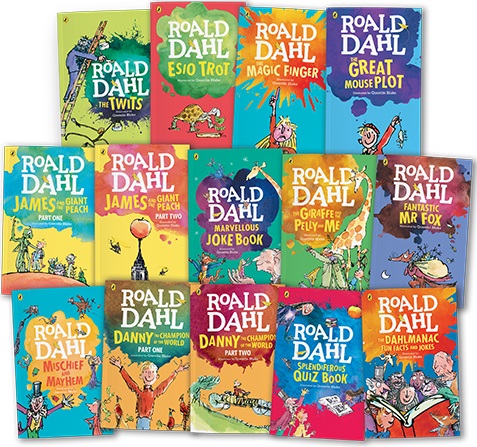
But does this include editing?  Are books written years ago now subject to contemporary sensibilities?  Roald Dahl – author of such legendary children’s tomes as “Charlie and the Chocolate Factory” and “James and the Giant Peach” – has become the latest target of political correctness, as his publisher, Puffin Books, has decided to edit some of those famous works.

For example, in “Charlie and the Chocolate Factory”, the character of Augustus Gloop is no longer “fat” but now “enormous”. In “The Twits”, Mrs. Twit is no longer “ugly and beastly”; she’s just “beastly”.

Other passages have been rewritten.  In the original version of “James and the Giant Peach”, the Centipede sings: “Aunt Sponge was terrifically fat / And tremendously flabby at that,” and, “Aunt Spiker was thin as a wire / And dry as a bone, only drier.”

In the amended interpretation, he sings: “Aunt Sponge was a nasty old brute / And deserved to be squashed by the fruit,” and, “Aunt Spiker was much of the same / And deserves half of the blame.”

Even the mundane term “female” has rendered vile.  The character of Miss Trunchbull in “Matilda” – described as a “most formidable female” – has now metamorphosed into a “most formidable woman”.

In a nod to the burgeoning transgender movement, gender neutral terms are now popular.  The Oompa-Loompas in “Charlie and the Chocolate Factory” are now “small people”, instead of “small men”; while the Cloud-Men in “James and the Giant Peach” are now “Cloud-People”.

Really?

The Roald Dahl Story Company explained the alterations by declaring, “it’s not unusual to review the language” during a new print run and any changes were “small and carefully considered”.

Puffin made the changes in concert with Inclusive Minds, an entity founded in 2013 that – according to their web site – “works with the children’s book world to support them in authentic representation, primarily by connecting those in the industry with those who have lived experience of any or multiple facets of diversity.”  It’s curious that Inclusive Minds emphasizes that they “do not edit or rewrite texts, but provide book creators with valuable insight from people with the relevant lived experience that they can take into consideration in the wider process of writing and editing.”

Okay, great, wonderful!  I have no problem with inclusion.  During high school and even college, I rarely found the Spanish and Indian portions of my heritage included in literature and popular cultural formats, such as television.  I certainly didn’t see any positive representations of queer people.

But, while inclusivity is great from a cultural perspective, it’s ridiculous and personally offensive to me as a writer to see books published long ago rewritten to cater to new levels of awareness.  We can’t go back and change what happened a lifetime ago.  No matter how much someone wishes things had been different way back when, they just can’t alter the past.  They simply can’t.  Dahl was a product of his time; he said and wrote what was commonly acceptable in his day.  If you read his books and don’t like the verbiage, then don’t read them!  It’s the same with a TV show; if you don’t like it, DON’T WATCH IT!

I understand that some things are blatantly offensive.  That’s just how it is.  If we ban every book that someone finds offensive, we wouldn’t have anything to read!  Stop the madness.  It’s not going to help move society forward.

17 Comments

Filed under Essays

Banned Books Week 2022

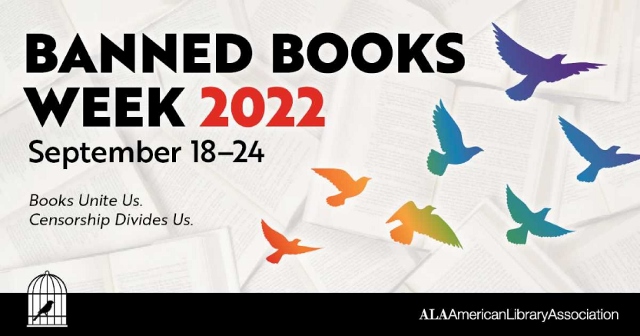
I know I’m running late with this, but it’s Banned Books Week, the annual commemoration of free speech and free press.  As always, some people feel they have the authority to determine what the rest of us can see and read.  They start with the schools and libraries under the familiar guise of protecting the children, but the ultimate goal is to restrict literature and education.

All writers and bloggers should always stand up to any kind of censorship.  Remember, no one – absolutely no one – has the right to select what you can and cannot read!

3 Comments

Filed under News

Book Less

“I shall not today attempt further to define the kinds of material I understand to be embraced within that shorthand description [‘hard-core pornography’], and perhaps I could never succeed in intelligibly doing so. But I know it when I see it, and the motion picture involved in this case is not that.”

U.S. Supreme Court Justice Potter Stewart, opinion in Jacobellis v. Ohio, 1964

You know the old puzzle: if a tree falls in the forest, and no one is around, does it make a sound?  Using that logic, if a book is published, and no one finds its content offensive, is it obscene?

Obscenity seems to be subjective.  Right-wing extremists certainly feel that way, as they have (once again) assumed the role of moral overseer and decided they have the authority to determine what books are and are not appropriate for others to read.  To we writers and other artists, the term censorship is like holy water to a devil worshiper: it’s terrifying!  Whenever we learn that some people are challenging the presence of certain materials in a public venue, such as a library, we bristle.  But, instead of running and hiding, we’ve been known to stand and fight.

In the latest battle, the school board in McMinn County, Tennessee decided to ban the 1986 Art Spiegelman book “Maus: A Survivor’s Tale” from its library.  The illustrated tome is Spiegelman’s recounting of his parents’ experiences as prisoners of the Auschwitz Nazi death camp.  It won Spiegelman a Pulitzer Prize and, in 1992, the Museum of Modern Art mounted an exhibition displaying his original panels for the story“Maus” had been party of the school district’s lessons on the Nazi Holocaust.  The McMinn school board’s complaints about “Maus” are the usual gripes: language and nudity (animal nudity in this case).

It’s worth noting McMinn County, Tennessee is near the location of the infamous Scopes Monkey Trial, where the concept of evolution became intensely controversial.  In 1925 the state of Tennessee passed the Butler Act, a bill banning the teaching of evolution in its schools.  Evolution, declared legislators, contradicted the Christian Bible as the single standard of truth in public arenas, such as schools.  The move astonished – and frightened – many across the country.

The American Civil Liberties Union (ACLU) responded immediately by vowing to support any educator in the U.S. who dared to teach evolution.  A popular young high school teacher in – of all places, Tennessee – named John Scopes offered to be the defendant, if the state decided to make good on its promise.  They did.  On May 7, 1925, Tennessee authorities arrested Scopes and charged him with violating the Butler Act.

The ensuing legal battle made headlines across the country and the world.  The judge in the case showed his deference to the state by opening each session with a prayer and refusing to let Scopes’ defense call any scientific witnesses.  Ultimately Scopes was found guilty and fined $100.  The ACLU hoped the case would make its way to the U.S. Supreme Court, but the Tennessee State Supreme Court reversed the decision on a technicality.  Still, the repercussions were widespread.  The Butler Act was never enforced in Tennessee again, and similar measures in other parts of the U.S. met with failure.  But progressives realized they could never relax in the face of extremist ideology.

So, here we are in the third decade of the 21st century, where the U.S. has come out of two brutal Middle East wars and is now facing an onslaught of urban violence.  We experienced 36 mass shootings in the month of January, resulting in 101 injuries and 42 deaths.  That’s just in the month of January 2022 alone!

But, as usual, social and religious conservatives are more upset with books.  In October of 2021, Texas State Representative Matt Krause asked the Texas Education Agency for information about 850 books in school libraries.  He wanted to know how many copies of these books were in each library.  It didn’t surprise observers that the majority of the books are by women, non-Whites and/or LGBT authors.  The imperial Krause is concerned that taxpayers are funding the presence of these books in school libraries.  Yet, my tax dollars are wasted if those books are removed because he and other like-minded folks find them unacceptable.

Some disputes have become hostile.  Police in Leander, Texas got involved in a controversy over one book, “Lawn Boy” in 2021.  Author Jonathan Evison says he received death threats because of it.  Texas – where any restrictions on guns is considered anathema – isn’t the only state under siege by moral zealots.  Similar attempts at censorship and assaults on free speech have played out in Missouri, Pennsylvania and Virginia.

“If I had a statement, it would be ‘Read the book or sit down,’” says Evison. “I feel like these people are frightened because they’re losing the culture wars.”

Yeah!  Sit down and read – more than the Bible or the TV guide.

I will concede parents have the right to be concerned by what their children view and read.  But I feel banning books from a school library is just one step away from banning books in any library or elsewhere.  It’s truly not an unrealistic stretch to envision such a scenario.  The world has witnessed such activities in totalitarian societies, and the results are often sanguineous.

Once again, though, what is obscene?

The 1920s was a decade of both progress and excess, particularly for the growing film industry.  Although silent and in black-and-white, movies had begun to show a variety of mature content – mainly heavy alcohol consumption and sexual behavior.  Concern over the material became so intense that, in 1934, Will H. Hays – then head of the Motion Picture Association of America (MPAA) – introduced his personally developed “Hays Code”, a standard production guide for what is and what is not acceptable content for motion pictures.  The code remained until 1968, when the MPAA introduced its film rating system: G (General Audiences), PG (Parental Guidance recommended), R (Restricted) and X (mainly for sex, but also for violence).

By the 1960s, films were presenting increasingly controversial subject matter – and headaches for the MPAA.  The 1966 film “Who’s Afraid of Virginia Woolf?” shocked audiences with its blatant use of foul language and served as one catalyst for the rating system.  The 1968 film “Vixen” became the first movie branded with an X rating.  The following year John Schlesinger released “Midnight Cowboy” with Jon Voight in the titular role.  It, too, was branded with an X rating.  Despite that, it went on to win the 1969 Academy Award for Best Picture – the first and (to date) the only X-rated film to win such an honor.  Viewing both “Vixen” and “Midnight Cowboy” now might make somebody wonder what the fuss was all about.

The film rating system took an odd turn in 1983 when a remake of the classic film “Scarface” came out.  The MPAA initially granted the movie an X rating because of its excessive violence.  Director Brian DePalma reluctantly trimmed some of the footage, and the film was rebranded with an R.  If it had gone out with the X label, “Scarface” would have been the first movie released as such because of violence.

Another X controversy arose six years later with “The Cook, the Thief, His Wife & Her Lover”.  The film’s gratuitous sexual content garnered an X rating from the MPAA.  As with DePalma and “Scarface”, director Peter Greenaway reluctantly agreed to edit out a small portion of the sexual matter – small as in some 5 minutes – and the film was upgraded to R.  The fiasco upset many in the entertainment community – not just in the U.S. but across the globe.  If the difference between an R and an X rating is a paltry 5 minutes, then how valid is a film rating system?

What is obscene?

In the 1950s, the Hays Code was applied to a growing new medium: television.  In motion pictures, the code, for example, dictated that people of the opposite sex could not be filmed in bed together, unless one of the duo (usually the man) had at least one foot on the floor.  In TV, however, even married couples couldn’t be shown in the same bed.  The rule went into effect after a 1947 episode of “Mary Kay and Johnny” showed the title characters hopping into the same bed.  But that taboo dissolved completely in 1969 with “The Brady Bunch”.  Bathrooms also were generally off-limits in television.  One exceptional first was a 1957 episode of “Leave It to Beaver”, when the boys tried to hide a pet alligator in the tank of a toilet.  An early episode of “All in the Family” produced another first: the sound of a toilet being flushed.

As mundane as all of these events are today, they each sparked a ruckus at the time.

Personally, I find excessive violence offensive.  I never laughed when I saw men and boys get struck in the groin in slap-stick comedy scenes in films and on television.  I grimace at bloody acts in similar venues, while others react as if nothing more than a sharp wind blew past them.  Conversely, many of these same individuals are horrified by the sight of blatant nudity, especially if the nudeness is that of a male.  It’s difficult to imagine now, but even as recently as the late 1960s words like pregnant and diarrhea were forbidden on television.

The word “bitch” is used frequently on TV today.  But, in 1983, a musical group called Laid Back released a song entitled “White Horse”, which features the line: ‘If you wanna be rich, you got to be a bitch.’  MTV played the video, but bleeped out the term “bitch”.  In 1994, Tom Petty released “You Don’t Know How It Feels”, which contains the line: ‘But let me get to the point, let’s roll another joint.’  Music video networks deemed the ‘roll another joint’ verbiage unacceptable and bleeped it out whenever they played the video.

In 1989, rap group 2 Live Crew released two versions of their song “Me So Horny”: what they dubbed the G-rated version and the R-rated version.  Radio stations played the G-rated version frequently, but the R-rated version generated the most strife.  At the start of 1990 a federal judge in the state of Florida considered the group and their music obscene and in violation of community standards – whatever that’s supposed to mean – and forbid local radio stations from playing any of their music.  Consequently, 2 Live Crew’s reputation and music sales skyrocketed.

I remember the controversy that erupted with the video to Madonna’s 1990 song “Justify My Love”.  Once again, music video networks assumed the role of moral protectorate and either refused to play the video or played it late at night, when children and other fragile souls – such as moral crusaders – were asleep.  Undeterred by the skirmish, Madonna packaged the video and sold it independently.

In 1965, The Rolling Stones made their debut appearance on “The Ed Sullivan Show”, during which they performed a sanitized version of “Let’s Spend the Night Together”.  Producers convinced the group to sing ‘Let’s spend some time together’ instead.  Lead singer Mick Jagger leered at the camera – in the way only Mick Jagger can – when he spat out the words.

Two years later The Doors were presented with a similar option when they made their appearance on the show and performed their already popular and now seminal hit “Light My Fire”.  Sullivan’s son-in-law, Robert Precht, suggested they alter the line ‘Girl, we couldn’t get much higher’ to ‘Girl, we couldn’t get much better.  The group refused and performed the song as it was.  Their act of defiance resulted in their permanent ban from the show – a move I know upset them to no end.

I’ve noticed social conservatives haven’t raised concerns about inappropriate material in books like “The Anarchist Cookbook” and “The Turner Diaries”.  The latter served as a blueprint for Oklahoma City bomber (domestic terrorist) Timothy McVeigh.  If conservatives really want to ban books with sexual references and violence, they should start with the Christian Bible, which is rife with salacious and unsavory behavior.

Meanwhile, “Maus” has experienced a surge in sales as a result of the squabble surrounding it.  If there’s one way to ensure something’s popularity or success, it’s to try to ban it.  In other words, censorship always backfires.

Yet, censorship will always remain a threat to freedom of speech, expression and the press.  The war will never be won – by either side.  But those of us on the side of true freedom can win individual battles by standing up to self-righteous demagogues.


2 Comments

Filed under Essays

Worst Quotes of the Week – February 5, 2022

“Here’s a quick thought experiment: If AOC was fat and in her 60s, would anyone listen to another thing she ever said?”

TV personality Adam Carolla, about Congresswoman Alexandria Ocasio-Cortez, to FOX News commentator Sean Hannity

Carolla, creator and co-host of the now-defunct “Man Show”, argued that while the 32-year-old politician is “young, vibrant and beautiful,” and “everyone’s always putting a camera and a mike in her face,” her “opinions are idiotic 95 percent of the time.”

“If you’re going to do this, then let’s be truthful about it, because the Holocaust isn’t about race.  It’s not about race.  It’s about man’s inhumanity to man. That’s what it’s about.”

Whoopi Goldberg, on The View

Goldberg made the comments during a discussion of how the Nazi Holocaust-centered graphic novel “Maus” was banned by a Tennessee school board.  That school board banned the book, Goldberg said, because there were complaints about the novel containing nudity and bad language.  “The minute you turn it into race, it goes down this alley.  Let’s talk about it for what it is – it’s how people treat each other.  It’s a problem.  It doesn’t matter if you’re Black or white because Black, white, Jews – everybody.”

Goldberg apologized the next day for her comments, but ABC announced immediately they had decided to suspend her for two weeks.

Leave a comment

Filed under News