Tag Archives: U.S. presidency

CB Saps

The CBS television network is one of the most storied media outlets here in the U.S.  It officially launched in September of 1927 as a radio network – a major news source at the time – before transitioning in 1941 into the new medium of TV.  The assassination of President John Kennedy in 1963 led CBS to expand their weekly evening news broadcasts from 15 to 30 minutes, which remains a staple of mainstream news outlets.

In 1960 a young journalist named Dan Rather joined CBS, and in 1981, he took over the helm of the network’s nightly evening news broadcast from another legend, Walter Cronkite.  Rather had already established himself as a premier journalist.  From his live coverage of Hurricane Carla in 1961 to the chaotic 1968 Democratic National Convention in Chicago and the horrors of 9/11, Rather had few equals.  But, in the fall of 2004, he encountered his final nemesis – and perhaps one of the most unlikely: a conservative Republican political figure with a fragile ego, incumbent U.S. President George W. Bush.  After five lackluster years as Texas governor, Bush ran for president in 2000 – and won in a controversial decision handed down by the U.S. Supreme Court.  He became only the second U.S. president to follow his father into that esteemed role.  One issue that arose early in Bush’s presidential campaign was his decision to join the Texas National Guard upon graduating from Harvard in 1968.  He reenlisted four years later and then – allegedly – transferred to Alabama to work on the presidential campaign of George C. Wallace, a renowned segregationist.  Whether or not Bush completed his second stint in the National Guard has never been resolved.  He served at a time when the Vietnam War was raging and positions in any state’s national guard were highly valued for draft-age men.

The same conundrum befell Bill Clinton when he announced his candidacy for the presidency in 1991.  Conservatives were quick to denounce Clinton as a “draft dodger”, but held off criticism of Bush years later.  But when Dan Rather began his quest to determine the exact nature of Bush’s so-called military service, right-wing hound dogs quickly pounced.  How dare Rather question the integrity of their contemporary savior!  After Bush won the 2004 election (in contrast to 2000, when it was strictly an electoral college victory), the pseudo-Texan’s anger manifested quietly and nondescriptly in Rather’s termination from CBS.

The move pleased conservatives, but outraged liberals.  It mirrored a similar move by CBS against Rather’s colleagues, Connie Chung, a decade earlier.  Chung began her journalism career with CBS as a Washington, D.C., correspondent in the 1970s.  In 1993, she became only the second woman and the first Asian-American to headline a major network news broadcast, when she became Rather’s co-anchor on the CBS Evening News.  Two years later, however, her stint with the network crashed after interview with the parents of another conservative Republican with a fragile ego.

In November 1994, Republicans gained control of both Houses of the U.S. Congress for the first time since 1954.  And they didn’t just win – they won a super-majority in each chamber.  There were at least 3 factors: Clinton’s attempt at a national healthcare program, a ten-year ban on assault-style weapons and queers in the military.  All three were anathemic to American conservatives, and the new Speaker of the U.S. House of Representatives, Newt Gingrich, stood at the helm of their angst.  A Pennsylvania native and Ronald Reagan acolyte, Gingrich first arrived in the U.S. Congress in 1979.  When Bill Clinton became president, Gingrich led the loud, yet unofficial call, to slaughter the former Arkansas governor’s reputation.

In the spring of 1995, Connie Chung traveled to Georgia to interview Gingrich’s parents.  His mother, Kathleen, sitting in her kitchen, chain-smoking and speaking barely above a stage whisper, noted her son’s disdain for the Clintons – not just the President, but also First Lady Hillary.  When pressed by Chung, Kathleen Gingrich said Newt had called Hillary Clinton a “bitch”.  Chung chuckled and seemingly expressed surprise.

The interview rocketed across the news spectrum like a lightning bolt.  Newt Gingrich openly announced his rage (and refused to acknowledge whether or not he’d described Hillary Clinton as a “bitch”).  Nonetheless, he accused Chung of taking advantage of people who weren’t “media savvy”.  In response, Chung asked how “media savvy” does someone need to be when they’ve welcomed a national news figure into their home and have three cameras and several studio lights set up around them.  CBS severed Chung’s contract.

Now, some two decades later, CBS has bowed to the ego of yet another conservative Republican: President Donald Trump.  They recently announced the cancelation of the long-running “The Late Show”, which will officially end in May 2026.  Comedian Stephen Colbert has hosted the show since 2015 and has been one of Trump’s most prominent critics.  This announcement comes as a surprise, but in reality, shouldn’t be.  Previous host David Letterman frequently mocked President George W. Bush – and never shied away from his barbs.  Every political figure in the U.S. has been the subject of disdain and caricature.  Anyone who enters American politics with a thin skin normally fries in the broth of farcical verbiage.  But it sort of comes with the territory.

Yet I can’t help but notice that attacks on journalism and popular culture have come from the conservative wing.  The right-wing fringe that once openly-mocked diversity and inclusion now seems to bristle at the sound of tawdry jokes and comical jibes.  And liberals are the wimps?

Spare me the anxiety!

Personally I was the subject of extensive bullying throughout my school years and even into young adulthood.  But I survived the maelstrom and I’m still here.  In a nation that values free speech and a free press, it’s frustrating to know that journalists and comedians are ostracized for criticizing or questioning anyone – least of all political figures.  In fact it pisses me off and makes me wonder what’s next.  The U.S. currently has a president who insulted a large number of people and deliberately fomented a physical assault on our government.  Threatening physical violence and slandering someone’s reputation are actually illegal.  But, in the current, political climate, personal fragility is obviously subjective.
1 Comment

Filed under Essays

The Magna Carta at 810

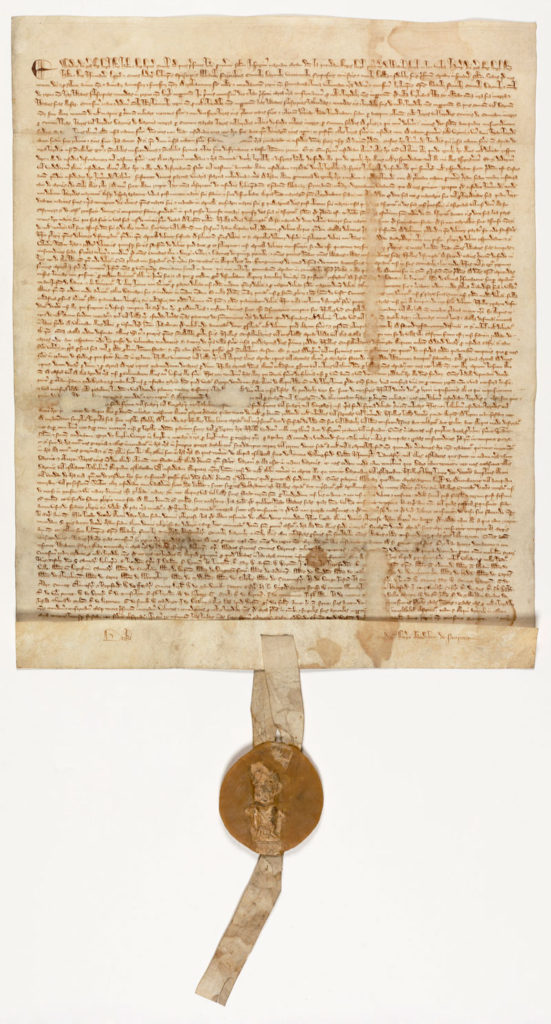
Around this time in 1215 C.E., England’s King John placed his royal seal on the “Great Charter”, more commonly known as the Magna Carta.  The signing came after a revolt by English nobility against John’s rule.  The document guaranteed the king would respect the rights of individuals and uphold the freedom of the Church – among other things.

The charter was a key element in the establishment of democracy in England and ultimately across Europe.  It also became critical in the creation of the United States more than 500 years later.  The framers of the U.S. Constitution highlighted the essence of the Magna Carta in their discussions.

The anniversary of King John’s signing is notable here in the U.S. since last weekend the indefatigable Donald Trump staged a parade in Washington, D.C., to coincide with the 250th anniversary of the establishment of the U.S. Army and his 79th birthday.  The festivities were more for him and his overbearing ego than to celebrate the Army.  But it was also important in that thousands of “No Kings” protests occurred across the nation – a direct response to Trump’s totalitarian attitude.

Fortunately, the Magna Carta – and the U.S. Constitution – will outlast any political ideology.

Here’s a PDF version of the translated document.

Leave a comment

Filed under History

Gallery of Nitwits

Well, just like the Earth didn’t self-obstruct when Barack Obama won his two elections, it hasn’t 75 7jpj56exploded now that Donald Trump has returned to the White House.  But at least there was never any (real) question that Obama actually won.  And I’m still feeling dismal.

It’s tough to remain faithful to the democratic process and the American vision of equality and happiness when someone like Trump keeps succeeding.  But this is life on planet Earth and it’s imperfect.  In fact, it’s downright screwy!

I don’t care what anyone says.  In my adult life, I’ve never seen anyone as incompetent or unqualified to claim the title of U.S. President than Donald Trump.  As I’ve stated before, I was embarrassed with George W. Bush in the White House.  But I’m incredibly disgusted with this former real estate magnate / pathetic reality TV star / tax cheat / draft dodger / womanizer in the same role.  U.S. politics has truly descended into madness.

Trump’s cabinet appointments have proven equally unfit for such prestigious and high-profile positions.   Former Congressman Matt Gaetz was the first of Trump’s appointments to come under intense scrutiny – and the first to withdraw his nomination.  Trump had wanted Gaetz to be his Attorney General, the nation’s top law enforcement official, despite not having any experience in the legal field – except as a litigant.

Trump’s second choice for the role, Pam Bondi, is Florida’s former attorney general and a corporate lobbyist.  Like the rest of Trump’s nominees, she’s a devout Trump supporter and apologist, but she actually made it through her confirmation hearing in one piece and is now overseeing the U.S. Justice Department.

For Defense Secretary, Trump picked Pete Hegseth, a former military veteran and FOX New TV host.  He also made it through his confirmation hearing – despite tales of his excessive alcohol consumption and sexual harassment allegations.  In this latter respect, he’s Trump “Light”.

Three other Trump nominees – Robert F. Kennedy, Jr., for Health and Human Services Secretary, Kash Patel for FBI Director, and Tulsi Gabbard for Director of National Intelligence – are facing tougher paths.  Kennedy, son of the late and legendary former U.S. Attorney General, ran as an independent candidate in last year’s presidential race.  But his past comments questioning the efficacy of vaccines, including COVID-19, have come back to haunt worse than one of Trump’s ex-wives.  He’d once declared that AIDS in Africa “is an entirely different disease from Western AIDS” and claimed that work done by the U.S. Centers for Disease Control and Prevention is akin to that of Nazi death camps.  He also propagated a popular conspiracy theory that vaccines cause autism in children.

Patel said recently that, if chosen as FBI Director, he’d terminate as many of the agency’s employees as possible and shut down its headquarters building, before reopening it as a museum to the “deep state”.  That “deep state” reference is common among right-wing conspiracy theorists, especially after FBI investigations into Trump’s antics during his first term in office.

Gabbard, a former Democratic congresswoman from Hawaii and a military veteran, may have the toughest road of all of them.  She has insinuated that Russia had some justification for invading Ukraine three years ago; denouncing the administration of Ukrainian president Volodymyr Zelensky as a “corrupt autocracy”.  She backed Russia’s unfounded claims that the U.S. and Ukraine have collaborated to engage in clandestine biological warfare.

One of my closest friends, Preston*, is a Trump voter who had told me last year that he was concerned – if Vice-President Kamala Harris won the presidency – she’d send U.S. troops into Ukraine.  He has two young adult sons who could face military conscription, if a military draft was enacted – which hasn’t occurred since the early 1970s.  I can identify with that sentiment.  In 1991, I feared something similar would happen with the Persian Gulf War, when I was in my mid-20s.  Preston believes wholeheartedly in Trump (which I don’t hold against him), but I’m worried now that Trump could send U.S. troops into the Middle East to help Israel fight against Iran.  Both those countries have nuclear weapons.

Another disquieting possibility is that Trump will enact the classic Republican tax cuts – that bullshit “trickle-down” economics regimen every GOP official has pushed onto the American people for over a century; the kind that has always shoved the U.S. into financial despair.  It happened with the Great Depression of the 1930s, the savings and loan crisis of the early 1990s, and the Great Recession less than two decades ago.  Trump’s round of tax cuts and deregulation measures during his first term only exacerbated the trauma of the COVID-19 pandemic.  I fear it’s going to happen again, and the U.S. will find itself in more economic distress.

But don’t blame people like me.  I didn’t vote for either Trump or Harris, but – as with Hillary Clinton in 2016 – I have to concede Harris would have been the lesser of two evils.  That’s never a pleasant position in which voters should find themselves, but it’s how I view politics in the U.S.

Now we’ll just have to see what shenanigans occur with Trump 2.0.  Fasten your seatbelts.

*Name changed

3 Comments

Filed under Essays

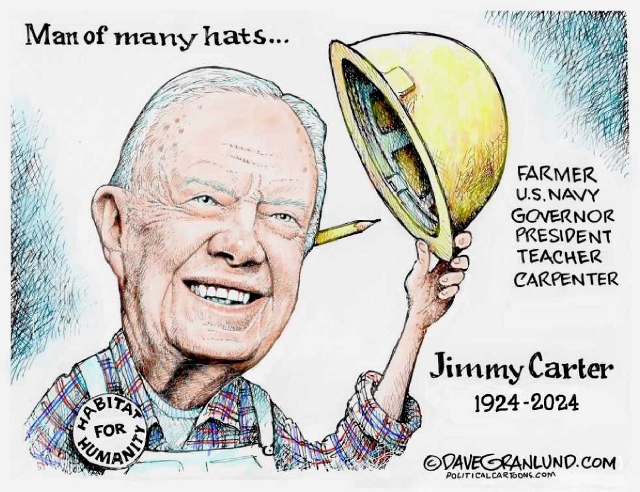
In Memoriam – Jimmy Carter, 1924-2024

“We have a tendency to exalt ourselves and to dwell on the weaknesses and mistakes of others. I have come to realize that in every person there is something fine and pure and noble, along with a desire for self-fulfillment. Political and religious leaders must attempt to provide a society within which these human attributes can be nurtured and enhanced.”

Jimmy Carter

Image: Dave Granlund

2 Comments

Filed under News

Glassed

Around the turn of the century, I saw news that a women’s college here in the U.S. had contemplated admitting men within a year or two.  The shock and outrage from the female student body was as palpable as it was vociferous.  Ironically the institution had a male chancellor at the time.  He tried explaining to the crowd that the college was trying to maintain its viability, but his voice was suffocated by the intense hysteria.  You would have thought the incoming male students would be selected from a sex offender registry.  I’m sure those young women had long since bought into the feminist myth that all men are naturally prone to violence, especially sexual assault.  Almost immediately, however, the college rescinded its decision, much to the delight of the students.  That same male chancellor made the announcement by unfurling a banner that bore the term “For Women Again”.  The crowd erupted into cheers of relief; some even popping open bottles of champagne.

At the bank where I worked at the time, the subject arose during a lunch conversation.  I was the only man in the small group, and my female colleagues collectively agreed that they understood the reticence of that college’s students to admit men.  But, of course, I had to opine by highlighting the obvious anger those young women expressed at the initial announcement.  “I wonder what those little girls will do when they enter the adult world and have real problems.  And there’ll be men all over the place, and there’s not a goddamn thing they can do about it.”

I suppose my constituents weren’t surprised by the statement, but to some extent, they had to concur.  There was a time when the genders were explicitly separated, and everyone seemed fine with it.  Men did this, and women did that.  And things functioned relatively well.

But I pointed out that, if women want true equality, they have to accept that men are part of that equation.  In many ways, for centuries, men have excluded women from the decision-making process; claiming there was a “place” for them.  Women have fought back and demanded a place at that proverbial decision-making table.

Oddly one of the women sitting with me in that lunch room didn’t believe women should be in positions of power, such as the U.S. presidency.  “We have too many emotional and hormonal problems!” she said, much to the shock and chagrin of the other women.  She wasn’t the first woman from whom I’d heard that.  But this was 2000, and I was certain such beliefs had been relegated to ancient times – like dial phones.

A few years before that particular conversation a similar debate arose among me and some female colleagues at the bank; another one about gender parity.  I noted that, if women wanted true equality with men, they needed to start registering for Selective Service – like the men have to do.  In the U.S., Selective Service is the most blatant form of sexism.  The current system was reinstated in 1980 by then-President Jimmy Carter.  Every male in the U.S. born since January 1, 1960 has to register for it within 30 days of their 18th birthday.  In the face of a never-ending Cold War and the sudden Iranian hostage crisis, it was a call-back to an older time in America.  There’s no penalty for late registration, but there are plenty of punishments for failure to register – including jail time and a six-figure fine; no admittance to college; and no financial aid.  The issue was a big one when I was in high school and it became a concern during the 1991 Persian Gulf War.

In the aforementioned workplace conversation, one of my female colleagues – the mother of a single college-aged son – responded, “When men get pregnant,” before storming off.  Another woman concurred with a laugh.  But I pointed out that men have to register for Selective Service; otherwise, face some serious legal repercussions.  Women, on the other hand, don’t have to have children if they don’t want.  There is no law that compels women to get pregnant.  My female cohorts couldn’t offer a logical reply.

All of that came back to me last week, when Vice-President Kamala Harris accepted the Democratic Party’s nomination as presidential candidate.  She’s only the second woman and the first non-White woman to be so honored.  This year’s presidential campaign has literally turned out to be the oddest in decades; certainly the most unusual in my lifetime.  And at the age of 60, I don’t have too many first time experiences left.

I started coming of age in the 1970s, just as the contemporary feminist movement was making more concerted inroads into a patriarchal American society.  I recall how just being male seemed to become anathemic.  Many women demanded full and complete equality with men in every aspect of civilization.  Yet, by the 1990s, I noticed some women (and men) expected a double standard.

Women can’t reasonably demand to be treated as equals to men in business and politics, yet still expect to be placed in the same category as infants and children when it comes to their health and welfare.  In other words, don’t insist on being given the chance to be the CEO of a major corporation, a governor, a Supreme Court justice, or president of the United States and still want to be the first ones in the lifeboat when the ship hits the ice berg.

If you want equality, I’ll give you equality.  But, remember the old saying: be careful what you wish for; you might just get it.  When it comes to progressive attitudes, I sometimes think of the 1967 film “Guess Who’s Coming to Dinner”.  Spencer Tracy and Katherine Hepburn portray a liberal San Francisco couple whose all-inclusive ideology is tested when their daughter (Katherine Houghton) introduces her fiancé (Sidney Poitier) to them.  While the movie is rife with stereotypes, the general message is essential: how sincerely should people value and hold onto their beliefs.  The presidency of the United States has often been deemed the ultimate “glass ceiling” for women.  As we march further into the 21st century, members of every previously-marginalized group need to consider how much shattered glass they want on the floor of progress.

Leave a comment

Filed under Essays

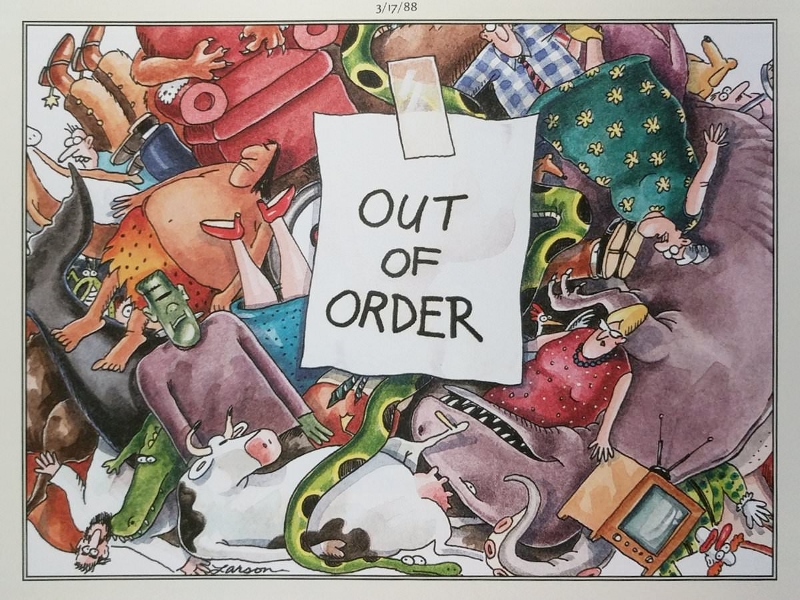
Maelstrom

Donald Trump gets shot at an outdoor rally; Joe Biden ends his presidential campaign; and the 2024 Summer Olympics launch in Paris with opening ceremonies conducted down the Seine and Lady Gaga greeting crowds in French (when has an American ever visited a foreign country and spoken the local language?).

Oh and this summer in the Northern Hemisphere is already smashing temperature records, plus we’re experiencing a COVID resurgence.  I thought 2020 was chaotic (and it truly was), but 2024 has proven even more unusual.  When I saw news that Trump had been shot by a would-be assassin, I simply responded the same way conservatives have reacted to school shootings: I offered my thoughts and prayers.  At least Trump survived.

Vice-President Kamala Harris has scooped up the embers of the Democratic torch and hurtled forwards towards November 5, Election Day here in the U.S. (and my 61st birthday).  A good birthday present for me would be a completely different candidate to win the race, but I’m smart enough to realize that just won’t happen.  I may go rogue and vote Green Party, as I did in 2016.  If enough people followed suit, it could probably cost Harris the election, but it could also cost Trump.  Die-hard Hillary Clinton supporters blamed folks like me for siphoning votes from her and essentially handing them to Trump.  No, I told them!  I didn’t cost Clinton the election.  She cost herself the election!

But that was almost an entire decade ago, and – unlike many social conservatives – time marches onward.  Harris made history when she became the first female and first non-White Vice-President.  For many women, the U.S. presidency is the ultimate glass ceiling.  But I have to note that, in this country, only men have to register for Selective Service and we have no law that bans male circumcision.  So what constitutes gender equity?  Many liberals and some moderates have already invested a lot of hope in Harris to save democracy from the hands of the despotic Trump.

Right-wing extremists have already painted Trump as a martyr for surviving the assassination attempt.  Tears fell from the eyes of some at the Republican National Convention last week, as their beloved self-anointed prophet recounted the sting of what might have been a fragment of glass that struck his right ear instead of an actual bullet.  Meanwhile, congressional hearings are still trying to determine how a geeky 20-year-old managed to climb atop the roof of a building within firing range of the former president – and why.  The latter question may speak to the sensitive issue of mental instability, but also attests to the pernicious gun culture in the United States.  But at least Democrats in Congress are expressing their collective shock at the assassination attempt, unlike their Republican counterparts who dismissed the riots of January 6, 2021 as “trespassing” and, of course, extend those ubiquitous “thoughts and prayers” after each mass shooting.

Thus, the political pandemonium that is American democracy continues.  I only hope none of it contains any firearms.

Image: Gary Larson, © 1988

Leave a comment

Filed under Essays

Slow Motion Debacle

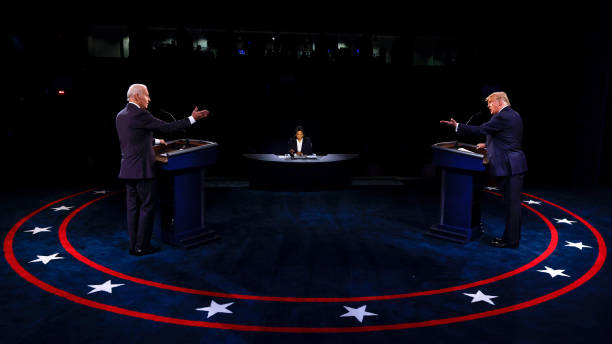
Anyone who watched the debate last Thursday between President Joe Biden and former President Donald Trump surely has a variety of words to describe it.  Mine are sad, pathetic, hopeless and frightening.  And those are the highlight adjectives!

I didn’t see it.  I had to do some writing and other work on my personal computer.  Plus, my genitals needed some extra attention, and I just couldn’t ignore them to watch two cantankerous old men exchange pithy barbs.  One good feature about the debate is that the microphone for whichever of the two candidates not speaking was muted.  I know that was incorporated strictly after the fiasco of the first Trump-Biden debate in 2020 – the one where a frustrated Biden blurted to Trump, “Would you shut up, man!”

If only both men could be muted now, I think we’d all be better off.  Americans – and people across the globe – pretty much know where they stand on particular issues.  Or where they don’t stand.

I recall the questions surrounding the health of Ronald Reagan when he ran for president in 1980; he was 69 at the time, and the voting populace (along with the media) verbalized their concerns about his welfare.  For the most part, seniority is respected and appreciated in certain fields.  Politics isn’t necessarily one of them, but experience does hold a certain value.  Reagan made the most of his age, even joking about it on occasion.  He held the distinction of being the oldest president until Trump.  In November of 2022, Biden crossed a new threshold when he became the nation’s first octogenarian Chief Executive.  And here we are.

I’ve always said the Democratic Party’s biggest mistake in the 2020 election cycle was to let Biden and Bernie Sanders run for president.  After leaving the White House as vice-president in 2017, I feel that Biden should have retired into the realm of a senior statesman; giving speeches, writing books and propagating democracy every reasonable chance he had.  The Democrats began the 2020 campaign with the most diverse collection of candidates, including more women than had ever attempted to run for president at one time and an openly queer man in their ranks.  Then they ended up just like the Republican Party – with two old White men at the top, Biden and Sanders.  Of course, one of those Democratic candidates, Kamala Harris, has become the nation’s first female and non-White vice-president, and another, Pete Buttigieg, has become the first openly queer cabinet official.

Like many people, I’d often mock older individuals in my youth.  Now I’m 60 and I know how that feels.  I don’t consider myself “old” in the traditional sense; my body has definitely aged, but I won’t let my mind collapse into senility.  But even I know this nation is in trouble with the likes of Biden and Trump as the primary presidential candidates.  And yes, it is because of their age.

The U.S. is rapidly approaching the 250th anniversary of its official birth as a nation.  Right now the future just doesn’t look too bright for us.

1 Comment

Filed under Essays

I Miss You, My Friend

As my 60th birthday approached last weekend, I thought of an old friend who had a birthday at the end of October.  We haven’t actually spoken in years and last communicated via Facebook.  But I don’t have any contact with him now.

Because of Donald Trump.

Max* was an interesting character.  Born into a large familiar from Eastern Europe, he lived in a number of different places because of his father’s career.  All of that afforded him not just an extraordinary education but an incredible life experience.  He became well-versed in the arts and humanities; a polyglot who could communicate with most anyone.

I admired him on many levels; even envied him.  Just listening to him made me feel smarter.  We discussed a number of issues; seeming to solve all the world’s most vexing problems.

Then Donald Trump entered the fray of politics, and I watched almost helplessly as Max descended into the madness of right-wing extremism.  I tried to remain reasonable; thinking it was something of a phase.  Max couldn’t be this delusional, I told myself; he’s too much of an intellect to be persuaded by this charlatan of a man.

But my thoughts – nearly prayer-like after a while – had no effect.  Max remained a devout Trumpist.  I realized he’d been seduced when he posted a portrait of Francisco Franco, the long-serving Spanish dictator, to his Facebook page.  I’ve often referred to Franco as Western Europe’s last totalitarian ruler; an autocrat who suppressed political dissent and an open media.  Trump reminded me of him – someone who despised his critics and launched vocal tirades against them to state his point.  His contemporaries included Brazil’s Jair Bolsarano and Hungary’s Viktor Orbán.  When Max posted that photo of Franco, I was appalled.  I guess I shouldn’t have been so upset, but it genuinely shocked me.  I quickly pointed out Franco’s dismal record on basic democratic principles and human rights, but a written response on a social media site is almost pointless.  Max had already fallen for the Trump rhetoric and seemed to concur with some of it.  When Trump referred to some African nations as “shithole countries”, for example, Max noted he’d lived in Africa briefly during his youth and could identify with Trump’s description of the region.

“Really, bro?” I replied at one point.

But again – pointless.

How do you persuade someone who’s consumed that proverbial Kool-Aid?  Long answer: education and persuasion.  Short answer: you don’t.  As smart as Max is, I honestly didn’t know what overture would be appropriate.  So…I just let it all go.

I genuinely hate that sensation – ending a friendship because of political opinions.  I’d never had that experience before.  Friends have died or simply faded into their lives, but I’ve never had one dissipate because of politics.

This past Saturday, November 4, another close friend, Preston*, treated me to lunch for my birthday.  As with Max, he and I often engaged in cerebral conversations, which I absolutely love.  I’ve known Preston much longer than I knew Max.  Our exchange migrated to politics and the 2020 election.  Preston is a Trump voter, but he doesn’t appear to be a devout loyalist.  Still, he feels fraud prevailed in the last presidential election.  I feel it prevailed in the 2016 election and highlighted that Trump didn’t win the popular vote.

“I have to respectfully disagree,” he said.

I looked at him and mentioned by former friend Max and what happened with us.  “Dude!” I said.  “I’ve already lost one friend because of political differences!  I’ll be damned if lose another!  Especially you!”

I told Preston I love and respect him too much to let politics drive a wedge between us.  So, we dropped the matter and moved on to other things.

I miss you, my friend Max.  I genuinely miss you and your views on the world and hearing you talk about your life experiences.  But you made the choice to become blinded by the rantings of a pathological madman; you caused this division between us.  I’m certain you’re not exactly upset or mortified – and quite frankly neither am I.

I just hate to see a good friend fade away in the morass of politics.

*Name changed

4 Comments

Filed under Essays

Sad

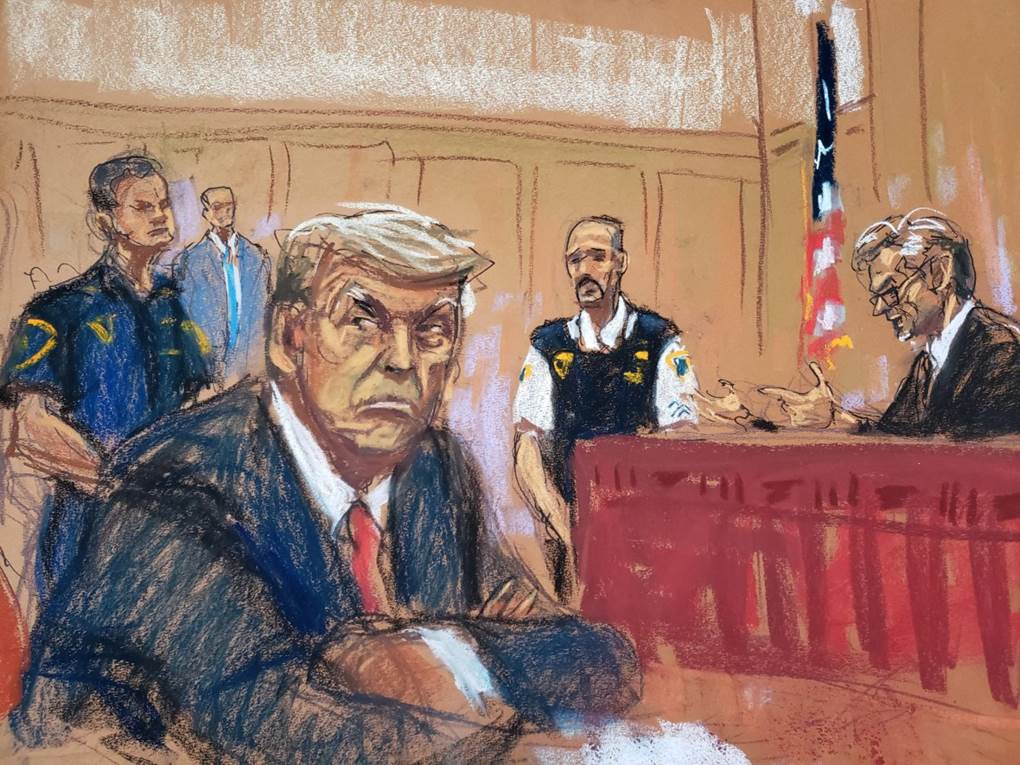
On April 4 New York officials arrested former President Donald Trump for paying a former adult film star $130,000 to keep quiet about an alleged tryst they had in 2006.  It’s actually more complicated than that.  And, in keeping with the appetite Americans have for the salacious antics of public personalities, there are more players in this game than a womanizing, tax-cheating businessman and a glamorized prostitute.

Politicians and porn stars seem to have a lot in common: they have no conscious and don’t care who they screw, as long as they get some kind of money and notoriety in the end.  And, for the record, I actually think more highly of porn stars.  I don’t know what prompted the “actress” known as Stormy Daniels (Stephanie Clifford) to find anything remotely attractive about Donald Trump.  She claims he was just exceptionally charming, which I think a lot of women say when they engage in such behavior.  Monica Lewinsky said the same about Bill Clinton.  Who really know and who really cares?

Trump’s real transgression involving Daniels – the one that landed him in a Manhattan courtroom – isn’t his sexual indiscretion or even the money he supposedly paid out to buy her silence.  It’s that he allegedly processed the payment through his campaign finances, as he desperately sought the Republican Party’s nomination for president in early 2016.  That’s illegal, if it did occur.  According to one of his closest confidants at the time, Michael Cohen, it did.  We know so much about the fiasco because Cohen was a Trump attorney who served as vice-president of the Trump organization.  In 2018 Cohen was found guilty of a number of monetary crimes, including campaign finance violations.  Afterwards he turned on Trump and declared that his former boss, indeed, paid Daniels to remain quiet.  Then news arose that Trump had an affair with another woman, Karen McDougal, an actress and former Playboy model – and that the real estate magnate had paid her to stay silent as well.  But wait!  It gets worst!  Yet another rumor has emerged that Trump had an affair with another, unnamed woman and that she bore a child as a result of their liaison.  This latter story comes from an admittedly dubious source – a doorman at Trump Tower in New York.

Writers for daytime dramas have composed shit like this for decades, and their viewers recognize the absurdity of it all, but still love to watch the shenanigans executed on screen.  When it happens in real life, though, observers react with awe.

Most of us, however, don’t react with shock or surprise – at least not people my age.  I’ve seen this type of histrionic morass play out in public most of my life.  I’m never really surprised when powerful people get caught up in their own personal machinations.  It’s almost laughable.

But, as I look at this mess involving Donald Trump, another word comes to mind: sad.  Trump is the first former U.S. president to be indicted for criminal behavior.  His supporters are screaming that this is all a liberal plot; quickly forgetting that conservatives tried to impeach Bill Clinton for lying about his own dalliance with a woman a quarter century ago.

Regardless this is all an embarrassment and a disgrace for a nation that has always prided itself on being the leader of the free world; a beacon for democracy.  This pathetic drama continues, but it’s truly disheartening.  The cesspool of American politics seemingly has no bottom.

Image: Jane Rosenberg

1 Comment

Filed under Essays

What He’s Done

SWAT officers take Solomon Peña into custody in Albuquerque, New México. (Photo: Roberto E. Rosales/Albuquerque Journal)

Earlier this week New México police arrested a failed Republican congressional candidate and charged him with hiring some men to shoot up the homes of Democratic opponents. Solomon Peña allegedly was dissatisfied with the results of his race last year and decided to seek revenge in the worst possible way: through violence. Like his idol, former President Donald Trump, Peña is an election denier and claimed fraud in his own run for a seat in the U.S. House of Representatives. He lost to his Democratic opponent by more than 3,600 votes.

In the U.S. many elected officials – mostly Democrat and liberal – have been the targets of political violence over the past 5 or 6 years; which (not surprisingly) coincides with the rise of Trump.  The animosity reached a feverish crescendo on January 6, 2021, when a mob of Trump loyalists stormed the U.S. Capitol Building in a failed attempt to undermine the 2020 presidential election, as well as democracy itself.  I’m still angry at the sight of hundreds storming into the building and even angrier at those who continue to support Trump and dismiss the severity of that day.  Like most Americans, the rampage reminded me of images of developing countries in the throes of political chaos.  While various groups in the U.S. have threatened to inflict such carnage over previous decades, no one really thought it would happen.

We have Donald Trump to thank for that.

Threatening election officials and taking out opponents with bullets is what used to happen in places like Colombia and the Philippines.  Even as recently as 1995, Israel experienced political violence when Prime Minister Yitzhak Rabin was assassinated.  The act stunned the international community and roiled the only truly democratic state in the Middle East.

Americans have always had a love-hate relationship with their elected officials, whether or not they actually voted for them, or even voted at all.  But I’ve always believed the Watergate fiasco was a major turning point in our nation’s disillusionment with politicians overall.  That a sitting president would seek to gain an advantage over his adversaries by concocting a burglary scheme shocked most people.  They always sort of knew politicians weren’t necessarily the most moral of individuals, but an actual break-in?

A greater sense of partisanship began to take hold in the ensuing decade and became more pronounced in the 1990s, as Republicans did everything they could – and failed – to undermine Bill Clinton’s agenda.  The scandalous (and genuinely corrupt) 2000 presidential election widened the chasm of discontent.  The GOP’s blatant disrespect for President Barack Obama was even more egregious and appalling – but not really unexpected from conservatives, as far as I was concerned.

Then came Donald Trump, and the haters suddenly had a license to lash out with unabashed vigor.  All the social upheavals of the 1960s were the result of tensions that had been brewing for decades; people had grown tired of just waiting for change and hoping for the best.  In a similar, yet twisted manner, the right-wing extremism that exploded under Trump also had been fomenting in the souls of angry (mostly White male) conservatives for years; that is, since…well, since the 1960s.  Ronald Reagan once said he wanted to return America to the time before the 60s screwed up everything.  As a relic of his past, he naturally didn’t understand we can’t go backwards in time.  That’s science fiction.  But that’s why I call most conservatives preservatives – they want to preserve the old ways of life; ways that were good for them, of course, but not everyone else.

Trump revised that futile dream with his “Make America Great Again” mantra; claiming he wanted to “take America back”.  Back to where, those of us with more than half a brain asked, and how far?  Back to the Civil War?  Back to the Gilded Age?

Peña is just one cog in the wheel of America’s political vitriol.  Think of this for a few moments.  Acting like a drug cartel leader, Peña (who already had a felony criminal record) hired some thugs to fire gun shots into the homes of people he thought had snatched victory from him. At least one of those bullets ended up in a child’s bedroom.  Just as with drug cartels, Peña and his henchmen cared nothing about their intended victims and any collateral damage – i.e., innocent bystanders.  Drug lords only care about their profits; everyone and everything else be damned.  Peña only cared about exacting personal revenge over what he perceived to be a corrupt system.  We’re not supposed to do that in civilized societies.

But that is Trump’s legacy.  That is what he’s done to the overall concept of democracy.

4 Comments

Filed under Essays