Tag Archives: U.S. Supreme Court

Right to Control

Many of the cases that arrive before the U.S. Supreme Court begin with individuals either trying right a wrong or make their own lives better.  They rarely expect to launch a national movement.  That was pretty much the case when Norma McCorvey found herself pregnant with her third child in 1969.  An unemployed carnival worker living outside Dallas at the time, McCorvey apparently had led a rough life and had given up her first two children for adoption.  She didn’t need – and couldn’t afford – to bring another child into the world.  However, the state of Texas didn’t allow for abortions except to save the life of the mother.  Even rape and incest victims couldn’t end their unwanted pregnancies.  Like so many women in her situation, McCorvey was too poor to travel to another state where abortions were safe and legal.  She even tried to obtain an illegal abortion, but again the cost was prohibitive.  She sought legal help and ended up under the guidance of attorneys Linda Coffee and Sarah Weddington.

In 1970, after McCorvey had given birth and given up the baby, Coffee and Weddington filed paper work challenging the Texas law and bestowed the name “Jane Roe” upon their client.  They targeted then-Dallas County District Attorney Henry Wade.  Wade had entered the national spotlight nearly a decade earlier when he prosecuted Jack Ruby for killing Lee Harvey Oswald who had been accused of assassinating President John F. Kennedy.  (Wade would later come to light as a ruthless prosecutor who engaged in unscrupulous legal maneuvers to ensure criminal prosecutions, no matter the cost and despite evidence to the contrary.)

After McCorvey’s suit was filed, a Texas district court ruled the state’s abortion ban violated the constitutional right to privacy under the 14th Amendment.  Wade persisted, however, and vowed to prosecute any doctor who performed what he deemed unnecessary abortions in the state.  The case eventually reached the U.S. Supreme Court and, in a 7-2 ruling on January 22, 1973, abortion was fully legalized in the United States.

That was pretty much the end of the issue until the 1980s, when right-wing religious leaders began stoking the fires of anti-abortion rhetoric.  It accompanied the presidency of Ronald Reagan who openly stated he wished for a return to an America before the 1960s.  That should say enough about his bigoted state of mind, but it aligned with a growing hostility towards progressive ideology and civil rights legislation.

Earlier this week the unexpected news arrived that the Supreme Court may overturn Roe vs. Wade by the end of its current term in June.  We wouldn’t know anything about this if it wasn’t for the leak of a draft opinion by Associate Justice Samuel Alito who declares the Roe decision “egregiously wrong” in terms of constitutional practicality.  Chief Justice John Roberts has confirmed the veracity of the statement, but has joined many others in condemning the leak.

For many of us the leak isn’t the main concern.  It’s what it says.  There is now a very real possibility that nearly a half century of protection for that part of women’s overall health care could end because a handful of conservative extremists on the High Court want to inject their personal views into it.

For their like-minded ilk in the American public, the overturning of Roe marks the end of a long-fought battle in their alleged “pro-life” agenda; a perverted early Mother’s Day gift.  It doesn’t matter that a majority of Americans don’t want to see a complete ban on abortion.  They’ve been working for this moment over the past four decades.

For liberals, though, this is a much more dire situation.  While the current case that brought Roe back into the forefront is limited to just abortion, progressives see other seminal SCOTUS decisions in the judicial crosshairs.  It really isn’t extraordinary to see such cases as Obergefell vs. Hodges, which legalized same-sex marriage, reversed.  Along with abortion, queer rights have been a target of far-right conservatives.  But, if the Court sees fit to outlaw abortion at the national level (and leave it up to individual states), it could also reasonably overturn Griswold vs. Connecticut, which ruled that states could not deny birth control to married couples.  Before that decision, married residents of Connecticut (and a few other states) couldn’t legally purchase birth control.

To some conservatives, abortion has become another form of birth control, which is not what contemporary feminists who jump-started the modern women’s movement desired.  The latter group had always declared that abortion should be a woman’s last choice.  But, with the overall concept of birth control in mind, is it possible a woman who has a tubal ligation could be criminally prosecuted?  For that matter, could men who have vasectomies be subject to criminal jurisprudence?  How about condoms or IUDs?  Could those be outlawed?

Why stop with Roe?  Aside from Obergefell and Griswold, could the Court target Loving vs. Virginia, the case that struck laws against interracial marriage?  How about Brown vs. Topeka Board of Education, which outlaws racial desegregation in schools?

Remember that, when Antonin Scalia died in 2016, Republicans in the Senate displayed their usual contempt and disdain for President Obama by refusing to hold hearings on his nominee to the Court, until after Donald Trump got into office.  They stated that, since Scalia’s death occurred during an election year, the incoming president should select his replacement.  Yet, upon the death of Ruth Bader Ginsburg in 2020, they rammed through the nomination of Amy Coney Barrett – a character straight out of “The Handmaid’s Tale”.

That social and religious conservatives want to dictate what women can and cannot do with their own bodies conflicts with the long-held American vision of individual freedom.  Many of these people screamed at the thought mandatory mask-wearing or forced vaccinations at the start of the COVID-19 pandemic; crying they should have autonomy over their own bodies.  Really?  What an original concept.

Conservatives herald the beauty of life, but a life costs hard dollars in the very real world of child-rearing.  Since 2019, for example, the state of Texas has experienced a 1,100% rise in children placed into foster care.  Love and compassion alone won’t pay those bills, no matter how much prayer one puts forth.  Former New Jersey Gov. Chris Christie once emphasized that pro-life means the entire life cycle – not just up to the moment the fetus is born.

The reasons why an individual woman wants to end a pregnancy are myriad, but it is no one else’s business.  As painful a decision as it may be, I’d rather see a woman end a pregnancy she doesn’t want than give birth to a child she doesn’t want.  Children who come into the world unwanted are often unloved.  That’s an awful fate for someone.

Regardless, pregnancy and birth are individual choices.  No one – not the Supreme Court and not a politician – has the right to interfere with that.

Leave a comment

Filed under News

Most Hypocritical Quote of the Week – April 16, 2022

“I’d look them in the eye and tell them, ‘I love you.’”

Former Vice President Mike Pence, in a speech at the University of Virginia

During a Q&A session after the speech, a student asked, “I’m just wondering if one of your children came out to you as gay, how would you respond?  What would you tell them?”

After the audience applauded his response, Pence added, “Let me say on this issue … if we got to know each other, you’d know the Pences love everybody. We treat everybody the way we want to be treated.

However, he went on to say, “But on this issue, and it’s frankly something that when the Obergefell decision was made which legalized same-sex marriage in America, the Supreme Court, Justice [Anthony] Kennedy wrote at the end, that this decision will likely create an intersection and tension between people in same-sex relationships and people in the exercise of their religious liberty.”

Leave a comment

Filed under News

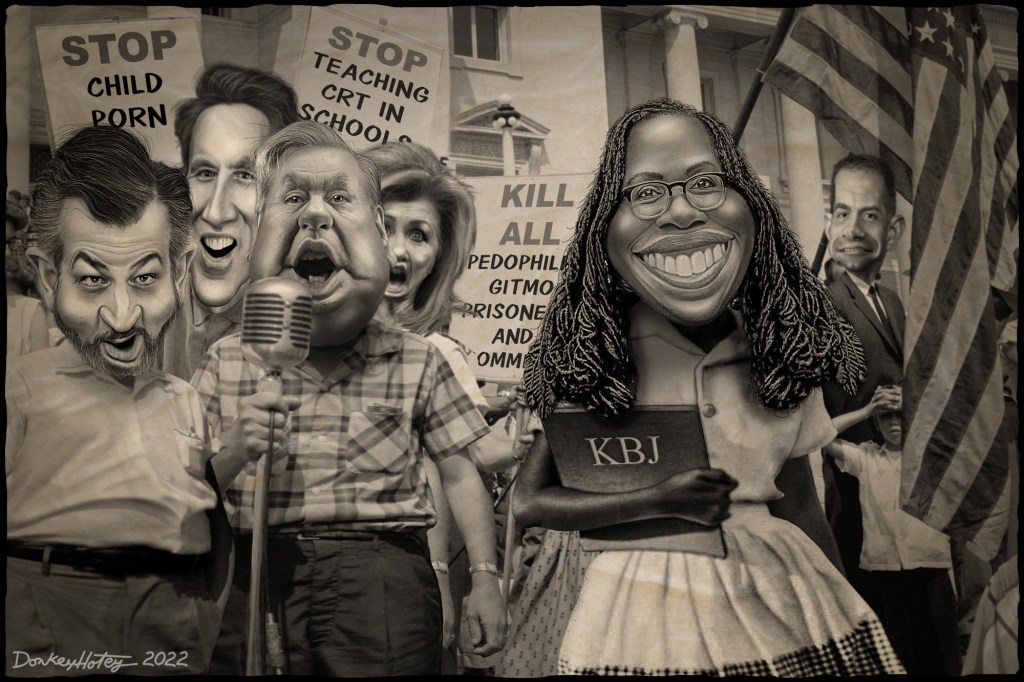
Political Cartoon of the Week – April 9, 2022

DonkeyHotey

Leave a comment

Filed under News

Worst Quote of the Week – April 9, 2022

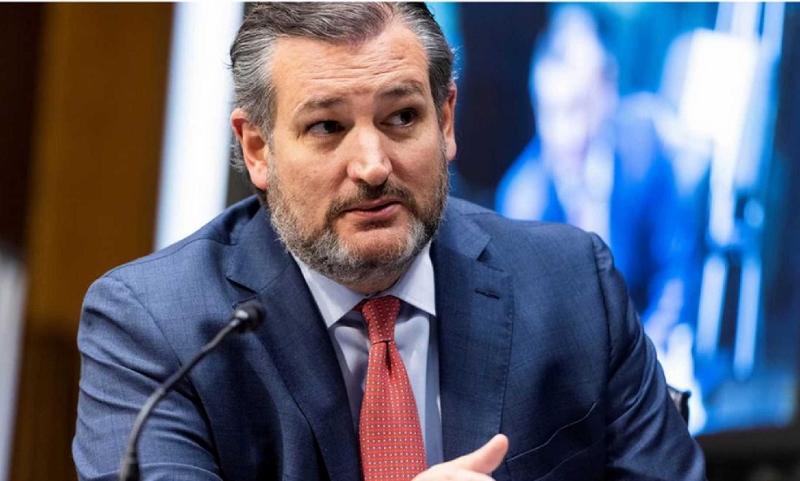
“Public defenders often have a natural inclination in the direction of the criminal.  Their heart is with criminal defendants.”

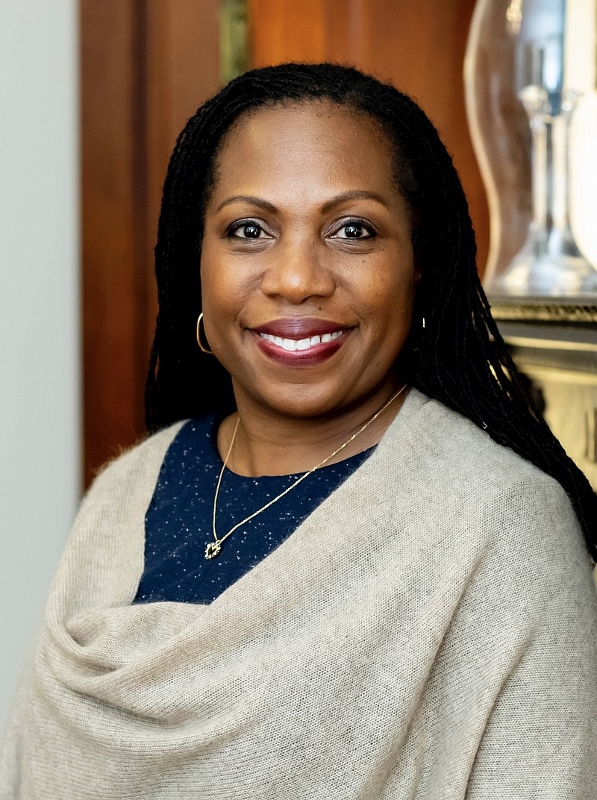
Sen. Ted Cruz, on why he opposed the nomination of Judge Ketanji Brown Jackson to the U.S. Supreme Court

Previously, Jackson had been a public defender.  Despite right-wing opposition, Jackson was confirmed to the High Court by the U.S. Senate.

Leave a comment

Filed under News

Political Cartoon of the Week – April 2, 2022

DonkeyHotey

Leave a comment

Filed under News

Worst Quotes of the Week – March 26, 2022

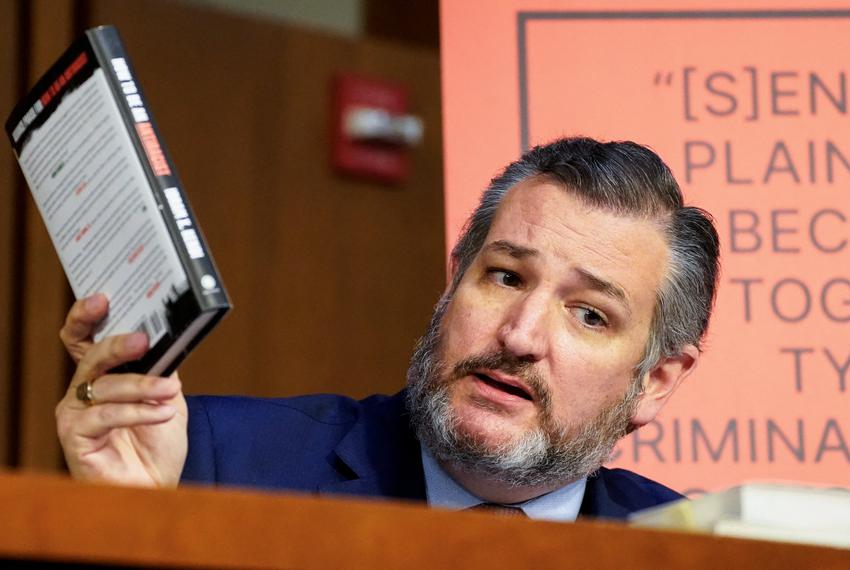
“Do you agree…that babies are racist?”

Sen. Ted Cruz, to Judge Ketanji Brown Jackson, repeatedly asking about her views on racism, children’s books and critical race theory (CRT)

He specifically asked if she agrees with a children’s book called “Anti-Racist Baby,” by Ibram X. Kendi, which is in the library at Georgetown Day School, a private school in Washington, D.C., at which Jackson was a board member.  Cruz held up a copy of the book and described it as one of the “most stunning” taught at the school.  He claimed it teaches children that babies are taught to be racist, not born racist, and that they are encouraged to admit if they have been racist and to talk about it.

In response, Jackson noted, “Georgetown Day School, just like the religious school that Justice [Amy Coney] Barrett was on the board of, is a private school.”

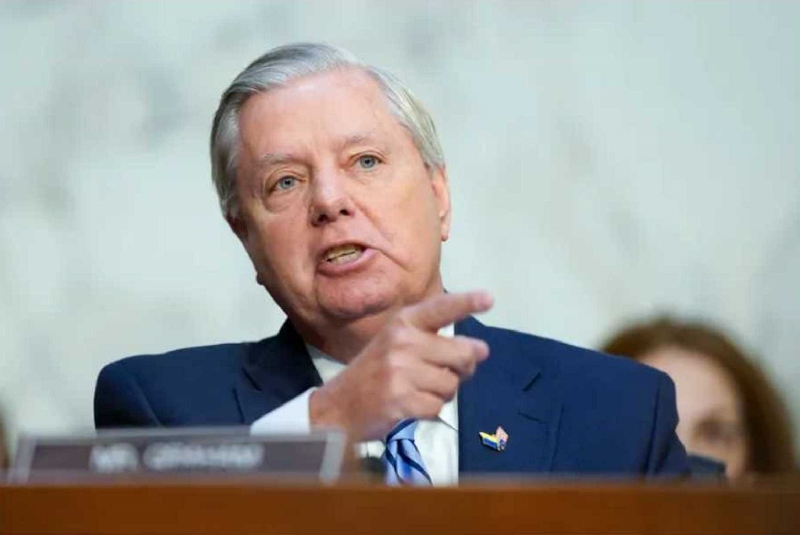
“On a scale of 1 to 10, how faithful would you say you are?  Do you attend church regularly?”

Sen. Lindsey Graham, inquiring about Judge Ketanji Brown Jackson’s faith and how important it was to her

Jackson replied that, although faith played a big role in her life, she was reluctant to talk about it in detail because “I want the public to have confidence in my ability to separate out my personal views.”  Jackson noted she is “Protestant, non-denominational”.

Graham conceded that judges could separate their religious beliefs with the way they rule.  It must be highlighted, though, that Graham voted to confirm Jackson three times to other posts: her current seat on the U.S. Court of Appeals for the District of Columbia Circuit, a court considered second only to the U.S. Supreme Court; her previous seat on the U.S. District Court for the District of Columbia; and her previous seat on the U.S. Sentencing Commission.

Leave a comment

Filed under News

Best Quotes of the Week – March 26, 2022

“You are worthy. You are a great American. I know what it’s taken for you to sit in that seat.”

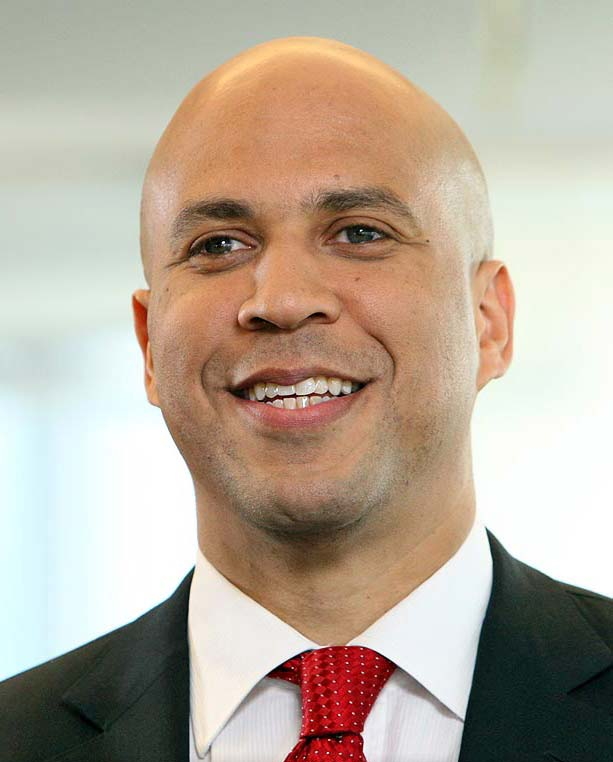
Sen. Cory Booker, during Judge Ketanji Brown Jackson’s Senate confirmation hearing

Booker chose to praise Jackson instead of asking her questions.  Booker also railed against his Republican colleagues who highlighted specific cases from Jackson’s past. The senator referenced abolitionist Harriet Tubman and Constance Baker Motley, the first Black woman to serve as a federal judge in 1966, as role models in his life and who paved the way for Jackson’s historic path.

“That is the nature of a right.  When there is a right, it means that there are limitations on regulation.”

Judge Ketanji Brown Jackson, in response to Sen. John Cornyn’s question whether a 2015 Supreme Court ruling establishing a right to same-sex marriage conflicts with the beliefs of some religions

Cornyn was referring to the High Court’s ruling in Obergefell v. Hodges, which compels states to recognize same-gender marriage under the 14th Amendment to the U.S. Constitution.

“At some point, you have to follow the rules!”

Sen. Dick Durbin, to Sen. Ted Cruz, as the latter went beyond his time limit during the Jackson confirmation hearing

Frustrated with Durbin’s repeated gavel-banging, Cruz shouted, “You can bang it as loud as you want!”

“It shows considerable effort when somebody goes to that much trouble to create that many organizations to hide how much money they’ve spent to control the nominations process to the court.”

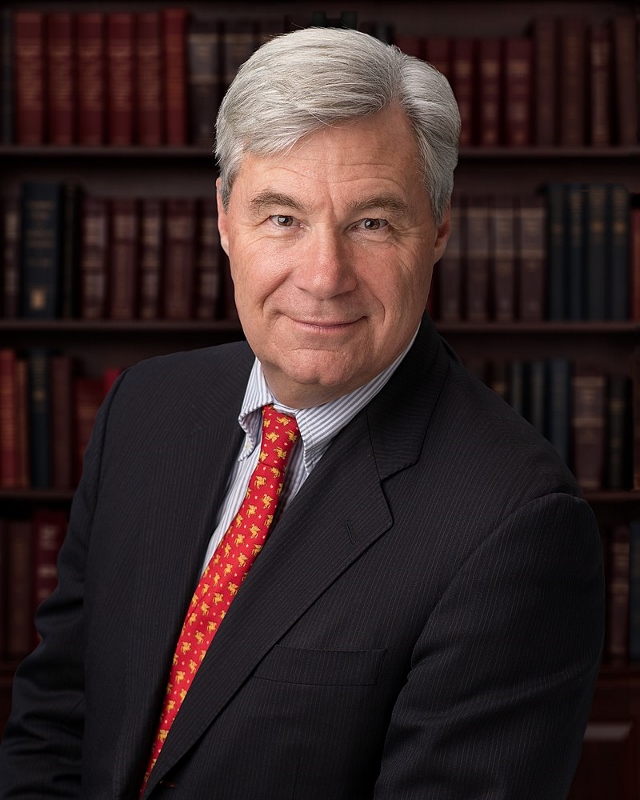
Sen. Sheldon Whitehouse, comparing the efforts of some conservative groups to the Republican Party’s recent attacks on progressive groups, such as Demand Justice, as well as Judge Ketanji Brown Jackson

Demand Justice supports Jackson’s nomination to the U.S. Supreme Court.  Whitehouse also specifically named The Federalist Society and Judicial Crisis Network among the conservative groups he claims encompass a vast network of secretive “dark money” groups that have played a major covert role in seating five of the Supreme Court’s current justices.

All told, he said, these groups have spent at least $400 million to help select and confirm Justices John Roberts, Samuel Alito, Neil Gorsuch, Brett Kavanaugh and Amy Coney Barrett.

Leave a comment

Filed under News

Video of the Week – February 26, 2022

Ketanji Brown Jackson remarks on her nomination to the U.S. Supreme Court.

Leave a comment

Filed under News

Book Less

“I shall not today attempt further to define the kinds of material I understand to be embraced within that shorthand description [‘hard-core pornography’], and perhaps I could never succeed in intelligibly doing so. But I know it when I see it, and the motion picture involved in this case is not that.”

U.S. Supreme Court Justice Potter Stewart, opinion in Jacobellis v. Ohio, 1964

You know the old puzzle: if a tree falls in the forest, and no one is around, does it make a sound?  Using that logic, if a book is published, and no one finds its content offensive, is it obscene?

Obscenity seems to be subjective.  Right-wing extremists certainly feel that way, as they have (once again) assumed the role of moral overseer and decided they have the authority to determine what books are and are not appropriate for others to read.  To we writers and other artists, the term censorship is like holy water to a devil worshiper: it’s terrifying!  Whenever we learn that some people are challenging the presence of certain materials in a public venue, such as a library, we bristle.  But, instead of running and hiding, we’ve been known to stand and fight.

In the latest battle, the school board in McMinn County, Tennessee decided to ban the 1986 Art Spiegelman book “Maus: A Survivor’s Tale” from its library.  The illustrated tome is Spiegelman’s recounting of his parents’ experiences as prisoners of the Auschwitz Nazi death camp.  It won Spiegelman a Pulitzer Prize and, in 1992, the Museum of Modern Art mounted an exhibition displaying his original panels for the story“Maus” had been party of the school district’s lessons on the Nazi Holocaust.  The McMinn school board’s complaints about “Maus” are the usual gripes: language and nudity (animal nudity in this case).

It’s worth noting McMinn County, Tennessee is near the location of the infamous Scopes Monkey Trial, where the concept of evolution became intensely controversial.  In 1925 the state of Tennessee passed the Butler Act, a bill banning the teaching of evolution in its schools.  Evolution, declared legislators, contradicted the Christian Bible as the single standard of truth in public arenas, such as schools.  The move astonished – and frightened – many across the country.

The American Civil Liberties Union (ACLU) responded immediately by vowing to support any educator in the U.S. who dared to teach evolution.  A popular young high school teacher in – of all places, Tennessee – named John Scopes offered to be the defendant, if the state decided to make good on its promise.  They did.  On May 7, 1925, Tennessee authorities arrested Scopes and charged him with violating the Butler Act.

The ensuing legal battle made headlines across the country and the world.  The judge in the case showed his deference to the state by opening each session with a prayer and refusing to let Scopes’ defense call any scientific witnesses.  Ultimately Scopes was found guilty and fined $100.  The ACLU hoped the case would make its way to the U.S. Supreme Court, but the Tennessee State Supreme Court reversed the decision on a technicality.  Still, the repercussions were widespread.  The Butler Act was never enforced in Tennessee again, and similar measures in other parts of the U.S. met with failure.  But progressives realized they could never relax in the face of extremist ideology.

So, here we are in the third decade of the 21st century, where the U.S. has come out of two brutal Middle East wars and is now facing an onslaught of urban violence.  We experienced 36 mass shootings in the month of January, resulting in 101 injuries and 42 deaths.  That’s just in the month of January 2022 alone!

But, as usual, social and religious conservatives are more upset with books.  In October of 2021, Texas State Representative Matt Krause asked the Texas Education Agency for information about 850 books in school libraries.  He wanted to know how many copies of these books were in each library.  It didn’t surprise observers that the majority of the books are by women, non-Whites and/or LGBT authors.  The imperial Krause is concerned that taxpayers are funding the presence of these books in school libraries.  Yet, my tax dollars are wasted if those books are removed because he and other like-minded folks find them unacceptable.

Some disputes have become hostile.  Police in Leander, Texas got involved in a controversy over one book, “Lawn Boy” in 2021.  Author Jonathan Evison says he received death threats because of it.  Texas – where any restrictions on guns is considered anathema – isn’t the only state under siege by moral zealots.  Similar attempts at censorship and assaults on free speech have played out in Missouri, Pennsylvania and Virginia.

“If I had a statement, it would be ‘Read the book or sit down,’” says Evison. “I feel like these people are frightened because they’re losing the culture wars.”

Yeah!  Sit down and read – more than the Bible or the TV guide.

I will concede parents have the right to be concerned by what their children view and read.  But I feel banning books from a school library is just one step away from banning books in any library or elsewhere.  It’s truly not an unrealistic stretch to envision such a scenario.  The world has witnessed such activities in totalitarian societies, and the results are often sanguineous.

Once again, though, what is obscene?

The 1920s was a decade of both progress and excess, particularly for the growing film industry.  Although silent and in black-and-white, movies had begun to show a variety of mature content – mainly heavy alcohol consumption and sexual behavior.  Concern over the material became so intense that, in 1934, Will H. Hays – then head of the Motion Picture Association of America (MPAA) – introduced his personally developed “Hays Code”, a standard production guide for what is and what is not acceptable content for motion pictures.  The code remained until 1968, when the MPAA introduced its film rating system: G (General Audiences), PG (Parental Guidance recommended), R (Restricted) and X (mainly for sex, but also for violence).

By the 1960s, films were presenting increasingly controversial subject matter – and headaches for the MPAA.  The 1966 film “Who’s Afraid of Virginia Woolf?” shocked audiences with its blatant use of foul language and served as one catalyst for the rating system.  The 1968 film “Vixen” became the first movie branded with an X rating.  The following year John Schlesinger released “Midnight Cowboy” with Jon Voight in the titular role.  It, too, was branded with an X rating.  Despite that, it went on to win the 1969 Academy Award for Best Picture – the first and (to date) the only X-rated film to win such an honor.  Viewing both “Vixen” and “Midnight Cowboy” now might make somebody wonder what the fuss was all about.

The film rating system took an odd turn in 1983 when a remake of the classic film “Scarface” came out.  The MPAA initially granted the movie an X rating because of its excessive violence.  Director Brian DePalma reluctantly trimmed some of the footage, and the film was rebranded with an R.  If it had gone out with the X label, “Scarface” would have been the first movie released as such because of violence.

Another X controversy arose six years later with “The Cook, the Thief, His Wife & Her Lover”.  The film’s gratuitous sexual content garnered an X rating from the MPAA.  As with DePalma and “Scarface”, director Peter Greenaway reluctantly agreed to edit out a small portion of the sexual matter – small as in some 5 minutes – and the film was upgraded to R.  The fiasco upset many in the entertainment community – not just in the U.S. but across the globe.  If the difference between an R and an X rating is a paltry 5 minutes, then how valid is a film rating system?

What is obscene?

In the 1950s, the Hays Code was applied to a growing new medium: television.  In motion pictures, the code, for example, dictated that people of the opposite sex could not be filmed in bed together, unless one of the duo (usually the man) had at least one foot on the floor.  In TV, however, even married couples couldn’t be shown in the same bed.  The rule went into effect after a 1947 episode of “Mary Kay and Johnny” showed the title characters hopping into the same bed.  But that taboo dissolved completely in 1969 with “The Brady Bunch”.  Bathrooms also were generally off-limits in television.  One exceptional first was a 1957 episode of “Leave It to Beaver”, when the boys tried to hide a pet alligator in the tank of a toilet.  An early episode of “All in the Family” produced another first: the sound of a toilet being flushed.

As mundane as all of these events are today, they each sparked a ruckus at the time.

Personally, I find excessive violence offensive.  I never laughed when I saw men and boys get struck in the groin in slap-stick comedy scenes in films and on television.  I grimace at bloody acts in similar venues, while others react as if nothing more than a sharp wind blew past them.  Conversely, many of these same individuals are horrified by the sight of blatant nudity, especially if the nudeness is that of a male.  It’s difficult to imagine now, but even as recently as the late 1960s words like pregnant and diarrhea were forbidden on television.

The word “bitch” is used frequently on TV today.  But, in 1983, a musical group called Laid Back released a song entitled “White Horse”, which features the line: ‘If you wanna be rich, you got to be a bitch.’  MTV played the video, but bleeped out the term “bitch”.  In 1994, Tom Petty released “You Don’t Know How It Feels”, which contains the line: ‘But let me get to the point, let’s roll another joint.’  Music video networks deemed the ‘roll another joint’ verbiage unacceptable and bleeped it out whenever they played the video.

In 1989, rap group 2 Live Crew released two versions of their song “Me So Horny”: what they dubbed the G-rated version and the R-rated version.  Radio stations played the G-rated version frequently, but the R-rated version generated the most strife.  At the start of 1990 a federal judge in the state of Florida considered the group and their music obscene and in violation of community standards – whatever that’s supposed to mean – and forbid local radio stations from playing any of their music.  Consequently, 2 Live Crew’s reputation and music sales skyrocketed.

I remember the controversy that erupted with the video to Madonna’s 1990 song “Justify My Love”.  Once again, music video networks assumed the role of moral protectorate and either refused to play the video or played it late at night, when children and other fragile souls – such as moral crusaders – were asleep.  Undeterred by the skirmish, Madonna packaged the video and sold it independently.

In 1965, The Rolling Stones made their debut appearance on “The Ed Sullivan Show”, during which they performed a sanitized version of “Let’s Spend the Night Together”.  Producers convinced the group to sing ‘Let’s spend some time together’ instead.  Lead singer Mick Jagger leered at the camera – in the way only Mick Jagger can – when he spat out the words.

Two years later The Doors were presented with a similar option when they made their appearance on the show and performed their already popular and now seminal hit “Light My Fire”.  Sullivan’s son-in-law, Robert Precht, suggested they alter the line ‘Girl, we couldn’t get much higher’ to ‘Girl, we couldn’t get much better.  The group refused and performed the song as it was.  Their act of defiance resulted in their permanent ban from the show – a move I know upset them to no end.

I’ve noticed social conservatives haven’t raised concerns about inappropriate material in books like “The Anarchist Cookbook” and “The Turner Diaries”.  The latter served as a blueprint for Oklahoma City bomber (domestic terrorist) Timothy McVeigh.  If conservatives really want to ban books with sexual references and violence, they should start with the Christian Bible, which is rife with salacious and unsavory behavior.

Meanwhile, “Maus” has experienced a surge in sales as a result of the squabble surrounding it.  If there’s one way to ensure something’s popularity or success, it’s to try to ban it.  In other words, censorship always backfires.

Yet, censorship will always remain a threat to freedom of speech, expression and the press.  The war will never be won – by either side.  But those of us on the side of true freedom can win individual battles by standing up to self-righteous demagogues.

2 Comments

Filed under Essays

Best Quotes of the Week – January 22, 2022

“The best thing to do when faced with voter suppression – and my friends, this is what voter suppression looks like – the best thing to defeat it is to go vote. The best thing to do is fight back.”

Dana DeBeauvoir, Travis County, Texas District Clerk, offering advice to voters

“Donald Trump, Donald Trump, Jr., and Ivanka Trump have all been closely involved in the transactions in question, so we won’t tolerate their attempts to evade testifying in this investigation.”

Letitia James, New York State Attorney General, in a statement released January 18 in which she alleges former President Donald Trump and his family inflated the value of his properties and misstated his personal worth in representations to lenders, insurance brokers and other players in his real estate empire

“History will not remember them kindly.”

Martin Luther King III, the son of the late civil rights leader, comparing Sens. Kyrsten Sinema and Joe Manchin to the White moderates his father wrote about during the civil rights battles of the 1950s and 1960s – who declared support for the goals of Black voting rights but not the direct actions or demonstrations that ultimately led to passage of landmark legislation

“COVID is real; COVID is a threat. But even more serious than COVID, as real and scary as it is, is to see thousands and thousands of thousands of voters not being able to vote, and it was on our watch. We refuse to stop. We refuse to turn around.”

Rev. Adolphus Lacey, a pastor in New York’s Brooklyn borough, announcing ongoing voter registration efforts despite the ongoing coronavirus pandemic

“This case is a disaster for the rule of law and a grave disservice to women in Texas, who have a right to control their own bodies.  I will not stand by silently as a State continues to nullify this constitutional guarantee.  I dissent.”

Sonia Sotomayor, Associate Supreme Court Justice, condemning severe abortion restrictions established by the state of Texas

5 Comments

Filed under News