
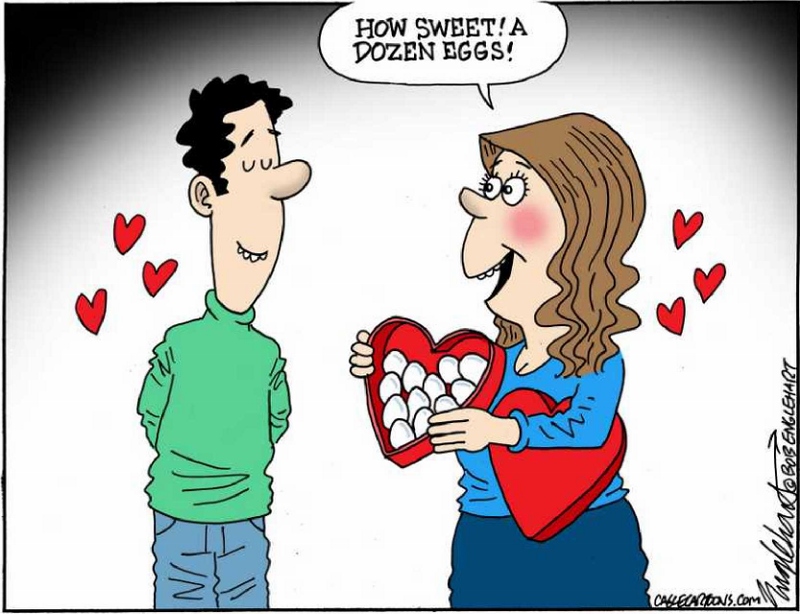
Anyone who has kept up with the egg crisis here in the U.S. knows this could be the perfect Valentine’s Day gift. Remember – it’s always the thought that counts!
Image: Bob Englehart
Anyone who has kept up with the egg crisis here in the U.S. knows this could be the perfect Valentine’s Day gift. Remember – it’s always the thought that counts!
Image: Bob Englehart
Filed under Art Working

Robert in 1997
My father planted pink spider lilies decades ago in our front yard, but at some point years later, he decided to dig them up. Shortly before his oldest sister, Amparo, died in February 1998, he was surprised to see several of those plants had re-surfaced. Over the next several years we both noticed that a number of those pink spider lilies would inexplicably pop up in various spots across the front yard. And then someone we knew – a relative, a friend, a neighbor – would die soon afterwards. That was an omen, he told me – someone we knew was going to die. Those lilies sprung up across the front yard shortly before my father’s death in June of 2016 and again before my mother’s death four years later. They even arose before my dog Wolfgang died in October of 2016. They came up again in early 2022 just weeks before my friend, Paul, died and again the following year, just before another friend, David, died unexpectedly.
A few weeks ago I spotted a few of those blooms near the front door. And now, for the third time in as many years, I’ve lost a close friend. Robert Souza died early Wednesday morning, the 16th. He turned 62 last month. A Massachusetts native, he’d moved to Texas in 1983 to attend some kind of religious school. That didn’t seem to work out, but he always retained some degree of spiritual faith. Oddly, despite living in Texas for so long, he still had that uniquely Bostonian accent. We met through mutual friends in February 1994 and found we had a few things in common: muscle cars, rock music and animals.
Robert had been through a lot personally, including some serious health problems, and even an attempted carjacking/robbery in 1997 where he took six bullets. I wrote about that in 2013. Despite everything, he always managed to get through it. This latest bout with severe pneumonia, however, proved insurmountable.
I’m afraid Robert’s death will mark the end for his mother – a retired nurse in her 80s who still lives in Massachusetts. She lost her young son, George, to ALS five years ago. Robert returned to Massachusetts for the funeral and stayed longer with his mother. Knowing all about his health concerns, she just wanted him to be with her for a little while. Now this.
After my friend David died in 2023, Robert and I discussed how we had reached the point in our lives where we lose people we know and love. I often joked that he was too mean to die; that he needed to soften up a little before God accepts him into the Kingdom. I guess he softened up without me realizing it!
My friend Paul who died of liver cancer in 2022 had told me years earlier of strange things surrounding him and his family. He lost his father, two nephews and his older brother over a six-year period. And in the weeks preceding each death he noticed a slew of black birds nearby. One even flew alongside him as he drove down a highway. Alarmed, he told me, he’d honked several times, but the bird continued flying beside his car. Even when he slowed or sped up, the bird remained a constant presence. Only when he exited did it fly away. The experience left him shaken, he recounted. Shortly afterwards his brother died.
A few days before my mother passed away I had a close family friend stay with her, while I went to the store. When I exited the building and approached my truck I was startled to see a small group of black birds gathered atop my truck. They remained, even when I got into the vehicle – literally close enough for me to touch them – and departed only when I started the engine. Earlier this week I went to the same store and – as I approached the entrance – noticed a single black bird on the ground ahead of me, just outside the automatic doors. It turned in my direction, and I slowed my pace. A few steps closer and the bird flew away.
Now I can only say I love you, my friend Robert, and I hope to see you on the other side.
Filed under Essays

“Damn! You’re old as shit!” That’s what Dan*, a friend and former colleague, texted to me last year after I’d informed him that I’d just turned 60.
“And you’re so ugly you almost hurt my feelings!” I replied with a laughing emoji.
Dan and I have always had that kind of friendship – if one of us didn’t insult the other, we might think we were mad. It’s a man thing actually.
I’ve had those so-called “senior moments” where I walk into a room and wonder why. I find myself occasionally losing my balance and stumbling or literally bumping into something. A bruise just below my left knee hasn’t healed after several months. It’s like a dark, small-scale version of Jupiter’s “Great Red Spot”. A night light in my bedroom is one that I used to turn off at 10 p.m. because I generally have to sleep in total darkness. Now I keep it on 24/7.
Albeit a former gymnast and taekwondo practitioner, I can no longer do deep knee bends. My left knee in particular seems to get caught whenever I bend it. In March of 2021, a close friend posted a picture on Facebook of himself squatting beside a vintage vehicle. His wife and daughter had treated him to a vintage car show for his birthday. I congratulated him and then added, ‘BTW, how long did it take u to stand back up from that squatting position? LOL!’
Earlier this year I wrote how I moved my Uncle Wes* and his cat, Leo, into my home. Wes had just turned 84, and – after a hard life – his body is slowly giving out on him. I don’t know how much longer he has, but I’m glad I can provide him a safe home in these final days. And then I look in the mirror and think, ‘Damn! With any luck (if you can call it that) I’ll be his age.’
My father was 83 when he died in 2016, and my mother was 87 when shed passed away four years later. I have a few other relatives who have made it into their 80s. My paternal grandmother died in 2001 at 97. Aside from their longevity, all of them had one other thing in common: they had loved ones caring for them as they aged.
I did get some good news recently, though. I had visited a local urologist, mainly for general male-specific healthcare, but also because I’d noticed a significant decline in energy and focus over the past couple of years. I attributed the latter simply to age, but I wondered if I needed testosterone replacement therapy; a growing practice for older men. I had some blood drawn at the urologist’s office and then visited the doctor again to discuss the results.
And the results were phenomenal. I measured 534 ng/DL (nanograms per deciliter) of testosterone, which puts me in the 35-40 age range. Most men my age fall into the 300 spectrum. I won’t necessarily reclaim my lost title of “Stud Burger” (or maybe I will), but to say I’m as healthy as a 35-year-old feels pretty good. The urologist doesn’t want to put me on any kind of hormone replacement therapy (HRT) as that could eventually hurt me more than help.
So the only possible cause of my fatigue is the result of another blood test by my regular doctor more than a month ago: low sodium levels. I grew up in the 1970s and 80s, when high cholesterol and too much salt in one’s diet became alarm bells of concern. I remember talk in the early 80s of actually trying to ban salt in processed foods. It was met with the same response Ronald Reagan got when he tried to get the state of California to label ketchup as a vegetable.
A couple of months ago I was discussing age with a close friend who’s a few years younger than me. I highlighted my concerns about my own aging; that I have no siblings (and therefore no nieces or nephews) and no children. Going back to what I stated above: I’m getting older alone.
“I hear you, brother,” he responded. He’s mostly in the same position, although he has a sister.
Regardless I have to say that I’d rather get to be this age – and experience the myriad agonies that come with it – than to die as a very young man. I lost a close friend to AIDS in 1993; he was almost 32. During my tenure working at a retail store in the 1980s, two of my teenage colleagues were killed in auto wrecks. I look at photos of young military men and women who died in the Afghanistan and Iraq wars and recollect what I was doing at their age.
So I’m doing okay. Gray hair or not – I’m at a good place in life.
*Named changed
Filed under Essays
Late last month a jury in New York City convicted former President Donald Trump of financial fraud. It’s an ignominious verdict. For the first time in U.S. history, a former president has been found guilty of a criminal offense. Many liberals are happy, since they view it as vindication for Trump’s disastrous one term in the White House. Conservatives are outraged, as they consider the entire affair nothing but political shenanigans at the hands of hateful Democrats.
And, just when everyone thought it couldn’t get any worse (or weirder), a jury in Delaware has found Hunter Biden, President Biden’s youngest son, guilty of purchasing a gun while hooked on illegal narcotics. He apparently lied about it, when completing the form – a felony. The younger Biden has long admitted his battle with drug addiction. His ex-wife and former girlfriend testified about his drug use. I’m not surprised that gun-rights advocates aren’t running to his defense. They oppose any limits to gun rights, even remaining silent when people with a clear case of lunacy obtains firearms, and dismiss the severity of every mass shooting with their usual “thoughts and prayers” bullshit. Regardless, it is the first time that a child of a sitting U.S. president has been convicted of a crime – another dubious moment in the annals of American politics.
Now that Trump and Hunter Biden have been successfully convicted, each awaits their respective sentencing. They could face jail time, but I doubt either man will be incarcerated. A former president and the son of a current president qualify as scions of the political elite – and they always seem to get away with even the most egregious of antics. Remember, Richard Nixon didn’t go to jail.
I view this mess with absolute disdain and even sadness. This is not a good thing for the United States – the self-appointed beacon of global democracy. In many ways the Trump fiasco resembles the sham impeachment of Bill Clinton a quarter century ago. Back then Republicans tried everything possible to undermine Clinton’s presidency – only to land on a rather minor issue: lying about a sexual tryst with a White House intern; in other words, sex!
With Trump, Democrats tried two impeachments, amid a bevy of other tactics; ultimately arriving at one thing: paying off a former adult film star to keep quiet about an alleged sexual tryst; in other words, sex!
I’m old enough to remember Watergate and Iran-Contra, as well as many contentious Supreme Court confirmation hearings. But Clinton’s impeachment fiasco was a new low for the U.S.
Until now.
In the morass that is the American political diaspora, many things have changed. But so much else has remained immobile. Conservatives keep pushing the myth that more guns make society safe, and liberals keep pushing the myth that merely throwing wads of cash at a problem will solve it or just make it go away. Both groups are wrong.
We have so many problems in the U.S., the wealthiest country in the world. A recent study by the National Health and Nutrition Examination Survey showed something extremely disturbing: food and clean water security for American children has dropped significantly since the turn of the century. I’d heard of food insecurity, but clean water insecurity is a new dilemma for me. As with many other things, such as education and health care, racial disparities are particularly acute.
Throughout the previous century, food and water security had improved, as the nation’s overall health infrastructure advanced. But in 2005, 4.6% of all children in the United States experienced both water and food insecurity. By 2020, researchers found that the percentage of children nationwide who faced both problems rose to 10.3%.
That should make everyone with any sort of conscience understand the nation’s true priorities. But in the halls of our elected representatives, the primary concern seems to be the next campaign and what they can do for themselves. I don’t really care that Donald Trump fucked a porn star or that Hunter Biden bought a gun while high on crack. Their problems aren’t mine and neither are their visions of reality. Whether it’s food insecurity or jobs, Americans need to focus on the issues that affect them directly and personally. So do politicians. But I don’t hold out hope for the latter.
Filed under Essays
Once again my home state of Texas has proven that it’s run by a pack of extremist right-wing morons. In the latest attack on individual rights from the gang that claims to cherish personal freedom, State Attorney General Ken Paxton has demanded that a woman named Kate Cox must go through with her current pregnancy – a pregnancy her own doctor has already said could be detrimental to her health. The fetus already has a confirmed disorder, and proceeding with the pregnancy could render Cox infertile. More frightening, though, is that it could kill her. She’s been to a local emergency room more than once over the past several weeks. Now she’s left the state to have the abortion her doctor recommended. Her whereabouts remain unknown – and for good reason.
When they first established these medieval abortion laws over a year ago, the self-righteous Paxton and Texas Governor Greg Abbott declared they would prosecute both any woman who had an abortion that didn’t meet their limited approval guidelines and anyone who aided in the procedure. That means anyone who so much as gave a ride to a woman to an abortion clinic or funded the procedure could be fined imprisoned. Yes! I’m not making up this shit! Someone please remind me what century we’re in right now.
Cox was so desperate she filed an appeal to the Texas State Supreme Court. But, of course, that all-Republican body denied her request. Once again, the woman’s life was in danger. Her doctor said as much! But these sanctimonious politicians have announced clearly they think they know better. They fully believe their comprehension of the law transfers to the medical arena.
I honestly feel they’re suffering from perception delusion – a genuine psychological disorder in which an individual believes their perception of the world around them is real and authentic; that they – and only they – understand what’s going on and everyone else is unaware of the truth. It’s akin to schizophrenia.
Let me put it in the more common vernacular: they’re fucked up.
It’s absolutely appalling these people think they know better about someone’s health and medical condition than that individual’s physician. Many medical practitioners are already leaving the state of Texas because of the abortion issue. Not just abortion providers! Many obstetricians and gynecologists, as well as those in other disciplines, don’t want to take the chance their medical expertise will be questioned and vilified.
Quite frankly, if I had the money, I would have funded both Cox’s voyage out of Texas and her procedure. I would have even funded her legal defense should the state come after her, as if she was a drug trafficker – which I’m sure they will!
In the 1960s, a group of women calling themselves the “The Jane Collective” established an underground network of abortion providers in the U.S. Operating much like the “Underground Railroad” of the 19th century, the “Janes” worked with known abortionists throughout the nation to help women in the midst of distressed pregnancies. In the spring of 1969, I was 5 years old, and my parents introduced me to a young woman named Carla*. I remember her as a petite, strawberry blonde who told me, at one point, that – if she ever had a little boy – she hoped he’d be like me. She stayed with us for a couple of days before she inexplicable (to me) disappeared. We lived in a two-bedroom apartment above a garage behind a house owned by my father’s older sister and her husband. It was where I grew up, until we moved to suburban Dallas at the end of 1972. I was about 12 or 13 when I remembered Carla and asked my mother about her. Who was she and why was she there? My mother – who never held back the truth – told me everything. Carla was about 18 and she was pregnant – and she didn’t want her parents to know. One of my mother’s female colleagues was part of the “Jane” group, and my very progressive mother – a woman who once slapped a Roman Catholic nun who had slapped her younger brother and told a priest she would NOT have a bunch of children per the Church’s directive – agreed to help. She had to talk my father into it. Carla stayed with us for a couple of days before she was spirited away. We never saw her again and never knew what became of her.
Around the turn of the century, when I was in my 30s, I was having lunch with my parents one Sunday afternoon, when the subject of abortion arose. I brought up Carla again. This time my father was in the room and substantiated my mother’s recounting of the events that spring so long ago. They both wondered what had happened to Carla, and so did I. I can only hope she was able to get her life in order and go on to have the family she might have wanted.
No one has the right to dictate what someone does with their own body and health. That’s why I’m so opposed to male circumcision, for example, which is a similar issue. Everyone has the right to the dignity of determining their own fate in life. Neither politics nor religion should ever interfere with that.
*Name changed.
Filed under Essays
Recently the U.S. Department of Health and Human Services released a report on a surprising, yet intriguing subject: loneliness. According to various studies and surveys, isolation and a lack of social connectivity has become epidemic. The COVID-19 pandemic may have exacerbated what was already problematic for millions of Americans.
“Our epidemic of loneliness and isolation has been an underappreciated public health crisis that has harmed individual and societal health,” declared U.S. Surgeon General Dr. Vivek Murthy. “Our relationships are a source of healing and well-being hiding in plain sight – one that can help us live healthier, more fulfilled, and more productive lives. Given the significant health consequences of loneliness and isolation, we must prioritize building social connection the same way we have prioritized other critical public health issues such as tobacco, obesity, and substance use disorders. Together, we can build a country that’s healthier, more resilient, less lonely, and more connected.”
The physical health consequences of poor or insufficient connections are dire. They include a 29% increased risk of heart disease; a 32% increased risk of stroke; and a 50% increased risk of developing dementia for older adults. Lack of social connections is estimated to increase the risk of premature death by more than 60%.
In addition to our physical health, loneliness and isolation contribute substantially to mental health challenges. In adults, the risk of developing depression among people who report feeling lonely often is more than double that of people who rarely or never feel lonely. Loneliness and social isolation in childhood increase the risk of depression and anxiety both immediately and well into the future. And with an estimated one in five adults living with a mental illness in the U.S., addressing loneliness and isolation has become critical in fully addressing the mental health crisis in America.
For better or worse, the COVID-19 pandemic exposed the loneliness dilemma. It also seems to have amplified it. As businesses either switched to remote work or shut down altogether, people found themselves isolated in the name of good health. I think much of this was foretold by the obsession with social media in the preceding two decades; where people would establish cyber relationships and call each other “friends”.
As an only child and a confirmed introvert, I’ve dealt with loneliness my entire life. Sometimes I really do get lonely; other times I’m just alone. I’ve always been a loner – something my parents never seemed to understand – and I’ve rarely done well in groups. I get bored easily and quickly grow tired of dealing with people’s attitudes and personality quirks. I put up with a lot of people’s disrespectful behavior towards me most of my life, which is the primary reason I don’t consider myself a people person.
But I have to admit I do get lonely sometimes. I’m glad my parents had each other and me (and even my dog, Wolfgang to some extent) as they aged. One of my uncles lives alone in a dingy apartment with a cat. (An older cat died a few months ago, which devastated him.) He can’t drive anymore, so he either takes a bus or has someone transport him somewhere. I’ve taken him to a variety of doctor appointments over the past few years and grocery shopping almost every weekend for months now. His stepdaughter lives closer, but she has her own health problems.
I have an aunt who also lives alone. Her son, like me, is an only child, but he’s married and resides several miles from his mother. She’s fortunate, though, in that a neighbor has access to her house and keeps an eye on her. My aunt frightened me a few years ago, when she recounted how she fell in the bathroom one night and had to drag herself into her bedroom. It took her hours just to get there. But she was able to call her neighbor who contacted the fire department. I stay in touch with my uncle and aunt, as well as other relatives and friends – even if it’s just via text message.
I only know a few of my neighbors and have little contact with most relatives. I’ve never been married and I never had children, so I don’t know how life will be for me if I grow much older. Loneliness will be just one factor in my later life.
Some years ago a friend expressed concern that I was becoming a hermit. “Why should I go out?” I responded. I lived with my parents, so I certainly couldn’t bring anyone home. Then again, I hadn’t brought anyone home who I didn’t know since before the turn of the century.
A close friend keeps urging me to get a dog, as he did a couple of years ago. Aside from two household plants that languish nondescriptly on a kitchen counter, I’m the only living being in this house. (That doesn’t include the occasional insect that invades my quiet abode.) I’d love to get a dog, but I’m just not in the right situation now to get one.
Dr. Murthy has established a six-point plan to help the U.S. deal with its loneliness epidemic:
All of this is easier said than done, and every plan looks good on paper. But I know something has to be done, if the nation’s overall health is to improve. I only have a small collection of friends, but that’s all I personally need. As with most everything else, it’s quality, not quantity, that matters. And quality of life is always important.
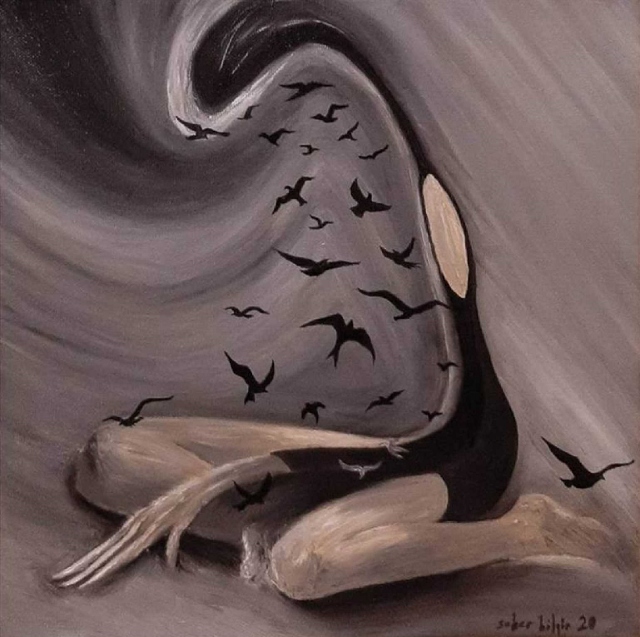
Image: Seher Bilgin
Filed under Essays

“I would like to see sensible gun control. I would like to see ending hate speech on the internet, on social media. It is not free speech. It is not the American way.”
Byron Brown, Mayor of Buffalo, New York, after a mass shooting at a local grocery store on May 14
Brown also declared, “We are not a nation of haters. We are not a nation of hate. We need to send the message that there is no place on the internet for hate speech, for hate indoctrination, for spreading hate manifestos. I will be a stronger voice for that. I believe that what happened in Buffalo, New York, yesterday is going to be a turning point. I think it’s going to be different after this, in terms of the energy and the activity that we see.”

“Parents and caretakers across the country cannot wait. They need our support now. This bill takes important steps to restore supply in a safe and secure manner. Additionally, with these funds, FDA will be able to help prevent this issue from occurring again.”
Rep. Rosa DeLauro, after passage of a bill in the U.S. Congress that would help to alleviate the current baby formula crisis
One of the bills provides $28 million in emergency funding to the U.S. Food and Drug Administration to address the shortage. The money would also be used to increase staff at the FDA, such as inspectors who could help the agency accelerate the approval process for formula manufacturers.
It has to be noted that an overwhelming majority of House Republicans voted against the bill, even though a majority have been complaining about the ongoing baby formula shortage.
Filed under News

“We are called to assist the Earth to heal her wounds and in the process heal our own.”
Filed under News

“I believe this… historic legislation is about rebuilding the backbone of this country and giving people of this nation – working people, middle class folks, people that built the country – a fighting chance. I’m going to have a lot more to say about that tonight and the next couple days.”
President Joe Biden, upon signing a $1.9 trillion COVID-19 relief bill
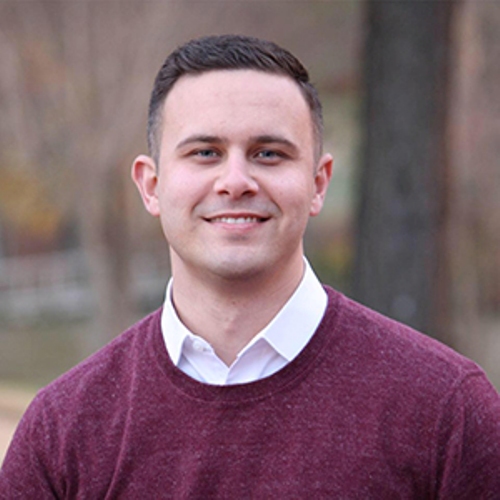
“ … Conspiracy theories should have no place in the Christian life. As people who claim to believe the gospel of Jesus Christ, we should not risk our public witness for political fantasies. We should denounce any movement that spreads false information.”
Seth Brown, in response to social media posts by Luke Coffee, former actor and conspiracy proponent, who took part in the January 6 Capitol Hill riots
Brown works with North Carolina-based Biblical Recorder and has written extensively for Southern Baptists about QAnon.

“In societies with bigger differences between rich and poor, women are less enfranchised and have less power, resources, and prestige than women in societies where those differences are smaller.”
Kate Pickett, British epidemiologist and Professor of Epidemiology in the Department of Health Sciences at the University of New York, in “Fissures That Tear Us Apart and Pressures That Weigh Us All Down”, Social Europe, 03/08/21
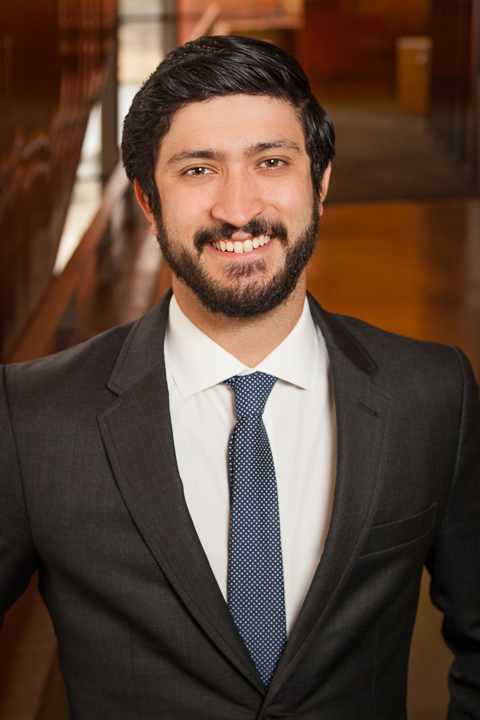
“In Austin, we’re committed to saving lives, period. If state officials don’t want to do their jobs protecting people from the virus, then we will.”
Greg Casar, Austin, Texas City Councilman, responding to Gov. Abbott’s order rescinding mandatory mask-wearing in public
The Governor’s new order went into effect March 10, but the City of Austin plans to retain a mask mandate for the immediate future.
Filed under News

I know I’m not alone in wishing this year a speedy demise. It certainly can’t end soon enough. On January 1, I personally felt I was at the precipice of a new beginning. I planned to finish and publish my second novel; a minor accomplishment that didn’t materialize last year. I also hoped to work towards upgrading my house. My father’s fetish for candles many years ago left soot marks throughout most every room. I also wanted to plant a couple of trees in the front yard. All sorts of good things loomed across the horizon! But, if you want to see the Great Creator’s sense of irony, announce your plans for the future.
At the end of January, my mother suffered a stroke; one bad enough to render her left side almost completely immobile. I had to admit her to a rehabilitation center and almost felt like I was abandoning her. She made good progress and started to regain movement on her left side, especially her arm. Then her Medicare benefits ran out, and the center had to discharge her. Basically they evicted her because she didn’t have enough money. So she returned home and went on hospice care. She passed away in June.
By then, however, the COVID-19 pandemic had hit, and the economy starting tanking. As my mother’s health deteriorated here at the house, I also fell ill and thought I’d contracted the C plague. Nasty visions of me lying in bed gasping for air, while my mother wilted in her own bed and hospice nurses tried getting into the house, burdened my days and nights. One morning local firefighters ambushed my front door with loud bangs. They’d been told a COVID victim might be trapped inside. A man stood on the porch with a heavy tool designed to breach everything from storm doors to bad attitudes.
After my mother died, I learned she had no beneficiary payouts from her two pension funds. Like so many Americans, I was unemployed and exhausting what funds I’d garnered from previous work. I couldn’t qualify for unemployment insurance, and no stimulus money was headed my way. I had to borrow money to pay basic utilities. Then I did receive money from an insurance policy I didn’t know existed. That became the brightest spot in my dismal life so far.
I’ve stabilized myself now, even as I remain jobless with minimal prospects. More importantly, I know I’m not alone in my feelings of despair and loneliness.
The U.S. is still mired in the depths of the most cantankerous presidential election in decades. The pandemic shows no signs of abating. And the economy remains brittle. Adding to the agony is that the Atlantic / Caribbean hurricane season just won’t quit. Even though it’s technically scheduled to cease on November 30, tell that to nature. Some fools tried that with the pandemic – ordering it to end by X date – and the scourge replied with a middle finger.
Such is 2020. Everything that could go wrong this year has gone wrong. We’ve reached the point, nevertheless, that any kind of mishap is answered with, ‘It’s 2020.’
The number 2020 is supposed to signify perfect vision. And, at this moment, we’ve seen how perfectly screwed up things can get. Thus, in the future, perhaps for generations to come, any crisis will be dubbed ‘A 2020’.
Had a bad day at work or school? Just tell people it was a 2020.
A rough trip through the airport? A 2020 escapade.
Burned food in the oven? You made a 2020.
How was it with your in-laws over? It was so 2020.
You get the message. Now, on to New Year’s!
Filed under Essays
 Chief Writing Wolf