Category Archives: Essays

Wolfgang at 20

Wolfgang, then Docker, at just a few months old in 2002.

When I saw that little ball of gray fur crawling around Tom’s* bare chest, I didn’t know what to think.  After he’d lost his older dog just a few days earlier, I honestly didn’t expect him to jump back into pet ownership mode.  My friendship with Tom soured by the end of that year, 2002, as his health apparently started to wane.  I never knew if he was being honest about that, but we had to part ways in January of 2003.  He left me with some $700 in debt.  But he also left me with the new puppy, a miniature schnauzer he named Docker.  I had grown attached to him since that day in August, when I first saw him.  We had agreed I’d take custody of him.  I renamed him Wolfgang.

If Wolfgang was still alive, today would be his 20th birthday.  He passed away in October of 2016, following a months-long battle with heart trouble.  But I maintain my father came out from the Great Beyond and snagged him.

By the end of 2002, Tom had decided he needed to return to his family home in far Northeast Texas to recuperate from whatever ailments were plaguing.  He had wanted to put up the puppy for sale, since he knew he couldn’t care for him.  I looked at that tiny ball of gray fur one evening, and his large dark brown eyes told me we belonged together.  I had started a new job with an engineering company in November 2002 and when I arrived home from work that Friday evening in January 2003, Wolfgang came bouncing out of Tom’s empty bedroom.  The dog was truly mine.

And I was concerned, almost frightened.  I wasn’t accustomed to having a dog around.  I hadn’t had an animal since 1985, when my parents and I put down our sick German shepherd, Josh.  We could never bring ourselves to get another dog again.  I’d seen so many residents of that apartment complex with small dogs and longed to have one of my own.  Now, here – I was an almost accidental pet owner.

We had a rough start.  I wasn’t used to dogs anymore.  I forgot, for example, that animal babies are like human babies in that they can’t control their bladders or bowels.  So I’d get mad at Wolfgang for messing on the floor.  And instantly regretted it.  He’s just a dog, I’d remind myself.

And that’s what I came to love and appreciate about him – he was a dog.  I eventually realized how comforting he could be; simply caressing his downy ears soothed whatever tensions had flooded my body and mind.  Any pet owner can empathize with me.  When I lived alone, his rambunctious greetings were an end-of-day highlight.  After I’d take him out for a brief walk and changed his water, we’d return to the apartment, where I’d strip down to my underwear and roll around on the floor with him.  His claw marks on my arms and back could testify to that.  But I also understood I was pretty much all he had.  I had my small collection of friends and my coworkers, but he spent most of his time alone.  Thus, I strongly considered getting another dog.  Dogs are pack animals and generally prefer the company of other canines.  I’d also come to feel that – in my 40s by this point – I didn’t need to be around other people.

I grew so attached to Wolfgang I considered him my child; an adopted child, but a kid nonetheless.  My love and devotion were so intense I seriously considered getting him a social security number to register him as a dependent.  I also realized something else: he was the meanest little critter on four legs I’d ever known in my life!

Any concept I had about small dogs being little more than adorable playthings was shattered with Wolfgang.  He was almost fearless.  The name I’d bestowed upon him truly fit his boisterous personality.  At most he weighed about 26 pounds (18 kg), but I know he viewed himself as the same size as that German shepherd.  Strangely he had a voice to match.  People who heard, but didn’t see him, thought Wolfgang was a monstrous canine.  Every vocalization that came out of him was loud – even his yawns!  You know you’re loud when someone can hear your yawns in the next room.

By 2007, my father’s health had started to decline.  He and my mother were in their late 70s.  That fall I made the decision to move back in with them; into this house where I had grown up.  It was a difficult time, as I’m such an introvert and was used to living alone.  I enjoy my privacy and personal space.  But it turned out to be for the best.

Shortly after moving in, I underwent foot surgery.  I placed Wolfgang in a room next to my bedroom and behind a dog gate.  As attached as he was to me, I knew he’d want to accost me in his usual manner when I returned from the hospital.  But hobbling in on crutches would have me too vulnerable.  After I got settled into bed, I told my parents to let Wolfgang come into the room.  Once he entered he slammed his front paws into the side of the bed, as if trying to ensure I was alright, before turning to my parents and unleashing a vociferous round of barks and growls.  His lips were pulled back as far as they could go; something dog owners know is a troubling sign.  I’d never seen him so angry.  But I knew that was also a gesture of how much he cared about me.

As time progressed, I became more ensconced in this house, and Wolfgang grew into a central figure in the lives of me and my parents.  That little dog somehow unified the household.  No matter the issue, he always brought things into focus.  My father developed a special bond with him; announcing Wolfgang was all the therapy he needed.  Indeed, as he’d already done with me, Wolfgang provided a heartening degree of therapeutic consolation.

In early 2016, Wolfgang began experiencing strange – and frightening – seizure-like episodes.  He’d struggle to breathe, as he’d squirm on the floor.  The vet diagnosed him with a heart murmur and placed him on medication, which stopped the seizures.

Shortly afterwards, my father’s health took a turn for the worst and he was hospitalized in May of that year.  He had suffered from gastrointestinal illnesses for his entire adult life and had major abdominal surgery in January 2008.  He was relatively fine for a few years, before he started getting sick again.

By Memorial Day weekend 2016, I told his doctors it was time for him to come home.  My father had said repeatedly he wanted to die in this house; the home he and my mother had worked so hard to get and keep.  And I wanted to honor that wish.

Over the next two weeks, Wolfgang would wander into my parents’ bedroom and start to climb onto the bed on my father’s side.  In his weakened state, I saw my father lift his left hand up and stroke Wolfgang’s head.  And both would sigh.

On Monday, June 6, 2016, I had sat down to watch the local noon news.  Wolfgang lay quietly beside the coffee table.  Then the lights flickered, and I felt a strange drop in air pressure.  I noticed Wolfgang lift his head and turn to his left.  He then rose slowly and sauntered down the hall; he stopped in front of my parents’ closed bedroom door and looked at me.  I knew then my father was gone.

Throughout that summer and into the fall of that year, Wolfgang’s behavior changed.  He became more subdued and less rambunctious – something I attributed to his age.  But I noticed he’d often look off into the distance and occasionally wander into my parents’ empty bedroom.  And stare.  I’d stare at him, knowing he was seeing my father.  In the last couple of years before his death, my father would run his fingers through Wolfgang’s fur and tell him “we’re going to go together.”  A secret, I realized – one he was relaying quietly to the dog, yet loud enough for me to hear.  In my father’s formal obituary in the “Dallas Morning News”, I mentioned Wolfgang – describing him as a canine “grandson”.

During the last weekend in October 2016, Wolfgang became especially lethargic – and cantankerous.  I became annoyed with him, but reminded myself again he was just a dog.  Then, by Wednesday morning, I realized I had to take him to the vet; he was critical.  As I rushed to the office less than two miles away, I begged him to stay with me; that I loved him more than most anyone else.  But it was too late.  The doctor couldn’t save him.  I leaned over him and whispered again that I loved him and to go with his “granddad”, my father.  The vet receptionist stood in the room with us and was already tearing up.

Then she looked up and seemed to sniff the air.  “What’s that?”

I smelled it, too.  It was the scent of Chaps – my father’s favorite cologne.

As tough as it was dealing with the deaths of my father and Wolfgang within a five month period, I’m glad I didn’t have to worry about either in the following years.  My mother’s health continued to worsen, as her descent into dementia intensified.  She finally passed away in June of 2020.

In the years since, I’ve realized how lonely it is without a dog.  I miss my parents, but I also miss Wolfgang.  During some down moments, I often see shadows of a small figure trotting down the hallway and think I need to limit my alcohol intake.  But I’ve also seen that tiny character in my dreams; virtual somnambulations I know are messages from my father.  Animals, it seems, are conduits for hope and love.

In the 1970s and 80s, Josh provided a unique brand of emotional support for various levels of my anxiety – from childhood into young adulthood.  Losing him traumatized me more than I could imagine at the time and ranks as one of the worst events of my life.  Losing Wolfgang wasn’t nearly as traumatic, since I knew he was old and suffering health problems that come with age.  When he turned 10 in 2012, I told my parents we needed to start preparing ourselves for his death.  We hadn’t done the same with Josh.

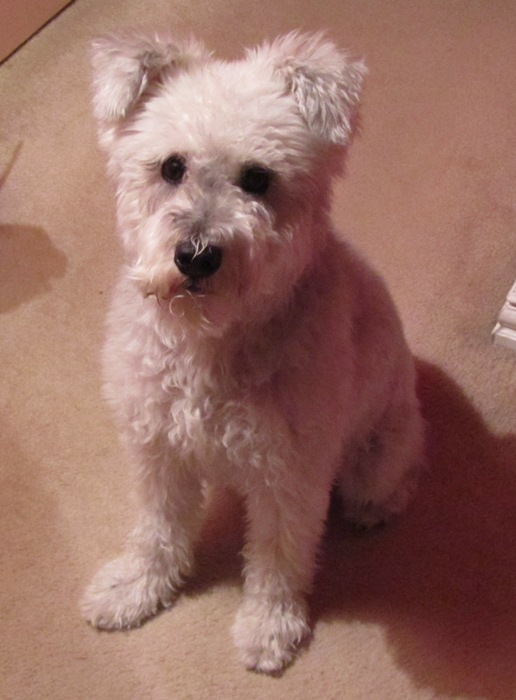
Wolfgang in December 2010

Stupid animals!  They wrap our hearts around them, make us fall in love with them – and then go off and die.  But they leave that stamp on our souls that we can never eliminate.  But who would?

A generation ago people grieved the loss of pets in solitude.  Yet we now view animals with a greater sense of appreciation.  Wolfgang’s veterinarian cremated him and returned the ashes to me in a small wooden box that I now keep on the same dresser my parents used.  A photo of him hangs beneath a photo of my father and me at a family Christmas gathering in the 1990s.  Another photo of him sits between my parents’ urns on the fireplace hearth.  A photo of Josh sits off to the left, looking towards all of them.

Happy 20th Birthday, Wolfgang!

This box now sits on my dresser amidst photos of other deceased loved ones.

*Name changed.

Leave a comment

Filed under Essays

Total Madness

Children flee Robb Elementary School in Uvalde, Texas on May 24, 2022.

They’re like recurring allergies – they just keep hitting over and over.  But we have a bevy of cures for allergies.  We don’t seem to have many for the sickening epidemic of mass shootings in the U.S.

As of this day, the U.S. has experienced over 250 mass shootings in 2022 – more than the number of days thus far in the year.  A mass shooting is defined as an event where four or more individuals are shot, not including the actual assailant.

Two recent massacres – 10 people in a grocery store in Buffalo, New York, and 21 at an elementary school in Uvalde, Texas – have garnered considerable attention.  The Buffalo calamity was racially-motivated, and the Uvalde event was the worst school shooting since the 2012 Sandy Hook Elementary School shooting in Newtown, ConnecticutBetween the Buffalo and Uvalde episodes, the U.S. experienced 14 other mass shootings.  Let that sink into your brain for a few minutes.

The gun issue has always been sensitive and controversial.  Hardline gun rights advocates have consistently placed the value of their sacred firearms over the right of people to live peacefully and happily.  Even more aggravating is a recent survey where 44% of Republican voters say mass shootings are one price we have to pay for living in a free society.  Somehow that doesn’t surprise me.  Ironically, many of these people consider themselves pro-life.

On the other side, far left gun control proponents want to eliminate all firearms for private citizens; believing that – in this violent, imperfect world – we only need herbal tea and kind words to solve every crisis.  These are the same people who get so emotional it’s almost painfully embarrassing to watch them recount their ordeals.  I understand these are horrific events, but the time for tears and anguish has already passed.

And that’s what I want to communicate to liberals.  Stop crying!  It’s time to get mad, stand up and yell back at these idiotic gun nuts whose only resolution to firearm blood baths is another weapon and a few thoughts and prayers.  Thoughts and prayers serve as little more than toilet paper for the carnage.

In the immediate aftermath of both Buffalo and Uvalde, as more talk of gun violence and gun control arose, we heard the usual cadre of right-wing loudmouths more worried (as always) that the rights of “law-abiding gun owners” could be desecrated.

Spare me the narrow-minded anxiety!

People have more of a right to live than anyone has a right to own a gun.  And no, they aren’t equally significant.  But conservatives campaigning for public office consistently point out one characteristic: they are pro-Second Amendment.  I see these ads every election cycle, especially here in Texas.  They always skip over the First Amendment, which ensures free speech and peaceable assembly and guarantees the right to vote.  Again, the twisted priorities of the conservative mindset.

Last year, when Texas Governor Greg Abbott signed several pieces of legislation into law that declared the state to be a “Second Amendment sanctuary”, I wasn’t shocked.  But I was angry.  This is the same governor who oversaw blatant attacks on the right to vote by dismissing the reality of gerrymandering in the state and allowing for partisan poll watchers.  In older days, partisan poll watchers across the South carried guns and would deliberately intimidate (mostly non-White) voters.  Conservatives steadily bemoan the myth of rampant voter fraud, while ignoring the very real pandemic of gun violence.

For the first anniversary of the 1999 Columbine school massacre, a national news network interviewed several of those first responders.  One man stated that he was particularly upset that the perpetrators (two teenage boys) had included girls among their victims.  He said could understand them shooting boys, “but they shot girls, too.”  I literally stopped when I heard him say that.  Aside from the shock value of the verbiage, that he could differentiate between the genders of the victims and therefore categorize his horror level proved how complacent people in this country have become towards violence.  It certainly was one of the stupidest things I’ve ever heard.

The outrage continued in the aftermath of the Sandy Hook massacre, when the U.S. Senate held a hearing on gun violence in the nation and the National Rifle Association’s Wayne LaPierre sat with a scowl on his face and became defensively hostile with every question lobbed at him.  And, as usual, liberals wept, while conservatives grunted.  And then…nothing.  Nothing happened.  No new legislation to address gun violence; no new funding for mental health counseling…nothing.  With that, it seemed the gun violence debate in the United States ended.  We’d accepted the murder of helpless children and thus, nothing more could be done.

At this point, I really don’t hold out much hope for any kind of movement on the legislative front.  Politics has gotten in the way of public service.  So, what’s new?

I remain as tired of the crying from liberals as I am of the concern for gun owner rights from conservatives.  If only the latter group understood the extent of the damage caused by bullet wounds, then perhaps they’d rethink their commitment to ensuring gun rights over human rights.  It’s time for we progressives to get mad and shout down the right-wing extremists who proudly pose with their firearms for family holiday photos the way most normal-minded folks pose with their children and pets, armed with little more than smiles.  The saccharine responses from the horrified won’t result in any considerable change.  They’ll just fade into the morass of national traumas.

Then we’ll have another mass shooting – in a school or some public venue.  And the cycle of tears and excuses will begin all over again.

3 Comments

Filed under Essays

Gone

Paul in New York City, Memorial Day weekend 1997

In 1983, when I was 19 years old, I visited a doctor for some long-forgotten reason.  Before then I had noticed a slight leftward tilt in my torso, even when I stood perfectly straight.  As a gymnast, perfect form was essential.  It still is for that matter.  When I mentioned it to the doctor, he said, “Oh, that’s scoliosis.”  In my naiveté, he might as well have said, ‘You have terminal cancer and have about six months to live.’  I honestly knew nothing about scoliosis, so after he left the room, I began contemplating my 19 years on Earth and what kind of mark I’d made on my loved ones.  I took it that seriously.

When the doctor returned after a few moments, I inquired further, and he explained in greater detail what scoliosis is and what causes it.  My anxiety came across as mere curiosity.  I had learned to act and – as a typical male – hide my emotions.  If the bastard only knew how terrified I was…

One of my long-time friends, Paul, died on April 9 after a year-long battle with liver cancer.  He was 55.  I’d written about him previously.  Paul and I had known each other for some 35 years.  We actually attended the same parochial grade school in Dallas and were altar boys at the same Catholic Church.  Our fathers had grown up together in East Dallas in the 1930s and 40s.  Like me, Paul had a strong dedication to family.  We had so much in common, yet differed on many levels.  We often dined together, and during one meal a few years ago, he asked why I still hung around him.  I couldn’t really answer him.  In some respects, he had an elitist mentality; in part, I think, because of his years living in New York and his trips to Europe.  We had something of a love/hate relationship.  We’d have a dispute over some issue and would be estranged from each other for weeks and sometimes months.

Aside from good food, one love we shared was cinema.  Among our favorite films was the campy 1962 classic “Whatever Happened to Baby Jane”.  The movie is like a steak cooked rare – an acquired taste.  We often jokingly referred to ourselves as ‘Blanche’ and ‘Baby Jane’, the dueling sisters of the story enmeshed in an unbreakable union of alcohol, bitter memories and dated outfits.  Yes, I know that sounds gay, but bear with me.  We watched a slew of films over the years and afterwards, critiqued them like an amateur Siskel and Ebert duo over cocktails.

Like me, Paul desired a career in the motion picture field.  In the mid-1980s, I studied filmmaking at the University of North Texas.  In 1991, Paul moved to New York to study the same at New York University.  He earned his degree three years later and remained in New York; trying to secure his place in one of the most fickle industries in one of the toughest cities in the world.  He finally decided to move back to Dallas in 1996 whereupon we began hanging out together again.

The friendship connection extended to our respective families.  I’d come to know his parents, and he had come to know mine.  We experienced each other’s struggles with family, friends, romance and work – you know, the usual stuff of life.  When he lived in a tiny apartment, he had Christmas parties every year, with plenty of food and beverages.  As much as it cost him, he told me, the gatherings made him happy.  And it made others happy.  They were simple times, but they were good.

I’ve written before about losing a close friend to AIDS in 1993 and how I got sick with hepatitis at the same time; how that prevented me from attending his funeral; how that made me feel I had betrayed his mother at the last moment by abandoning them – like so many of her son’s so-called friends had done.  I noted how the bonds of friendship are tested during the worst times of our lives.  I’m proud to say I’ve often been that ‘True’ friend and equally happy to say I have ‘True’ friends among my inner circle.

Paul and I had a dispute at the end of 2020.  The source?  A “New York Times” editorial about the unexpected support Donald Trump received from Hispanics in Texas.  I expressed surprise, but Paul (who had grown increasingly conservative) said it made perfect sense to him.  A short time later he learned he had liver cancer.  As 2021 progressed, his health worsened, and our mutual desire to reconnect increased.  We were old friends, after all, getting to be old men.  Or as I like to call it – the tail end of middle age.  A news editorial shouldn’t be a permanent barrier to good memories.

When Paul’s sister called me that Saturday night to inform me of his death, she asked, “Are you sitting down?”

“Is he gone?” I replied.

I already knew the answer.

One of my last text messages with Paul

I’ve been going through a lot personally in recent months.  Paul’s demise only adds to it.  There’s nothing like the death of a relative or close friend to put our lives into perspective; to understand what is truly important and valuable.

The funeral was this past Wednesday, the 20th.  Beneath a cloudy sky, I stood beside a mutual and much younger friend who was doing everything not to burst out crying.  I wrapped an arm around him and told him these moments are what make life so hard.  We have to deal with the deaths of people we know and love – family, friends, coworkers.  It’s what allows people to survive and reach a certain age.  Paul buried both his parents, a beloved aunt, his older brother and two nephews.  For whatever reason, his time here had ended.

Another mutual friend told me shortly after he’d learned of Paul’s death that he had dreamed of him.  “I didn’t know if it was the edible I’d eaten earlier,” he added.  But he said Paul told him he was happy now; he felt good and was safe.

I have to admit that – as bad as I’ve been feeling lately – I bore some envy of Paul.  He was no longer suffering.  All his pain had gone.  He didn’t have to worry about credit card bills, taking out the trash – or wondering if he was going to wake up the next day.  He also won’t get to live out his dreams of being a screenwriter.

When each of my parents died, I told people my only consolation was that they were no longer suffering from physical agonies.  But they had lived long lives and they’d achieved the best they could, given their circumstances.

I suppose Paul had done the same in his 55 years.

Living our best lives is all we should do with whatever time we have.

2 Comments

Filed under Essays

Brats

It was the slap seen around the world.  During the single most awkward moment at this past Sunday’s Academy of Motion Picture Arts & Sciences’ annual Oscar ceremony, actor Will Smith got so mad when presenter Chris Rock made cheap comment at the appearance of Smith’s wife, Jada Pinkett Smith, that he stormed the stage and literally smacked him across the face.  Rock – a comic already known for his abrasive sense of humor – was about to present the award for Best Feature Length Documentary, when he started his usual routine of picking on some of his fellow celebrities – including the Smiths who were seated in the front row.

In recent years Jada has been suffering from alopecia, so she sat beside her husband with her bald head.  In an industry that puts so much emphasis on looks, with most everyone – especially women – trying to out-coiffure and out-style one another, Jada appeared defiant and comfortable with her new-found condition.  If not comfortable, at least accepting.  When Rock turned to her and said, “G.I. Jane 2, can’t wait to see it,” he was referencing the 1997 movie “G.I. Jane” about a fictional first female Navy SEAL candidate, where actress Demi Moore portrayed the title character and even shaved her head as part of her method-style acting.  If you watch the moment, it’s obvious Will got the joke and started to laugh.  But his wife rolls her eyes, as if she was suddenly offended.  At that point, Will snapped and practically ambushed Rock, then proceeded to curse him out once back at his seat.

The audience gasps are audibly apparent, and the mood suddenly darkened.  What many in the theatre and global audience thought was a staged incident turned out to be brutally real.  Will Smith really slapped Chris Rock across the face!  Rock – in his usual comedic, show-must-go-on persona – seemed to brush off the incident and continued with his presentation.

Things seemed to get more awkward when – some 35 minutes later – Smith won the Best Actor award.

But the response has been insane and surreal.  Social media (of course) blew up with Smith defenders and critics, as memes mocking the fiasco exploded across the cyber universe.  The incident made national news, and late night talk show hosts have had fun with it.

The Oscar ceremonies have dealt with plenty of controversy over the decades.  A kerfuffle arose over Hattie McDaniel’s Best Supporting Actress nomination for her role in “Gone with the Wind”.  She was the first African-American to be nominated for and to win an Oscar in any category.  Just as many eyebrows were raised when “Midnight Cowboy” became the first (and to date, only) X-rated film to win a Best Picture Oscar.  George C. Scott created a tiff when he refused to accept his 1970 Best Actor Oscar for “Patton”.  One of the biggest fiascos arose two years later, when Marlon Brando didn’t appear at the Oscar ceremonies to receive his Best Actor award for “The Godfather”.  Protesting the treatment of Native Americans, he sent a would-be actress attired in Indian headdress to speak for him.  The audience booed her as she exited the stage.  The following year saw another unexpected moment, when a male streaker pranced across the stage behind David Niven.

Over the past several days, just about everyone has an opinion about the Rock-Smith flap.  Ricky Gervais tweeted a clip from his popular TV show “The Office” that pokes fun at alopecia.  Like Rock, Gervais is known for his unbridled humor.  If everyone who got offended by his jokes took a swing at him, a coroner would have to identify him by whatever little pulp of his flesh remained.  Comedian Kathy Griffin – definitely no stranger to controversy – worried openly that Will Smith’s actions could pose a danger to everyone in her profession, if the incident goes unchecked.

It has to be noted that Smith apologized to the Academy during his acceptance speech, but waited until the next day to apologize to Rock.  Jada has now opined and called for a “season of healing” – whatever that’s supposed to mean.  These latter two statements naturally came out on social media.

The matter took a more serious turn when the Academy’s Board of Governors decided to convene and discuss possible actions against Smith, including stripping him of his award. That has never happened in the institute’s history. If bad behavior on or off stage is reason to rescind someone’s Oscar, then the majority of recipients would be award-less.

The show’s producer, Will Packer, now confirms that Academy officials asked Will Smith to leave the Dolby Theatre, but he refused.  Moreover, Los Angeles police (who are always present for such a large-scale event) entered the chaos and said they could arrest Smith.  After all, it was felony assault.  Packer says he deferred to Rock who refused to demand Smith be arrested.  Now, this about this for a moment.  How many of you believe you could bitch-slap someone in a public forum and then be given the option of vacating the premises?

One unique irony of the incident is that, just last week, Jada posted a TikTok video stating she doesn’t give “two craps” what people think of her now and how she looks.  So what happened at Sunday night’s event?  She suddenly got offended?  Or is that woman’s prerogative to change her mind suddenly manifest itself?

I couldn’t care less.  One egotistical celebrity attacking another egotistical celebrity because his feelings were hurt amidst a pack of overrated zealots gathered to bloviate how wonderful they all are doesn’t bother me.  Will Smith’s actions shouldn’t surprise anyone.  After all, he’s a rapper at heart, so violence and vulgarity are in his blood.  Neither he nor his wife are exactly class acts.

Jada admitted a few years ago that she had strayed from their union on more than one occasion.  She confessed to having entanglements – meaning she fucked around.  But Hollywood is like Washington, D.C.: if you want loyalty, get a dog.

Understand one thing: Jada is suffering from alopecia – not cancer!  She’s losing her hair – not her life!  Considering that thousands of our military personnel from returned from Afghanistan and Iraq without limbs – if they didn’t come home in body bags – and what’s happening now in Ukraine, it’s really tough for me to feel sorry for an over-hyped actress who has an image problem.

Jada is a selfish, egotistical wench who went from empowered to pissed off in a nanosecond.  And her husband felt into her trap as he let himself get sucked into the proverbial chivalrous role of male protector; a man willing to become violent to uphold the dignity of his woman.  In this case, a woman who had already disrespected him by entangling with other people and then playing the victim when someone made a joke about her hair.  Spare me the drama!

Of all the antics I’ve seen at the Oscar festivities, I have NEVER seen anyone physically assault another person!  This is truly a first.

The show produced a few other unique firsts.  “CODA” became the first film with a majority physically challenged cast to win the Best Picture Oscar.  Troy Kotsur became the first deaf man to win the Best Supporting Actor Oscar, while Ariana DeBose became the first queer woman of color to win Best Supporting Actress.  (Curiously, DeBose won the same award for the same role that Rita Moreno won 60 years ago.  They’re the only two Hispanic actresses to win acting Oscars – something that annoys me more than a fight over hair follicles.)

On Friday, April 1, Smith declared that he will resign from the Academy.  But the damage is already done.

The Rock-Smith incident will forever be sealed into the memory of the American public.  No one who saw it – either as it played out or later – will ever forget it.  Will Smith will forever be known as the guy who struck someone on live television in front of a global audience.  His award does not overshadow what he did to Chris Rock; what he did to Chris Rock will overshadow his award.  No matter what he says or does now, he will never be able to escape that.

Leave a comment

Filed under Essays

Finis

There are a number of things that terrify people: spiders, darkness, getting stranded on a desolate road in East Texas.  But, in this modern age, one thing horrifies people more than seeing another Starbucks pop up in the neighborhood – your computer crashing.  For decades we’ve been led to believe technology is our mechanical savior; it will make our lives easier and more productive at all times.  And, to some extent, that’s true.

But when that dreaded “Blue Screen of Death” materializes, it’s worse than learning you need to shop again for homeowner’s insurance.  That’s what happened to me recently, when my 11-year-old desktop PC apparently decided it had enough of me and my cyber antics and took its own life.  It explains why I didn’t post anything last weekend.  I try to be consistent.  Of course, I tried to be consistent in pursuing my adult film career some 20 years ago – but obviously nobody had faith in my sexy technical writer persona.

Anyway…the old bastard died (the PC), and I was stranded.  Fortunately, I still had my father’s desktop PC, and a long-time neighbor/friend helped me yank out the hard drive from mine and showed me how to install it temporarily into this other one.  I still wasn’t able to pull any of my old data off of it, but I’m glad I back everything up onto a zip drive once a month.

So not all was lost.

All of my writings were on that zip drive, which – I guess to any writer – is one of those lifesaving moments.  Kind of like realizing there is at least one place that still sells your favorite wine.

And a writer without their collection of stories is like…well, a porn star without lube!

Leave a comment

Filed under Essays

Neuro-Excited

As The Chief continues his technical writing pursuits, I periodically encounter some odd elements.

In the email below, for example, the recruiter either wasn’t familiar with the English language or they tried to be inspirational.  But yeah!  There are few things more exciting than looking for a job!  I mean what reasonable person doesn’t enjoy the rigor of composing a perfect correspondence to a potential employer – especially if they’re desperate to find a job.

Then there’s this beauty below.  While applying for another tech writing job last December, I had to complete a section which asked a question I’d never seen before.

‘Do you identify as neurodivergent.’

Neurodivergent?!  I actually had to look that up – and was offended they’d made such an inquiry.

For years companies have been taking people’s fingerprints and making copies of their driver’s licenses.  I never had a problem with that and always acquiesced.  It was just part of the hiring process.

I’ve also undergone drug screenings, which entail urinating into a plastic cup.  I still find that more intrusive than anything and – after my last such screening a few years ago – vowed never to do it again.  In that incident I inadvertently starting washing my hands after stepping out of the room, which I didn’t know was forbidden.  I’d already handed the cup to the gloved associate who had been standing immediately outside.  When she practically hollered at me for reaching towards the sink, one of her colleagues (they were both female) passed by and made some chicken-shit comment about men not being able to follow instructions.  They began laughing to which I promptly responded, “Excuse you!”  That seemed to upset them, but I will not be disrespected.  Imagine if male associates had said something similar to a woman.

Now some employers are asking for proof of COVID vaccinations.  And exactly what type of shot I received!  And from where!  That’s when I stop being conciliatory.  I simply told one recruiter ‘NO’.  I would not tell them exactly what type of anti-COVID vaccine I received, much less provide a copy of the card displaying my personal data.  If it’s a remote position, who really cares if I’m vaccinated?!  I received both shots, each of which made me ill.

Understand I’m not some right-wing extremist or a Canadian truck driver.  I think the COVID hysteria has reached a crescendo.

But neurodivergent?!  That’s a new one, which I find as intrusive as the cup thing.

Several years ago a human resources associate with the energy company where I worked asked if I’d had personality disputes with coworkers.

“Come on now,” I replied.  “You’ve been around long enough to know, when you gather different people from different backgrounds in one location to work together, inevitably there’ll be some conflict.”

My elaborate answer seemed to surprise her.  I surmise she was accustomed to hearing something like, ‘Oh never!’  Or, ‘Of course not.  I get along with everybody.  I’m a people person.’

But she had to concede I was right.  A company never knows what they’re going to get when they hire someone new.

Neurodivergent?!

This moment came a few months after I’d had a heated text discussion with a long-time acquaintance who lives in California.  He was involved with two younger men – a couple he’d met on a dating site.  He described one of them as somewhat anti-social, adding that the guy’s mental aptitude fell along the autism spectrum.  He went further, though, declaring that people who aren’t good in dealing with other people are borderline autistic.

It stunned me.  I’ve never been good in dealing with other people.  My parents could never understand why I had such a tough time making friends.  But no one had ever deemed me autistic.  To me autism is just one step above mental retardation.  My California acquaintance tried to assure me he wasn’t insinuating I’m mentally retarded, but I remain unconvinced.  He doesn’t really know me.  We’ve never even met.  So I found his cyber-assessment of me as autistic insulting.

I answered no to the “neurodivergent” inquiry, but I wished there had been another option: ‘Who gives a shit!’

Leave a comment

Filed under Essays

Book Less

“I shall not today attempt further to define the kinds of material I understand to be embraced within that shorthand description [‘hard-core pornography’], and perhaps I could never succeed in intelligibly doing so. But I know it when I see it, and the motion picture involved in this case is not that.”

U.S. Supreme Court Justice Potter Stewart, opinion in Jacobellis v. Ohio, 1964

You know the old puzzle: if a tree falls in the forest, and no one is around, does it make a sound?  Using that logic, if a book is published, and no one finds its content offensive, is it obscene?

Obscenity seems to be subjective.  Right-wing extremists certainly feel that way, as they have (once again) assumed the role of moral overseer and decided they have the authority to determine what books are and are not appropriate for others to read.  To we writers and other artists, the term censorship is like holy water to a devil worshiper: it’s terrifying!  Whenever we learn that some people are challenging the presence of certain materials in a public venue, such as a library, we bristle.  But, instead of running and hiding, we’ve been known to stand and fight.

In the latest battle, the school board in McMinn County, Tennessee decided to ban the 1986 Art Spiegelman book “Maus: A Survivor’s Tale” from its library.  The illustrated tome is Spiegelman’s recounting of his parents’ experiences as prisoners of the Auschwitz Nazi death camp.  It won Spiegelman a Pulitzer Prize and, in 1992, the Museum of Modern Art mounted an exhibition displaying his original panels for the story“Maus” had been party of the school district’s lessons on the Nazi Holocaust.  The McMinn school board’s complaints about “Maus” are the usual gripes: language and nudity (animal nudity in this case).

It’s worth noting McMinn County, Tennessee is near the location of the infamous Scopes Monkey Trial, where the concept of evolution became intensely controversial.  In 1925 the state of Tennessee passed the Butler Act, a bill banning the teaching of evolution in its schools.  Evolution, declared legislators, contradicted the Christian Bible as the single standard of truth in public arenas, such as schools.  The move astonished – and frightened – many across the country.

The American Civil Liberties Union (ACLU) responded immediately by vowing to support any educator in the U.S. who dared to teach evolution.  A popular young high school teacher in – of all places, Tennessee – named John Scopes offered to be the defendant, if the state decided to make good on its promise.  They did.  On May 7, 1925, Tennessee authorities arrested Scopes and charged him with violating the Butler Act.

The ensuing legal battle made headlines across the country and the world.  The judge in the case showed his deference to the state by opening each session with a prayer and refusing to let Scopes’ defense call any scientific witnesses.  Ultimately Scopes was found guilty and fined $100.  The ACLU hoped the case would make its way to the U.S. Supreme Court, but the Tennessee State Supreme Court reversed the decision on a technicality.  Still, the repercussions were widespread.  The Butler Act was never enforced in Tennessee again, and similar measures in other parts of the U.S. met with failure.  But progressives realized they could never relax in the face of extremist ideology.

So, here we are in the third decade of the 21st century, where the U.S. has come out of two brutal Middle East wars and is now facing an onslaught of urban violence.  We experienced 36 mass shootings in the month of January, resulting in 101 injuries and 42 deaths.  That’s just in the month of January 2022 alone!

But, as usual, social and religious conservatives are more upset with books.  In October of 2021, Texas State Representative Matt Krause asked the Texas Education Agency for information about 850 books in school libraries.  He wanted to know how many copies of these books were in each library.  It didn’t surprise observers that the majority of the books are by women, non-Whites and/or LGBT authors.  The imperial Krause is concerned that taxpayers are funding the presence of these books in school libraries.  Yet, my tax dollars are wasted if those books are removed because he and other like-minded folks find them unacceptable.

Some disputes have become hostile.  Police in Leander, Texas got involved in a controversy over one book, “Lawn Boy” in 2021.  Author Jonathan Evison says he received death threats because of it.  Texas – where any restrictions on guns is considered anathema – isn’t the only state under siege by moral zealots.  Similar attempts at censorship and assaults on free speech have played out in Missouri, Pennsylvania and Virginia.

“If I had a statement, it would be ‘Read the book or sit down,’” says Evison. “I feel like these people are frightened because they’re losing the culture wars.”

Yeah!  Sit down and read – more than the Bible or the TV guide.

I will concede parents have the right to be concerned by what their children view and read.  But I feel banning books from a school library is just one step away from banning books in any library or elsewhere.  It’s truly not an unrealistic stretch to envision such a scenario.  The world has witnessed such activities in totalitarian societies, and the results are often sanguineous.

Once again, though, what is obscene?

The 1920s was a decade of both progress and excess, particularly for the growing film industry.  Although silent and in black-and-white, movies had begun to show a variety of mature content – mainly heavy alcohol consumption and sexual behavior.  Concern over the material became so intense that, in 1934, Will H. Hays – then head of the Motion Picture Association of America (MPAA) – introduced his personally developed “Hays Code”, a standard production guide for what is and what is not acceptable content for motion pictures.  The code remained until 1968, when the MPAA introduced its film rating system: G (General Audiences), PG (Parental Guidance recommended), R (Restricted) and X (mainly for sex, but also for violence).

By the 1960s, films were presenting increasingly controversial subject matter – and headaches for the MPAA.  The 1966 film “Who’s Afraid of Virginia Woolf?” shocked audiences with its blatant use of foul language and served as one catalyst for the rating system.  The 1968 film “Vixen” became the first movie branded with an X rating.  The following year John Schlesinger released “Midnight Cowboy” with Jon Voight in the titular role.  It, too, was branded with an X rating.  Despite that, it went on to win the 1969 Academy Award for Best Picture – the first and (to date) the only X-rated film to win such an honor.  Viewing both “Vixen” and “Midnight Cowboy” now might make somebody wonder what the fuss was all about.

The film rating system took an odd turn in 1983 when a remake of the classic film “Scarface” came out.  The MPAA initially granted the movie an X rating because of its excessive violence.  Director Brian DePalma reluctantly trimmed some of the footage, and the film was rebranded with an R.  If it had gone out with the X label, “Scarface” would have been the first movie released as such because of violence.

Another X controversy arose six years later with “The Cook, the Thief, His Wife & Her Lover”.  The film’s gratuitous sexual content garnered an X rating from the MPAA.  As with DePalma and “Scarface”, director Peter Greenaway reluctantly agreed to edit out a small portion of the sexual matter – small as in some 5 minutes – and the film was upgraded to R.  The fiasco upset many in the entertainment community – not just in the U.S. but across the globe.  If the difference between an R and an X rating is a paltry 5 minutes, then how valid is a film rating system?

What is obscene?

In the 1950s, the Hays Code was applied to a growing new medium: television.  In motion pictures, the code, for example, dictated that people of the opposite sex could not be filmed in bed together, unless one of the duo (usually the man) had at least one foot on the floor.  In TV, however, even married couples couldn’t be shown in the same bed.  The rule went into effect after a 1947 episode of “Mary Kay and Johnny” showed the title characters hopping into the same bed.  But that taboo dissolved completely in 1969 with “The Brady Bunch”.  Bathrooms also were generally off-limits in television.  One exceptional first was a 1957 episode of “Leave It to Beaver”, when the boys tried to hide a pet alligator in the tank of a toilet.  An early episode of “All in the Family” produced another first: the sound of a toilet being flushed.

As mundane as all of these events are today, they each sparked a ruckus at the time.

Personally, I find excessive violence offensive.  I never laughed when I saw men and boys get struck in the groin in slap-stick comedy scenes in films and on television.  I grimace at bloody acts in similar venues, while others react as if nothing more than a sharp wind blew past them.  Conversely, many of these same individuals are horrified by the sight of blatant nudity, especially if the nudeness is that of a male.  It’s difficult to imagine now, but even as recently as the late 1960s words like pregnant and diarrhea were forbidden on television.

The word “bitch” is used frequently on TV today.  But, in 1983, a musical group called Laid Back released a song entitled “White Horse”, which features the line: ‘If you wanna be rich, you got to be a bitch.’  MTV played the video, but bleeped out the term “bitch”.  In 1994, Tom Petty released “You Don’t Know How It Feels”, which contains the line: ‘But let me get to the point, let’s roll another joint.’  Music video networks deemed the ‘roll another joint’ verbiage unacceptable and bleeped it out whenever they played the video.

In 1989, rap group 2 Live Crew released two versions of their song “Me So Horny”: what they dubbed the G-rated version and the R-rated version.  Radio stations played the G-rated version frequently, but the R-rated version generated the most strife.  At the start of 1990 a federal judge in the state of Florida considered the group and their music obscene and in violation of community standards – whatever that’s supposed to mean – and forbid local radio stations from playing any of their music.  Consequently, 2 Live Crew’s reputation and music sales skyrocketed.

I remember the controversy that erupted with the video to Madonna’s 1990 song “Justify My Love”.  Once again, music video networks assumed the role of moral protectorate and either refused to play the video or played it late at night, when children and other fragile souls – such as moral crusaders – were asleep.  Undeterred by the skirmish, Madonna packaged the video and sold it independently.

In 1965, The Rolling Stones made their debut appearance on “The Ed Sullivan Show”, during which they performed a sanitized version of “Let’s Spend the Night Together”.  Producers convinced the group to sing ‘Let’s spend some time together’ instead.  Lead singer Mick Jagger leered at the camera – in the way only Mick Jagger can – when he spat out the words.

Two years later The Doors were presented with a similar option when they made their appearance on the show and performed their already popular and now seminal hit “Light My Fire”.  Sullivan’s son-in-law, Robert Precht, suggested they alter the line ‘Girl, we couldn’t get much higher’ to ‘Girl, we couldn’t get much better.  The group refused and performed the song as it was.  Their act of defiance resulted in their permanent ban from the show – a move I know upset them to no end.

I’ve noticed social conservatives haven’t raised concerns about inappropriate material in books like “The Anarchist Cookbook” and “The Turner Diaries”.  The latter served as a blueprint for Oklahoma City bomber (domestic terrorist) Timothy McVeigh.  If conservatives really want to ban books with sexual references and violence, they should start with the Christian Bible, which is rife with salacious and unsavory behavior.

Meanwhile, “Maus” has experienced a surge in sales as a result of the squabble surrounding it.  If there’s one way to ensure something’s popularity or success, it’s to try to ban it.  In other words, censorship always backfires.

Yet, censorship will always remain a threat to freedom of speech, expression and the press.  The war will never be won – by either side.  But those of us on the side of true freedom can win individual battles by standing up to self-righteous demagogues.

2 Comments

Filed under Essays

A Ten Year Blogiversary!

Happy 10th Birthday to me!  This month marks a full decade since The Chief entered your lives and brought unmitigated joy, anger, heartbreak and questions about how someone of such deranged mental capacity as me could possibly get onto the Internet.  Aren’t you glad you showed up and stayed?

I can’t even begin to describe the mixture of curiosity and trepidation I felt launching this blog.  I had never really put myself into the public eye under such circumstances.  It’s odd, if you knew me, because in a previous life I’d wanted to be a professional actor.  When I felt my life was going out of control in the late 1980s, I seriously began researching life in California and New York.  But I decided to remain in Texas and hoped someone of importance would notice me.  They didn’t.  Bastards!

Now I’ve resigned myself to being a hermit writer.  I’ve always been introverted and thus, was isolating myself at home long before the COVID-19 pandemic made it fashionable.  That means blogging came natural to me – like eating good food, drinking good wine and having regular orgasms.

I realized almost immediately the blogosphere is ideal for any writer or creative visionary.  It has taken the written word and placed it into the hands of ordinary people.  Whether what they create is valuable or authentic is often purely subjective or subject to fact-finders.  But – for better or worse – people no longer have to rely upon established publishing houses or newspaper editorial boards to determine if they get something published or not.  It’s not necessarily vulnerable to censorship or opinionated editing.

I feel this blog has improved my writing and widened my own eyes to the world around me.  I used it as a platform to promote my first published novel, “The Silent Fountain”.  I’ve been able to broadcast short stories and essays that renowned editorial deities didn’t like.

For all of you who have stayed with me over the past decade, I love you and thank you.  Stay with me!  There’s more psychological shenanigans to come!

3 Comments

Filed under Essays

Death and Time

The death of actress and national icon Betty White on New Year’s Eve 2021 has left many of us here in the United States shocked and despondent.  White was just 17 days shy of her 100th birthday; an event which she and the rest of us looked forward to celebrating.  Now she’s gone.  Suddenly.  None of us really saw this coming.  How could this happen?  Why?  But none of us should be shocked.

Death doesn’t honor our designated times of order.  My paternal grandfather once said that he respected death because it bears no prejudice.  It takes who it wants when it wants.  According to my father it was painful for him to admit even that much; as he had seen so many very young people and/or very good people suffer an untimely demise throughout his time on Earth.  My grandfather died in 1969, and my father didn’t fully comprehend the meaning of what the old man had said until some years later.

Perhaps it’s easy for we older folks to have a more cynical if not sedate view of death.  I’m at the point where I know I have more years behind than ahead of me.  But currently I feel I’m surrounded by people enduring serious health struggles.  A close friend is showing signs of Parkinson’s.  Another friend is dealing with liver cancer.  His doctors gave him less than a decade, unless he has a liver transplant.  But his liver seems too badly damaged to qualify for a transplant.  So he’s resigned himself to decluttering his life and reconnecting with people.  One of my cousins who’s 10 years older suffered a heart attack in 2020 and is now battling kidney failure.  The 40-something son of another long-time friend is still recovering from a catastrophic stroke he experienced about 2 years ago.  He’s ensconced in a rehabilitation facility, but doesn’t appear to be making much progress – not according to his father.  The latter says it seems his son doesn’t really want to cooperate with the therapists; as if – just a few years from age 50 – he’s decided he’s lived life to the fullest.

As a manic depressive in my past life, death often occupied more space in my mind than thoughts of the future.  A typical artistic type, I experience the full range of emotions humanity possesses.  But death haunts all of us throughout our lives.  When I was in high school, a girl was killed when a train struck the car in which she was riding.  Around that same time, lightning killed a boy walking home from school.  Some years later, while working at a retail store, a teenage constituent was killed by a drunk driver, and another died in a car wreck.  In the fall of 1992, I happened upon the obituary of a young man I’d known in grade school; he was 29.  The following year a friend died of AIDS at the age of 31.

Looking at the myriad news events surrounding the wars in Afghanistan and Iraq, I’m always heartbroken at the sight of very young people returning home with damaged bodies and minds or in coffins.  The epidemic of school shootings and deaths of those caught up in civil unrest is truly upsetting.

How is it these things are allowed to happen?  Isn’t there supposed to be an all-loving, omnipotent deity who could prevent such horrors?

I’ve always wondered what life is like on “The Other Side”; whatever it’s supposed to be and wherever that is.  I like to think all those I’ve known in decades past, including my parents and even my dogs, are safely enveloped in such realms; where (hopefully) they are happy and loved.

Back in 2012, I had a brief dream of an English and German instructor I had at a community college in suburban Dallas in the 1980s.  She was a quirky, yet truly inspirational character.  I hadn’t thought of her in years when I had that dream.  I think it was a day or two later when I found her obituary in the newspaper.  And I thought later that, perhaps, she flitted through my sleeping subconscious to say goodbye – for now.

Betty White’s “sudden” death saddened so many people.  But she was 99!  So she didn’t quite make it to her centennial birthday!  She always vocalized how fortunate she was to have lived so long and to have so many people admire and love her.  She had reached the end of her time in this world.

We all will at some point.  As sad as it may be sometimes, it doesn’t really matter one’s age or condition at the moment of death.  It just happens.  We have to make our time as valuable and fulfilling as we can.

3 Comments

Filed under Essays

Appliances, People and Other Crap That Gets Old

Last month I had to buy a new clothes washer.  I came home from work one Friday and dropped my casual dress shirts into the washer, as I did at the end of every work week.  After a few minutes I realized the washer had stopped.  In fact, after it filled with water, it had grown surprisingly silent.  The thing banged a lot when in action.  But when I checked on it, I was stunned to find it still filled with water.  No amount of manipulation – which, for the mechanically-challenged such as myself – meant yanking on the knob (as if I was in the midst of a raucous masturbatory session) and smacking it (again, as if in the midst of a raucous masturbatory session).  Aren’t you glad you decided to read something today?!

All of that was to no avail.  So I removed the shirts and squeezed out the water and searched online for a repair place.  I found one, but they couldn’t fix it.  I paid their fee – and never heard from them again.  I filed a fraud complaint with my bank, which gave me provisional credit.  But they ultimately decided I was hysterical and reversed the credit.

I was forced to get a new washer – and change banks.  I realized the obvious: my 10-year-old clothes washer had decided to give up on me (at the financially worst time!) and I had to get a new one.  My long-time good friend, Raymond*, came in from out of town shortly after that.  He was here when I bought a new washer through Overstock and here at the house when it arrived.  It turned out to be much smaller than anticipated – suitable more for a dorm room or efficiency apartment than a hyper-clean single man living alone in a 3-bedroom house – so I was forced to return it.

I then purchased a fuller-size washer and had it delivered.  Before Raymond returned home, he helped me disconnect and move the deceased appliance into the garage.  I had to empty out the bulk of the water by hand.  We both laughed afterwards, as I championed the fact two 50-something fuckers like us could move a massive appliance across several feet and through two doorways.  Personally, it was the most exercise I’d had in months!

Not long afterwards, Raymond encountered his own appliance-related fiasco.  His aging refrigerator had started causing him problems.  He was able to get it repaired, but it was still an unsettling prospect for him.  His health problems seriously impact his personal finances, and in the wealthiest country on Earth, people in his condition have to budget tightly.

The image at top is from a series of text messages between Raymond and me as he lamented his refrigerator ordeal.  I couldn’t help but laugh loudly and told as many people as possible; people who are roughly our age.

At 15, my truck is showing its age.  The engine light keeps illuminating, and a headlight recently went out.  But it’s still operating relatively well!  Other things in and around my house are also becoming problematic.  My father had a fetish for scented candles, until I finally convinced him they were damaging the walls and ceilings with soot.  The kitchen sink had been causing trouble years ago – long before either of my parents passed away.  The water heater is leaking slowly.  My iron (my mother’s iron actually) committed suicide a few months ago in mid-session.  The roof has a number of openings, which allow squirrels and other small invasive varmints to enter and hide.  Their rumblings in the attic make me recall the mythical rat problem in “The Exorcist”.

Years ago my mother would tell me that life begins at 40; a rather common saying at the time.  She had just turned 40 when we moved into this suburban house in December of 1972.  Shortly after I turned 40 in 2003, I came down with the flu for the first time in my entire life.  The following April, I severely sprained my left ankle while walking my dog.  It had rotated as far as it could go without breaking.  I ended up on crutches and taking time off from work.  About 5 months before I turned 50 in 2013, I had a freak accident here at the house that severely damaged my right arm and landed me in the hospital for a few days.  If I had been alone, I probably would have bled to death.

It seems the start of every decade of my life coincides with something bad.  In the two months before I turned 30 in 1993, one of my closest friends died, and I contracted Hepatitis A that culminated in a hospital stay and nearly two months off from work.  Therefore, I’m not eager to see what awaits me come my 60th birthday – if I’m fortunate enough to make it that far.

A couple of months ago I was looking into one of my eyes in the mirror when I noticed a bruise on the outside of my left forearm, close to the elbow.  It immediately drew my attention for one simple reason – I have no idea how the damn thing got there!  And I grew alarmed.  Occasionally my parents would end up with miscellaneous bruises; marks with an unknown cause.  It made me recall an even more unsettling incident from more than two decades ago.

I worked for a bank in Dallas, dealing with high-dollar clientele.  Many of my customers were elderly.  I was on the phone with a gentleman one afternoon when he halted the conversation and began mumbling.  I asked if he was alright.  He then noted rather casually – almost too casually – that he was bleeding and didn’t know from where.  A colleague passing by my desk at that moment noticed my eyebrows pop upward in shock.  I asked the man if I needed to call someone for him, as in 911.  He said no, that he’d be alright.

Of course, a bruise is nowhere as serious as blood.  But I’m still wondering if I’m now at that point in time – the age where my body is subtly telling me it wants to lead a life of its own.  I’m not ready to let the bastard go yet!  Yes, I’m a writer, but I don’t want to melt down into a fat, grouchy curmudgeon surrounded by books and bottles of wine and vodka!  If you knew my present lifestyle, it may seem that way, but no one asked you!

Raymond turned 59 last month, and I told him I’m actually looking forward to turning 60 in two years.  I also told him something even more significant – we will age and mature, indeed, but we will never get “old”.  I certainly don’t intend to let myself reach that point.  Raymond has been through a lot in his life.  Just half the crap he’s endured would send most people into therapy or a talk show.  And I’m still here for a reason, too.

Broken clothes washers or not, I’ll go on until my power system decides it’s had enough.  In the meantime, I’m still on the lookout for anymore rogue bruises.

*Name changed

2 Comments

Filed under Essays